
Destination
Tangier
The story
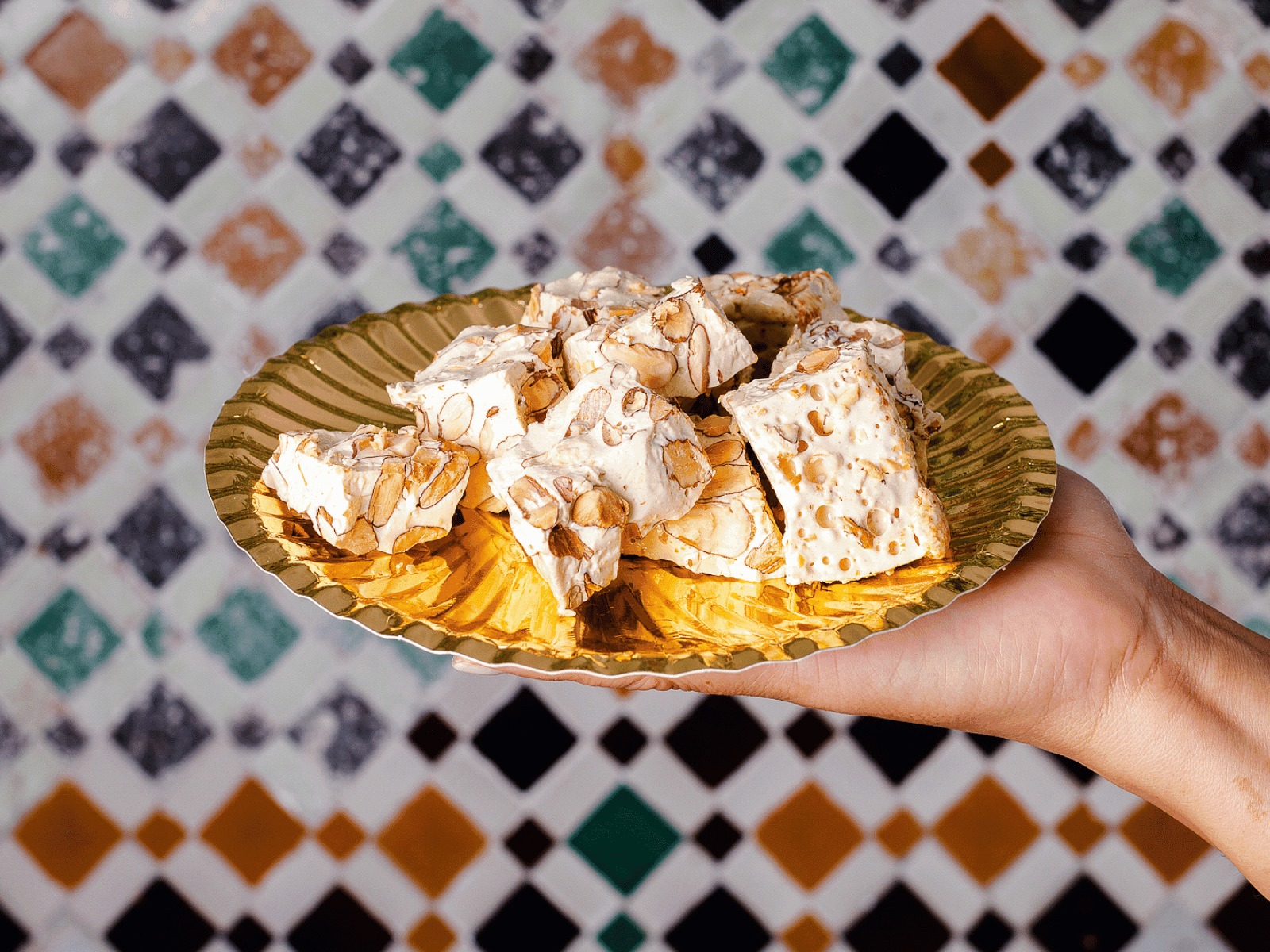
Moroccan nougat (also called halkoum or mahalabiya-based nougat in some regions) is the country's classical Eid al-Fitr and wedding confection: a slab of chewy, honey-sweet, egg-white-lightened nougat studded with toasted whole almonds, shelled pistachios and (in some versions) sesame seeds, cut into small dominoes and sold from every mercado sweet counter and wedding tent. Wrapped in cellophane and given as gifts during Eid, offered on trays at every wedding, sold by weight from big wooden trays at the souk. Every Moroccan has memories of eating it as a child.
Method
Preheat oven to 150C. Spread almonds and pistachios on a baking tray. Toast 10 minutes until fragrant and pale gold. Keep warm in the oven at 80C until needed — cold nuts firm up the nougat before it's mixed.
Line a 20 x 20cm square tin with baking paper. If using wafer paper, cut it to fit the base and lay it on top of the baking paper.
In a heavy small saucepan, warm the honey and orange blossom water over medium heat until the honey reaches 130C on a candy thermometer. Set aside briefly.
In a separate small pan, combine sugar, water and glucose. Bring to a boil over medium heat without stirring. Cook until the syrup reaches 145C (hard-ball stage).
Meanwhile, in a stand mixer with the whisk attachment, beat the egg whites with the salt until stiff peaks form.
With the mixer running on medium, slowly pour the hot honey syrup down the side of the bowl into the whipping whites. Then slowly pour in the hot sugar syrup. Add vanilla. Continue whipping 8 to 10 minutes on high speed until the mixture is thick, pale, glossy and holds a stiff ribbon.
With the mixer on low (or with a wooden spoon), fold in the warm nuts and sesame seeds. Work fast — the nougat sets quickly.
Immediately scrape the nougat into the prepared tin. Press down with a wet spatula or the back of a lightly-oiled spoon to level. Top with a second sheet of wafer paper if using. Cover with a clean tea towel and rest at room temperature 6 to 12 hours (overnight). To cut: lift the nougat out of the tin using the baking paper, dust with cornstarch-icing sugar mix, and slice with an oiled sharp knife into 2 x 3cm dominoes.
Tips
- Sugar thermometer is essential. Hard-ball stage (145C) is the marker. Cooler and your nougat is chewy-soft; hotter and it's rock-hard. No thermometer, no reliable nougat.
- Warm nuts. Cold nuts firm up the hot nougat mass too quickly and prevent even distribution. Keep them at 80C in the oven until the moment they go in.
- Egg whites stiff before syrup goes in. Not soft peaks — full stiff peaks. This holds the syrup as it's poured in and gives you the classical light-but-chewy texture.
- Slow syrup pour. Pouring the hot syrup down the side of the bowl (not straight in) prevents it from cooking the eggs into scrambled bits.
- Wafer paper is classical. Moroccan and French nougat both use edible wafer paper (obiati) top and bottom so the nougat doesn't stick. Any baking supply shop stocks it. Skip if unavailable — the nougat will still cut fine with the icing-sugar dust.
More recipes
View all
Ring-shaped semi-hard biscuits scented with fennel, aniseed and sesame, twice-baked until golden. Morocco's tea-dunking staple, sold by weight at every pastry souk.

Almond and raisin twice-baked biscuits, sliced from a loaf and dried until crisp. Morocco's biscotti-like tea companion.
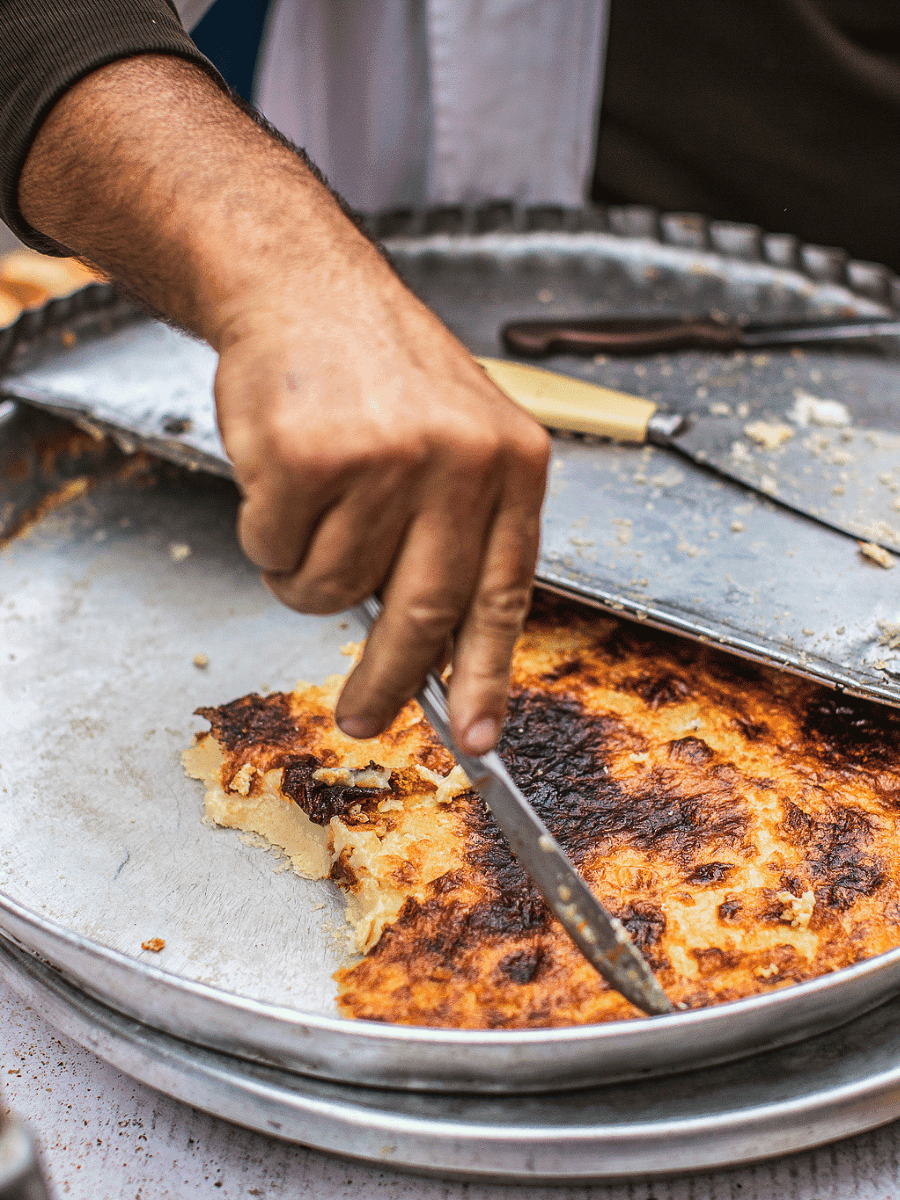
A dense, savoury chickpea-flour cake baked in a wood oven, sold sliced from paper on street corners. Tangier's Andalusi-Sephardic morning snack.

Layered filo pastry crisps sandwiched with almond-milk custard, dusted with icing sugar and cinnamon. Fes's most elegant dessert.
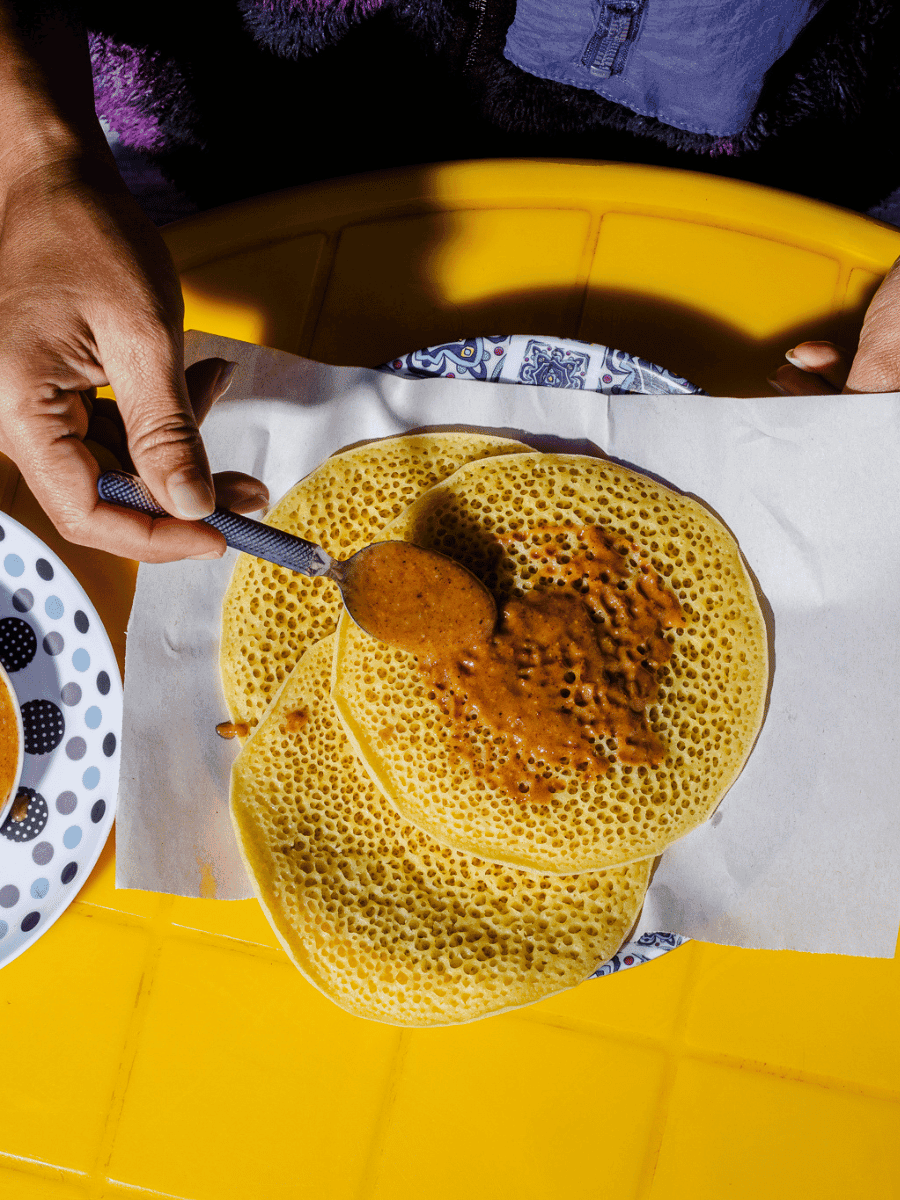
Soft yeasted semolina pancakes covered in a thousand tiny bubbles, cooked on a hot skillet on one side only. Morocco's spongy honey-soaked breakfast.

Sweet, thick set yogurt made from whole milk and rennet, scented with orange blossom. Morocco's oldest dessert, spooned from small clay jars.