
Destination
Kigali
The story
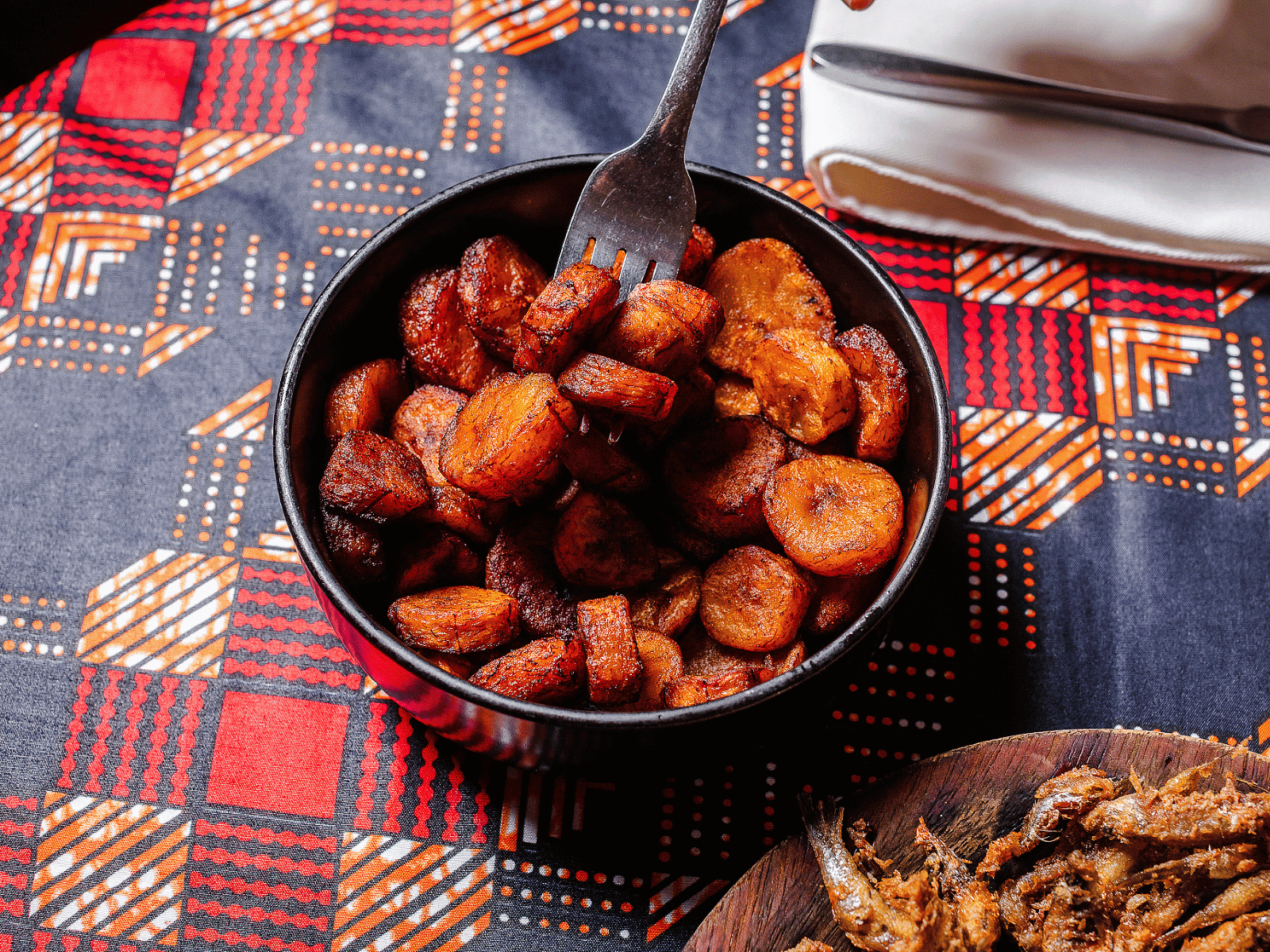
Mizuzu is East Africa's fried sweet plantain — the after-school snack, the roadside cart treat, the every-Rwandan-restaurant side dish, and one of the simplest ways to showcase the sweet ripeness of a properly-yellow plantain. Ripe plantains (yellow with black spots — the very ripe stage where the starch has converted to sugar) are peeled and sliced into 1cm rounds or thick diagonal slices, then shallow-fried in oil until the outside is deep gold and caramelised, the inside soft and jammy-sweet. Served alongside brochettes, fried isambaza, isombe or grilled tilapia as the sweet counterpoint to savoury food, and as a stand-alone snack with a splash of hot chili sauce.
Method
The plantains must be yellow with heavy black spots — the very ripe stage where they've softened and the starch has converted to sugar. Green plantains do not work for mizuzu (they make tostones, a different dish). Squeeze gently: they should give slightly.
Cut off the tips of each plantain. Score the skin lengthways along one of the natural ridges. Peel the skin off with your thumb — it should come off easily on a ripe plantain. Discard the skins.
Slice each plantain on a diagonal into 2cm-thick oval rounds. You should have 6 to 8 slices per plantain.
Warm the oil in a wide heavy pan (cast-iron or non-stick) over medium heat. The oil should shimmer but not smoke — 170C is the target.
Lay the plantain slices in a single layer in the pan (work in batches if needed). Cook 3 to 4 minutes without moving until the underside is deep golden and caramelised at the edges.
Flip each slice carefully with tongs. Cook another 2 to 3 minutes until the second side is also golden and caramelised.
Lift onto a wire rack or paper. Sprinkle immediately with a pinch of sea salt while glistening. Dust with cinnamon if using.
Pile mizuzu on a warm platter. Serve alongside brochettes, isombe, kachumbari or beans as the sweet side. Or eat straight as a snack with a squeeze of lime and a spoon of hot sauce.
Tips
- Ripe yellow-with-black-spots plantains. This is essential. Any greener and you get tostones (a different dish). Any softer and they turn to mush in the pan.
- Medium heat, not high. Plantain sugars caramelise slowly. High heat burns the outside before the inside softens. Medium heat for 3 minutes a side is the target.
- 2cm thick, on the diagonal. Thinner slices burn before the inside softens; thicker slices don't cook through. The diagonal cut gives more surface area for caramelisation.
- Salt while hot. A pinch of sea salt on the still-glistening plantain balances the sweetness. Delicate table salt disappears; coarse sea salt sits on the surface.
- Serve immediately. Mizuzu firm up as they cool. Ten minutes on the counter and they lose the caramelised-outside, soft-inside contrast.
More recipes
View all
Diced tomato, thin-sliced red onion, chili and coriander tossed with lime, salt and a splash of oil. East Africa's essential fresh side salad.

Triangular yeasted doughnuts scented with cardamom and coconut milk, fried until deep golden. Rwanda's morning tea companion, best fresh from the pan.
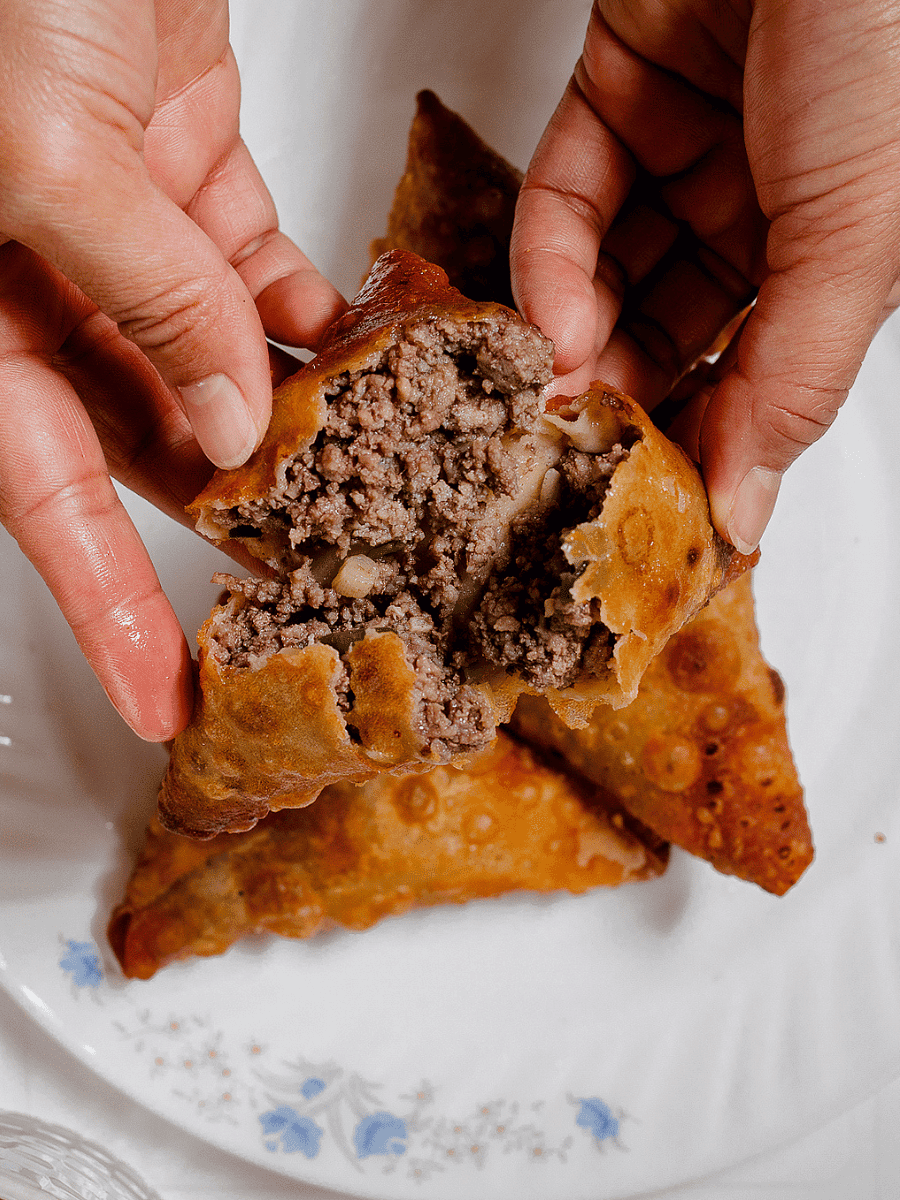
Small triangular pastries stuffed with spiced minced beef, onion and green peas, deep-fried until crisp. Rwanda's answer to Indian samosas, sold at every bar.
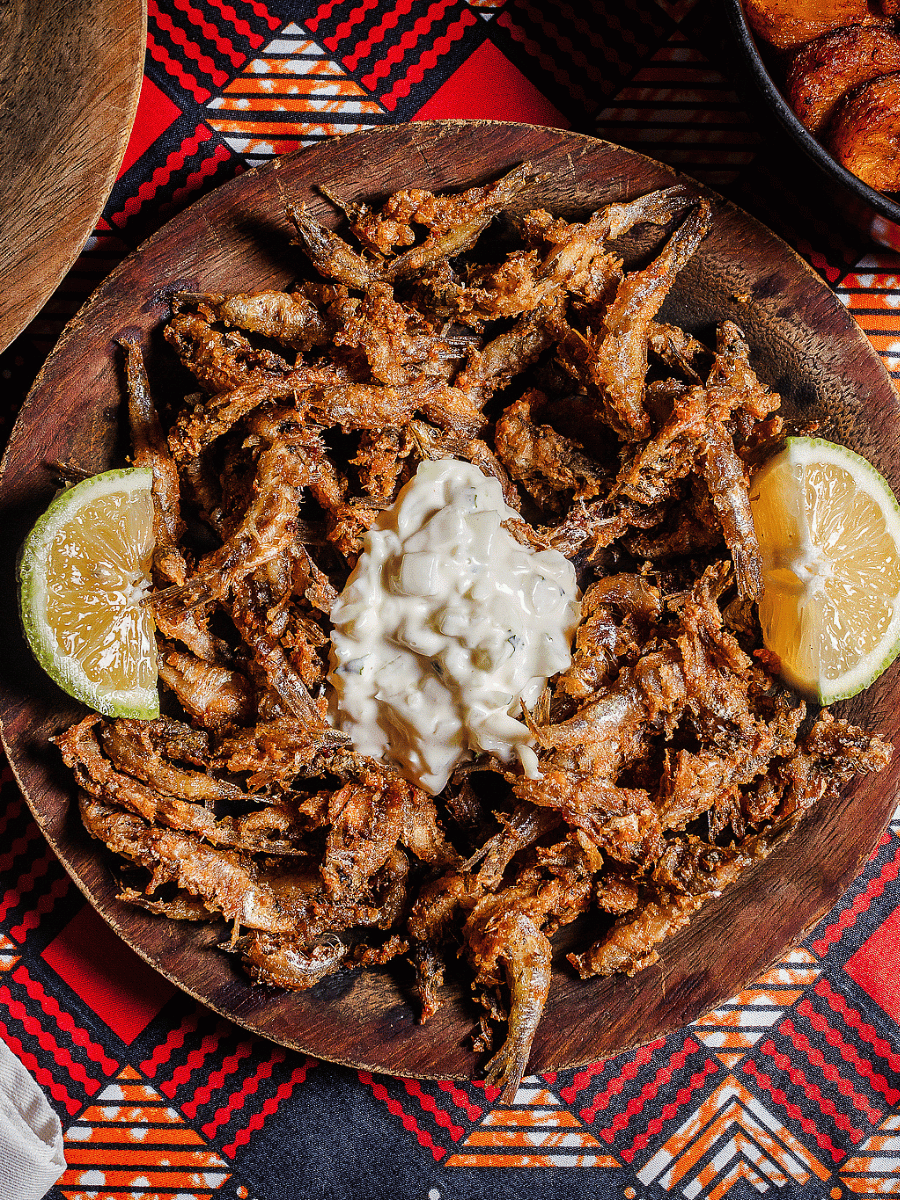
Small silver sardines from Lake Kivu, seasoned with salt and pepper, dredged in flour and deep-fried until crackly. Rwanda's beer snack, eaten by the handful.

Tiny yellow Colombian potatoes fried whole in their thin skins until golden and shrivelled, tossed with butter and salt. The Bogotá bar snack no one can stop eating.
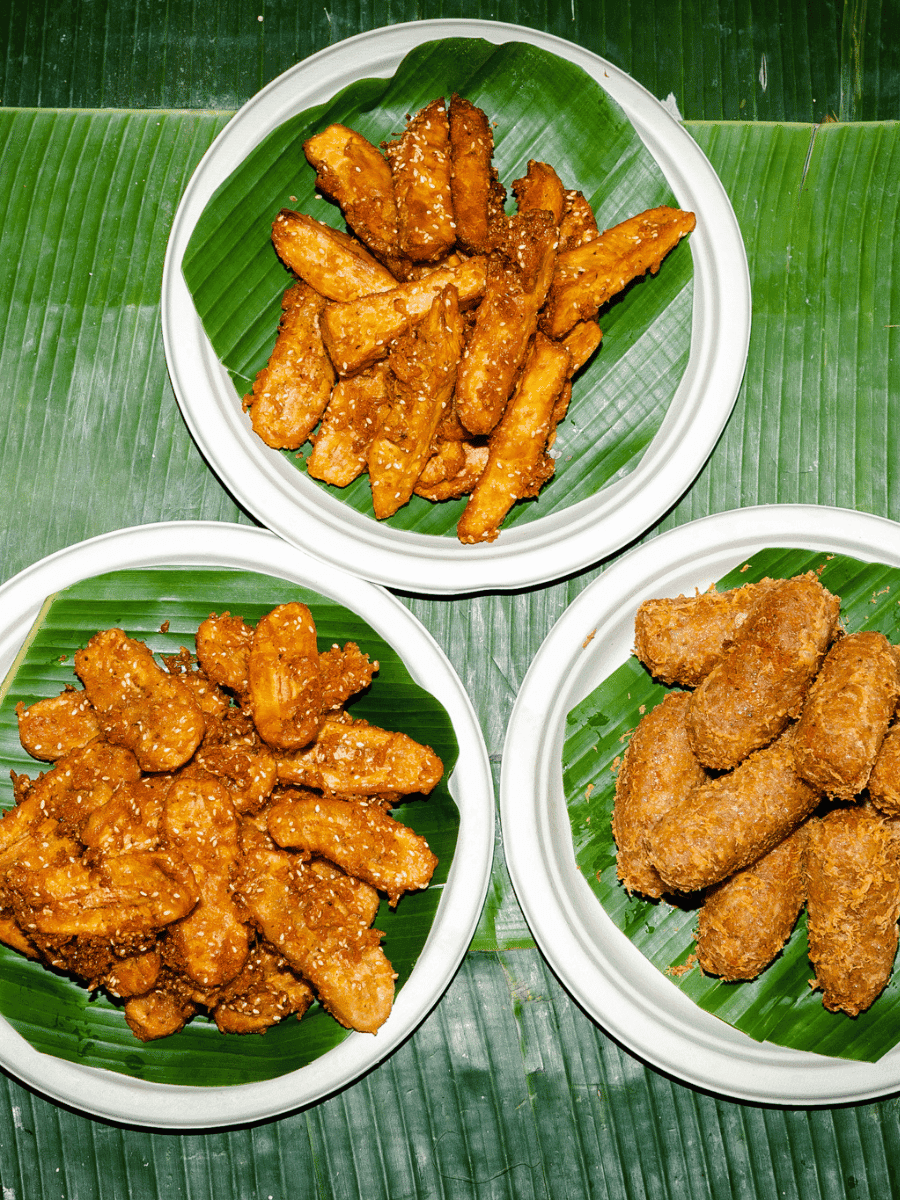
Sliced ripe bananas dipped in a coconut-flour-sesame batter and deep-fried until deep golden. Bangkok's evening tea-time snack, served hot from paper cones.