
Destination
Luang Prabang
The story
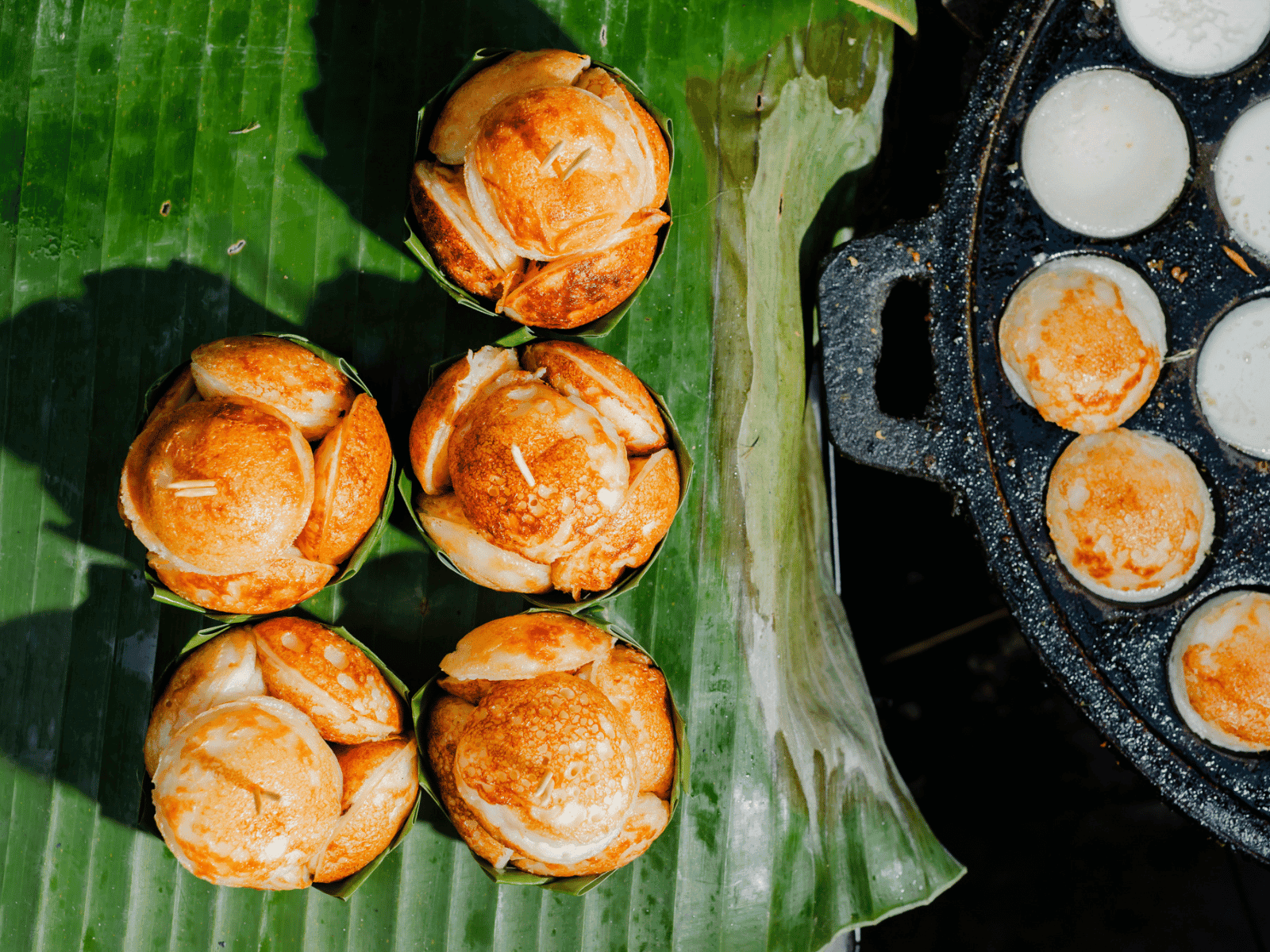
Khao nom kok are Laos's small dome-shaped coconut-rice dumplings, sold at night-market stalls in Luang Prabang and Vientiane from small carts equipped with the specialised khao nom kok pan (a heavy cast iron griddle with rows of small dimples like a mini takoyaki pan). A slightly sweet coconut rice-flour batter is poured into the dimples, cooked briefly until the outside sets, then a spoon of a saltier coconut-cream mixture is added on top of each dome, and the whole thing cooks until crispy on the bottom and just set on top. Served hot in small paper cones, two dumplings pressed together into a single ball, with a bamboo skewer to eat them.
Method
In a bowl, whisk together the rice flour, glutinous rice flour, mashed cooked rice, sugar and salt. Slowly whisk in the coconut milk and water until smooth. Rest 15 minutes.
In a small saucepan, whisk together the coconut cream, rice flour and salt. Warm over low heat, stirring, for 3 to 4 minutes until slightly thickened. Off the heat, stir in the spring onion.
Place the khao nom kok pan (or takoyaki pan) over medium heat. Brush each dimple generously with oil.
When the pan is hot, fill each dimple about 2/3 full with the rice batter. If using optional additions (corn, pumpkin), press a small piece into the top of each dimple now.
Cover with a lid (or a large upturned bowl). Cook 3 to 4 minutes until the bottom of each dumpling is deep gold and the top has just set.
Spoon a small amount of the coconut cream mixture on top of each dumpling. Cover again and cook another 2 minutes.
Using a small spoon or a wooden skewer, gently lift each dumpling out and press two together (bottom-to-bottom) to form a small ball. Repeat until all dumplings are paired.
Serve immediately in small paper cones with bamboo skewers or toothpicks for eating.
Tips
- The pan is essential. A khao nom kok pan (or Japanese takoyaki pan) with half-sphere dimples is the only way to get the classic dome shape. Any wider or flatter pan gives you a very different dish.
- Brush the dimples generously with oil. The batter sticks easily; a good coat of oil in every dimple before pouring gives you clean release.
- Rest the batter. 15 minutes lets the flour hydrate and gives you a smoother texture.
- Cook covered. A lid over the pan traps steam and helps the tops set, so the finished dumplings are crisp on the bottom and just set on top rather than cratered.
- Serve immediately. Khao nom kok stiffens as they cool. Straight from the pan into paper cones, into hands, into mouths.
More recipes
View all
Small pairs of steamed coconut-and-sticky-rice cakes sandwiched together and wrapped in banana leaf. Luang Prabang's tea-time sweet, softly sweet and softly perfumed.

Sticky rice packed onto a bamboo skewer, brushed with beaten egg and grilled hot until the outside crisps golden. Laos's morning market snack, sold from carts before sunrise.
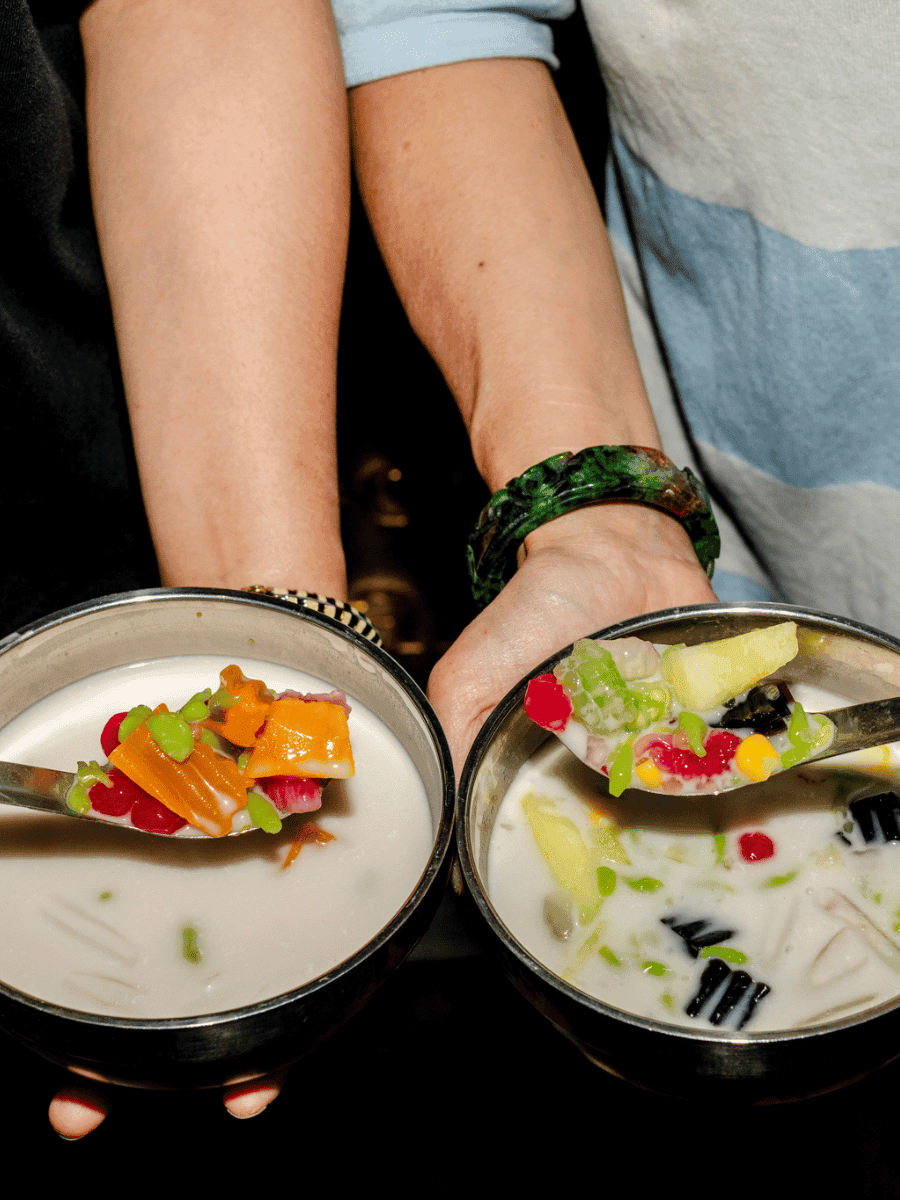
Coconut milk, palm sugar and layered tapioca, jelly, banana or jackfruit in a tall glass over ice. The Lao afternoon cooling drink.
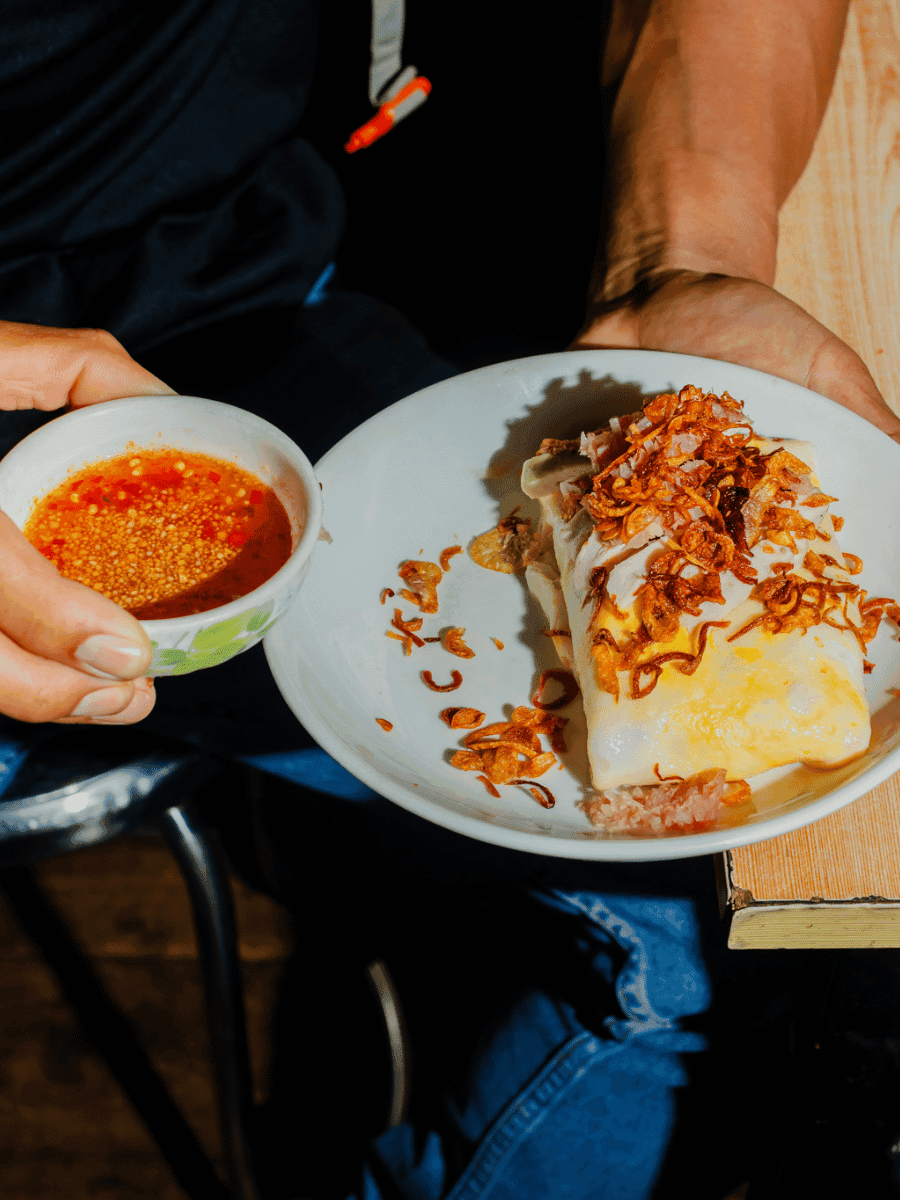
Steam-set rice noodle rolls filled with pork and wood-ear mushroom, served with sliced grilled sausage and fresh herbs. Luang Prabang morning market's Vietnamese-Lao crossover.

Thin strips of beef marinated in fish sauce, sugar and pepper, air-dried in the sun and finished with a quick deep-fry. Laos's sweet-savoury jerky, always with sticky rice.

Chewy hand-cut tapioca-and-rice noodles simmered in a clear ginger-chicken broth, topped with poached chicken, fried garlic and fresh herbs. Laos's daily breakfast.