
Destination
Luang Prabang
The story
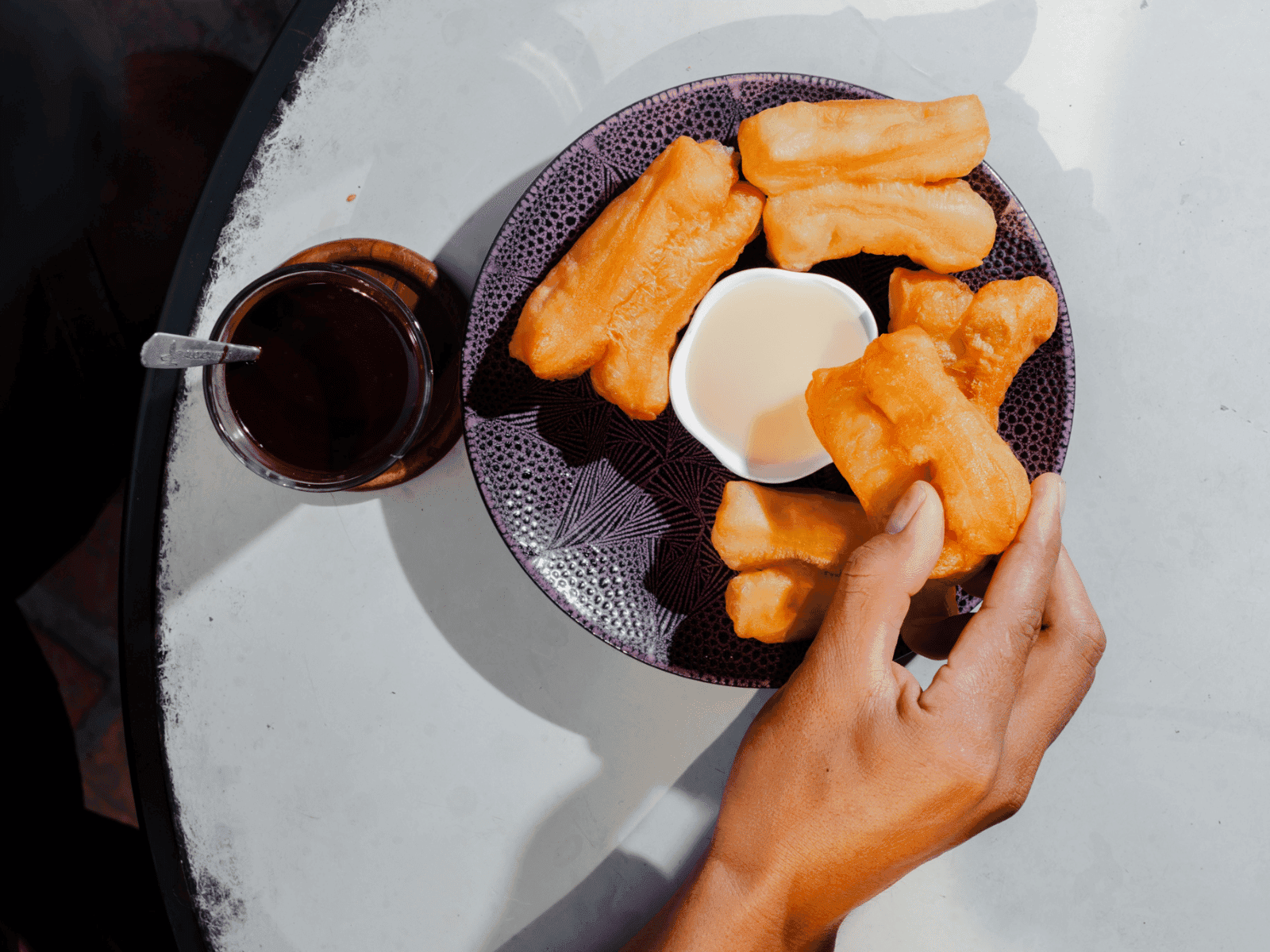
Khanom khuu ("paired sweets") is one of Luang Prabang's traditional afternoon-tea sweets: two small discs of steamed glutinous rice flour and coconut cream, sandwiched together with a spoon of coconut jam or mung-bean paste, wrapped in a small square of banana leaf and served warm. The name refers to the pairing (khuu means "pair" in Lao); the two halves reflect a specifically Luang Prabang symbolism of duality and completion, and khanom khuu is often served at weddings and family celebrations as well as at everyday afternoon markets.
Method
Combine the grated coconut, palm sugar, coconut milk and salt in a small saucepan. Cook over low heat, stirring, for 5 to 6 minutes until thick and slightly sticky. Cool.
In a saucepan, warm the coconut milk with the palm sugar and salt over low heat until the sugar dissolves. Cool slightly. In a large bowl, whisk together the glutinous rice flour and rice flour. Slowly whisk in the warm coconut milk mixture and pandan extract if using, until smooth and lump-free.
Bring a large steamer to a rolling boil. Lightly oil the small moulds.
Divide the batter between 24 moulds (filling each about 3/4 full). Steam in batches for 15 to 20 minutes, until the cakes are set (a skewer inserted comes out clean) and the tops are glossy.
Cool briefly in the moulds for 5 minutes, then unmould. You should have 24 small cake discs.
Spoon a small amount of coconut filling onto the flat side of one cake. Press a second cake on top, flat sides together, to sandwich. Repeat with the rest until you have 12 pairs.
Place each pair in the centre of a softened banana-leaf square. Fold the sides of the leaf over the cake, then the ends. Tie with a small strip of leaf or a piece of string if it doesn't stay closed.
Just before serving, warm the wrapped khanom khuu in the steamer for 3 to 5 minutes to soften the cakes and release the banana-leaf aroma.
Serve warm alongside a small pot of Lao coffee or green tea. Each khanom khuu is unwrapped by the eater at the table.
Tips
- Glutinous rice flour, not regular rice flour. Both are in the recipe, but glutinous is the majority for the chewy texture. Regular rice flour or plain wheat flour won't set correctly.
- Palm sugar, not white sugar. The molasses depth is essential; white sugar gives a flat, one-note sweetness. Panela or dark muscovado are decent substitutes.
- Small moulds. Traditional khanom khuu are small (about 4cm across); large versions are too filling and don't have the classic paired shape. Silicone mini muffin tins work perfectly.
- Banana leaves are traditional but not essential. If you can't find them, wrap in small pieces of parchment; the aroma is different but the eating experience holds.
- Best warm. Steamed rice-flour cakes stiffen as they cool. Serve warm from the steamer; reheat briefly if serving later.
More recipes
View all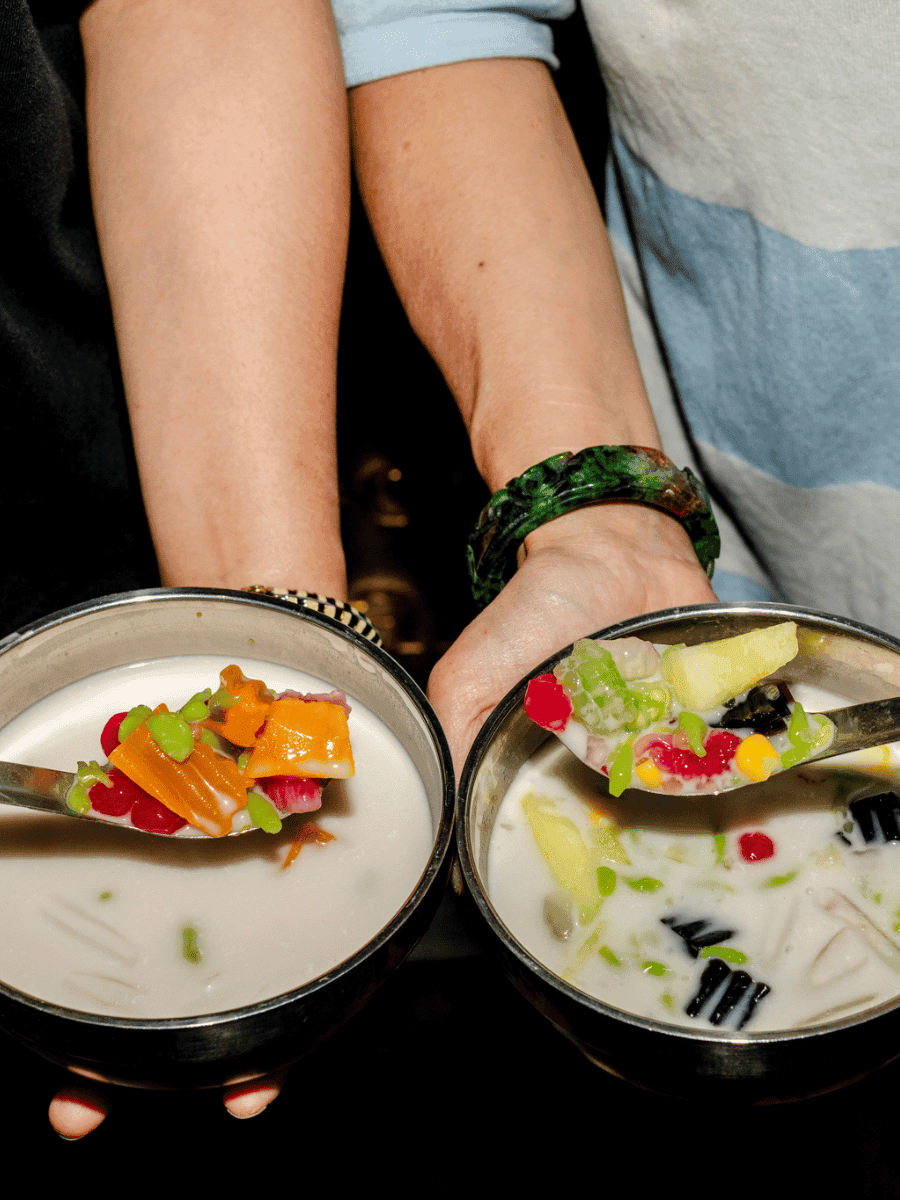
Coconut milk, palm sugar and layered tapioca, jelly, banana or jackfruit in a tall glass over ice. The Lao afternoon cooling drink.

Small coconut rice-flour dumplings cooked in a special dimpled pan until crisp on the outside and molten with coconut cream inside. Luang Prabang's night-market sweet.
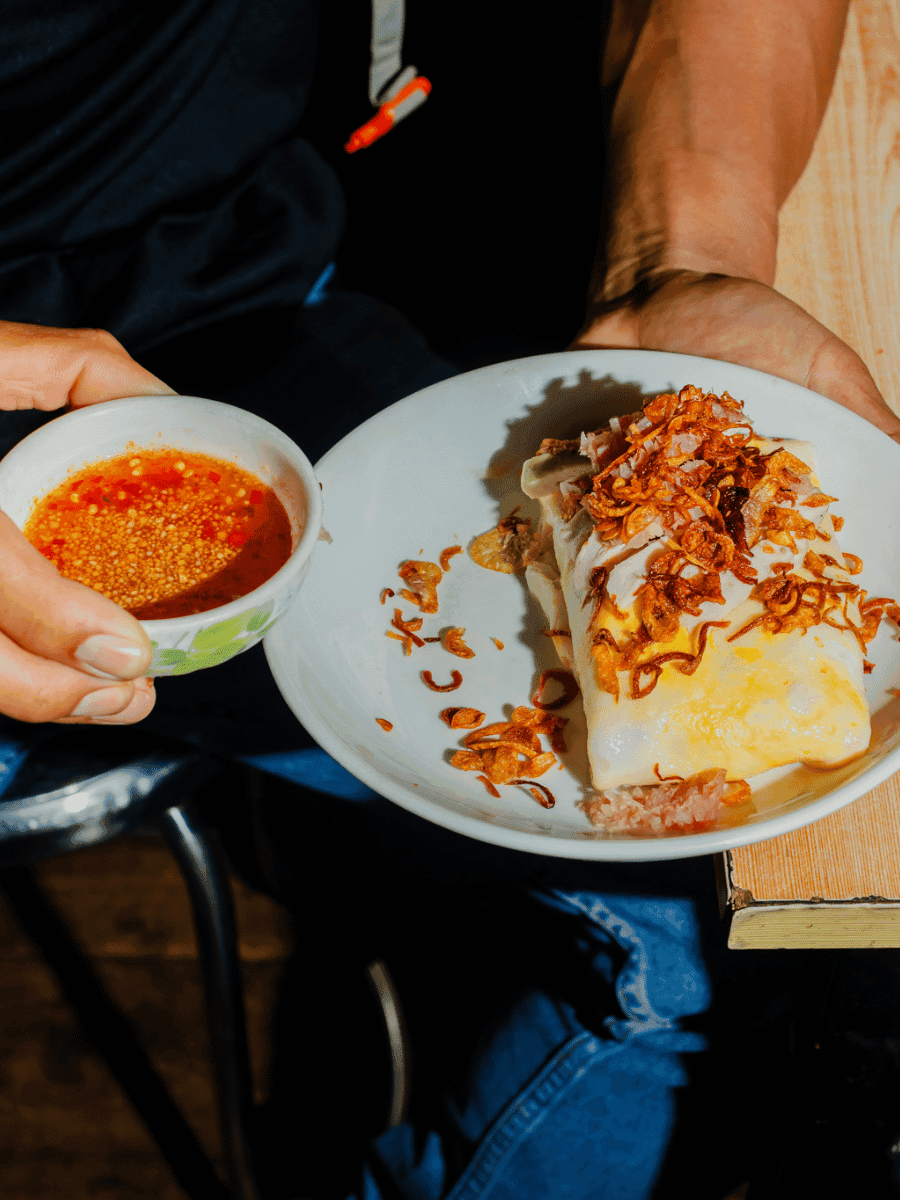
Steam-set rice noodle rolls filled with pork and wood-ear mushroom, served with sliced grilled sausage and fresh herbs. Luang Prabang morning market's Vietnamese-Lao crossover.

Thin strips of beef marinated in fish sauce, sugar and pepper, air-dried in the sun and finished with a quick deep-fry. Laos's sweet-savoury jerky, always with sticky rice.

Roasted chillies, garlic and shallots pounded to a thick paste with fried pork skin, fish sauce and a little palm sugar. Laos's national condiment, served with sticky rice and raw vegetables.

Sticky rice packed onto a bamboo skewer, brushed with beaten egg and grilled hot until the outside crisps golden. Laos's morning market snack, sold from carts before sunrise.