

Destination
Koh Samui
The story
Keang kiaw wan ("sweet green curry") is Thailand's most-famous curry and a defining dish of Central Thai cooking: chicken or beef simmered in a coconut-milk-based sauce built on a green curry paste of fresh green chilies, lemongrass, galangal, kaffir lime zest, coriander root, cumin, shrimp paste and garlic, thickened with more coconut cream, punctuated by Thai eggplant, pea eggplant and a fistful of Thai sweet basil (horapa). Served with steamed jasmine rice or khanom jeen (Thai fresh rice noodles). Sold at every Thai restaurant abroad and every Bangkok food counter, keang kiaw wan is arguably the most-cooked Thai dish in the world.
Method
If making from scratch: pound all paste ingredients in a stone mortar for 20 to 30 minutes into a very smooth green paste, or blend in a food processor with a splash of water. If using store-bought: measure 4 to 5 tbsp.
In a wok or heavy pan over medium heat, add half the coconut cream (about 200ml). Cook 5 to 8 minutes, stirring, until the cream reduces, thickens and "splits" — you'll see oil separating from the solid whites. This is the classical Thai curry-cracking technique.
Add the curry paste to the split cream. Fry 4 to 6 minutes, stirring constantly, until the paste turns deep green-brown and smells intensely fragrant. The oil should be visibly green from the paste.
Add chicken pieces. Toss to coat in the paste. Cook 3 minutes to seal.
Pour in the remaining 200ml coconut cream and 400ml coconut milk. Stir. Bring to a simmer.
Add Thai eggplants (and pea eggplants and bamboo shoots if using). Simmer gently 15 to 20 minutes until chicken is cooked through and eggplants are soft.
Add fish sauce, palm sugar and half the kaffir lime leaves. Stir to dissolve sugar. Taste — should be salty, sweet, mildly sour, deeply coconut. Adjust with more fish sauce or palm sugar.
Off the heat, add red spur chilies, remaining kaffir lime leaves and Thai basil. Stir to wilt basil. Serve immediately with jasmine rice, lime wedges, extra basil and sliced chili. The curry deepens as it sits — even better on day two.
Tips
- Split the coconut cream. This is the Thai curry-cracking technique that non-Thai cooks skip. Frying the cream until oil separates gives you a flavour base impossible without it.
- Thai basil, not sweet basil. Horapa (Thai sweet basil) has a specific anise-clove flavour. Italian sweet basil is a poor substitute; use holy basil (bai krapao — the pad krapao herb) as a distant second.
- Store-bought paste is fine. Mae Ploy is the classical Thai brand. Making paste from scratch is a project; store-bought lets you cook the curry in 30 minutes.
- Kaffir lime leaves are essential. The specific citrus-pine perfume is Thai green curry's marker. Tear rather than slice.
More recipes
View all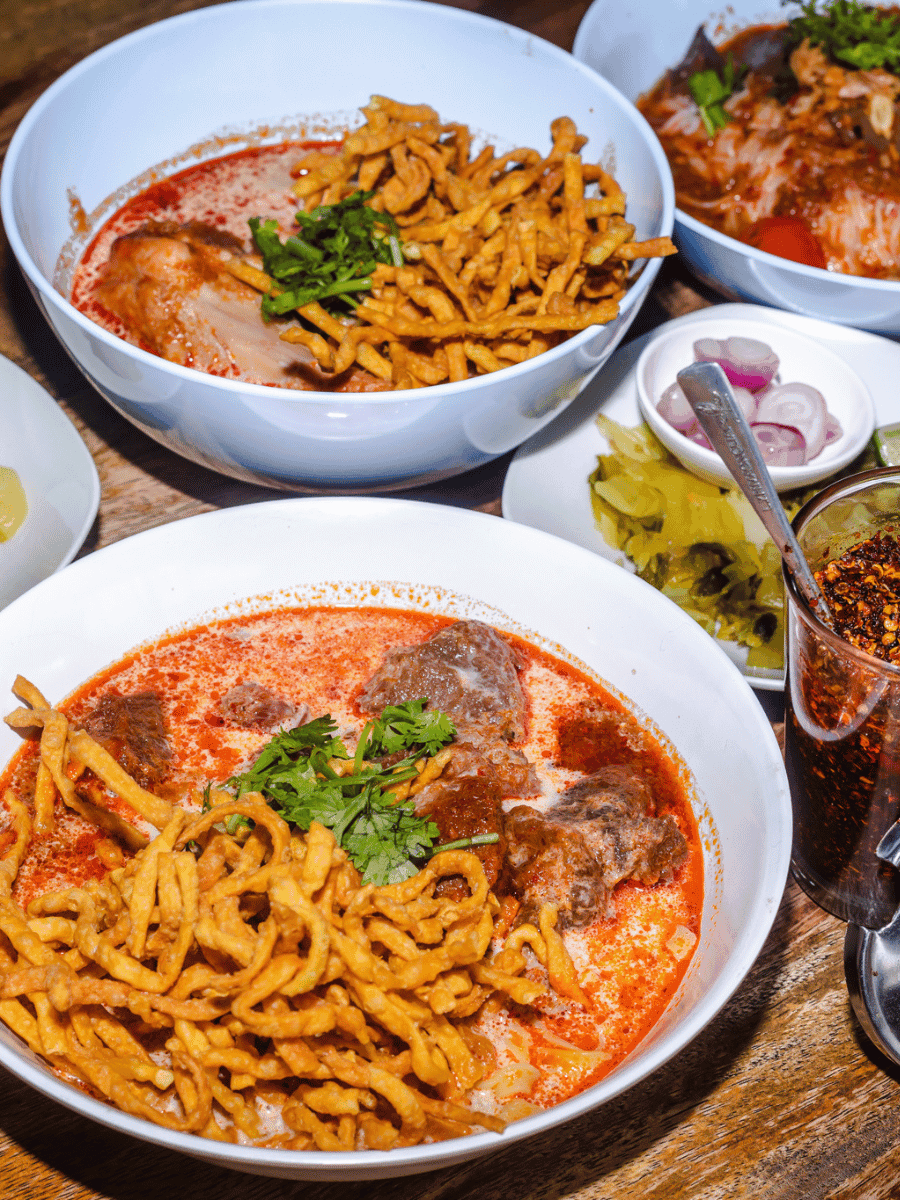
Egg noodles in a rich coconut-curry broth with braised chicken, topped with crispy fried noodles, pickled mustard greens, shallots and lime. Northern Thailand's iconic bowl.
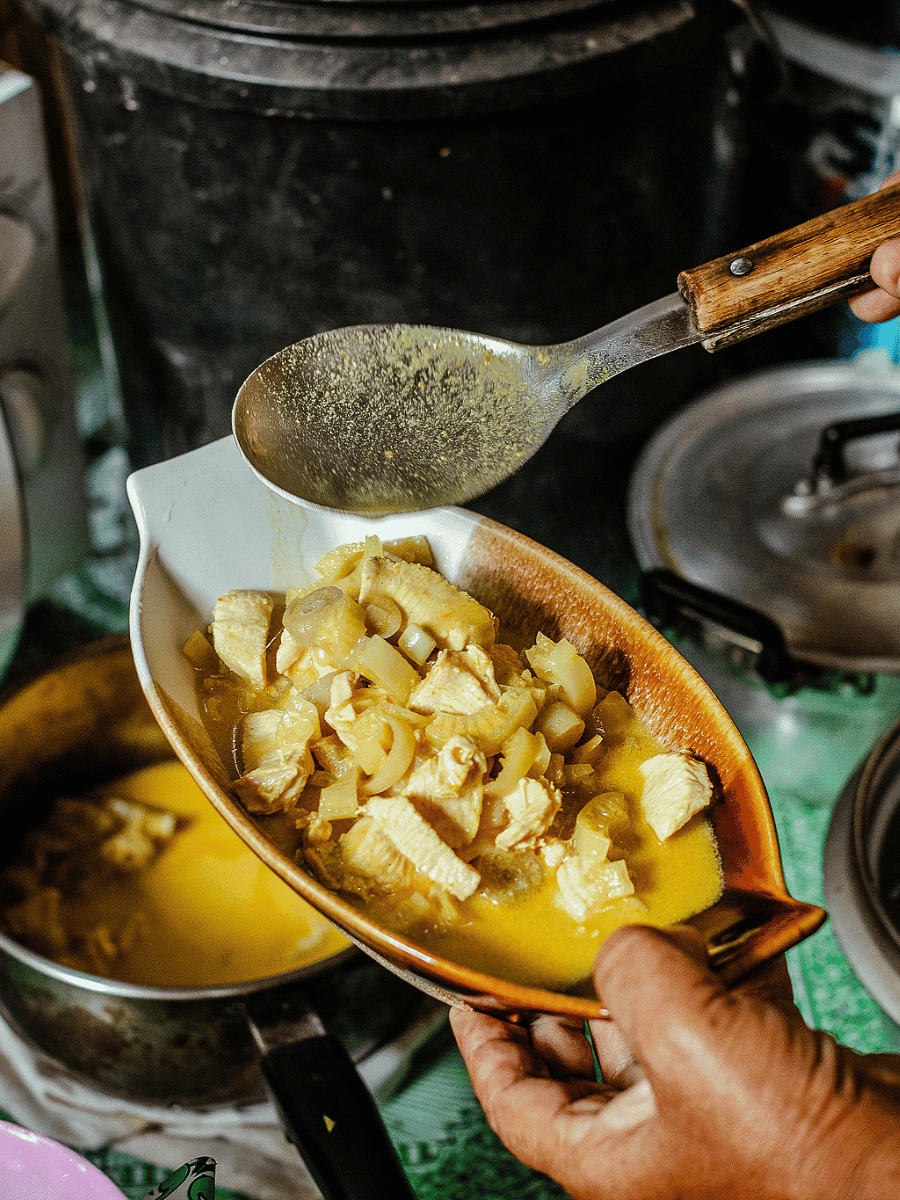
A mild yellow curry with chicken and potato in a turmeric-coloured coconut broth, thickened with peanuts and finished with fried shallots. Bangkok's Muslim-influenced Sunday curry.

A fierce, hot, sour, turmeric-yellow curry with fish, vegetables and tamarind. Southern Thailand's most-defining curry, aggressively spicy.

Fresh fish and prawn folded into a red-curry-and-coconut-cream custard, steamed in banana-leaf cups until set. Bangkok's most-photographed steamed appetiser.
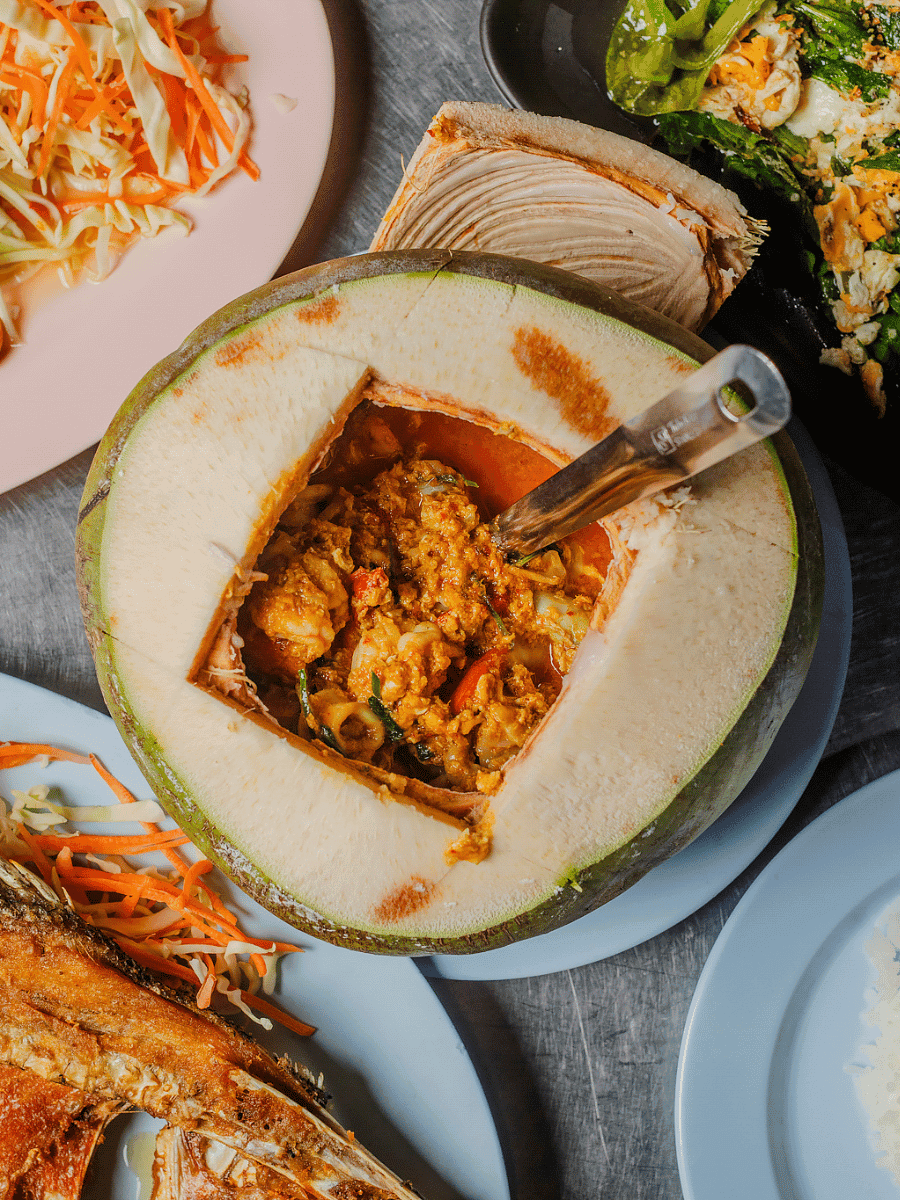
The classical hor mok fish curry mousse baked inside a whole young coconut. Bangkok's fine-dining Thai showstopper.
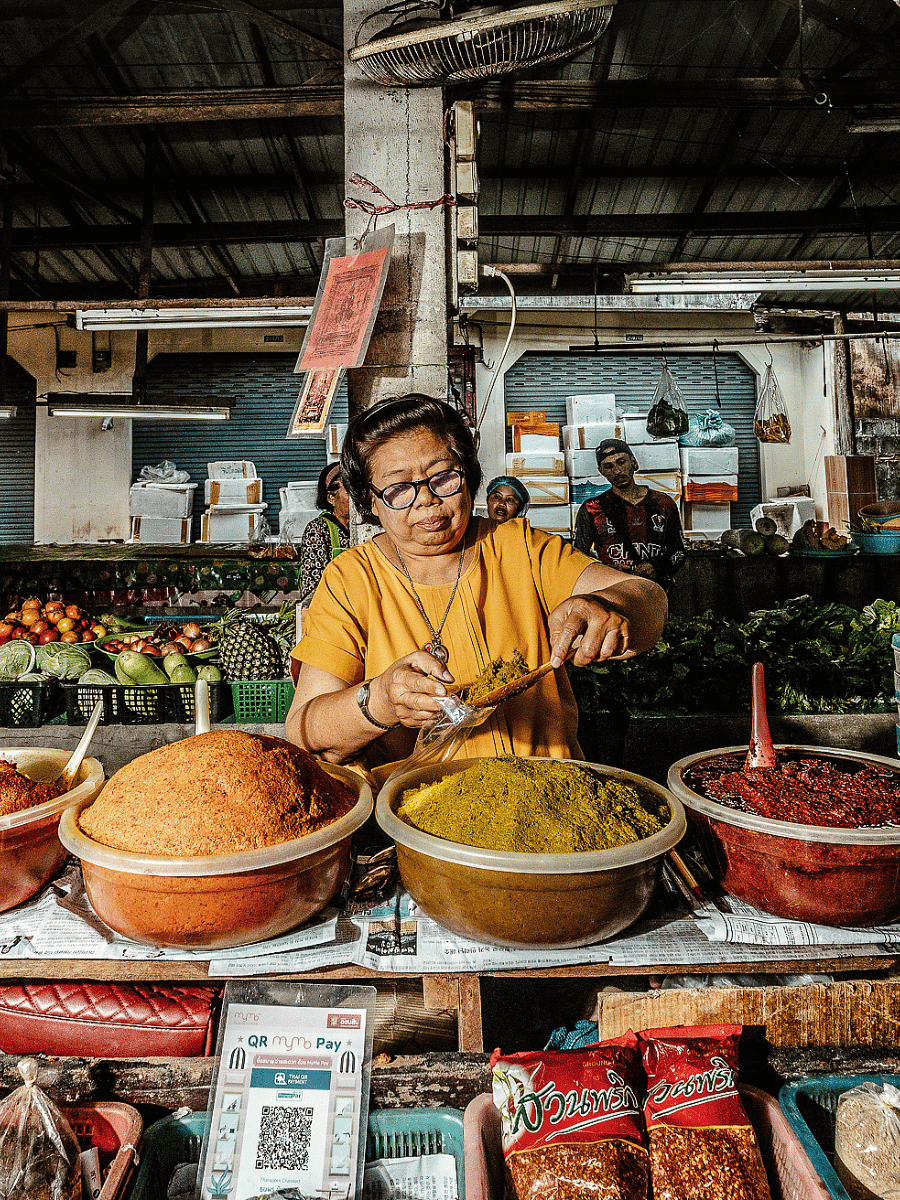
The essential Thai curry paste — dried chilies, shallots, garlic, galangal, lemongrass, kaffir lime, coriander root and shrimp paste, pounded in a mortar. The base of every Thai curry.