

Destination
Koh Samui
The story
Nam phrik kaeng ("curry chili paste") is the essential building block of Thai curry cooking — the aromatic paste that flavours red curry, green curry, yellow curry, panang curry, massaman curry and dozens of regional variations. The classical Thai curry paste is a laboriously pounded blend of dried red chilies (soaked and drained), shallots, garlic, galangal, lemongrass, kaffir lime rind, coriander root, cumin, coriander seed, white peppercorn and Thai shrimp paste — the specific proportions varying by curry style but the ingredient list being remarkably consistent. Every Thai kitchen has a mortar (khrok) and a wooden pestle; every classical Thai cook is judged on the smoothness of her paste (a food processor produces a similar but inferior version — the pounding action is essential).
Method
Dry-toast cumin, coriander seeds and white peppercorns in a small pan 60 seconds until fragrant. Cool briefly.
In a Thai stone mortar (or a spice grinder), pound the toasted spices to a fine powder. Reserve.
Add sliced galangal, lemongrass, kaffir lime zest and salt to the mortar. Pound with a wooden pestle for 8 to 10 minutes until reduced to a very smooth paste.
Add garlic, shallots and coriander root. Pound another 5 to 8 minutes until smooth.
Drain soaked chilies. Add to mortar. Pound 5 to 8 minutes until fully incorporated into a smooth red-orange paste.
Add shrimp paste and the ground toasted spices. Pound another 3 minutes to integrate.
Taste — should be salty, spicy, aromatic. Adjust with more salt if flat.
Transfer to a sterilised glass jar. Top with 1 tbsp neutral oil to seal the surface. Refrigerate up to 2 weeks or freeze for 3 months. Use 3 to 4 tbsp per curry serving 4.
Tips
- Order of pounding matters. Hardest first, softest last. This is the classical Thai technique.
- Stone mortar, not marble. Thai cooking mortars are heavy stone (mai daeng) — a specific tool. Ceramic mortars are too light.
- Pound 20 minutes minimum. Under-pounded paste is chunky and gives a rough finished curry.
- Freeze in portion sizes. 4 tbsp portions frozen in ice-cube trays are perfect for a curry serving 4.
More recipes
View all
A fierce, hot, sour, turmeric-yellow curry with fish, vegetables and tamarind. Southern Thailand's most-defining curry, aggressively spicy.

A whole fish deep-fried until skin blisters into shatter-crispy sheets, drizzled with a fierce fish-sauce-lime-chili dressing. Bangkok's most-primal fish plate.

Fresh fish and prawn folded into a red-curry-and-coconut-cream custard, steamed in banana-leaf cups until set. Bangkok's most-photographed steamed appetiser.
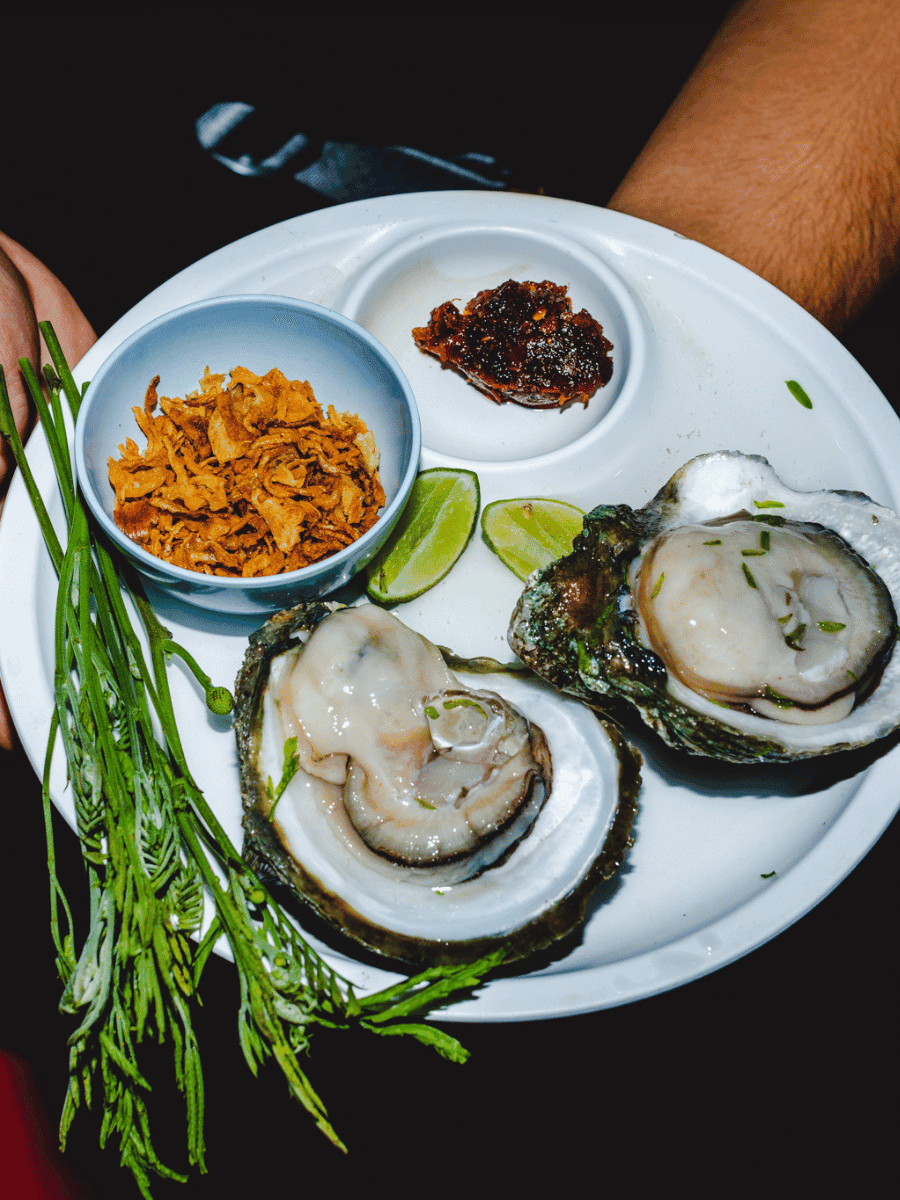
Small fresh oysters served raw with a fierce chili-lime-garlic dipping sauce, fried shallots and fresh Thai herbs. Thailand's coastal aperitivo.
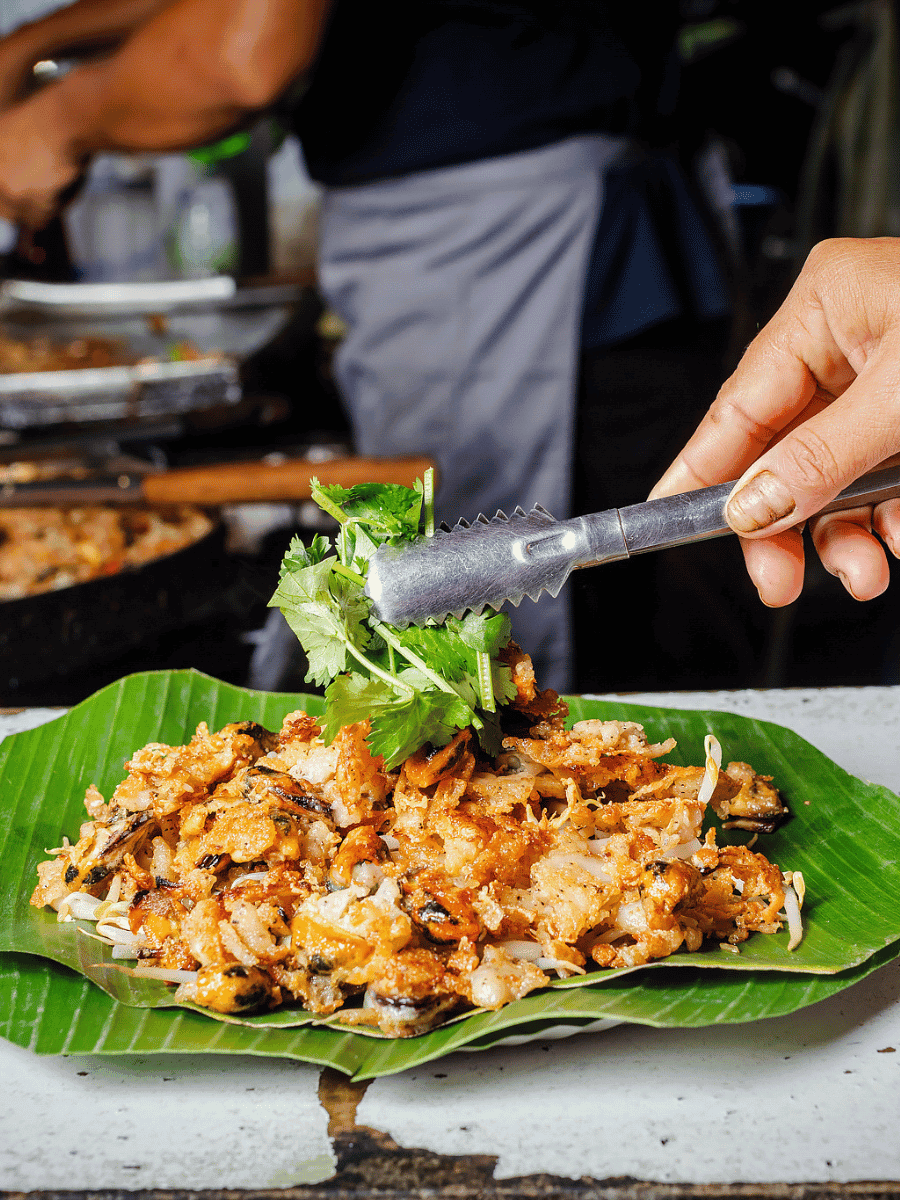
A crispy rice-flour pancake studded with fresh oysters, topped with egg, bean sprouts and coriander, drizzled with sriracha. Bangkok Chinatown's late-night classic.
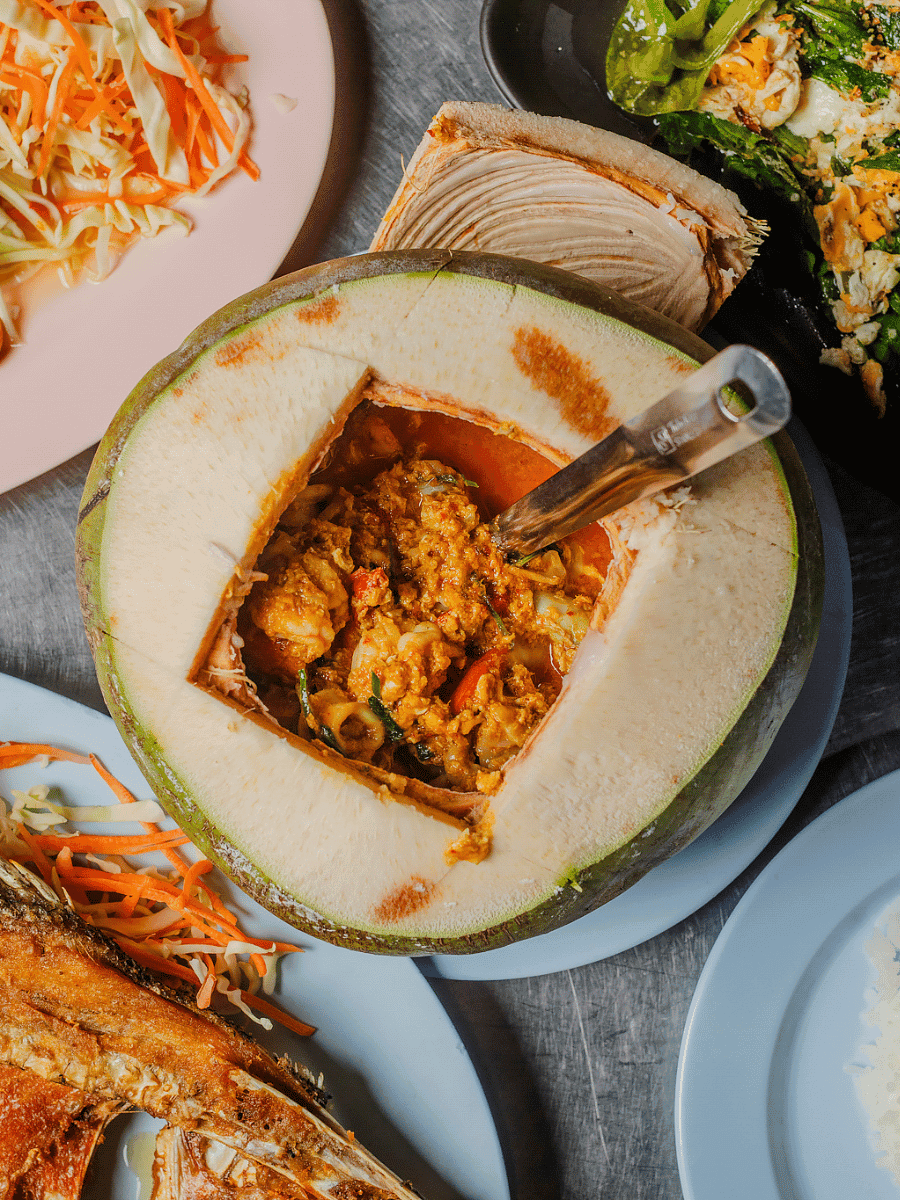
The classical hor mok fish curry mousse baked inside a whole young coconut. Bangkok's fine-dining Thai showstopper.