

Destination
Ipoh
The story
Mee sotong ("squid noodles") is one of Penang's most distinctive street dishes: yellow wheat noodles tossed briefly in a wok with tender braised squid (sotong), bean sprouts, fried tofu and a specifically Penang sauce built from dark sweet soy, chilli paste, tamarind and hae ko (Penang prawn paste). Served on a plate with a lime wedge and often a dollop of crushed peanuts. Sold from a small handful of stalls in Penang's Padang Kota Lama (the old cricket ground) area, especially the famous Hameediyah restaurant just down the road.
Method
Toss the scored squid with the dark sweet soy, sugar and salt. Set aside for 10 minutes.
Warm the oil in a wide heavy pan over medium heat. Add the garlic and cook 30 seconds until fragrant. Add the chilli paste and cook 60 seconds until darkened and fragrant.
Add the dark sweet soy, light soy, tamarind paste, hae ko, palm sugar and water. Whisk together and bring to a simmer. Cook 5 minutes until slightly thickened.
Add the marinated squid to the sauce. Reduce heat to low and braise gently for 15 to 20 minutes, until the squid is tender and has curled into pieces. Don't boil hard; gentle simmering keeps the squid tender.
While the squid braises, rinse the fresh yellow noodles briefly under warm water and gently separate the strands.
Add the noodles, bean sprouts, fried tofu and spring onions to the pan with the squid and sauce. Toss vigorously with tongs or two spatulas for 60 to 90 seconds, until the noodles are hot through, evenly coated in sauce, and the bean sprouts have just wilted.
Divide between 4 plates. Add lime wedges, a scatter of crushed peanuts if using, and extra chilli sauce on the side.
Tips
- Score the squid deeply. Diagonal crosshatch cuts on the inside of the squid tubes help them curl into tender pieces and hold the sauce. Uncut squid pieces cook flat and tough.
- Braise gently, don't boil. High-heat cooking makes squid rubbery. Gentle 15 to 20-minute simmering in the sauce is the sweet spot for tender squid.
- Hae ko is the Penang marker. Malaysian-Chinese grocers sell it in small jars labelled prawn paste sauce or hae ko. Without it, the dish is a decent sweet-chilli noodle but not mee sotong.
- Toss the noodles briefly at the end. Adding fresh noodles to the squid sauce and tossing for 60 to 90 seconds gives you noodles that are hot and coated but haven't absorbed all the sauce (which would make them dry).
- Fried tofu (tau pok) is essential. These small squares of deep-fried firm tofu (sold in packets at Chinese grocers) soak up the sauce beautifully. Skip and the dish loses a specific texture element.
More recipes
View all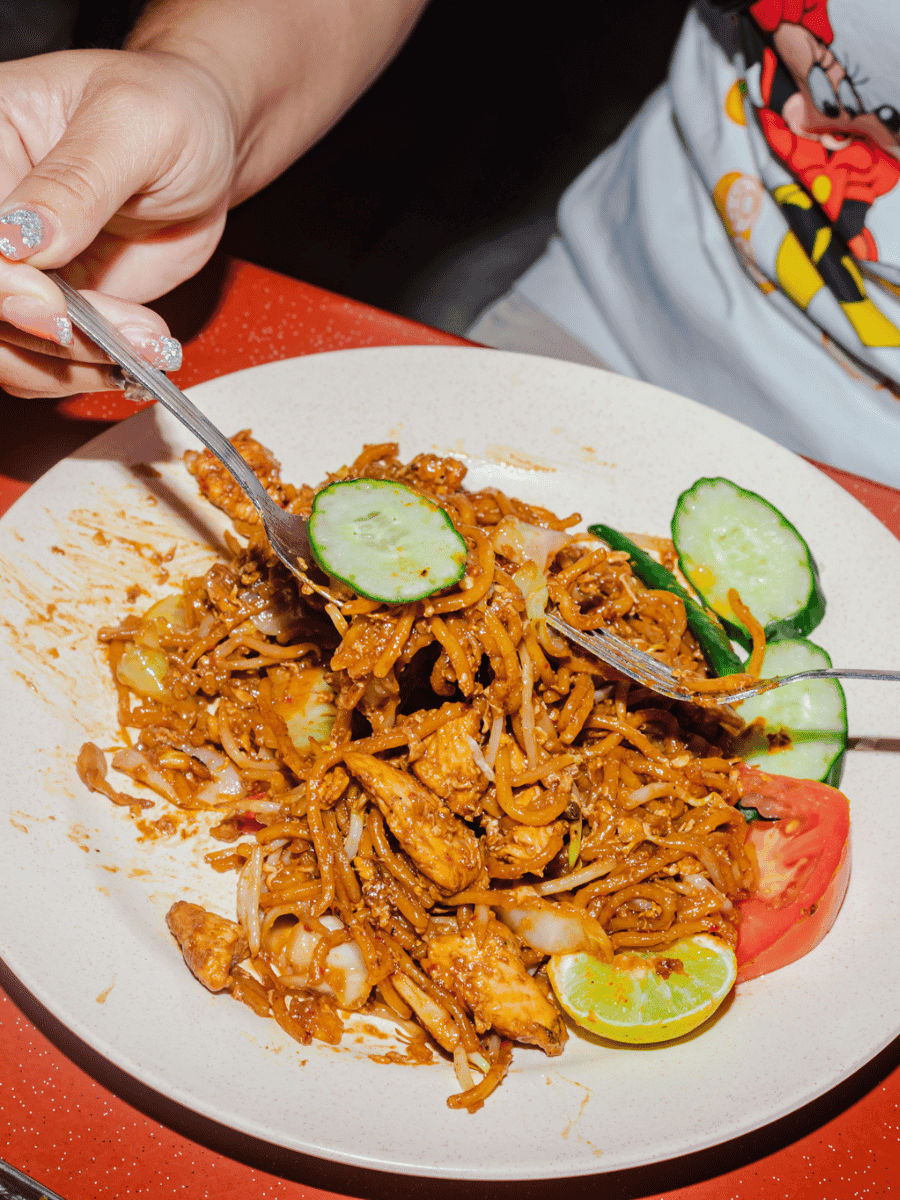
Yellow noodles fired in a screaming-hot wok with sambal, ketchup, egg, potato cubes and tofu puffs. Malaysia's signature mamak-stall plate, ready in six minutes.
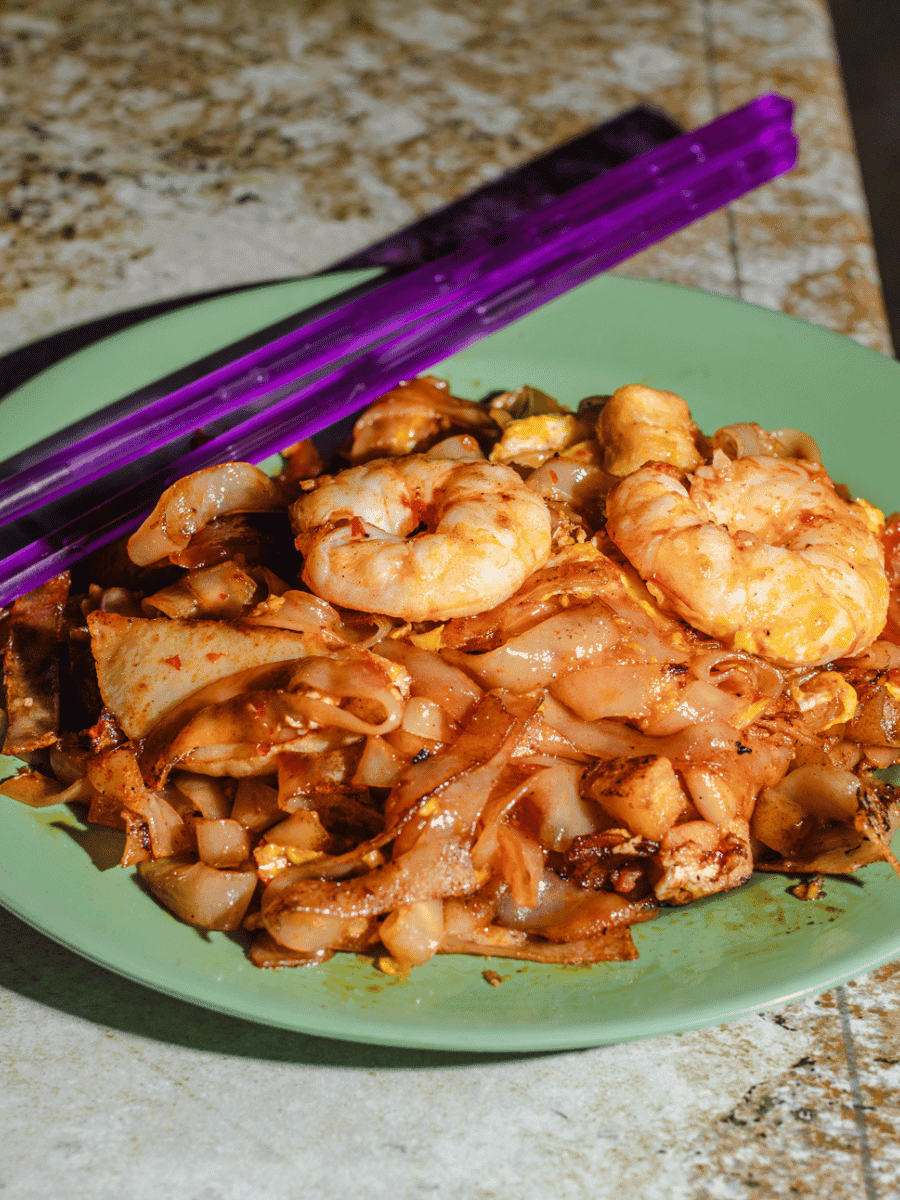
Flat rice noodles stir-fried hard in a wok with prawns, cockles, Chinese sausage, chives, bean sprouts and dark sweet soy. Penang's most famous hawker dish.

Silky rice noodle rolls in a dark sweet-shrimp sauce with a scatter of toasted sesame seeds. Penang's morning-market breakfast, cousin to Hong Kong's cheung fun.
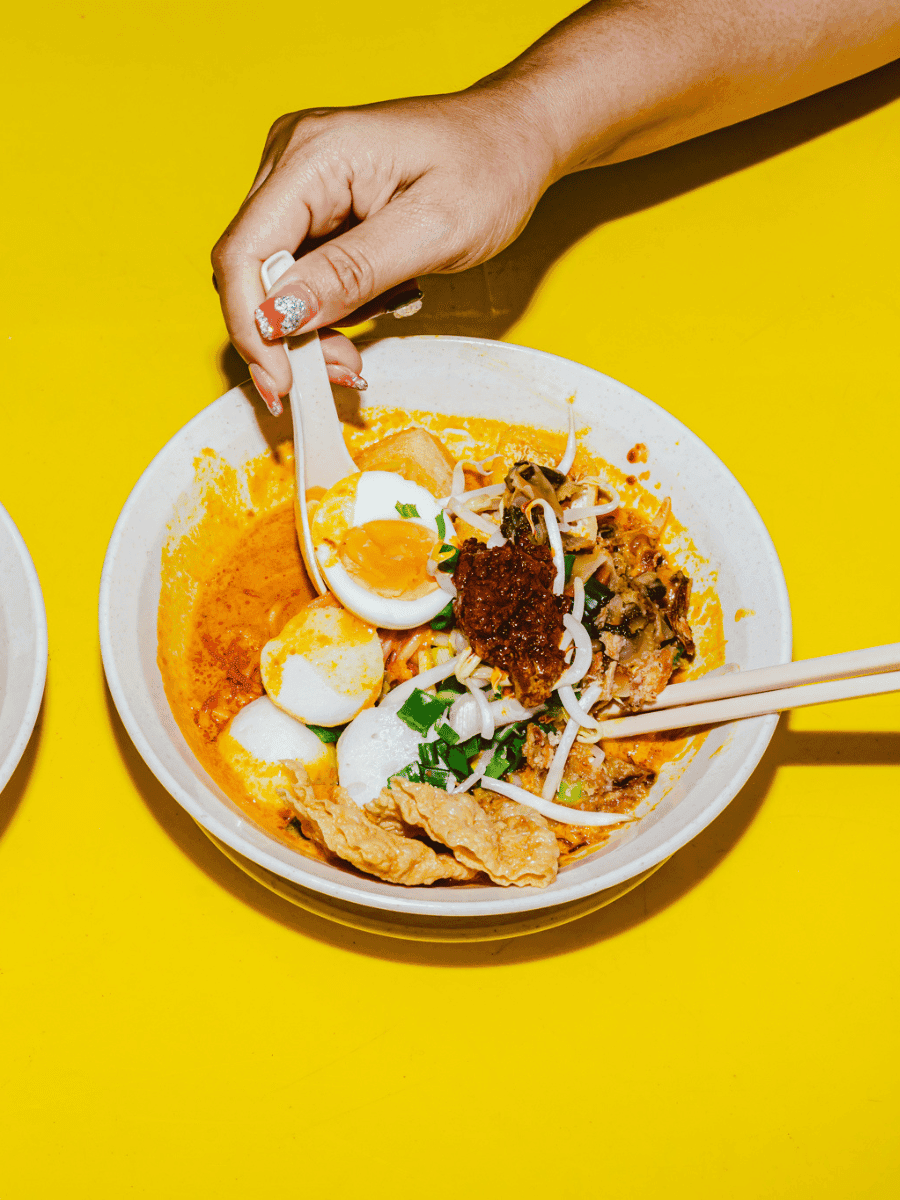
Coconut-based curry noodle soup with prawns, tofu puffs, cockles and a scarlet slick of chilli oil. Malaysia's default lunchtime laksa, richer and softer than its Penang cousin.
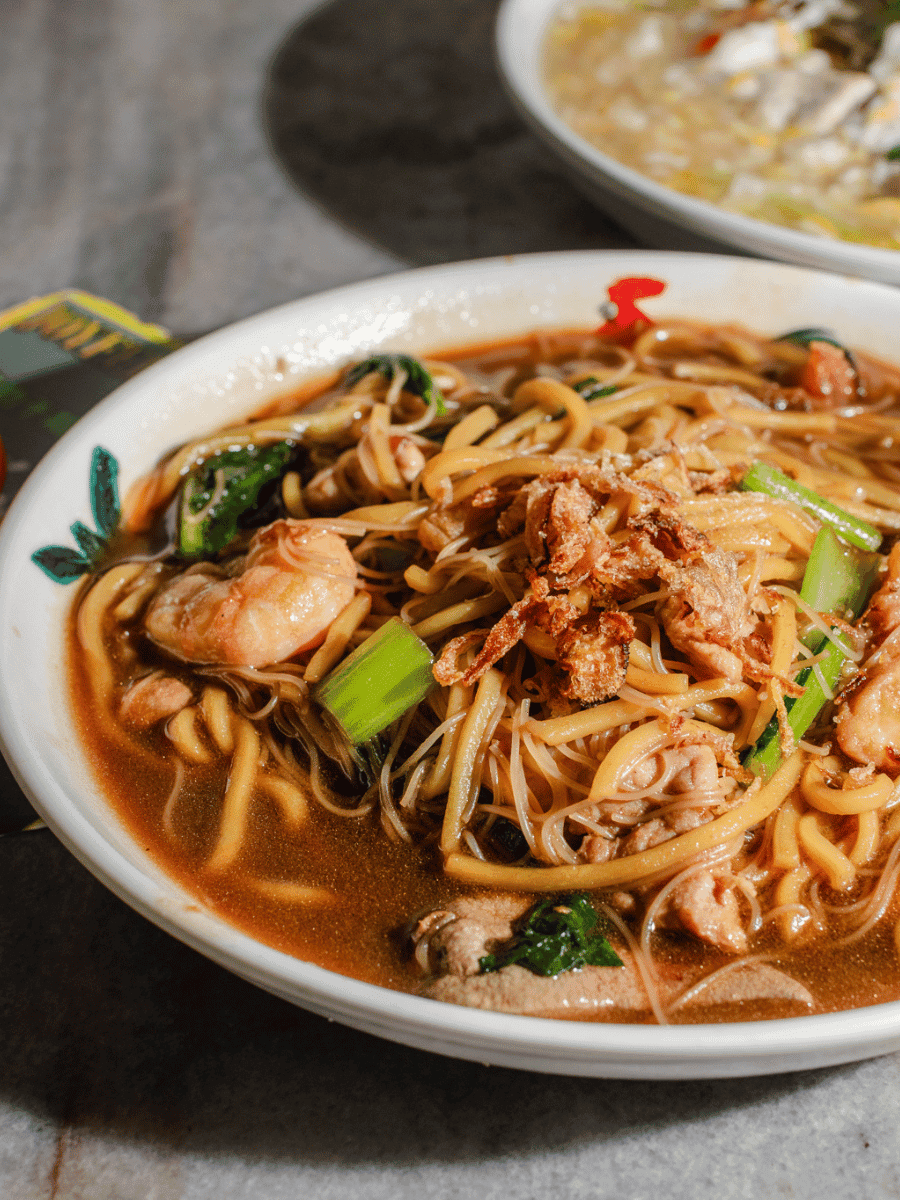
Thick yellow noodles stir-fried hard in a dark sweet soy glaze with prawns, squid, cabbage and slices of pork. KL's late-night black-noodle classic.

A pyramid of banana-leaf-wrapped coconut rice with sambal, fried anchovies, peanuts, hard-boiled egg and cucumber. Malaysia's national breakfast, sold from every roadside stall before dawn.