

Destination
Cuenca
The story
Hornado is Ecuador's Sunday feast, and specifically the Sunday feast of the Sierra. A whole pig (or, for smaller households, a pork leg or shoulder) is marinated overnight in a fierce mix of garlic, cumin, oregano, achiote, chicha (fermented corn beer) and cerveza (regular beer), then roasted for hours in a wood-fired oven until the skin puffs to a lacquered mahogany and the meat pulls off the bone. Sliced or pulled at a market stall, plated with mote (hominy corn), llapingachos (potato patties), tortillas de papa, agrio (tangy chicha salsa) and a scoop of lettuce salad. Sold from Sunday markets across the highlands.
Method
With a very sharp knife, score the pork skin in a diamond pattern about 1cm apart, cutting through the skin but not into the flesh.
In a large bowl, combine the garlic, cumin, oregano, achiote, salt, pepper, beer, orange juice, lemon juice and oil. Whisk. Place the pork in a large roasting tin, rub the marinade all over and into the scored skin. Cover and refrigerate at least 12 hours, ideally 24. Turn once during the marinade.
Take the pork out of the fridge 90 minutes before roasting. Preheat the oven to 150°C (300°F).
Lay the sliced onion, halved garlic and oregano sprigs across the base of a deep roasting tin. Pour in the stock. Place the pork on top of the vegetable bed, skin-side up. Reserve any leftover marinade for basting.
Cover the tin loosely with foil and roast 3 hours, basting every 45 minutes with the marinade and pan juices, until the meat is fork-tender.
Remove the foil. Turn the oven up to 240°C (465°F). Roast another 30 to 40 minutes without basting, until the skin puffs, blisters and turns deep mahogany. Watch closely so it doesn't burn.
Move the pork to a warm platter. Rest at least 20 minutes, loosely tented with foil, before pulling or slicing.
Pull the meat off the bone in generous chunks. Plate over mote, add a llapingacho, a slice of maduro frito, a spoonful of agrio, a leaf of lettuce and a slice of tomato. Top with a piece of the crackled skin. Serve with ají de tomate de árbol on the side.
Tips
- Marinate at least 12 hours, ideally 24. This is what turns pork into hornado. The beer + citrus + spices need real time to penetrate through the meat.
- Score the skin, don't slash it. Shallow diamond cuts through the skin (not into the flesh) allow the fat to render and the skin to puff. Deep slashes let the fat escape and give you leathery skin.
- Cover for the long slow roast, then uncover for the hot blast. Covered roasting keeps the meat tender; the final hot blast is what puffs and blisters the skin into the classic hornado crackling.
- All the accompaniments are essential. Hornado without mote, llapingachos and agrio is just roast pork. The whole tradition is the assembled plate.
- Agrio is the crucial acid. A rough salsa of chopped red onion, tomato, lime and coriander (some versions add chicha or panela vinegar) is what cuts through the richness. Every Sangolquí hornado stall makes their own.
More recipes
View all
Hominy corn simmered slowly with pork, chorizo and a thick pumpkin-seed paste. Cuenca's Easter soup, dense enough to eat with a fork.
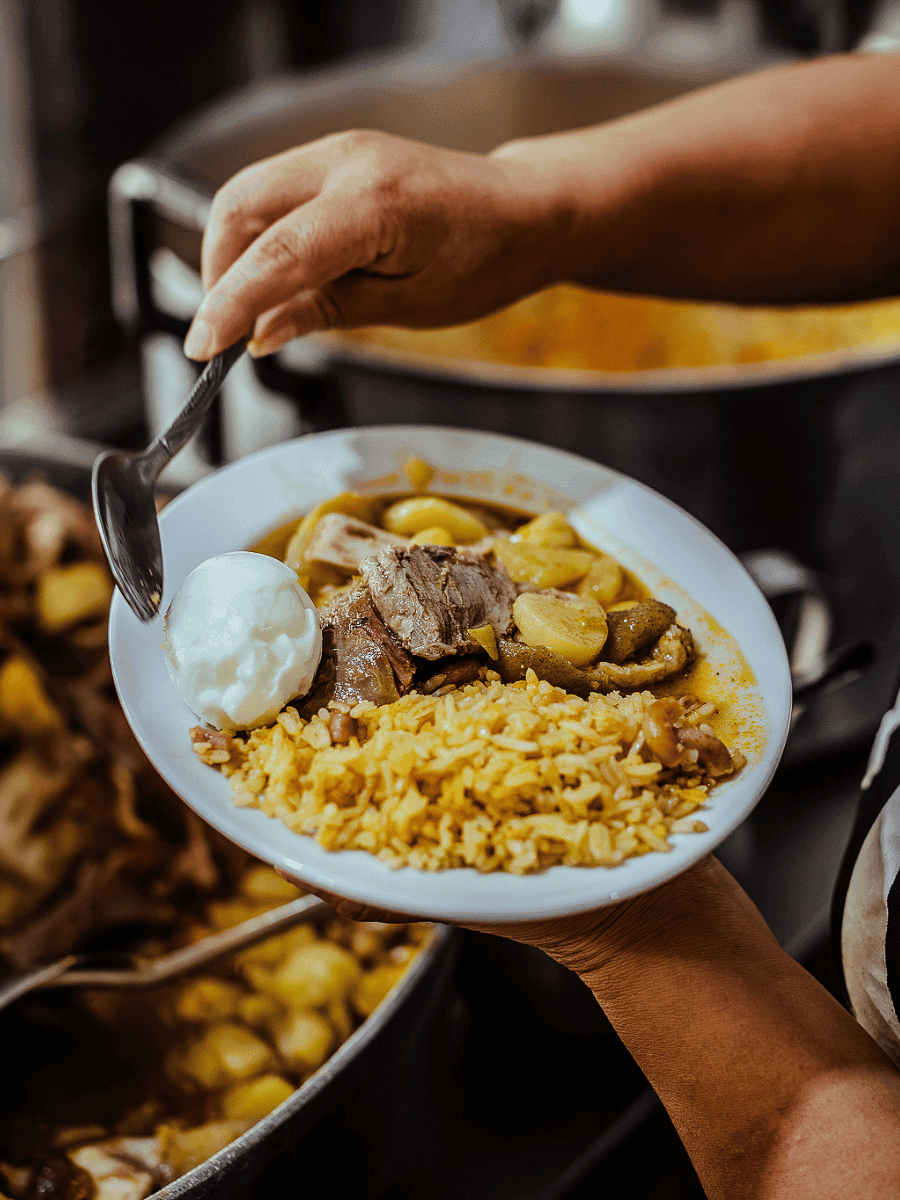
Small potatoes stewed slowly with pork skin, achiote and cumin until the sauce turns golden and gelatinous. Ecuadorian highland comfort food.

Goat slow-braised in naranjilla juice, beer and coriander until the sauce turns dark and glossy. The Ecuadorian sierra's celebration stew.

Pork cubes braised in orange juice, garlic and cumin until the liquid evaporates and the meat fries golden in its own fat. Sierra Ecuador's Sunday plate.

A rich lamb-and-potato soup topped with cubes of fried lamb blood, chopped onion, tomato and avocado. Sierra Ecuador's most ancient dish.

Green plantain smashed hot in a hot pan with cheese, egg and crackling pork. Loja's substantial breakfast; skip the second coffee.