

Destination
Quito
The story
Yahuarlocro is one of the most ancient dishes still cooked in Ecuador. A rich, creamy potato soup base built from lamb offal (traditionally tripe, heart and lung; modern home cooks often use lamb shoulder for a milder version), potatoes broken down into the broth, onion, garlic, achiote, cumin and milk. The signature topping: small cubes of lamb's blood, seasoned and pan-fried, scattered over the top of each bowl along with chopped raw onion, diced tomato, fresh coriander and slices of ripe avocado. The name means "blood soup" in Quechua (yahuar = blood, locro = potato soup).
Method
Warm the oil in a large heavy pot over medium heat. Sweat the white onion, spring onion and half the garlic 6 minutes. Add the achiote, cumin, salt and pepper. Cook 1 minute.
Turn the heat up. Add the lamb chunks and sear 5 to 6 minutes, stirring, until deep brown on all sides.
Pour in the water or lamb stock, add the bay leaf and the remaining garlic. Bring to a simmer, skim any foam, and cook 60 minutes at a lazy bubble until the lamb is fork-tender.
Add the cubed potatoes to the pot. Simmer another 25 to 30 minutes until the potatoes are so soft they start breaking apart into the broth. Some of the potato should dissolve; some should stay in chunks. This gives yahuarlocro its characteristic creamy body.
Pour in the milk. Simmer 5 minutes more (don't boil hard). Taste for salt.
In a separate pan, warm a tablespoon of oil over medium-high heat. Add the cubed morcilla (or the mixed blood-and-onion mixture). Cook 4 to 5 minutes until crisp at the edges. Set aside.
Ladle the soup into wide bowls. Top each with a generous scatter of the fried blood cubes, then heaps of the raw toppings: diced onion, diced tomato, coriander and slices of avocado. Serve with a small plate of white rice on the side, ají picante and lime wedges.
Tips
- Morcilla is the easy substitute for fresh blood. Blood pudding (Spanish morcilla, French boudin noir, or Colombian morcilla) diced and pan-fried gives you close to the correct texture and flavour without needing to source raw blood. Purists disagree; the dish still works well.
- Lamb shoulder is the milder home version. Traditional yahuarlocro uses tripe, heart and lung. If you're comfortable with offal, use them; if not, lamb shoulder gives you a mainstream-palatable version.
- Let the potatoes break down. Half the pleasure of yahuarlocro is the creamy potato body of the soup. Simmer the potatoes until some dissolve into the broth naturally. Don't drain or reserve them whole.
- The raw toppings are essential. Chopped onion, tomato, coriander and avocado on top of every bowl are what turn a rich soup into a proper yahuarlocro. Skipping any of them changes the dish.
- Serve with rice on the side. Ecuadorian convention is a small plate of white rice alongside the bowl, spooned in as the meal progresses. Rice absorbs the rich broth and cuts the density.
More recipes
View all
Pork cubes braised in orange juice, garlic and cumin until the liquid evaporates and the meat fries golden in its own fat. Sierra Ecuador's Sunday plate.

Hominy corn simmered slowly with pork, chorizo and a thick pumpkin-seed paste. Cuenca's Easter soup, dense enough to eat with a fork.
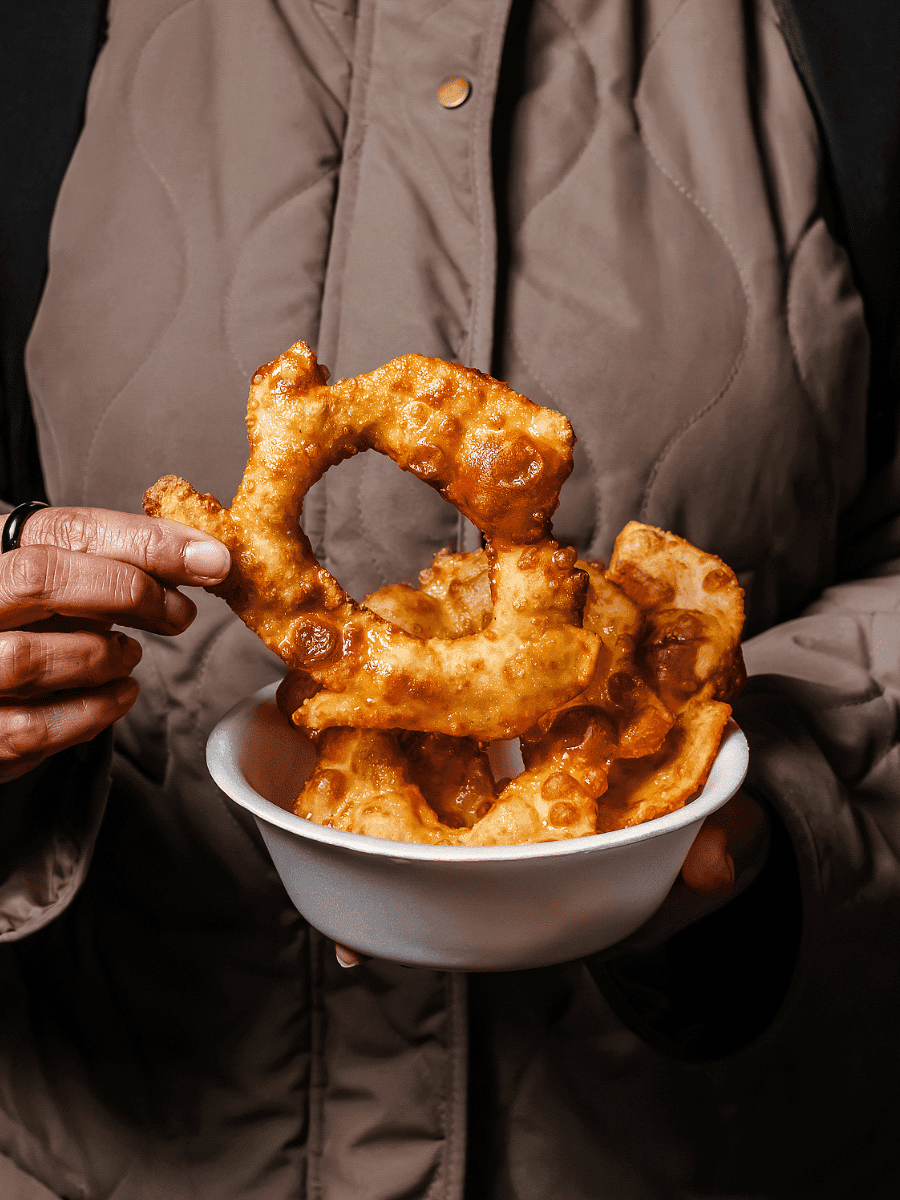
Fluted rings of fried dough drenched in a panela-and-cinnamon syrup. Ecuador's Christmas Eve dessert, served alongside hot cinnamon chocolate.

Green plantain dough wrapped around melty white cheese, deep-fried until crackling. Coastal and Amazonian Ecuador's four-o'clock snack, best with black coffee.
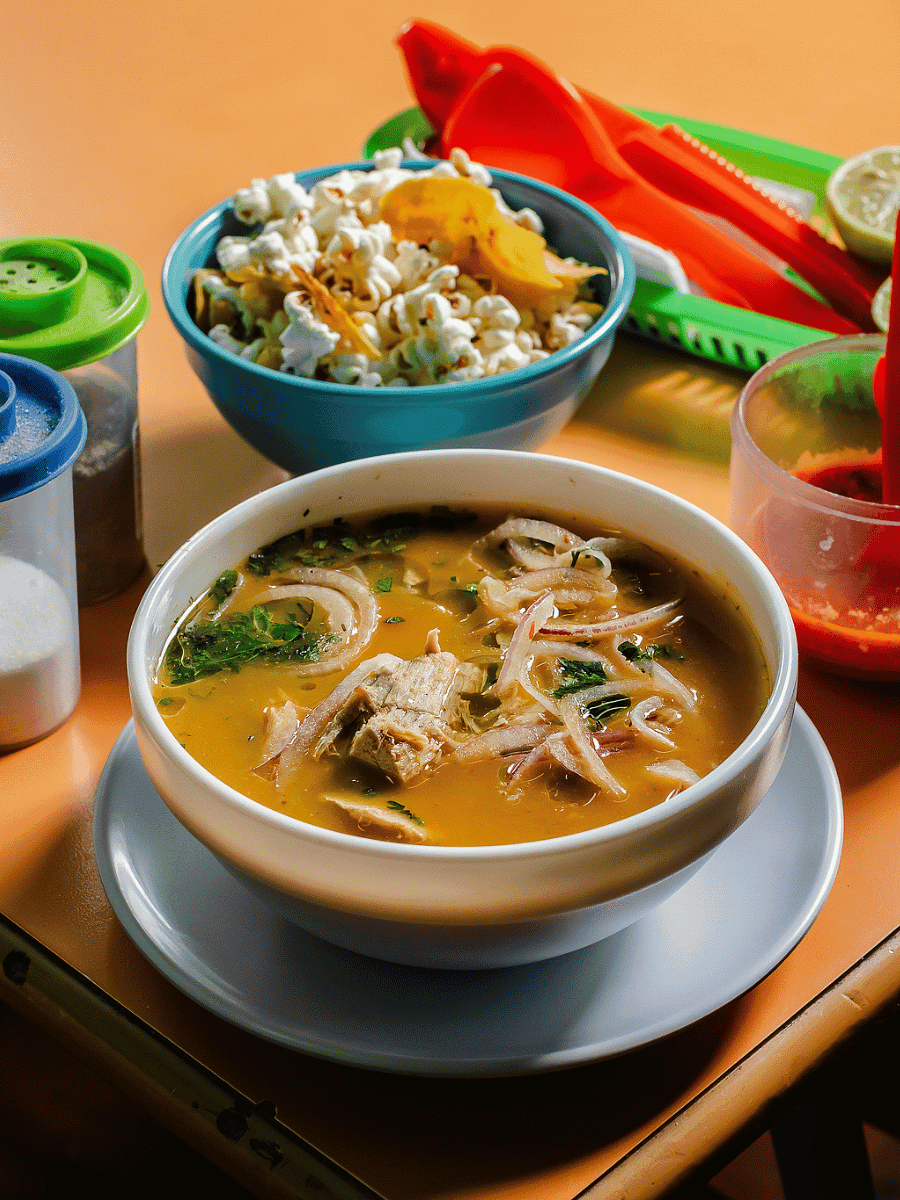
Fresh tuna simmered in a spiced tomato broth with cassava and lime-pickled red onion. Guayaquil's Sunday-morning hangover cure and coastal signature.

Paper-thin dough puffed to a hollow pillow around melted cheese, dusted with sugar. Sierra Ecuador's teatime snack, the size of your face.