
Destination
Cuenca
The story
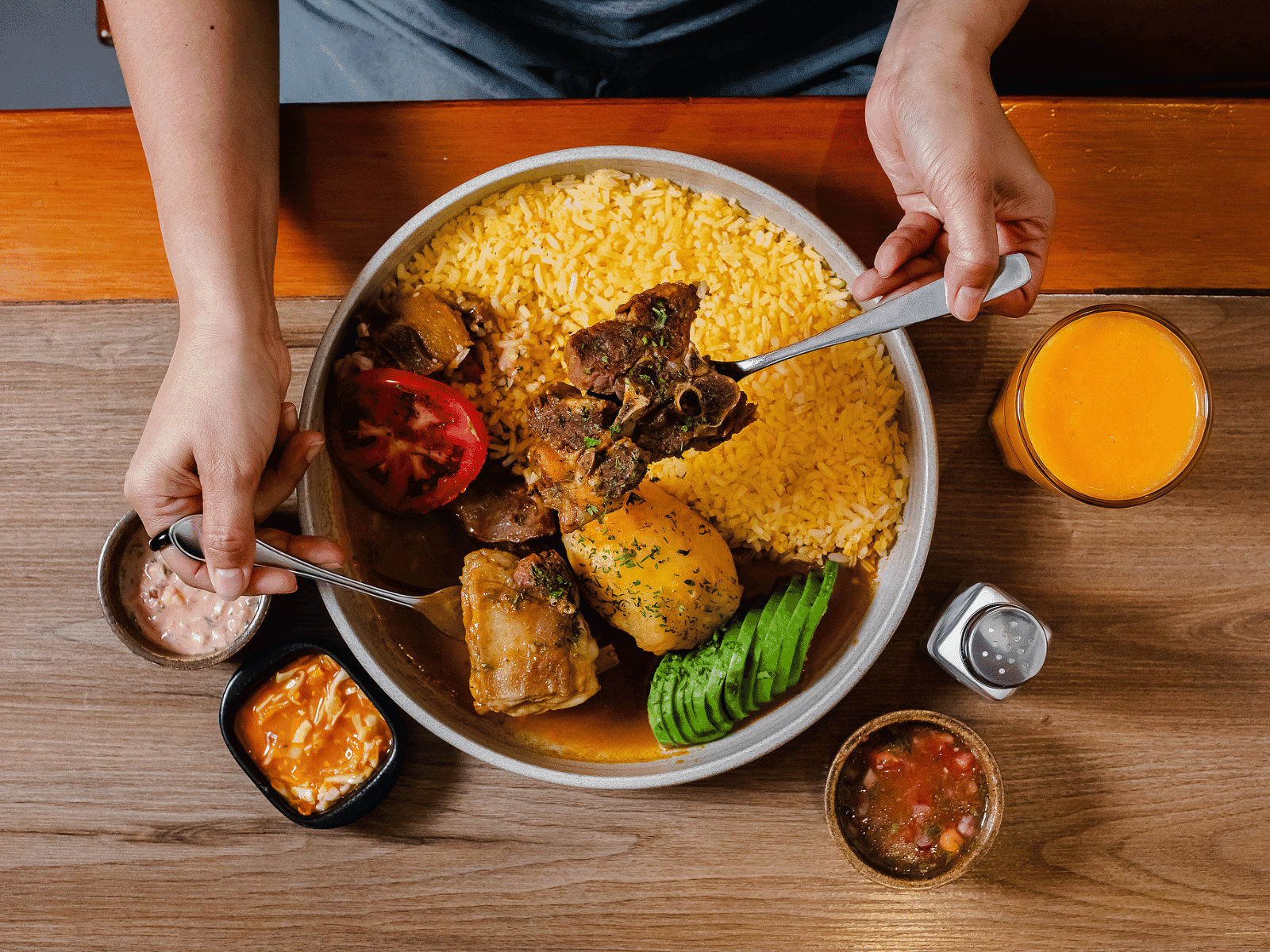
Seco de chivo is Ecuador's celebration stew: goat (or lamb, if you can't get goat) slow-braised for hours in a specific combination of naranjilla juice, beer, tomato, onion, garlic, cumin and a fistful of coriander, until the meat pulls off the bone and the sauce reduces to a dark, glossy, slightly sweet-and-sour glaze. Served over white rice with a scoop of maduro frito (sweet plantain), a slice of avocado and half an ear of choclo (boiled corn). The dish of family birthdays, wedding luncheons and Sunday get-togethers across the Sierra and Coast.
Method
Toss the goat chunks with the garlic, cumin, achiote, salt, pepper and lemon juice. Cover and refrigerate at least 2 hours, ideally overnight.
Warm the oil in a large heavy pot over medium-high heat. Sear the goat in batches, 3 to 4 minutes per side, until deep brown all over. Lift out and reserve.
Reduce heat to medium. Add the white onions, red pepper and spring onions to the pot. Sweat 8 to 10 minutes until soft. Add the garlic and cook 1 minute.
Add the tomato and cook 3 minutes until it breaks down. Pour in the naranjilla juice and cook 3 minutes more until slightly reduced.
Pour in the beer, scraping up any browned bits from the base of the pot. Simmer 3 minutes to cook off the alcohol.
Return the goat to the pot along with the stock, coriander stalks and salt. Bring to a gentle simmer, cover with a lid and cook 90 minutes to 2 hours on low heat, until the goat is fork-tender and pulling off the bone.
Uncover and simmer another 15 to 20 minutes if the sauce is thin. It should be dark, glossy and coating the meat.
Stir in most of the chopped coriander leaves (save some for garnish). Taste for salt. Plate over white rice with maduro, a round of corn, avocado, ají and curtido on the side.
Tips
- Goat, or lamb if goat is unavailable. Real Ecuadorian seco de chivo uses goat (chivo). Lamb shoulder is the closest substitute in most Western butchers; it braises tender in about the same time.
- Naranjilla is what makes it Ecuadorian. Frozen naranjilla pulp (or juice) is sold at Latin grocers in the frozen fruit section, in small bags. Without it, the dish loses its specific tart-fruity character. There's no perfect substitute; a mix of kiwi puree and lime juice gives a distant hint.
- Beer is not optional. Ecuadorian pilsner-style lager adds a subtle malty bitterness that cuts through the meat. Substitute any pale lager if unavailable.
- Coriander goes in twice: stalks in the braise, leaves at the end. The stalks add depth during the long cook; the leaves add fresh brightness at the end. Both are essential.
- The three accompaniments (rice, plantain, avocado) are mandatory. The sauce needs the rice to soak into, the plantain balances the tart naranjilla, and the avocado adds cool fat to the richness. Skip any and the plate feels incomplete.
More recipes
View all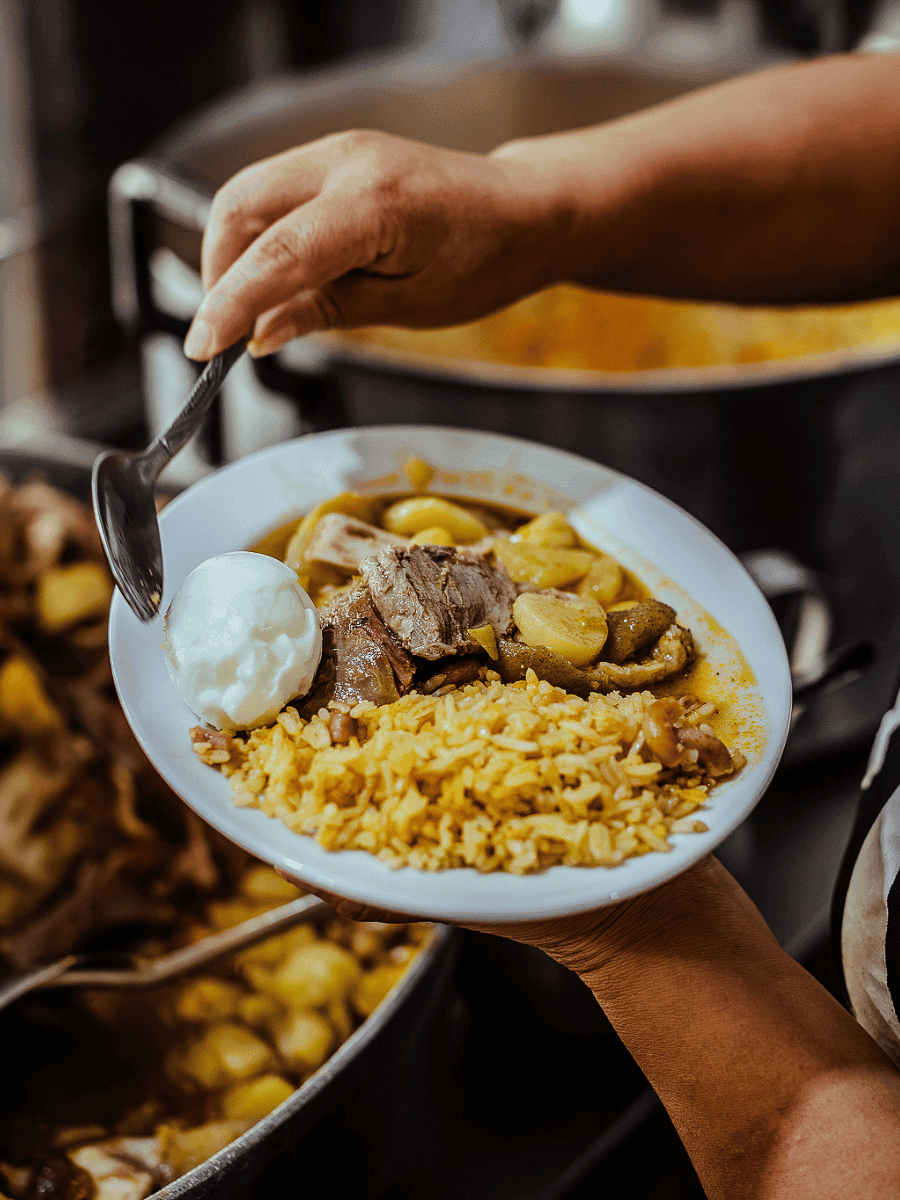
Small potatoes stewed slowly with pork skin, achiote and cumin until the sauce turns golden and gelatinous. Ecuadorian highland comfort food.

Pork cubes braised in orange juice, garlic and cumin until the liquid evaporates and the meat fries golden in its own fat. Sierra Ecuador's Sunday plate.

Green plantain smashed hot in a hot pan with cheese, egg and crackling pork. Loja's substantial breakfast; skip the second coffee.

Egg yolks whipped with sugar into a foam, mounted with hot milk, cinnamon and a shot of aguardiente. Quito's Christmas Eve nightcap.

A rich lamb-and-potato soup topped with cubes of fried lamb blood, chopped onion, tomato and avocado. Sierra Ecuador's most ancient dish.

Fresh corn ground with butter, milk and cheese, wrapped in corn husks and steamed into a soft sweet-savoury cake. Andean afternoon-tea food.