
Destination
Buenos Aires
The story
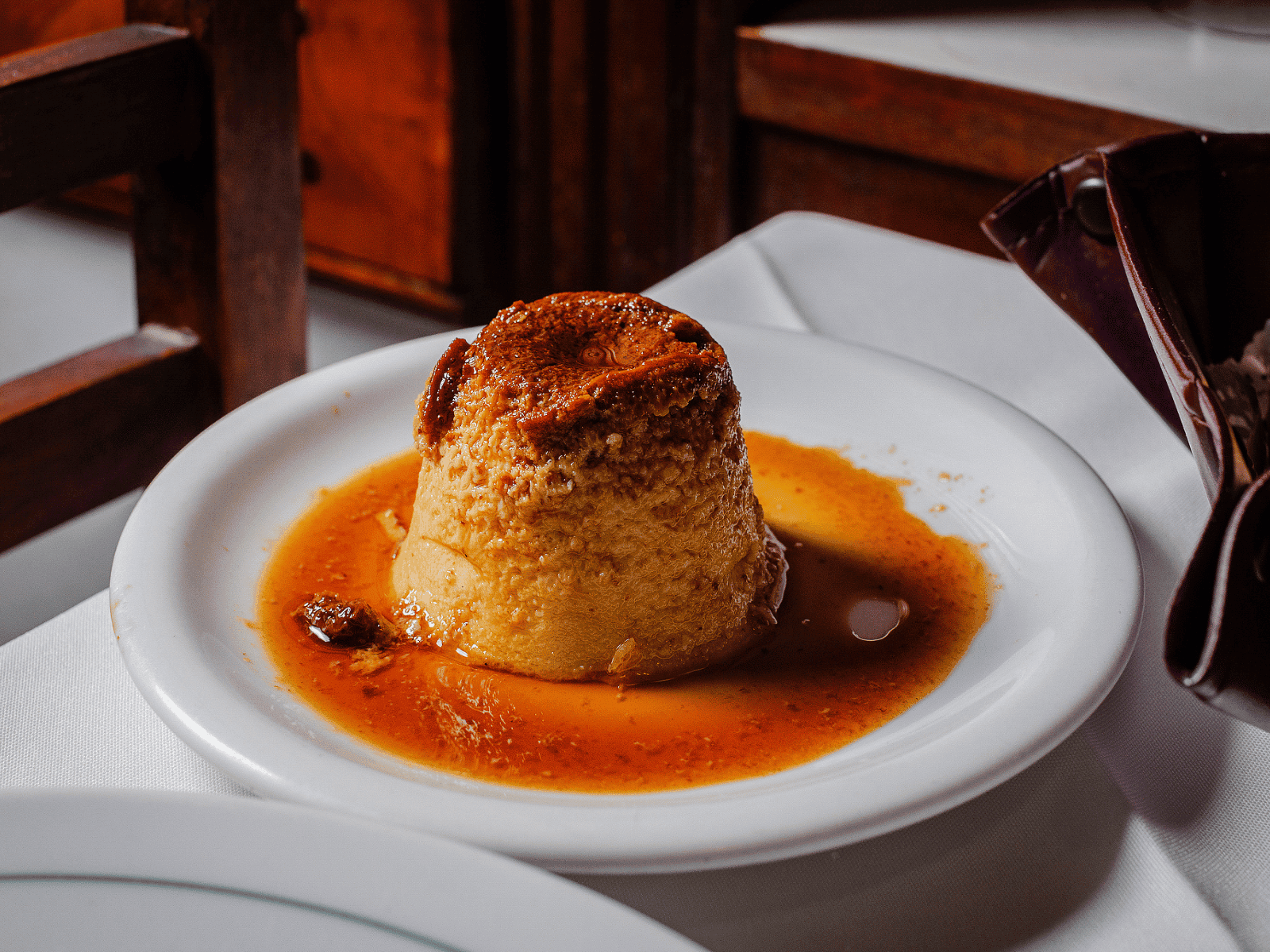
Flan casero is the dessert every Argentine abuela makes: a dark, slightly bitter caramel base, an egg-heavy baked custard, and always a generous spoonful of dulce de leche beside it. Order it in a bodegón as flan mixto and you'll get a small plate with a golden dome, a scoop of dulce de leche and a cloud of crema chantilly. Non-negotiable.
Method
In a saucepan, gently warm the milk with the lemon peel and vanilla until it's just steaming. Take off the heat and leave to infuse for 10 minutes.
In a heavy-bottomed pan, combine the sugar and water. Cook over medium heat without stirring until it turns a deep amber (not black). Immediately pour into a 22cm flan mould or 8 individual ramekins, tilting to coat the base.
Heat the oven to 160°C (320°F).
In a large bowl, whisk together whole eggs, yolks and sugar until pale but not foamy. Overworking traps air, which shows up as bubbles on the finished flan.
Remove the lemon peel from the milk. Pour the warm milk slowly into the eggs, whisking continuously. Strain the mixture through a fine sieve into a jug — this catches any stray chalaza and gives you a glass-smooth surface once inverted.
Pour the custard over the caramel. Place the mould in a deep roasting tin and pour hot water into the tin until it reaches halfway up the sides. Bake for 50 to 55 minutes (30 to 35 for ramekins), until the custard is just set with a slight wobble in the centre.
Lift the mould out of the water and cool to room temperature. Cover and chill at least 4 hours, ideally overnight — the caramel dissolves into a proper syrup and the custard tightens.
Run a knife around the edge. Invert onto a serving plate; the caramel should pool around the flan. Serve each slice with a generous spoon of dulce de leche and a cloud of crema chantilly.
Tips
- Watch the caramel like a hawk. It goes from golden to burnt in ten seconds. The moment it hits deep amber, pull it off the heat: residual heat will keep cooking it in the pan.
- The wobble test is everything. A perfect flan wobbles like set jelly when you nudge the tin, not like liquid. Overcook it and you get scrambled-egg texture; undercook it and it collapses when you invert it.
- Argentine flan mixto isn't optional. Dulce de leche and cream aren't a garnish, they're part of the dish. Serve them alongside so each spoonful gets its own ratio.
- Make it the day before. Flan improves overnight in the fridge as the caramel turns into syrup and the custard sets properly.
- Don't skip the strain. Straining the custard through a fine sieve is what separates bakery flan from home-cook flan.
More recipes
View all
Two crumbly cornstarch shortbreads sandwiched with dulce de leche, edges rolled in coconut. Argentina's tea-time cookie: one in each hand, gone before you notice.

Yeast-raised dough deep-fried until it blooms, rolled hot in sugar, hollowed and filled with dulce de leche. The porteño merienda in three bites.

Ring-shaped semi-hard biscuits scented with fennel, aniseed and sesame, twice-baked until golden. Morocco's tea-dunking staple, sold by weight at every pastry souk.

Ridged pastry ropes piped into hot oil, tossed in cinnamon sugar and served with a mug of thick Mexican hot chocolate for dunking.

A Genoese chickpea flatbread that made a home in Buenos Aires. Stacked on a slice of pizza (al caballo), or eaten alone with cracked black pepper.

Buenos Aires' Genoese-immigrant pizza. Thick, doughy base under a mountain of sweet onions, mozzarella and oregano.