
Destination
Buenos Aires
The story
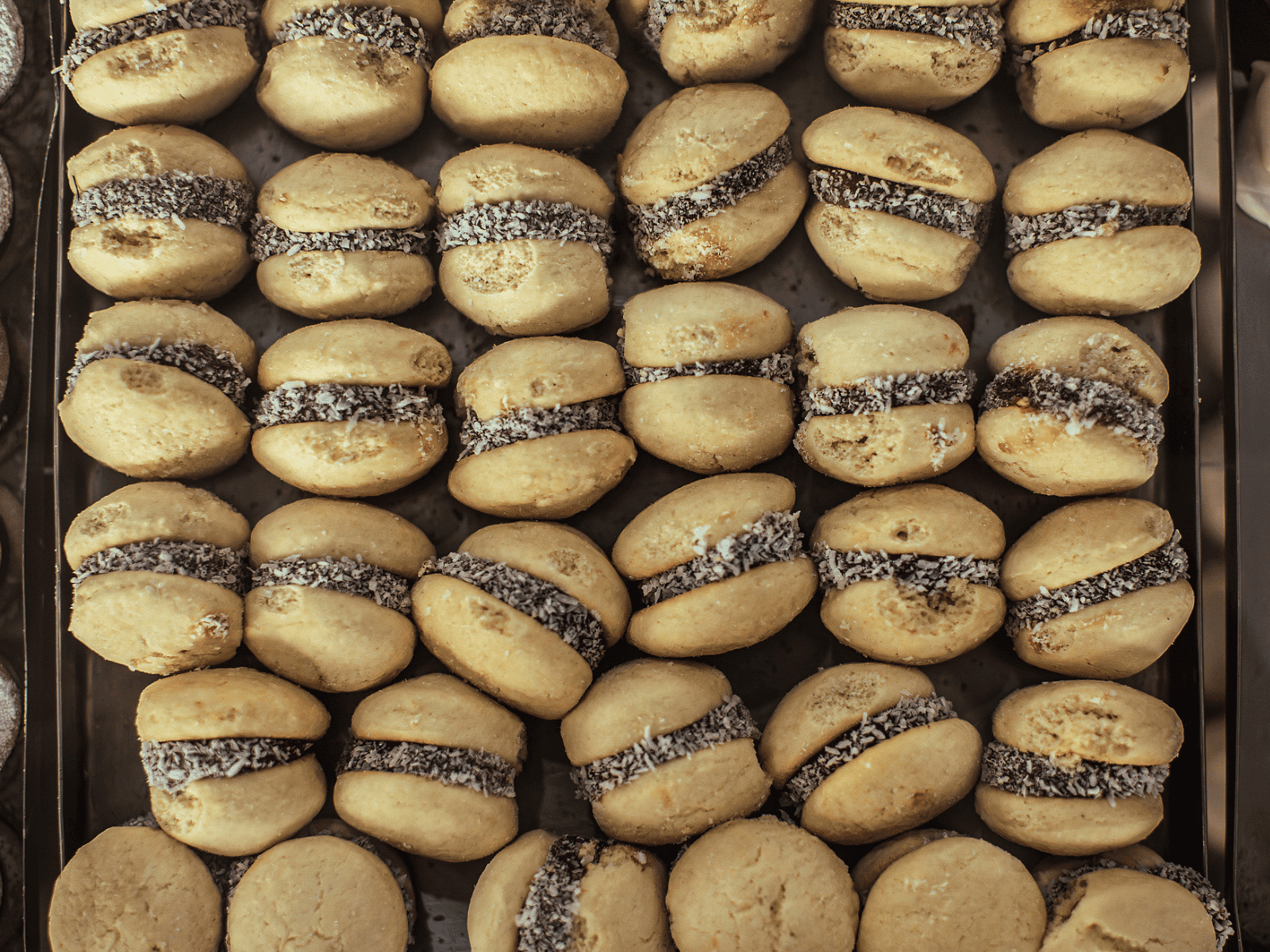
Alfajores are Argentina's tea-time cookie: two crumbly round shortbreads made with cornstarch, sandwiched with a fat scoop of dulce de leche, and rolled in shredded coconut around the edge. Melt-in-the-mouth, one-in-each-hand, disappear-before-you-notice. Every abuela has her recipe. Every bakery sells its own. Buenos Aires-based Havanna and Balcarce-based Cachafaz are the two big commercial brands, and both are Argentine institutions.
Method
In a stand mixer with the paddle attachment, cream the butter and sugar 3 to 4 minutes until pale and fluffy.
Beat in the egg yolks one at a time, then the lemon zest, vanilla and brandy if using. Scrape down the sides of the bowl.
In a separate bowl, whisk together the cornstarch, flour, baking powder and bicarbonate.
Add the dry to the wet in two batches, mixing on low just until it comes together as a soft dough. Don't overwork it.
Tip the dough onto cling film, shape into a flat disc, wrap and chill 30 minutes. Cold dough is easier to roll and holds its shape in the oven.
Heat the oven to 180°C (355°F). Line two baking trays with baking paper.
Roll the chilled dough on a lightly floured surface to about 5mm thick (thicker than a normal cookie). Cut with a 5cm round cutter. Re-roll scraps once, gently; any more than that toughens the dough.
Arrange on the trays with a little space between each. Bake 12 to 14 minutes, until the edges just barely take colour. They should stay pale on top: overbaked alfajores are dry and crumbly in the wrong way.
Leave the biscuits on the tray for 5 minutes to firm up, then transfer to a rack. They're delicate while warm; wait until fully cool before assembling.
Spread a heaped teaspoon of dulce de leche on the flat side of one biscuit. Press a second biscuit gently on top (flat sides together) until the filling just squeezes out the edges. Roll the exposed seam in the shredded coconut to coat.
Tips
- Room-temperature butter is the whole game. Butter that's too cold gives you a stiff dough that won't cream properly; butter that's too warm gives you biscuits that spread flat in the oven. Leave it out for an hour before you start.
- Don't over-bake. Alfajores are done when the edges just barely turn golden and the tops are still pale. They firm up as they cool. Ten seconds too long in the oven and they go from soft-crumbly to dry-crumbly.
- Use repostero-grade dulce de leche if you can find it. Standard dulce de leche is too runny for sandwich cookies and slides out the sides. Repostero (pastry-grade) is thicker and holds the seam. Argentine grocers sell it in tins.
- Warm the dulce de leche briefly before spreading. Ten seconds in the microwave loosens it just enough to spread without cracking the biscuits. Any longer and it runs.
- Store in an airtight tin. Alfajores keep 4 to 5 days at room temperature in a sealed container. The dulce de leche softens the biscuits over the first day, which is when they taste best.
More recipes
View all
Yeast-raised dough deep-fried until it blooms, rolled hot in sugar, hollowed and filled with dulce de leche. The porteño merienda in three bites.

A Genoese chickpea flatbread that made a home in Buenos Aires. Stacked on a slice of pizza (al caballo), or eaten alone with cracked black pepper.

Buenos Aires' Genoese-immigrant pizza. Thick, doughy base under a mountain of sweet onions, mozzarella and oregano.

Thick, spongy dough buried under a thick blanket of mozzarella, topped with oregano and a whole green olive. The Buenos Aires bar-counter pizza, not the Neapolitan kind.

The green sauce that rides shotgun with every grilled meat in Argentina. Parsley, garlic, oregano, chilli, red wine vinegar and olive oil.

A slab of aged provolone melted over live coals, dressed with oregano, chilli and olive oil. The starter that opens every asado.