
Destination
Bogota
The story
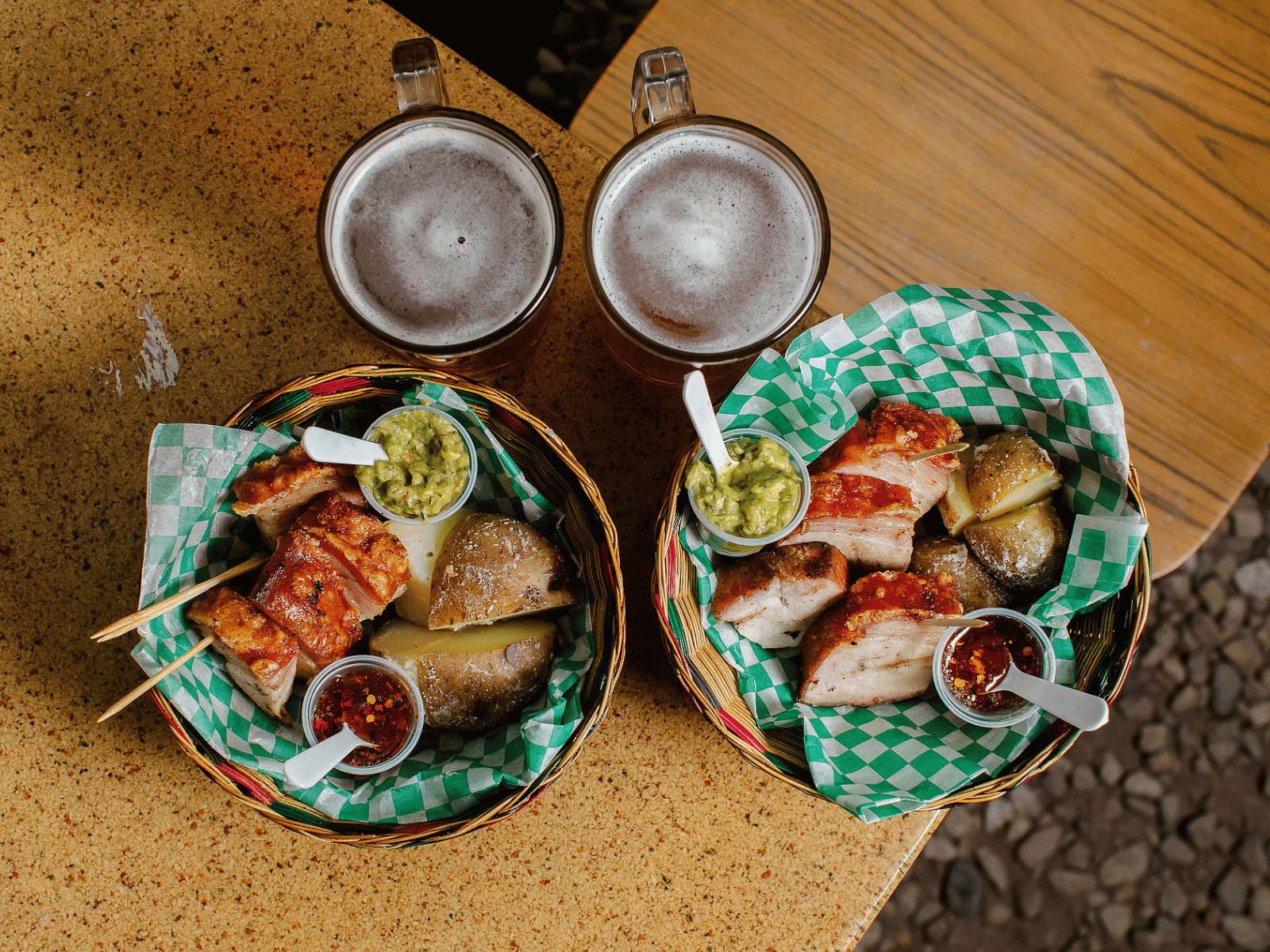
Colombian chicharrón is not a snack. It's a proper cut of pork belly, sliced into thick fingers with the skin still attached, cooked slowly in its own rendered fat until the meat is tender and juicy and the skin puffs and blisters into an audible crackling. Served as the centrepiece of the Paisa (Antioquia region) bandeja paisa alongside red beans, white rice, fried plantain, chorizo, a fried egg, a slice of avocado and an arepa. Two-thousand calories on a plate. A meal that anchors a whole afternoon.
Method
With a very sharp knife, score the skin of each pork belly finger with shallow parallel cuts about 5mm apart. This helps the skin puff evenly.
Place the pork fingers in a large heavy pot with the salt, cumin, garlic, bay leaf and enough cold water to cover by 2cm. Bring to a simmer, skim any foam, and cook 60 minutes, until the meat is fork-tender but not falling apart.
Lift the pork out of the water. Place on a rack over a tray and let dry, uncovered, for at least 30 minutes at room temperature (or in the fridge for 2 hours if you have time). Dry skin is the whole trick for crackling: wet skin steams and stays leathery.
Heat a heavy pan (cast iron ideally) over medium-high heat. Add the pork fingers skin-side down, along with 2 tbsp of the oil if your pork is lean. Cook 5 to 7 minutes without moving them, until the skin puffs, blisters and crackles. You'll hear it (loudly). Reduce heat if it browns too fast; render, don't burn.
Flip the fingers to cook the meat side. Fry 3 to 4 minutes more until deep golden on all cut sides. The meat should be tender under a slightly caramelised crust.
Lift onto kitchen paper. Rest 5 minutes: the fat settles and the crackling holds its bite.
For a proper bandeja paisa, plate a mound of red beans, a scoop of white rice, a fried egg on top of the rice, a spoon of fried plantain, half an avocado, a grilled chorizo, an arepa, and the chicharrón as the centrepiece. Serve with ají and hogao at the table.
Tips
- The dry step is non-negotiable. The skin must be dry when it hits the hot pan or it will steam instead of crackling. Fridge-dry overnight is best; 30 minutes at room temperature is the minimum.
- Score the skin, don't slash it. Shallow parallel cuts (5mm deep, no deeper) help the skin puff and crackle. Deep slashes let the fat escape and leave you with leathery skin.
- Skin-side down first, and leave it alone. The first side needs 5 to 7 minutes of undisturbed contact with the hot pan to render the fat and puff the skin. Constantly poking or flipping stops the crackling from forming.
- Don't crowd the pan. Two or three fingers at a time is the max in a home pan. Crowding drops the temperature and steams instead of frying.
- Chicharrón is at its best minutes after cooking. The skin softens as it cools. If you're building a bandeja paisa, cook the chicharrón last and serve immediately.
More recipes
View all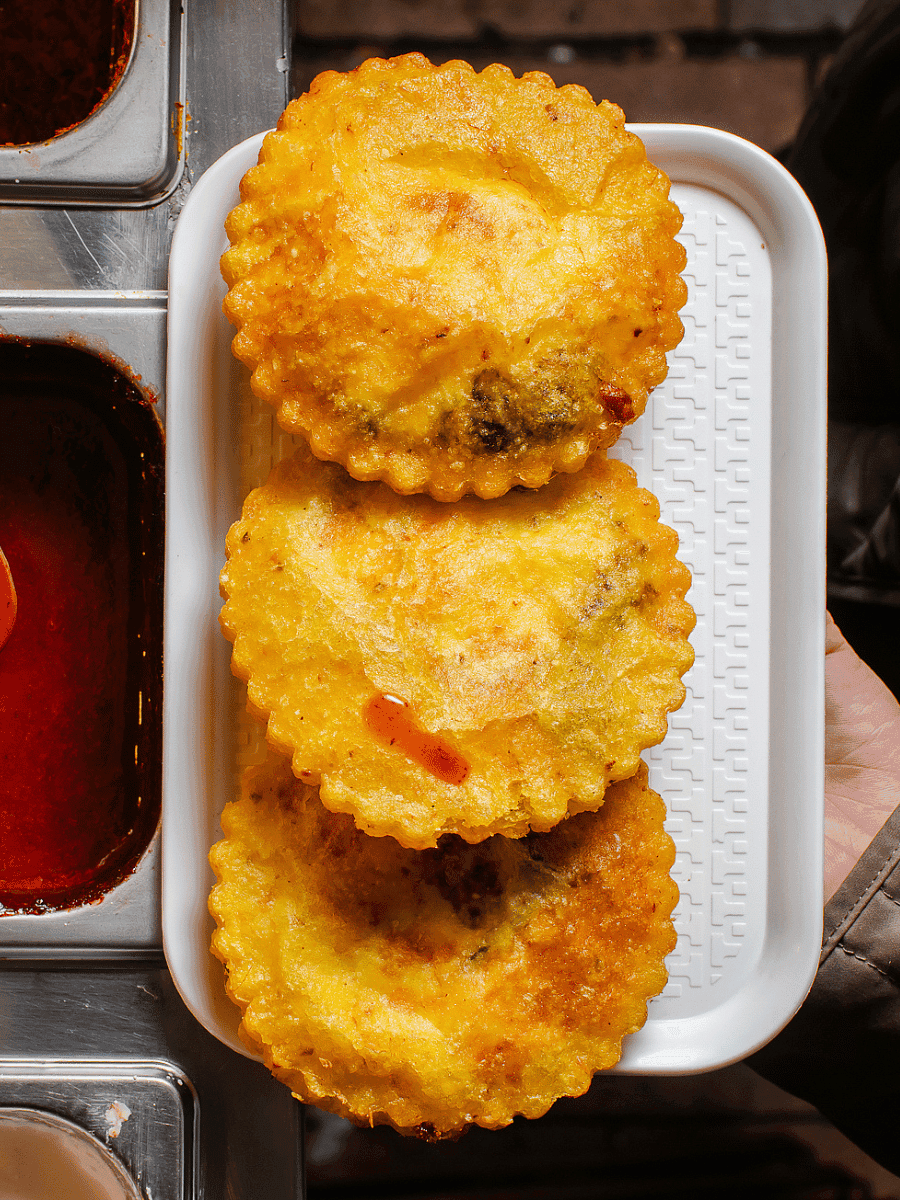
Caribbean-style yellow corn arepa fried once, split open, filled with a whole raw egg and seasoned beef, sealed and fried again until golden. Cartagena's morning market classic.

A slow-cooked Andean feast of beef, chicken, ribs and the strange, wonderful native tubers of Colombia's mountain heartland: cubios, ibias, hibias and papa criolla, in one pot.

Tiny yellow Colombian potatoes fried whole in their thin skins until golden and shrivelled, tossed with butter and salt. The Bogotá bar snack no one can stop eating.

Yellow corn dough wrapped around a filling of shredded chicken, potato and hogao, deep-fried until deep gold and crackly. Colombia's small crunchy street empanada.
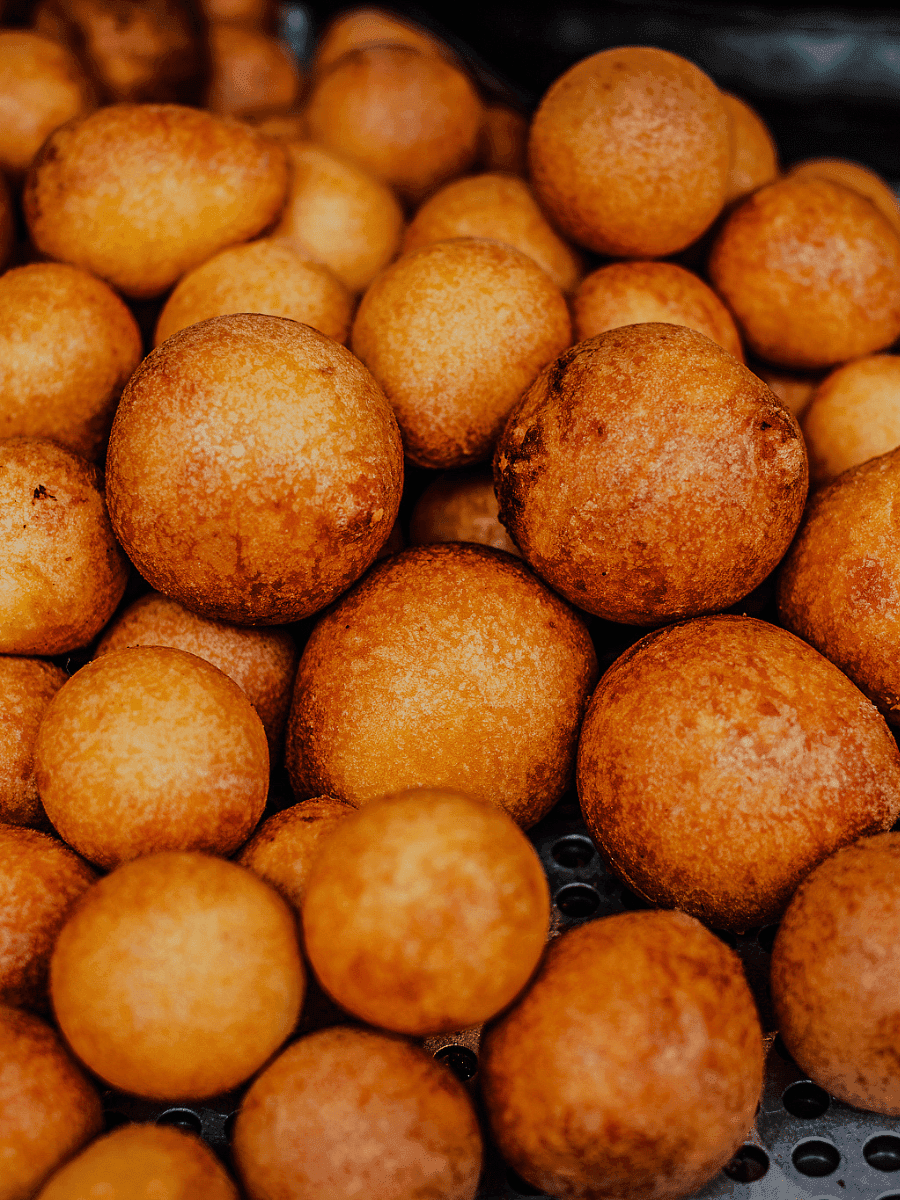
Crumbly fresh cheese and cornstarch balls deep-fried until they crack open like small planets. Christmas Eve's mandatory Colombian snack, always eaten with natilla.

Bijao-leaf-wrapped parcels of yellow corn masa, pork, chicken, chorizo, chickpea, potato, egg and hogao, steamed for hours over an open pot. Paisa Sunday breakfast at its most generous.