
Destination
Bogota
The story
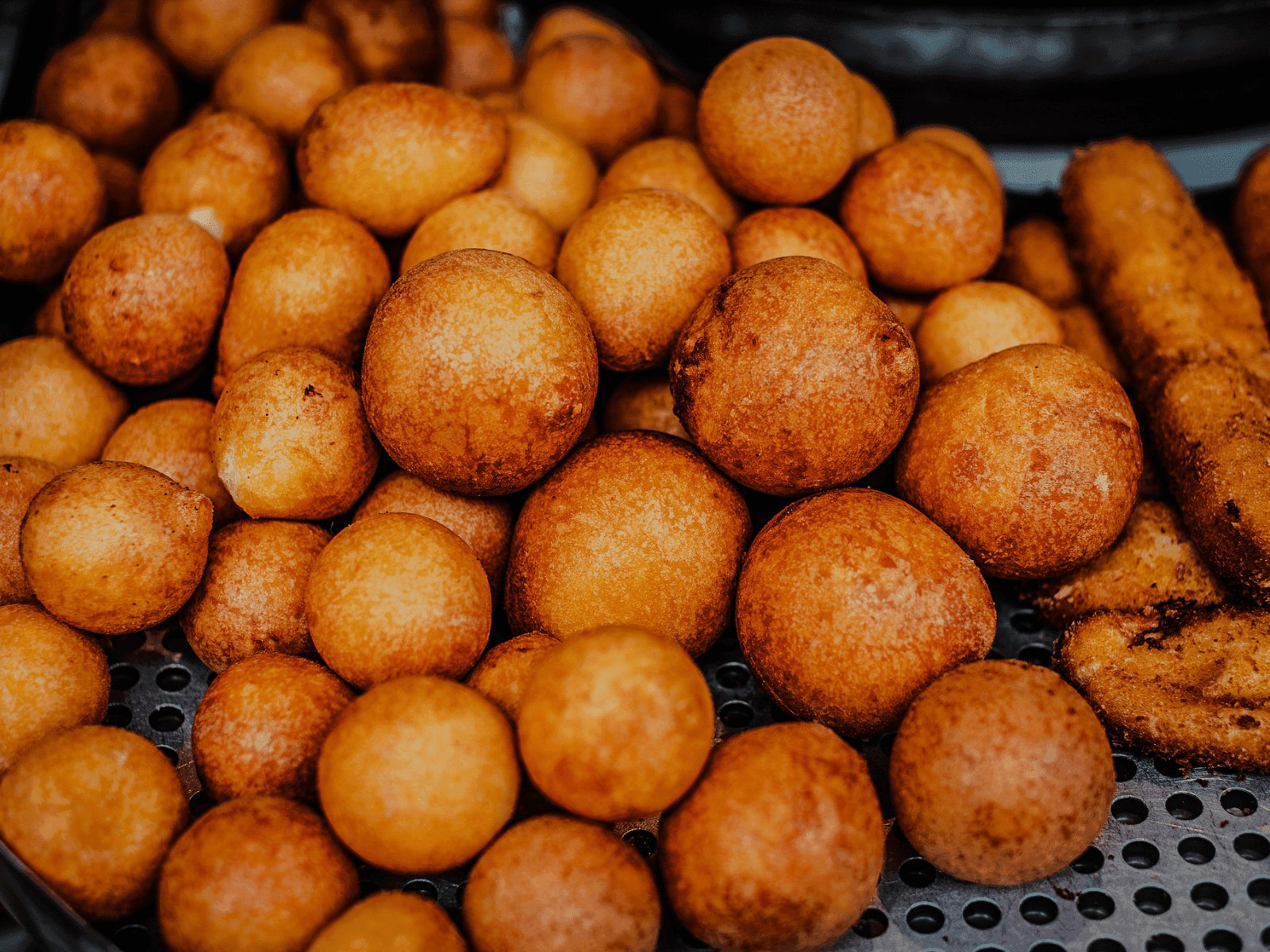
Colombian buñuelos are their own species. Nothing like the Spanish buñuelo (which is closer to a doughnut) or the Mexican buñuelo (a crispy tortilla-adjacent disc). The Colombian version is a small, round, deep-fried ball made from queso costeño (a salty fresh Caribbean-coast cheese), cornstarch, eggs, a little sugar and baking powder, mixed into a soft dough that fries into a puffed, cracked-open sphere: golden and crispy outside, soft and slightly stretchy inside, unmistakably cheesy.
Method
Finely grate the cheese into a large bowl. If using feta, rinse the block briefly under cold water to reduce the salt, pat dry, then grate.
Add the cornstarch, baking powder and sugar to the grated cheese. Toss to distribute. Add the egg and mix with a wooden spoon or your hands until it comes together into a soft, slightly sticky dough. If dry, add a tablespoon or two of milk.
Cover and rest 10 minutes at room temperature. The cornstarch hydrates and the dough firms up slightly.
Wet your hands lightly. Pinch off pieces the size of a walnut (about 30g each) and roll into smooth balls between your palms. Aim for about 20 buñuelos.
Heat the oil in a deep pot to only 160°C (320°F). This is unusually low for deep-frying, and it's the whole trick: low heat cooks the middle before the outside browns.
Add the buñuelos to the oil in batches of 5 or 6. Fry for 6 to 8 minutes, turning gently, without letting the temperature rise. They will float, crack open with an audible split, and slowly turn deep gold. Don't rush.
Lift onto kitchen paper. Rest 1 minute. Serve immediately alongside natilla and hot chocolate.
Tips
- Low heat is the whole secret. Buñuelos need to cook through slowly. If the oil is too hot (180°C+), they brown outside while the middle stays raw and dense. 160°C for 6 to 8 minutes is right.
- Cassava starch is more traditional than corn starch, but harder to find. Almidón de yuca (also called tapioca starch, or sold as "sweet cassava starch") gives the classic slightly stretchy interior. Cornstarch (maicena) works as a substitute.
- The dough should feel like Play-Doh. Not sticky, not crumbly. If your cheese was very wet, add more cornstarch; if very dry, a splash of milk. Adjust to feel.
- Roll smooth. Any cracks or rough edges in the raw ball become deep splits in the oil. Wet hands and firm rolling gives you the classic round shape that only cracks open once (dramatically) as it cooks.
- Best eaten within 20 minutes of frying. Buñuelos go tough as they cool. If prepping for a party, fry them in the hour before guests arrive, keep warm in a low oven, and serve.
More recipes
View all
Tiny yellow Colombian potatoes fried whole in their thin skins until golden and shrivelled, tossed with butter and salt. The Bogotá bar snack no one can stop eating.

Green plantain boiled and mashed with butter, hogao and crumbled cheese, topped with a fried egg. Santa Marta's Caribbean breakfast, cheap, filling and ancient.

Pork belly slow-cooked in its own fat until the meat is tender and the skin has puffed to a crackling. The centrepiece of the Paisa bandeja and Medellín's proudest export.

Yellow corn dough wrapped around a filling of shredded chicken, potato and hogao, deep-fried until deep gold and crackly. Colombia's small crunchy street empanada.

Rolled oats blended with cold milk, panela and cinnamon, served over ice. Colombia's midday refresher, sold in every panadería from a chilled glass jug.

A hot broth of milk and water with poached eggs, chopped spring onion and coriander, poured over torn bread. Bogotá's Muisca-inherited breakfast (and hangover cure).