

Destination
Pattaya
The story
Salapao is Thailand's version of Chinese baozi — soft, pillowy, slightly-sweet steamed buns filled with either a savoury pork mix (moo saap salapao — the classical) or a sweet paste of mung bean or black sesame (salapao wan). Sold at every Bangkok Chinatown bakery, every 7-Eleven convenience store steamer, every train station morning-food cart and every temple-fair snack counter. The specifically Thai-Chinese version distinguishes itself from Cantonese char siu bao by a slightly sweeter dough and by filling with a mixture of pork, sausage and quail egg (rather than just sweet char siu). Two Bangkok chains dominate: Chatchat Salapao (the low-cost 5-baht version) and Cha Ba Salapao (the more upmarket).
Method
Warm oil in a wide pan. Cook onion 4 minutes; add garlic. Add diced pork; brown 6 minutes. Add mushrooms and sausage, cook 3 minutes. Add dark soy, oyster sauce, fish sauce, Shaoxing wine, pepper, five-spice and sugar. Simmer 5 minutes. Whisk cornstarch slurry in; cook 60 seconds until glazed. Cool completely.
Whisk warm milk, warm water and 1 tbsp sugar. Sprinkle yeast; rest 5 minutes until foamy. Add remaining sugar, flour, cornstarch, salt, oil and baking powder. Mix and knead by hand 10 minutes until smooth and slightly tacky. Cover and rest 60 minutes until doubled.
Punch down. Divide into 12 balls (about 70g each). Cover with a damp towel.
For each ball: flatten between your palms into a 10cm disc, keeping the middle slightly thicker. Place a heaped tbsp of pork filling and 1 quail egg in the middle. Gather the edges up around the filling, pinching pleats at the top. Twist to seal.
Set each bun on a baking-paper square. Arrange in bamboo steamer baskets with 5cm spacing. Cover with a towel; rest 30 minutes until visibly puffed.
Set steamer over a wok of simmering water. Steam 15 to 18 minutes over medium-high heat. Do not lift the lid.
Turn off heat; rest buns in the covered steamer for 5 minutes before opening.
Serve warm. Best within 1 hour of steaming. Reheat by re-steaming.
Tips
- Cornstarch in the dough. This is the Bangkok Chinese-Thai bun's trick — softer, more pillowy texture than plain flour dough.
- Do not lift the lid. Steaming buns collapse if you peek. Cover for the full 15-18 minutes plus 5-minute rest.
- Cool the filling completely. Hot filling melts the wrapper's structure.
- Freeze steamed buns. Wrap and freeze; reheat by re-steaming from frozen 20 minutes.
More recipes
View all
Green-flecked steamed rice-flour dumplings filled with garlic chives, served with a sweet-hot chili-vinegar dip. Bangkok Chinatown's Teochew snack.

Crab meat mixed with pork, water chestnut and coriander, stuffed back into the shell and deep-fried. Bangkok Chinatown's Thai-Chinese celebration snack.

Chopped crispy pork belly stir-fried hard with garlic, bird's-eye chili, fish sauce and holy basil. Served over rice with a fried egg — Thailand's fastest lunch.

Open-top steamed dumplings filled with pork, prawn, water chestnut and Thai sweet soy, served with a fierce chili-vinegar dipping sauce. Bangkok Chinatown's dim sum classic.
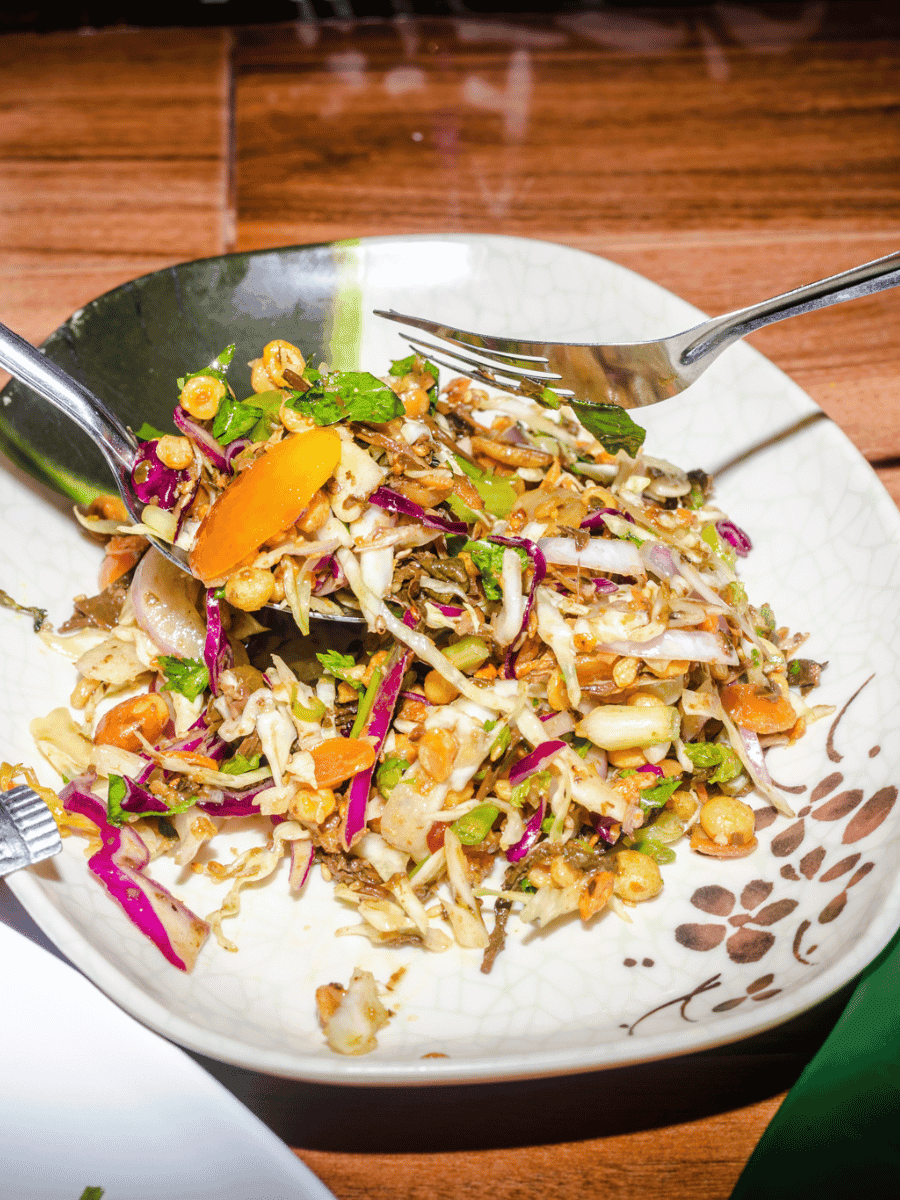
Wild pepper leaves wrapped around dried shrimp, coconut, chili, lime cube and ginger, drizzled with palm-sugar sauce. Bangkok's most-photographed one-bite starter.

Large yellow crispy turmeric-rice crepes filled with prawn, pork, bean sprouts and herbs, folded and cut into wedges. Bangkok's Vietnamese-Thai fusion snack.