
Destination
Singapore
The story
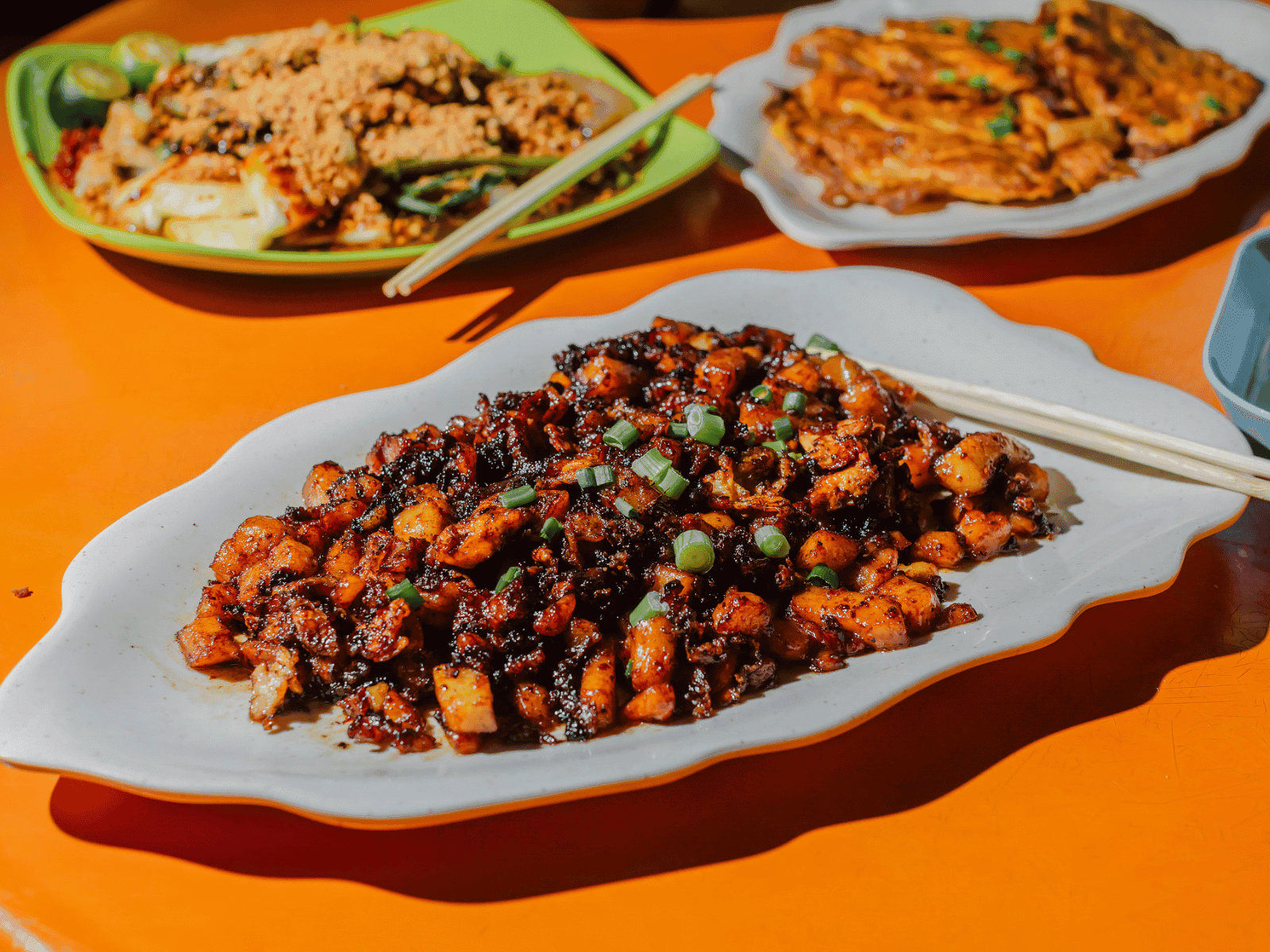
Chai tow kway is Singapore's most-loved late-night hawker dish (locally called "carrot cake" — the "carrot" is actually white daikon radish, misnamed in Singlish): cubes of steamed radish-and-rice-flour cake, wok-fried hard with garlic, chai poh (salty preserved radish), egg and spring onion, in one of two styles — white (with fish sauce and pepper) or black (with dark sweet soy — the "black carrot cake"). Sold at hawker centres and coffee shops across the country, especially at old-school stalls like Fu Ming Cooked Food and Bedok South Chai Tow Kway, chai tow kway is the after-cinema, after-work, after-drinking food that Singaporeans crave at 10pm on a rainy Tuesday.
Method
In a large pot, combine grated radish, water, salt and white pepper. Bring to a boil and simmer 15 minutes until soft and translucent.
Whisk rice flour and wheat starch with 200ml cold water into a smooth slurry. Slowly pour the slurry into the hot radish mixture while stirring constantly with a wooden spoon. Cook 3 minutes as the mixture thickens into a heavy paste that pulls from the sides of the pan. Stir in 3 tbsp oil.
Line a shallow rectangular tin (about 25 x 15cm) with baking paper. Pour in the radish paste and level with a spatula. Steam over simmering water for 60 minutes until set and firm to the touch. Cool completely at room temperature (2 hours) then refrigerate overnight to firm up.
Turn the cake out of the tin. Cut into 2cm cubes. You should have about 800g of cake cubes.
Soak the chai poh in cold water 5 minutes to remove excess salt. Drain and chop fine.
Warm the oil (or lard) in a wok over the highest heat until smoking. Add garlic and chai poh; toss 30 seconds until fragrant. Add chopped chili.
Add the cubed radish cake in a single layer. Do not stir for 3 minutes — let the cubes catch and crisp on the bottom. Toss carefully and cook another 4 minutes, letting more sides catch and crisp.
Push the cake to one side of the wok. On the empty side, pour in the beaten eggs. Let them set for 30 seconds, then break up and toss into the cake. Add the dark sweet soy (black version) or fish sauce + soy (white version) and white pepper. Toss for 60 seconds until everything is coated. Tip onto plates. Scatter with spring onion and coriander. Serve immediately with sambal chili, sliced chili and lime.
Tips
- Two-day project. The radish cake needs overnight rest to firm up enough to cube without falling apart. Same-day cake is too soft.
- Sear, don't stir. This is the whole technique. Let the cubes catch on the wok base for 3 minutes without moving so they develop crispy caramelised edges.
- Chai poh is the flavour marker. The salty preserved radish is what makes chai tow kway taste specifically Singaporean. Sweet chai poh (a different variety) is not a substitute. Any Chinese grocer stocks the salty version.
- Black or white. Pick one and commit. Some hawkers do half-half plates for eaters who can't decide.
- Fresh coriander at the end. This is the herbaceous cut that keeps the dish from feeling too heavy. Do not skip.
More recipes
View all
Rugby-ball dumplings of mashed taro wrapped around a spiced pork filling, deep-fried into lacy golden shells. A dim sum classic and Singapore's fanciest fried snack.

Flat rice noodles wok-fried hard with beef slices, kai lan and dark sweet soy — the Teochew-Chinese Singapore hawker classic.
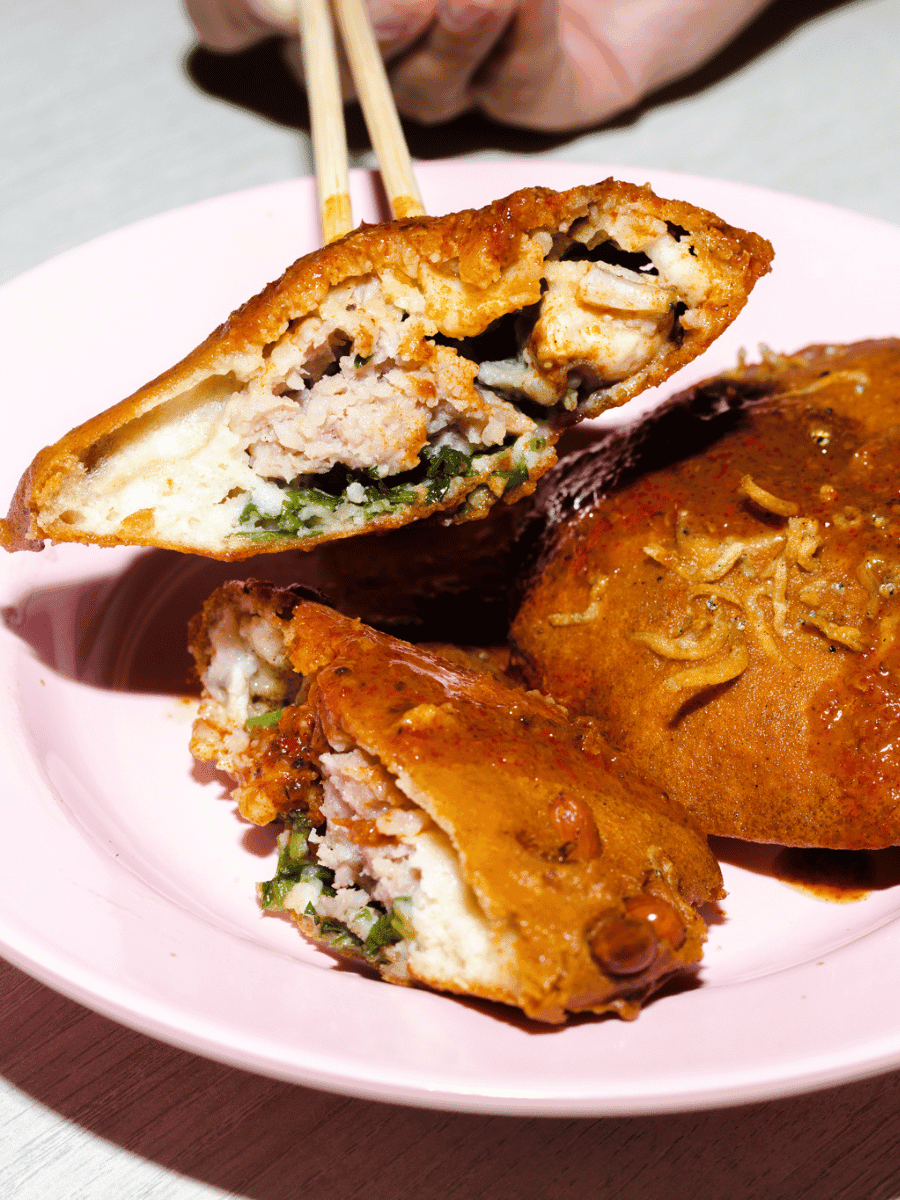
Deep-fried disc of rice-flour batter studded with whole oysters, minced pork and dried shrimp, served with a squeeze of chili sauce. Old Chinatown Singapore's snack.

Long-simmered white rice porridge, silky as cream, topped with poached chicken, thousand-year egg, soy-fried peanuts, spring onion and a drizzle of sesame oil.

Cubes of steamed rice cake stir-fried hard in a wok with dark soy, chilli paste, egg, bean sprouts and preserved radish. Penang's late-night hawker classic.

Whole chicken slow-poached in dark soy master stock scented with star anise, cinnamon and rock sugar, chopped over rice with a spoon of ginger oil.