

Destination
Hue
The story
Cao lầu is the signature dish of Hoi An in central Vietnam and one of the most-guarded regional specialties in the country. Thick chewy noodles (specifically dyed and cooked with lye water) sit at the base of a shallow bowl, topped with thin slices of Chinese-style barbecue pork (xa xíu), crunchy squares of deep-fried noodle crackers, a small handful of fresh Vietnamese herbs (Thai basil, perilla, coriander, mint), sliced green mango or unripe papaya, bean sprouts, and finished with a small pour of a dark spiced pork broth. The eater tosses everything together before eating. Cao lầu is unique in that Hoi An locals claim the dish can only be authentically made using well water from specific historical wells in the old town.
Method
Whisk marinade ingredients. Rub thoroughly over pork. Refrigerate at least 8 hours (overnight is best).
Preheat oven to 200C. Place pork on a rack over a roasting tin. Roast 30 minutes, then reduce to 180C and roast another 25 to 30 minutes, basting every 10 minutes, until deep mahogany and internal temperature is 68C. Rest 10 minutes, then slice thin.
Combine all broth ingredients in a saucepan. Bring to a simmer; cook 20 minutes to reduce and intensify. Strain into a clean pan and keep warm.
Warm oil in a small pan to 175C. Fry the 3cm noodle squares in batches 90 seconds until deep golden and crackly. Drain on paper.
Boil the udon noodles per packet instructions. Drain briefly (do not rinse; you want them still slightly starchy).
Divide hot udon between 4 shallow bowls. Top each bowl with a small handful of lettuce, blanched bean sprouts, green mango julienne, a scatter of fresh herbs, slices of pork, and a scatter of noodle croutons.
Pour just 3 to 4 tablespoons of the reduced broth over each bowl. Cao lầu is not a soup; the broth is a seasoning, not a bath.
Scatter with spring onion. Serve with lime wedges and chili sauce on the side. Diners toss everything together at the table before eating.
Tips
- Small pour of broth. This is essential. Cao lầu is a dry noodle dish, not a soup. Two to three tablespoons per bowl.
- Thick chewy noodles. Fresh udon is the practical substitute. Do not use rice noodles or thin egg noodles.
- Crispy noodle croutons. Not optional. The texture contrast is half the dish.
- Green mango or papaya. The sour crunch cuts the richness. Do not substitute ripe fruit.
- Fresh herbs generously. Half the dish is the herb-mountain topping.
More recipes
View all
Grilled pork patties and pork belly slices in a warm, sweet-sour fish sauce broth with pickled papaya, served with cool rice vermicelli and a plate of fresh herbs. Hanoi's lunchtime classic.

Rice vermicelli in a clear duck broth simmered with pickled bamboo shoots and blood cubes, topped with sliced duck meat, coriander and spring onion. A Hanoi cold-weather bowl.

Rice vermicelli in a tangy tomato broth topped with clouds of crab meat, tofu, tomato and shrimp paste. Hanoi's Sunday-morning noodle soup, best with a plate of fresh herbs.

Rice noodles in a long-simmered beef bone broth scented with star anise, cinnamon and charred ginger, topped with rare beef slices and a plate of fresh herbs for finishing at the table.

Fat tapioca noodles in a thick golden crab broth with prawn, quail egg, pork knuckle and a pat of annatto oil. Ho Chi Minh City's rich comfort noodle bowl.
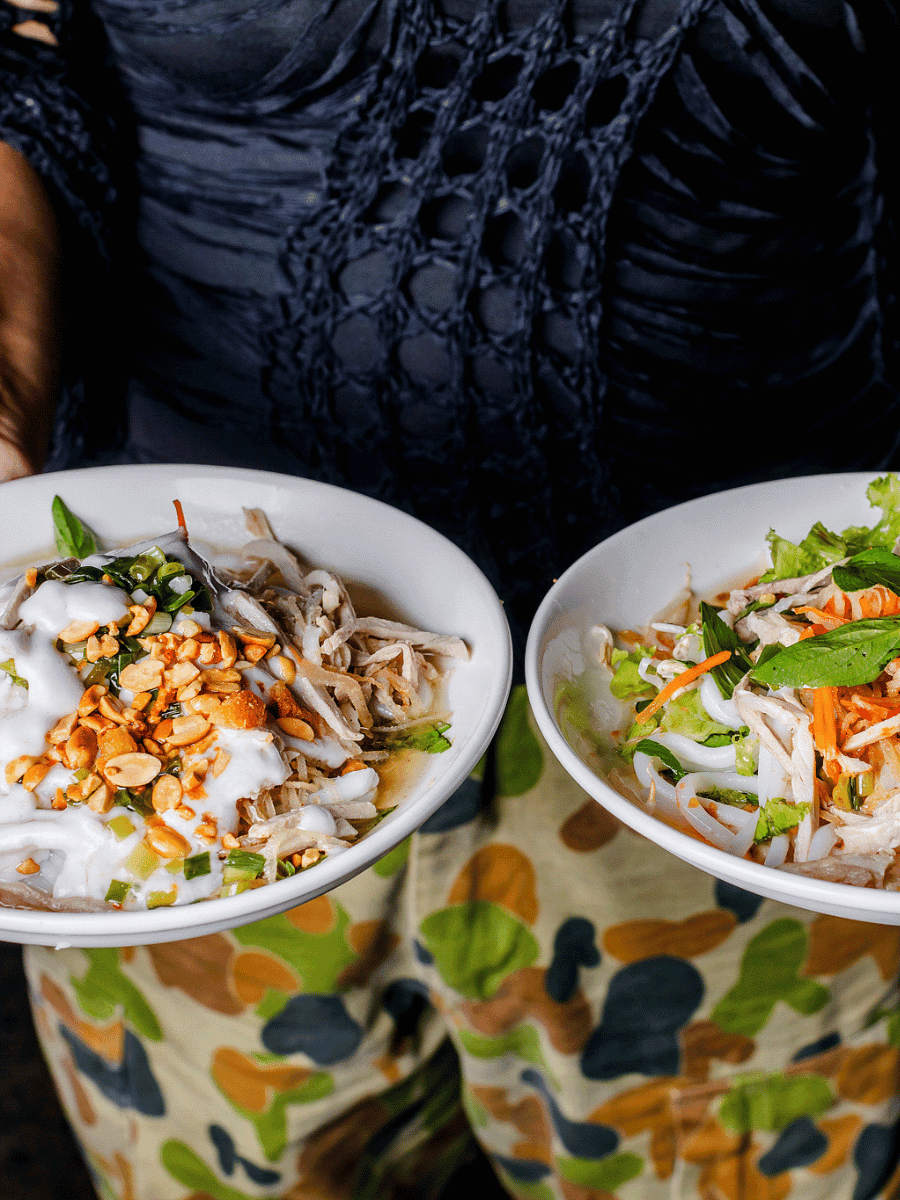
Thick chewy rice noodles served warm with shredded pork skin, coconut cream, crushed peanuts and a splash of sweet-sour fish sauce. Mekong Delta's home-style noodle bowl.