
Destination
Kathmandu
The story
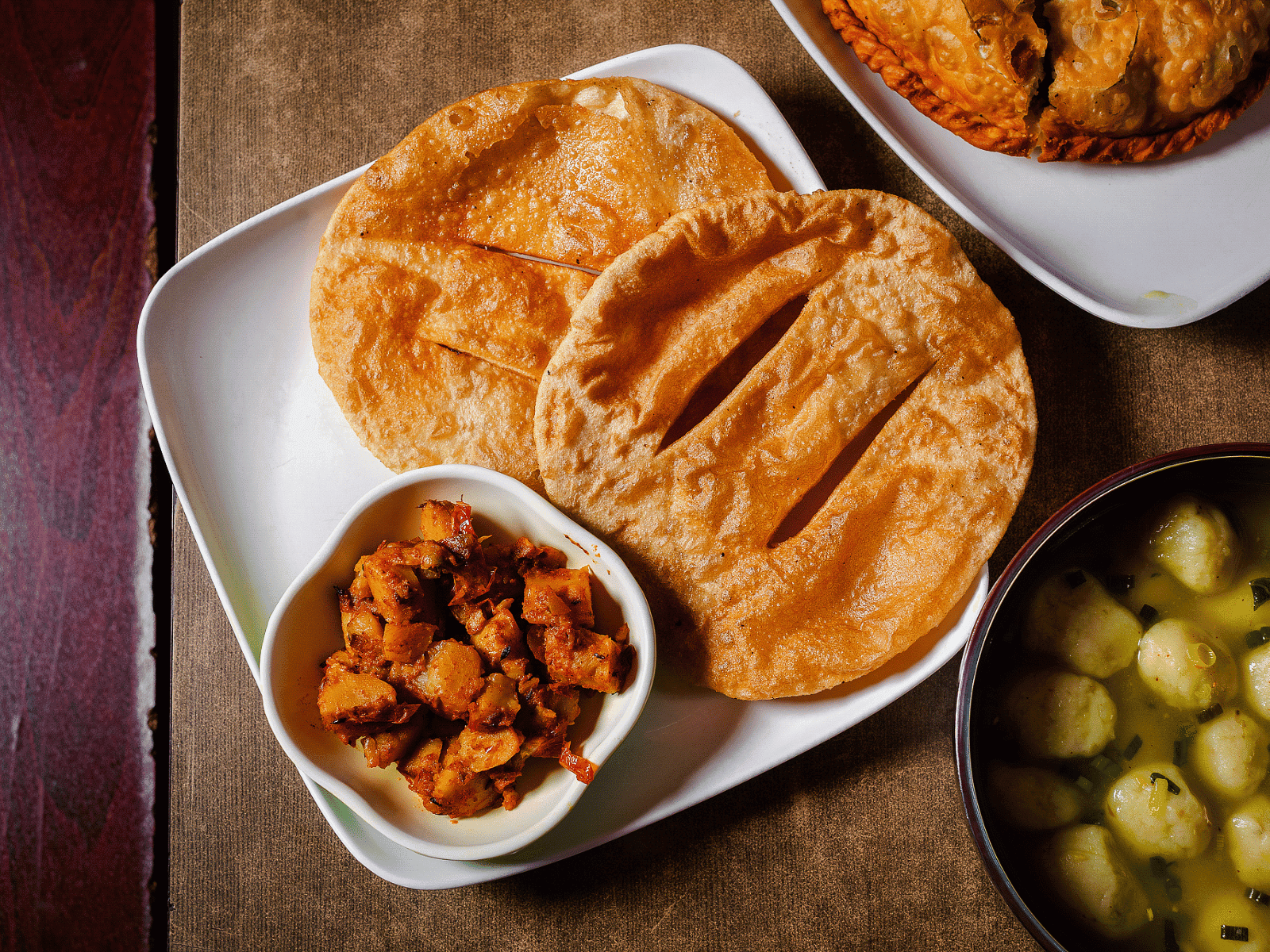
Puri tarkari is Kathmandu's most-loved Saturday-morning breakfast: small, puffed, deep-fried whole-wheat breads (puri) served with a spiced potato curry (tarkari) full of tomatoes, onion, cumin, coriander, turmeric and green chilies. Sold at every corner sweet shop, every roadside cart and every Newari eatery from Thamel to Bhaktapur, puri tarkari is the Nepali working weekend breakfast — filling, mildly spicy, cheap. Eaten with the fingers: tear a piece of puri, scoop up curry, eat, repeat. Served with a glass of sweet chai and a spoon of dahi (plain yogurt) on the side.
Method
In a large bowl, whisk atta flour, salt and cumin. Add oil and rub in with your fingers. Add water gradually, mixing with your hand, until you have a firm but pliable dough. Knead 4 minutes on a lightly floured surface. Cover with a damp towel and rest 30 minutes.
Warm mustard oil in a heavy pot over medium heat. Add cumin and mustard seeds; they'll pop within 20 seconds.
Add onion; cook 5 minutes until soft. Add garlic, ginger, green chilies. Cook 60 seconds.
Stir in turmeric, ground cumin, ground coriander, Timur and cayenne. Toast 30 seconds in the oil until fragrant.
Add the cubed potatoes, chopped tomatoes, water and salt. Bring to a simmer.
Cover partially and cook 25 to 30 minutes over medium-low heat until the potatoes are tender when pierced and the sauce has thickened to a spoonable curry consistency. Stir occasionally; add water if it dries out.
Divide the dough into 16 balls. On a lightly oiled surface (not floured — flour burns in the oil), roll each ball into a 12cm disc, 2mm thick. Stack under a towel.
Heat oil to 190C in a deep heavy pot. Fry the puris one at a time: slide a disc into the hot oil. Within 5 seconds it should start puffing. Press gently under the oil with a slotted spoon to encourage full puff. Cook 30 seconds a side. Lift out onto kitchen paper. Repeat for all 16. Meanwhile, stir chopped coriander into the tarkari off the heat. Serve puris hot on a platter with the tarkari in a bowl alongside, plus yogurt, onion, lime, achar and chili slices on small dishes. Eaters tear a puri, scoop tarkari, eat.
Tips
- Very hot oil for the puri. 190C is the target. Cooler and the puri won't puff; hotter and they burn before puffing. A small piece of dough should float and sizzle within 3 seconds.
- Oil the rolling surface, not flour. Flour on the puri surface burns and turns the oil dark. A lightly oiled counter is the traditional Nepali rolling surface.
- Fry immediately after rolling. Rolled puri stiffen if they sit too long. Roll one, fry one, or roll a batch and fry quickly.
- Serve immediately. Puris deflate within 10 minutes of cooking. This is a hot-and-immediate breakfast, not a make-ahead one. The tarkari can be made ahead; the puris cannot.
- Encourage the puff. A gentle press with a slotted spoon while the puri is in the oil traps steam inside and encourages the puff. Do not skip this move.
More recipes
View all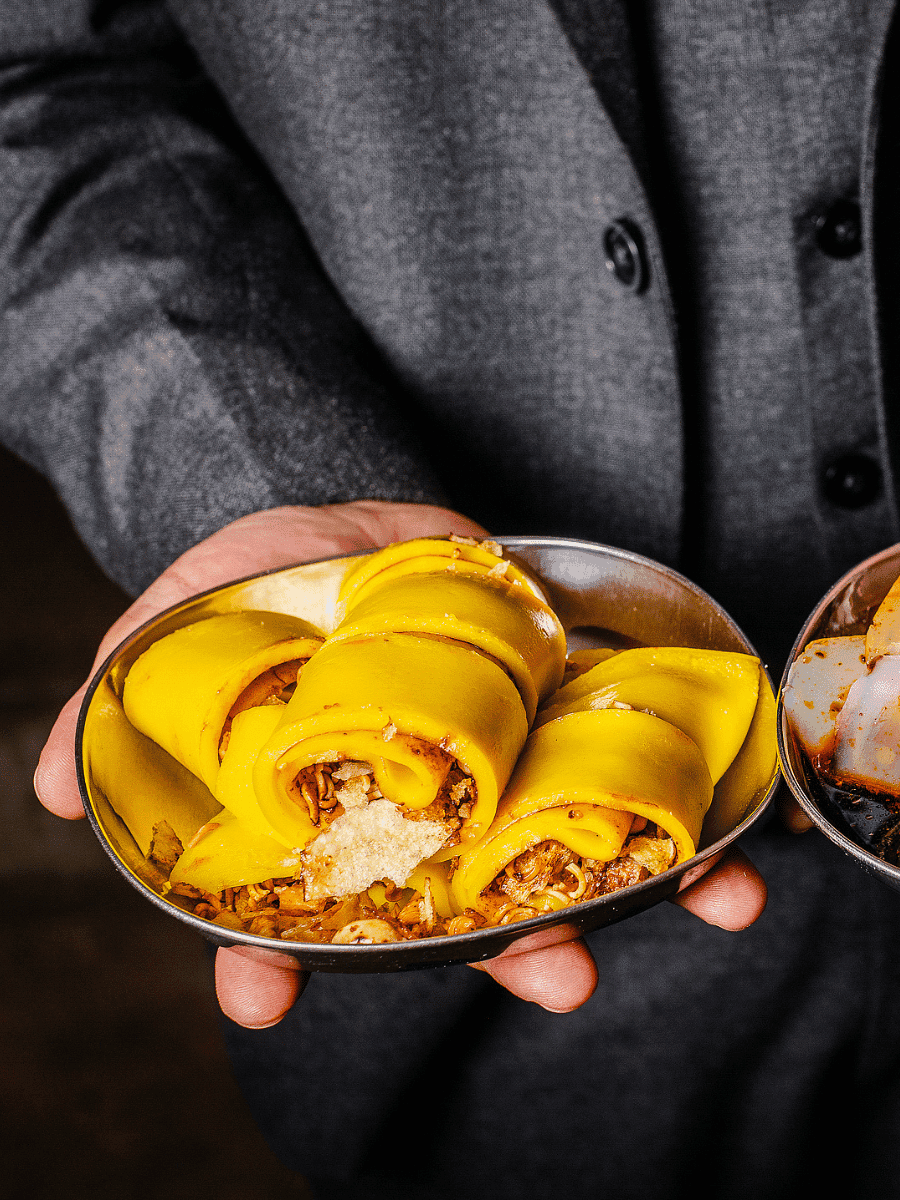
Cold, jelly-textured mung-starch noodles topped with soy, chili oil, cucumber, coriander and crushed peanuts. Kathmandu's Tibetan street snack.

Torn flatbread pan-fried in niter kibbeh and berbere until glossy and spiced. Ethiopia's Oromo breakfast, sold from morning cafés across Addis Ababa.

Bright orange fried batter spirals soaked in cardamom-scented sugar syrup. Kathmandu's Newari sweet, sold hot from bubbling oil at every sweet shop.

Roasted black soybeans dressed with mustard oil, garlic, ginger, chilies and Timur pepper. Newari beer snack, best with a cold Gorkha lager.
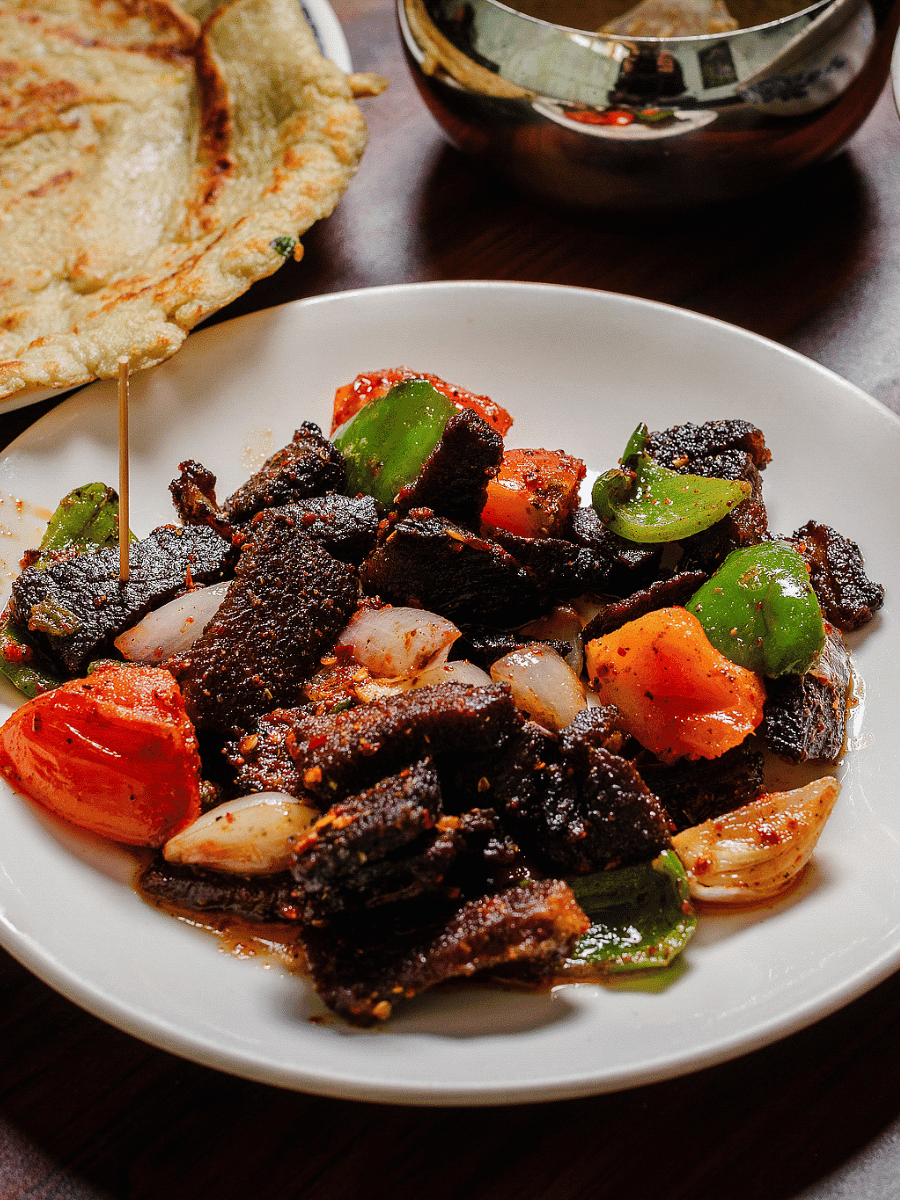
Buffalo strips wok-fried hard with onion, capsicum and green chilies in a soy-vinegar sauce. Kathmandu's Newari-Chinese Sunday-lunch centrepiece.
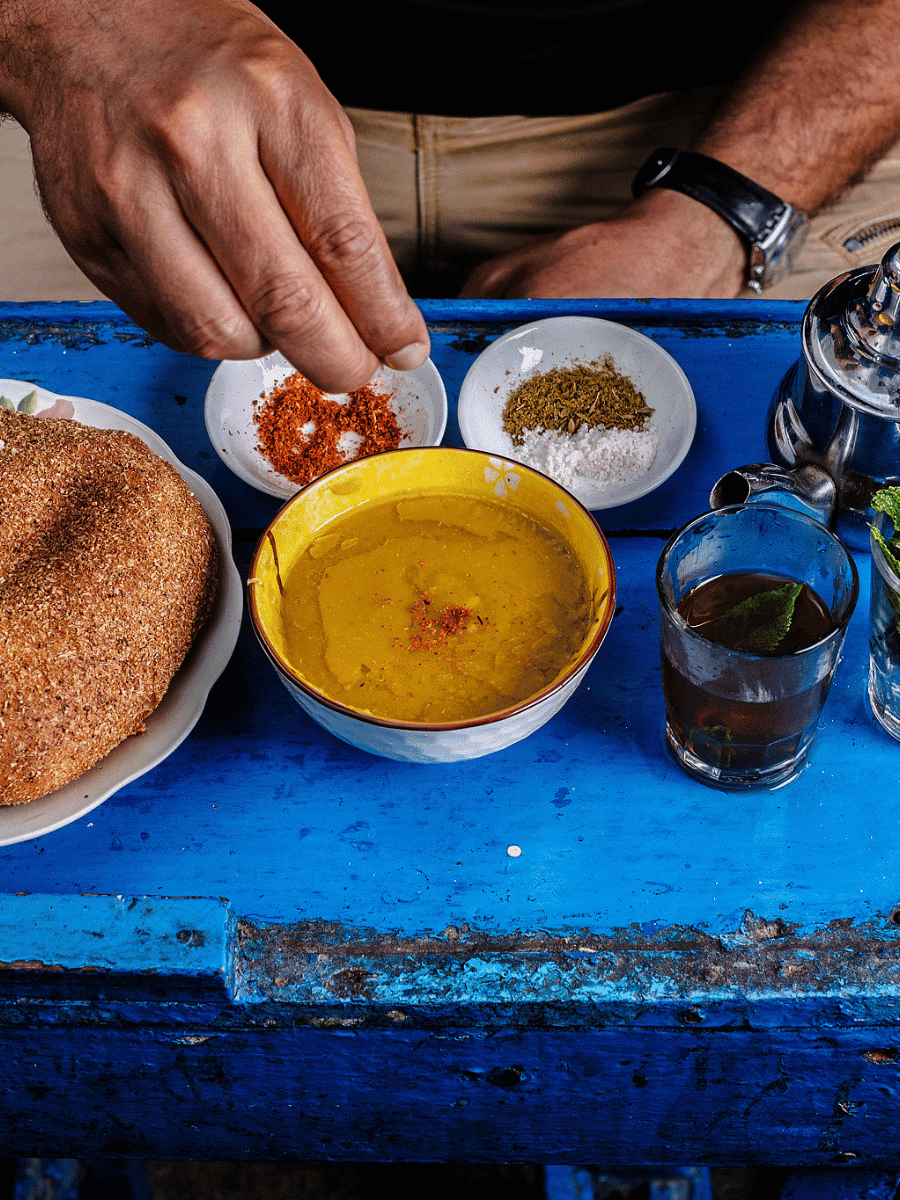
Silky split fava bean soup, drizzled with olive oil and dusted with cumin and paprika. Chefchaouen's winter breakfast, eaten with khobz.