
Destination
Manila
The story
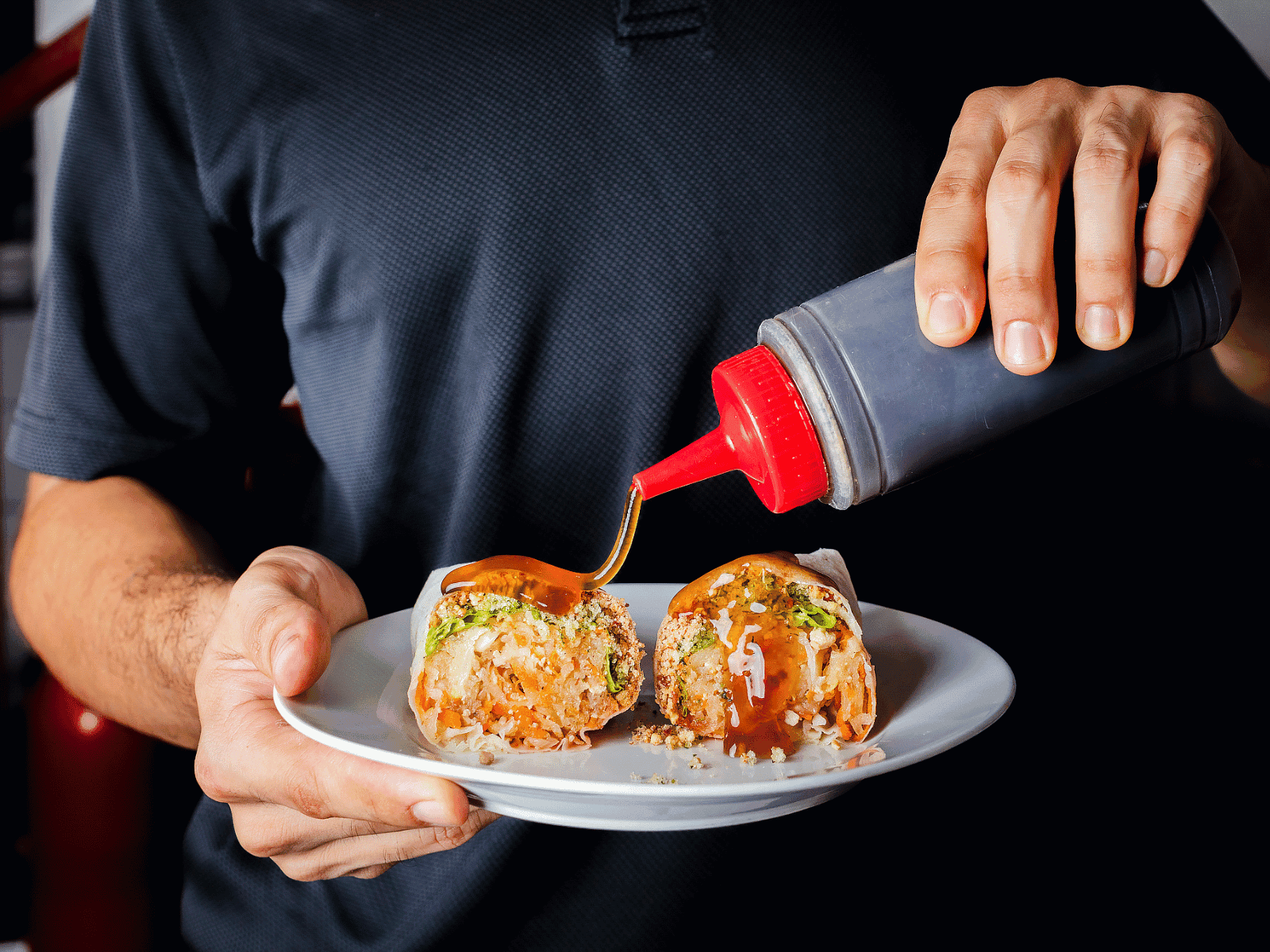
Lumpiang sariwa — "fresh lumpia" — is the Filipino equivalent of a Vietnamese summer roll but with a distinct Filipino identity: a thin, soft, savoury-crepe wrapper (made from flour, eggs and water) is layered with a lettuce leaf, spooned with a warm filling of sautéed pork, prawns, tofu, ubod (heart of palm), carrot, French beans and bean sprouts, sprinkled with toasted crushed peanuts, and rolled into a fat cigar. The finished lumpia is served on a platter with a small dish of the classical sweet garlic-peanut sauce (sarsa) poured generously over the top and a scatter of extra crushed peanuts. Sold at every Filipino carinderia (small restaurant), served at every party as a merienda (afternoon snack), and made in every household for family lunches.
Method
Whisk flour, cornstarch and salt in a large bowl. In a separate bowl, whisk eggs, water and 2 tbsp of the oil. Pour wet into dry and whisk until smooth. Strain through a sieve. Rest 30 minutes.
Warm a non-stick 22cm pan over medium heat. Brush lightly with oil. Pour a small ladle (about 60ml) of batter into the pan, tilting immediately so the batter spreads into a paper-thin 20cm circle. Cook 45 seconds — the surface should be just set and matte, edges slightly lifted. Flip and cook 15 seconds more. Slide onto a plate. Repeat until you have 12 wrappers. Stack with a piece of baking paper between each. Cover with a damp towel.
Warm oil in a wok over high heat. Cook onion 3 minutes; add garlic 30 seconds. Add pork, break up, brown 5 minutes. Add prawns, cook 90 seconds. Add fish sauce, soy sauce and pepper. Add tofu, ubod, French beans and carrots. Toss 4 minutes. Add bean sprouts and sugar. Toss 60 seconds. Season with salt. Drain any excess liquid from the wok. Cool the filling to warm.
Combine stock, brown sugar, soy sauce, fish sauce and garlic in a saucepan. Bring to a boil. Whisk in the cornstarch slurry. Cook 3 minutes until thickened to a glossy heavy sauce. Off the heat, stir in calamansi juice. Keep warm.
Lay a wrapper flat. Place a lettuce leaf in the middle. Spoon 3 heaped tbsp of the warm filling onto the lettuce. Fold the bottom of the wrapper up over the filling, then fold in one side (leave the top open so the lettuce leaf peeks out). Roll tightly to form a fat cigar with lettuce visible at one end.
Set 2 rolls per plate, lettuce-end up. Do not slice.
Ladle a generous amount of warm sauce over each pair of lumpia — the sauce should pool around them. Scatter crushed peanuts, fried garlic chips and coriander over the top.
Serve immediately with a small extra dish of sauce on the side. Diners eat with a spoon and fork, or pick up and eat with hands. Best within 20 minutes of assembly — the wrappers absorb sauce and soften over time.
Tips
- Wrapper thickness is the whole trick. Aim for paper-thin. If your first two crack, add a splash of water to the batter to thin it. Practice makes perfect — the first two go in the bin.
- Cool the filling before rolling. Hot filling melts the wrapper. Let the wok mixture rest 10 minutes before assembly.
- Ubod (heart of palm) is the flavour marker. Fresh ubod from a Filipino grocer is best; jarred/tinned palm heart works well. Do not substitute jicama or bamboo shoots — the flavour is wrong.
- Assemble to order. Fresh lumpia doesn't hold. Assemble at the table if you have prep space; otherwise assemble in the kitchen within 20 minutes of serving.
- Sauce is essential. The sweet garlic-peanut sauce is what turns fresh lumpia into lumpiang sariwa. Do not serve without.
More recipes
View all
Open-top dumplings filled with pork, prawn and water chestnut, steamed in bamboo baskets and served with a fierce chili-garlic-calamansi soy sauce.
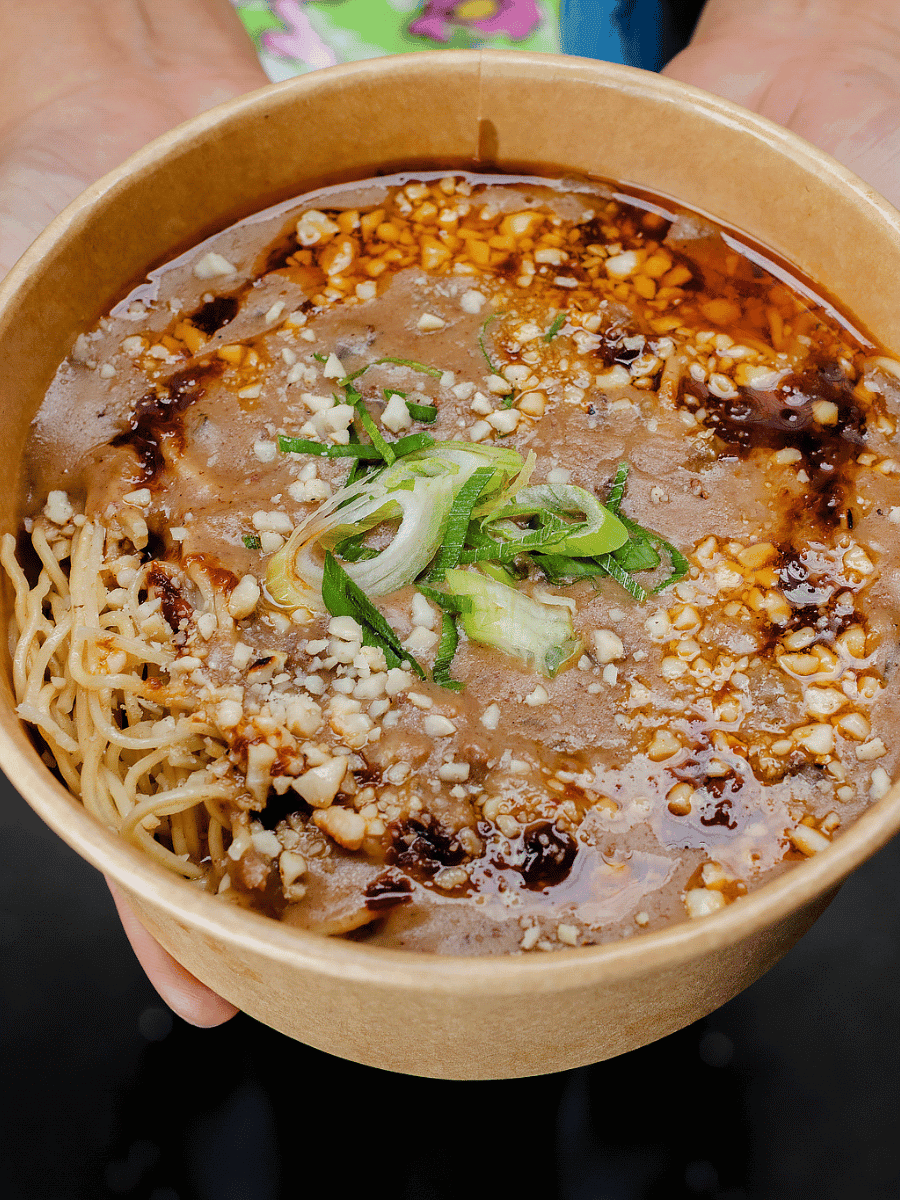
Slow-cooked oxtail and tripe in a thick peanut-annatto sauce, served with fermented shrimp paste (bagoong) and rice. The Philippines' Sunday-lunch stew.
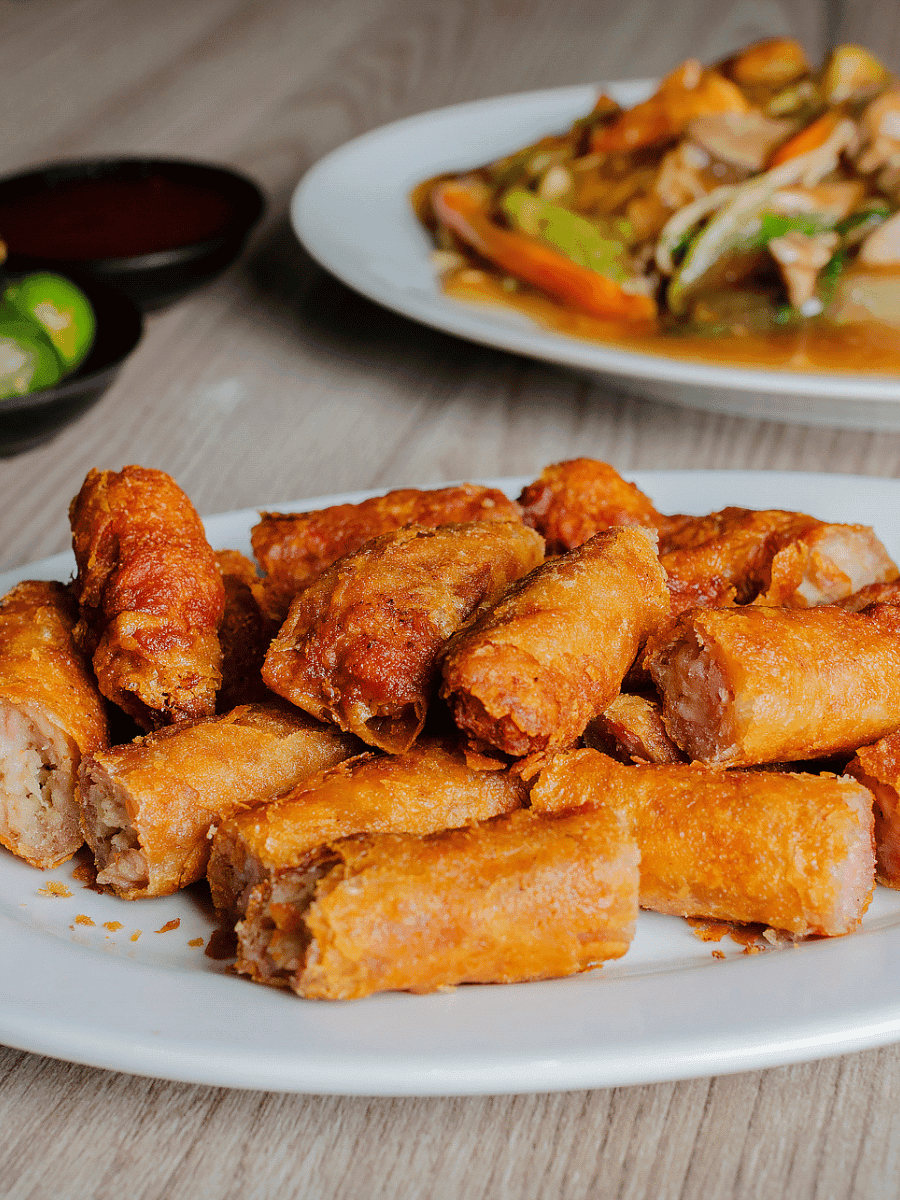
Thin, crisp pork-and-vegetable rolls fried to a shatter, dipped in banana ketchup or a sweet chili vinegar. The Philippines' party finger food.

Marinated pork loin glazed in a five-spice honey-soy sauce and slow-roasted until deep red at the edges. Manila's Chinese-Filipino roast pork.

Egg noodles in a deeply-simmered beef broth, topped with pork wontons, slices of tender braised beef and blanched pechay greens. Manila's kopitiam comfort soup.

Wide flat rice noodles wok-fried hard with beef strips, bean sprouts and Chinese greens in a dark soy glaze. Manila's Chinoy fried noodle classic.