

Destination
Cuenca
The story
Habas con melloco is a plain-looking side plate from Sierra Ecuador that carries more Andean identity than most main courses. Fresh (or dried and soaked) fava beans (habas) boiled with mellocos (a small pink-and-yellow Andean tuber called ulluco elsewhere), tossed while hot in butter, sweated red onion, achiote and a scatter of crumbled queso fresco. Served alongside hornado, fritada, or any grilled meat, or just eaten by itself with a piece of bread for a light supper.
Method
Bring a saucepan of salted water to a boil. Add the fava beans and cook 6 to 8 minutes (fresh) or 12 to 15 minutes (dried and soaked) until tender. Drain and, for the smoother texture Ecuadorians prefer, slip the beans out of their outer skins between finger and thumb (optional but classic).
Cook the melloco in salted boiling water for 15 to 20 minutes, until fork-tender. Drain and, if the tubers are large, halve them.
Melt the butter in a wide pan over medium heat. Sweat the red onion and spring onion 5 minutes until soft. Stir in the achiote, salt and pepper.
Add the cooked beans and melloco to the pan. Toss gently to coat in the butter. Cook 1 to 2 minutes just to warm through and let the flavours marry.
Tip into a serving bowl. Scatter with crumbled cheese and chopped coriander. Serve warm alongside a main course, or as a light supper on its own with crusty bread.
Tips
- Fresh habas are best but frozen work. Frozen fava beans (podded and blanched) are widely available and a very good substitute for out-of-season fresh. Dried habas soaked overnight also work but take longer to cook.
- Slipping the skins is optional but classic. Older, tougher fava beans benefit from having their bitter grey outer skin removed after cooking. Young fresh habas can be eaten skin-on.
- Frozen melloco is sold at Latin grocers. If you can't find it, waxy baby new potatoes (halved) are a visual and functional substitute, if not a cultural one.
- Achiote is the Ecuadorian touch. Its warm orange colour and subtle earthy flavour lift the dish out of "beans and potatoes with butter" and into specifically Andean territory.
- Queso fresco just before serving. Add the cheese off the heat so it stays crumbly. Melted cheese changes the character of the dish (and makes it much richer).
More recipes
View all
Cooked hominy corn scrambled with eggs, onions and achiote until the kernels turn golden and glossy. Cuenca's breakfast staple, eaten with fresh coffee.

Fresh corn ground with butter, milk and cheese, wrapped in corn husks and steamed into a soft sweet-savoury cake. Andean afternoon-tea food.
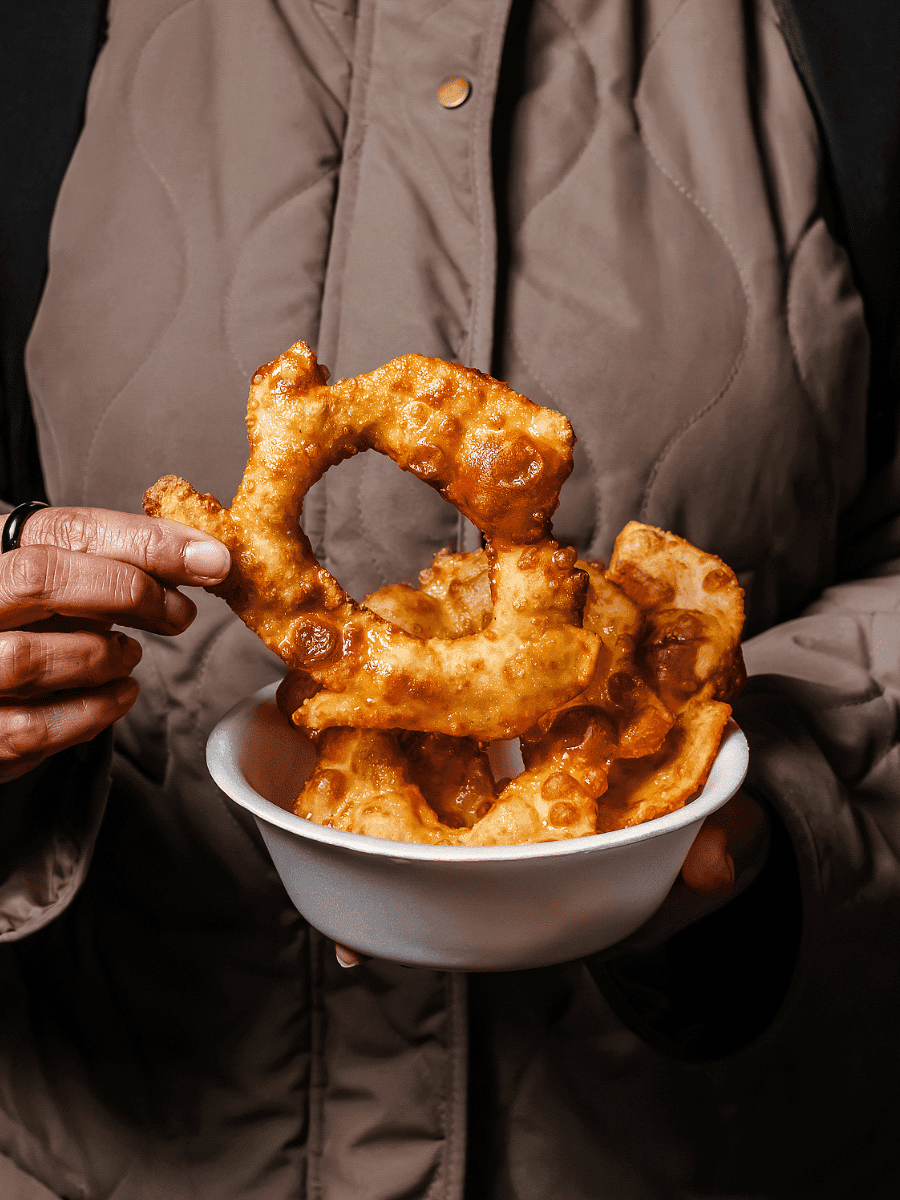
Fluted rings of fried dough drenched in a panela-and-cinnamon syrup. Ecuador's Christmas Eve dessert, served alongside hot cinnamon chocolate.

Green plantain dough wrapped around melty white cheese, deep-fried until crackling. Coastal and Amazonian Ecuador's four-o'clock snack, best with black coffee.

Paper-thin dough puffed to a hollow pillow around melted cheese, dusted with sugar. Sierra Ecuador's teatime snack, the size of your face.

Guava paste whipped with egg whites into a light pink meringue-mousse, piped into paper cones and eaten while walking. Quito's pink-cloud street sweet.