

Destination
Cuenca
The story
Espumilla is the pink cloud of Ecuadorian street food: fresh guava pulp whipped with egg whites and sugar into a light, airy, mousse-meringue that holds its shape enough to be piped from a bag into small paper cones or waffle horns and dotted on top with a couple of coloured sprinkles. Sold from bicycle carts across Quito, Cuenca and Guayaquil, especially in the parks on Sunday afternoons. A dollop of nostalgia for every Ecuadorian who grew up on it.
Method
Halve the guavas and scoop out the pulp (skin discarded). Simmer with the sugar and lime juice in a small pan for 8 to 10 minutes until soft. Pass through a fine sieve to remove the seeds. You should have about 250ml of thick pink puree. Cool completely.
Set a heatproof bowl over a saucepan of gently simmering water (the water shouldn't touch the bottom of the bowl).
Add the egg whites, sugar, salt and cream of tartar to the bowl. Whisk continuously by hand over the heat for 3 to 4 minutes, until the sugar has fully dissolved and the mixture is hot to the touch (65°C on a thermometer).
Transfer the bowl to a stand mixer with the whisk attachment (or use a hand whisk with strong arms). Whip on high for 5 to 6 minutes, until the meringue is glossy, tripled in volume and holds a firm peak.
Reduce the mixer speed to medium. Slowly drizzle in the cooled guava puree, whipping as you go, until the mixture is a pale pink, holds a soft peak and looks completely airy.
Spoon the espumilla into a piping bag with a large star tip. Pipe generous swirls into paper or waffle cones, going high and airy. Decorate with sprinkles or grated chocolate.
Serve immediately. Espumilla weeps and loses its structure within an hour, so it's best made just before eating.
Tips
- Very ripe guava is essential. Under-ripe guava is astringent and pale. Ripe guava (soft, deeply perfumed, giving under thumb pressure) gives you the classic pink colour and sweet-floral flavour.
- The hot meringue technique cooks the whites. Whisking over a bain-marie until 65°C makes the meringue food-safe (equivalent to pasteurisation), which matters because espumilla is served without further cooking.
- Whip until firm before adding the guava. The meringue needs to hold a firm peak before the fruit puree goes in. Under-whipped and the finished espumilla is soupy; well-whipped and the guava folds in without collapsing.
- Drizzle the guava, don't dump. Adding the fruit puree all at once knocks the air out. Drizzle slowly with the mixer running so it incorporates gently.
- Eat within an hour. Espumilla is a fresh product. It weeps and softens as it sits, so make just before serving. Not a make-ahead dessert.
More recipes
View all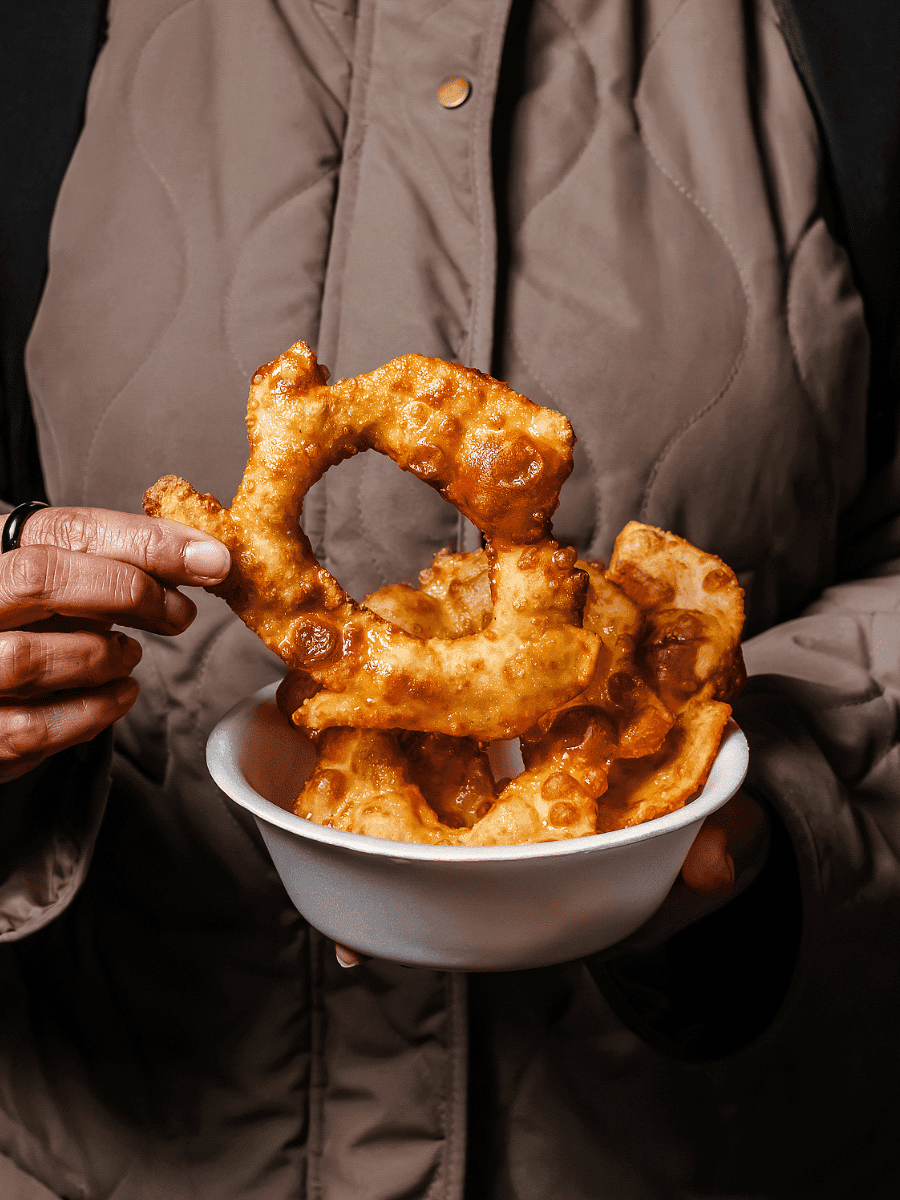
Fluted rings of fried dough drenched in a panela-and-cinnamon syrup. Ecuador's Christmas Eve dessert, served alongside hot cinnamon chocolate.

Coarsely ground white corn simmered slowly with milk, cinnamon and panela into a thick, warming drink. The evening street-cart pour on cold Quito nights.

Egg yolks whipped with sugar into a foam, mounted with hot milk, cinnamon and a shot of aguardiente. Quito's Christmas Eve nightcap.

Fresh corn ground with butter, milk and cheese, wrapped in corn husks and steamed into a soft sweet-savoury cake. Andean afternoon-tea food.

Green plantain dough wrapped around melty white cheese, deep-fried until crackling. Coastal and Amazonian Ecuador's four-o'clock snack, best with black coffee.

Paper-thin dough puffed to a hollow pillow around melted cheese, dusted with sugar. Sierra Ecuador's teatime snack, the size of your face.