

Destination
Cuenca
The story
Empanadas de verde are Ecuador's coastal and Amazonian answer to the empanada: instead of wheat pastry, the shell is made from mashed green plantain, and the classic filling is a slab of melty white cheese (queso fresco or queso blanco), sometimes accompanied by a scoop of shredded chicken or a spoon of hogao. Formed by hand between two sheets of plastic, sealed with a fork, deep-fried until the outside crackles into a deep bronze crust. The cheese melts inside as the empanada cooks. Sold at every roadside kiosk and mid-afternoon bakery from Guayaquil to Puyo.
Method
Place the plantain chunks in a large pot of salted water. Bring to a boil and cook 20 to 25 minutes until fork-tender.
Drain well. Immediately transfer to a large bowl and mash smooth with a potato masher. Green plantain dough seizes if it cools before mashing.
Add the achiote oil, butter and salt to the hot mash. Knead by hand for 2 to 3 minutes until smooth, glossy and slightly warm-sticky. The dough should feel like soft Play-Doh and hold a shape without cracking.
Wet your hands. Pinch off a piece about the size of a small egg (60g). Place between two sheets of plastic (a slit freezer bag works). Press flat with the base of a heavy pan into a disc about 12cm wide and 4mm thick.
Peel back the top plastic. Place a slab of cheese (and a small spoon of onion + coriander if using) on one half of the disc. Using the bottom plastic, fold the empanada in half over the filling. Press the edges together firmly, then crimp with a fork.
Heat the oil in a deep pot to 175°C (350°F). Fry the empanadas in batches of 2 or 3 for 3 to 4 minutes, turning gently, until deep golden and crackly all over. Don't crowd the pot.
Lift onto kitchen paper. Serve immediately with ají picante and a small cup of strong black coffee.
Tips
- Green plantains only. Yellow or ripe plantains make a sweet, sticky dough that falls apart in the oil. Skin must be entirely green and firm.
- Shape between plastic sheets. Green plantain dough is too fragile to roll on a floured surface. Two sheets of plastic (or a slit freezer bag) let you press flat and lift the disc without tearing.
- Fresh Ecuadorian queso fresco is ideal. Mozzarella is a passable substitute; halloumi and feta are too dry. You want a cheese that melts (but not too much) into the hot dough.
- Fry as soon as shaped. The dough softens if it sits at room temperature. Shape and fry in small batches rather than shaping everything first.
- Best within 5 minutes of frying. The exterior loses its crackle fast. If serving a crowd, cook in batches and pass around straight from the pan.
More recipes
View all
Paper-thin dough puffed to a hollow pillow around melted cheese, dusted with sugar. Sierra Ecuador's teatime snack, the size of your face.

Fresh corn ground with butter, milk and cheese, wrapped in corn husks and steamed into a soft sweet-savoury cake. Andean afternoon-tea food.
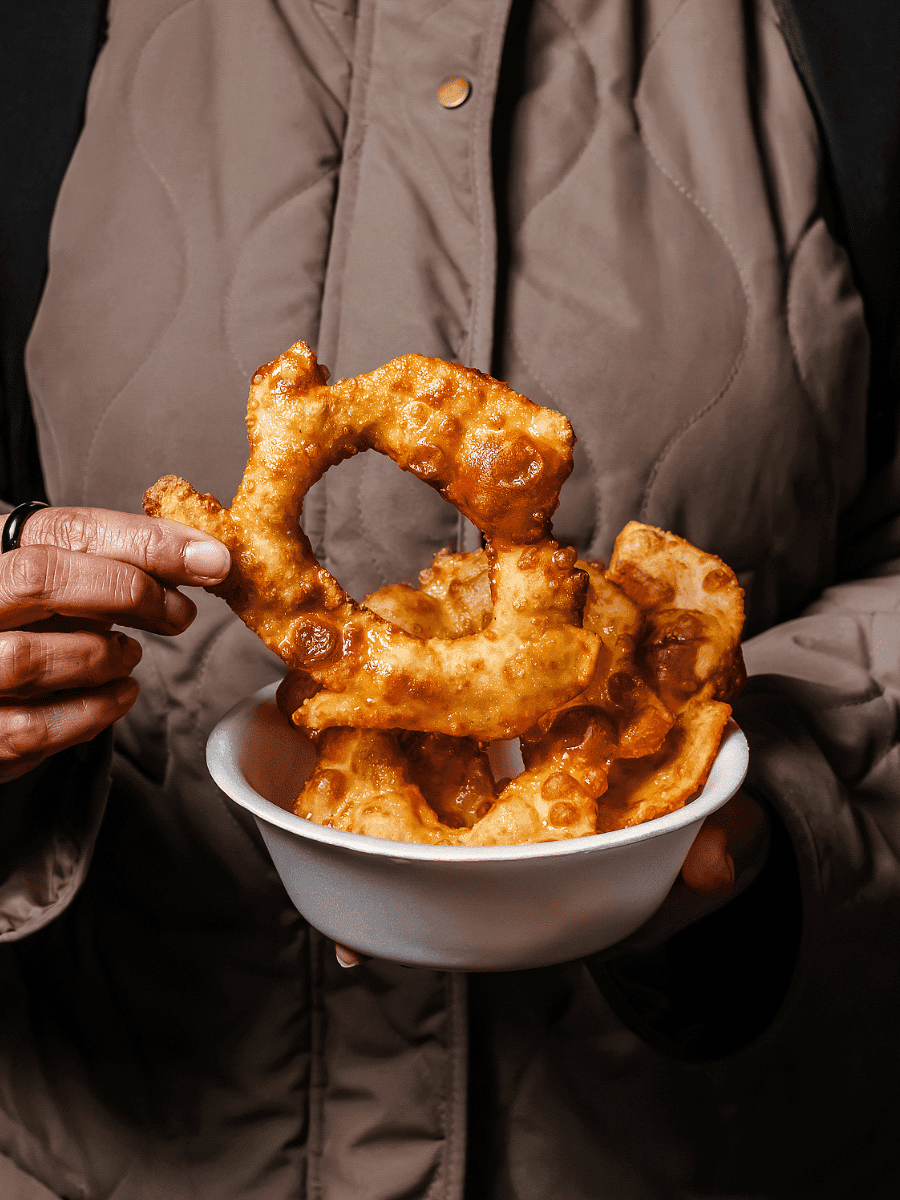
Fluted rings of fried dough drenched in a panela-and-cinnamon syrup. Ecuador's Christmas Eve dessert, served alongside hot cinnamon chocolate.

Coarsely ground white corn simmered slowly with milk, cinnamon and panela into a thick, warming drink. The evening street-cart pour on cold Quito nights.

Egg yolks whipped with sugar into a foam, mounted with hot milk, cinnamon and a shot of aguardiente. Quito's Christmas Eve nightcap.

Cooked hominy corn scrambled with eggs, onions and achiote until the kernels turn golden and glossy. Cuenca's breakfast staple, eaten with fresh coffee.