
Destination
Puerto Vallarta
The story
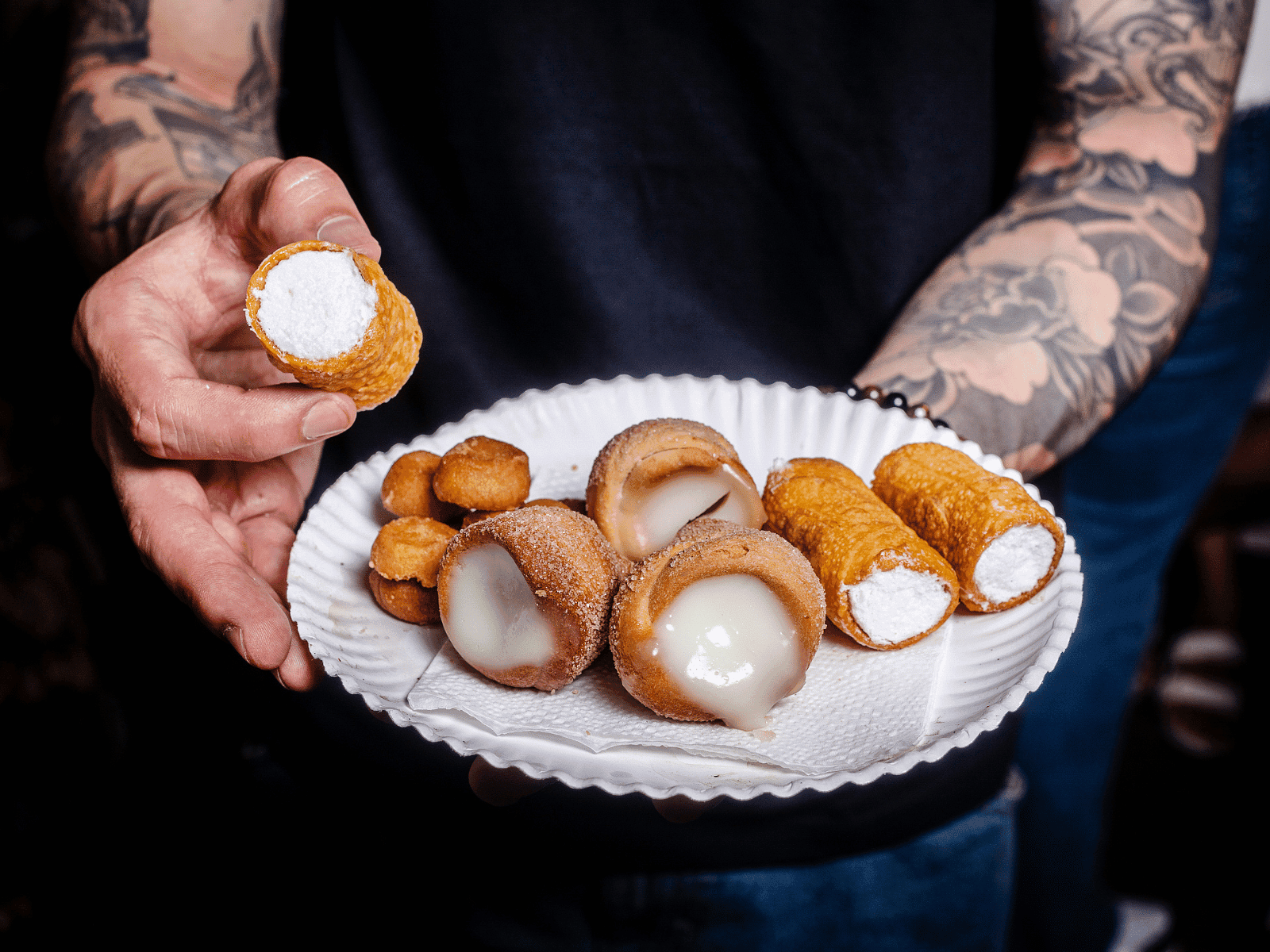
The gaznate is one of the most photogenic and least-exported of Mexican desserts: a small tube of thin pastry, deep-fried until crisp and pale-golden, then filled at the last minute with a fluffy sweet meringue or a rich dulce de leche. The finished pastries are stacked in wire baskets or straw trays at Mexican ferias (town fairs) and parades, especially around Independence Day and the celebrations of the Day of the Dead, and eaten on the spot with the meringue pouring out over the eater's chin as they bite. The name gaznate is old Spanish for "throat" or "windpipe" — a reference to the tube shape — and the dessert is thought to have arrived with the Spanish in the 16th century as a variation of Andalusian relámpagos, then evolved into the Mexican street-fair form.
Method
Rub the butter into the flour, sugar and salt with your fingertips until it resembles fine breadcrumbs. Whisk together the egg yolks, milk, vinegar and vanilla. Pour into the dry ingredients and mix with a fork until just combined. Turn out and knead briefly into a smooth ball. Wrap in cling film and refrigerate 30 minutes.
Divide the dough in half. Roll each half between two sheets of baking paper until paper-thin (2mm). Cut into rectangles about 8cm wide and 12cm long. You should have 16 pieces.
Lightly oil each cannoli tube. Wrap a pastry rectangle around each tube, overlapping the edges by 1cm and pressing to seal. Do not stretch the pastry.
Heat the oil to 170C in a deep heavy pot. Fry the wrapped tubes 2 at a time for 90 seconds, turning to colour evenly, until pale golden and crisp. Lift out with tongs and drain on kitchen paper. Cool 2 minutes, then carefully slide the pastry off the tube. Repeat for the rest.
Combine sugar and water in a small heavy saucepan. Bring to a simmer without stirring. Cook until the syrup reaches 115C (soft-ball stage) — about 5 to 6 minutes.
While the syrup cooks, whip the egg whites with the salt in a stand mixer to soft peaks. When the syrup reaches 115C, pour it slowly down the side of the bowl into the whipping whites (do not stop the mixer). Continue whipping 5 minutes until the meringue is glossy, stiff and cool to the touch. Whisk in the vanilla.
Spoon the meringue into a piping bag fitted with a small star tip. Pipe generously into both ends of each pastry tube until the meringue starts to peek out. Excess meringue on top is authentic — a proper gaznate is over-filled.
Dust each gaznate with icing sugar and (optional) a pinch of cinnamon. Serve immediately, arranged on a platter or in a wire basket for a proper feria look. Best eaten within 20 minutes.
Tips
- Roll the pastry paper-thin. 2mm is the target. A thick pastry gives you a chewy tube; a thin one gives you the shattering, delicate shell that makes gaznates gaznates.
- Oil the tubes lightly. Too much oil and the pastry slides off during frying; too little and it sticks. A very thin brush is right.
- Fry at 170C. Cooler and the pastry stays pale and greasy. Hotter and it browns before the inside is cooked.
- Italian meringue is stable. It uses hot syrup, so the egg whites are pasteurised and the meringue holds its shape for hours. French meringue (just sugar into whites) doesn't hold — don't substitute.
- Fill at the last minute. Filled gaznates lose their crunch within 20 minutes. Fill just before serving, or set out the empty shells with a bowl of meringue and let guests fill their own.
More recipes
View all
Ridged pastry ropes piped into hot oil, tossed in cinnamon sugar and served with a mug of thick Mexican hot chocolate for dunking.

Buttery Mexican pastry pockets filled with guava paste and cream cheese, or with dulce de leche and pecans. Mercado sweets sold from glass cabinets.

Guadalajara's answer to crème brûlée: a cinnamon-vanilla custard baked until the top blisters and turns almost black. No blowtorch needed.

A silky caramel-topped custard, richer and denser than the European original. Mexico's most-eaten dessert, born in nuns' kitchens 300 years ago.

Corn-thickened Mexican hot chocolate spiced with cinnamon and star anise. Winter-morning breakfast drink, halfway between hot chocolate and porridge.

Fresh corn kernels roughly mashed and slow-cooked with butter, chile and cream until the natural sugars caramelise into a golden savoury porridge. A Guerrero-style comfort dish.