
Destination
Puerto Vallarta
The story
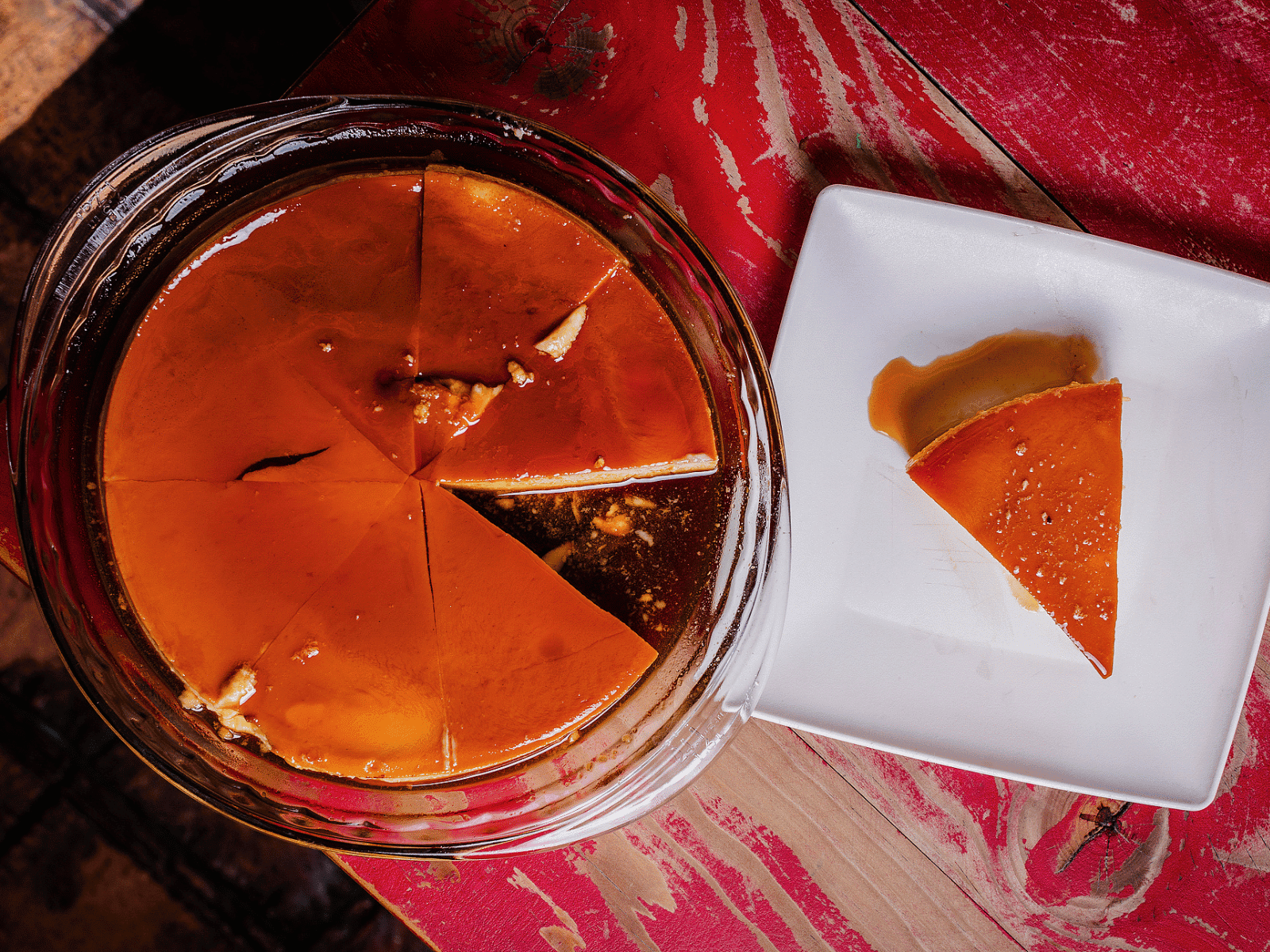
Flan is the most-eaten dessert in Mexico and the country's default sweet-course finish: a silky, caramel-topped custard, richer and heavier than the Spanish original because Mexican cooks add condensed milk and cream cheese to intensify the flavour. Every fonda, every family Sunday lunch, every bakery counter and every fine-dining restaurant serves a version, and every Mexican has an opinion on whose grandmother makes the best. Cool, wobbly, deeply sweet, coated in an amber caramel that turns to syrup on the plate — this is the dessert Mexican-American food culture exported and the dessert Mexican expats miss most when they leave.
Method
Preheat oven to 160C. Boil a kettle of water.
Combine the sugar and 3 tbsp water in a heavy small saucepan over medium heat. Do not stir once dissolved. Cook 6 to 8 minutes, swirling the pan occasionally, until the mixture turns deep amber-mahogany — do not walk away, this is where flan is made or lost. Immediately pour into the mould and tilt to coat the base and sides. Set aside to harden.
In a blender, combine the condensed milk, evaporated milk, cream cheese, whole eggs, egg yolks, vanilla and salt. Blend on medium 60 seconds until smooth and free of lumps. Strain through a fine sieve into a jug — this removes any last bits of cream cheese and gives you the silky classical texture.
Pour the strained custard over the hardened caramel in the mould. Set the mould in a roasting tin. Carefully pour boiling water from the kettle into the roasting tin until it comes halfway up the sides of the mould.
Cover the flan mould with its lid or a piece of foil. Bake 60 to 75 minutes until the custard is just set — a slight jiggle in the middle is correct. Test by inserting a knife 2cm from the edge; it should come out clean.
Lift the flan mould out of the water bath onto a rack. Cool at room temperature 60 minutes. Refrigerate at least 6 hours, preferably overnight.
Run a thin knife around the edge of the mould. Set an upturned serving plate over the mould and invert in one confident motion. The flan should release cleanly, with the caramel pouring down over the top as syrup. If it sticks, dip the base of the mould in warm water for 30 seconds and try again.
Slice into wedges. Serve with extra caramel pooled around each slice, and a spoon of the caramel syrup on top. Whipped cream on the side is a modern touch.
Tips
- Dark amber caramel. Not golden, not medium, not walking-away safe. Dark amber (like chestnut wood) is the classical flan colour and provides the faintly-bitter edge that balances the sweetness. It's easy to burn, so watch it constantly.
- Strain the custard. This removes any lumps from the cream cheese and gives you the silky classical texture. A blender leaves microlumps; the sieve catches them.
- Bain-marie is essential. Dry-baked flan is unevenly cooked and grainy. Water bath, always. Halfway up the sides is the correct depth.
- Overnight in the fridge. Flan needs to fully set and cool. Serving warm gives you a mushy, half-liquid mess.
- The invert is the drama. A proper flan should slide out clean, with the caramel pouring like maple syrup. If it sticks, warm the mould base in hot water for 30 seconds — do not force with a knife.
More recipes
View all
Corn-thickened Mexican hot chocolate spiced with cinnamon and star anise. Winter-morning breakfast drink, halfway between hot chocolate and porridge.

Buttery Mexican pastry pockets filled with guava paste and cream cheese, or with dulce de leche and pecans. Mercado sweets sold from glass cabinets.

Ridged pastry ropes piped into hot oil, tossed in cinnamon sugar and served with a mug of thick Mexican hot chocolate for dunking.

A pastry tube fried crisp then filled with sweet meringue or dulce de leche. Mexico's most photogenic feria (fair) dessert, sold from wire baskets at every parade.

Fresh corn kernels roughly mashed and slow-cooked with butter, chile and cream until the natural sugars caramelise into a golden savoury porridge. A Guerrero-style comfort dish.

Guadalajara's answer to crème brûlée: a cinnamon-vanilla custard baked until the top blisters and turns almost black. No blowtorch needed.