

Destination
Singapore
The story
Singaporean curry laksa (also called laksa lemak) is the country's most-loved coconut-curry noodle soup: yellow egg noodles and rice vermicelli sit in a rich orange-red coconut-and-chili broth built on a Nyonya rempah of dried chilies, shallots, garlic, lemongrass, galangal, candlenuts and dried shrimp, topped with prawns, cockles, fried tau pok (bean curd puffs), sliced fish cake, bean sprouts, and — the Singapore signature — a spoonful of finely-chopped laksa leaf (daun kesum) that gives the broth its distinctive citrusy edge. Sold at every hawker centre in the country; the Katong version (from the Peranakan neighbourhood of East Coast Road) is the most famous, served with the noodles pre-cut so you can eat with a spoon only.
Method
Wrap the belacan in a small piece of foil and toast in a dry pan 3 to 4 minutes each side. Crumble into the food processor.
Drain the soaked chilies and shrimp. Combine all rempah ingredients in a food processor. Blend to a smooth paste (2 to 3 minutes), scraping down.
Warm the oil in a heavy pot over medium heat. Add the rempah and curry powder. Cook 12 to 15 minutes, stirring often, until the paste has darkened and the oil separates and turns deep red at the edges.
Pour in the chicken stock and coconut milk. Bring to a gentle simmer. Add sugar, salt and fish sauce. Simmer 20 minutes so flavours integrate and the broth thickens slightly.
Poach the prawns in the broth for 2 minutes just until pink; lift out. Add the fish cake and tau pok; simmer 3 minutes. Add the cockles for 60 seconds if fresh. Stir in coconut cream just before serving so it stays glossy.
In a separate pot of boiling water, blanch the yellow noodles 30 seconds and rice vermicelli 45 seconds. Drain both. Divide between 4 deep bowls. Top with bean sprouts.
Arrange prawns, fish cake, tau pok, cockles and half an egg on top of each bowl. Ladle the hot broth generously over.
Top each bowl with a generous scatter of chopped daun kesum (laksa leaf) and a spoon of sambal belacan. Serve with lime wedges and extra chili on the side. Eat with a spoon (traditional Katong style — noodles are cut) or with chopsticks and spoon.
Tips
- Toast the belacan. Untoasted belacan tastes raw. Two minutes wrapped in foil is not optional.
- Fry rempah until oil separates. Twelve minutes minimum. Under-cooked rempah gives you a cloudy, raw-tasting broth.
- Laksa leaf is essential. Daun kesum (Vietnamese mint / laksa leaf) is what makes Singapore curry laksa taste distinctly Singaporean. Sold at any Asian grocer. Do not substitute mint or coriander.
- Add coconut cream at the end. Boiling coconut cream splits and turns the broth grainy. Stir in during the last 2 minutes.
- Cut the noodles. Katong-style laksa serves the noodles pre-cut so you can eat with just a spoon. Try it — it's a different eating experience.
More recipes
View all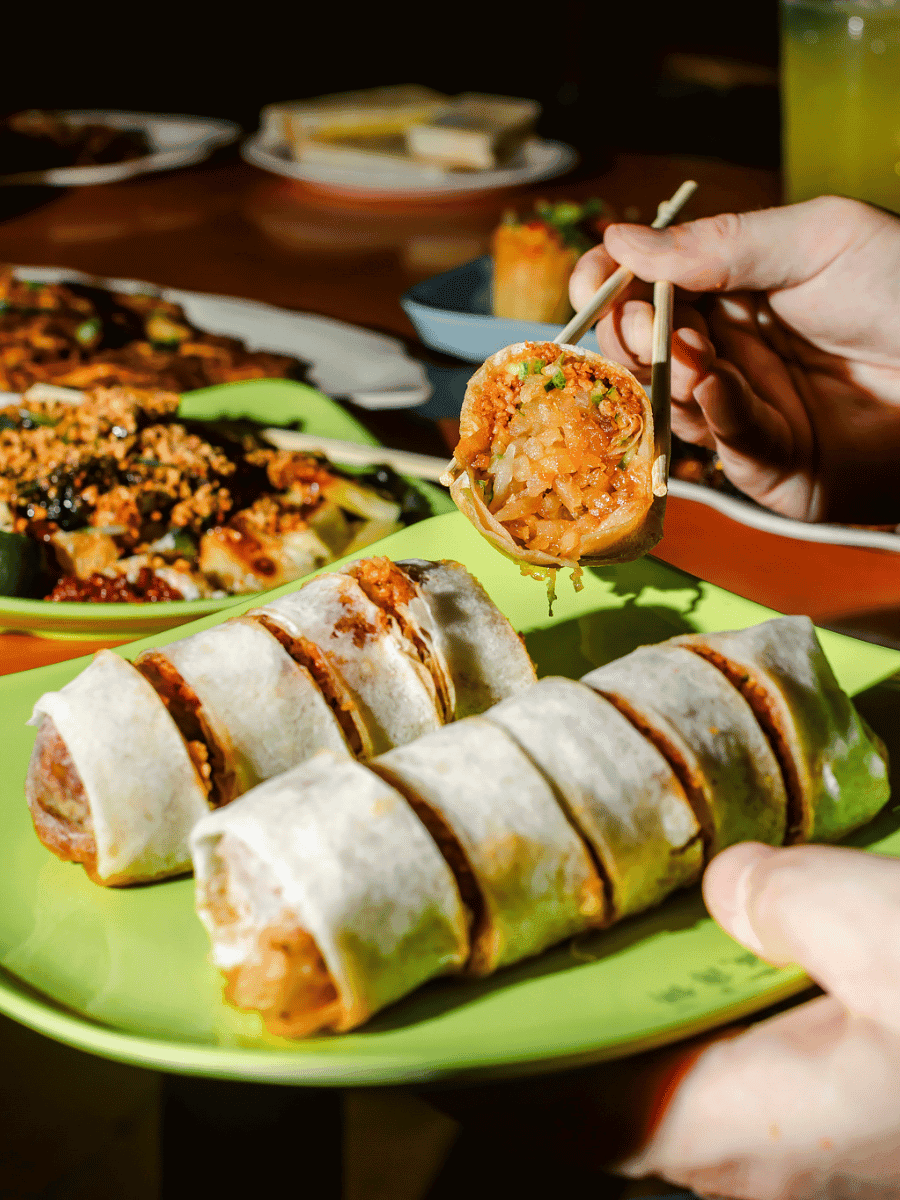
Fresh crepe wrappers filled with braised turnip, lettuce, prawn, sweet Chinese sausage and a slick of sweet-hot sauce. Peranakan Singapore's party-food centrepiece.
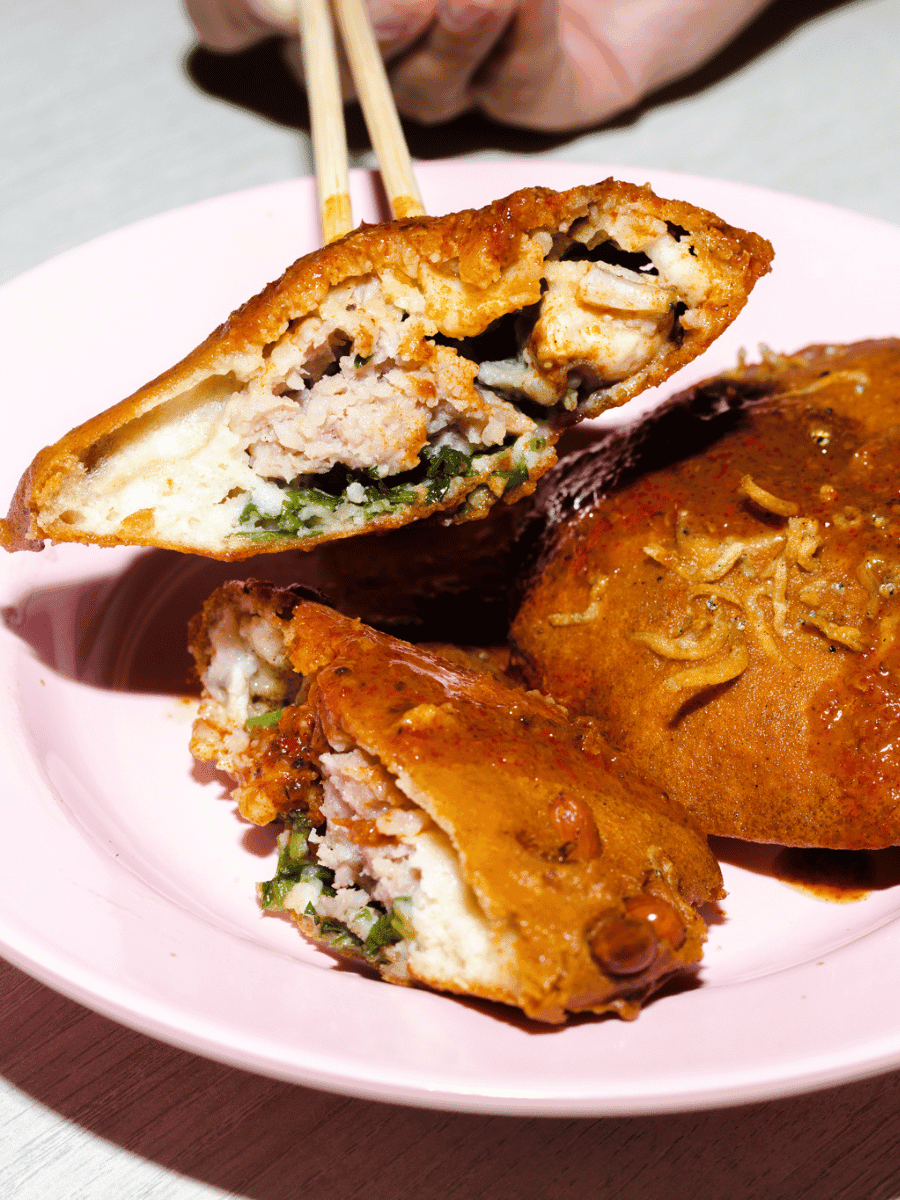
Deep-fried disc of rice-flour batter studded with whole oysters, minced pork and dried shrimp, served with a squeeze of chili sauce. Old Chinatown Singapore's snack.

Flat rice noodles wok-fried hard with beef slices, kai lan and dark sweet soy — the Teochew-Chinese Singapore hawker classic.

A plate of rice topped with breaded pork chop, chap chye cabbage, ngoh hiang and a ladle of dark yellow Hainanese curry gravy. Singapore's Chinese-Hainanese hawker specialty.
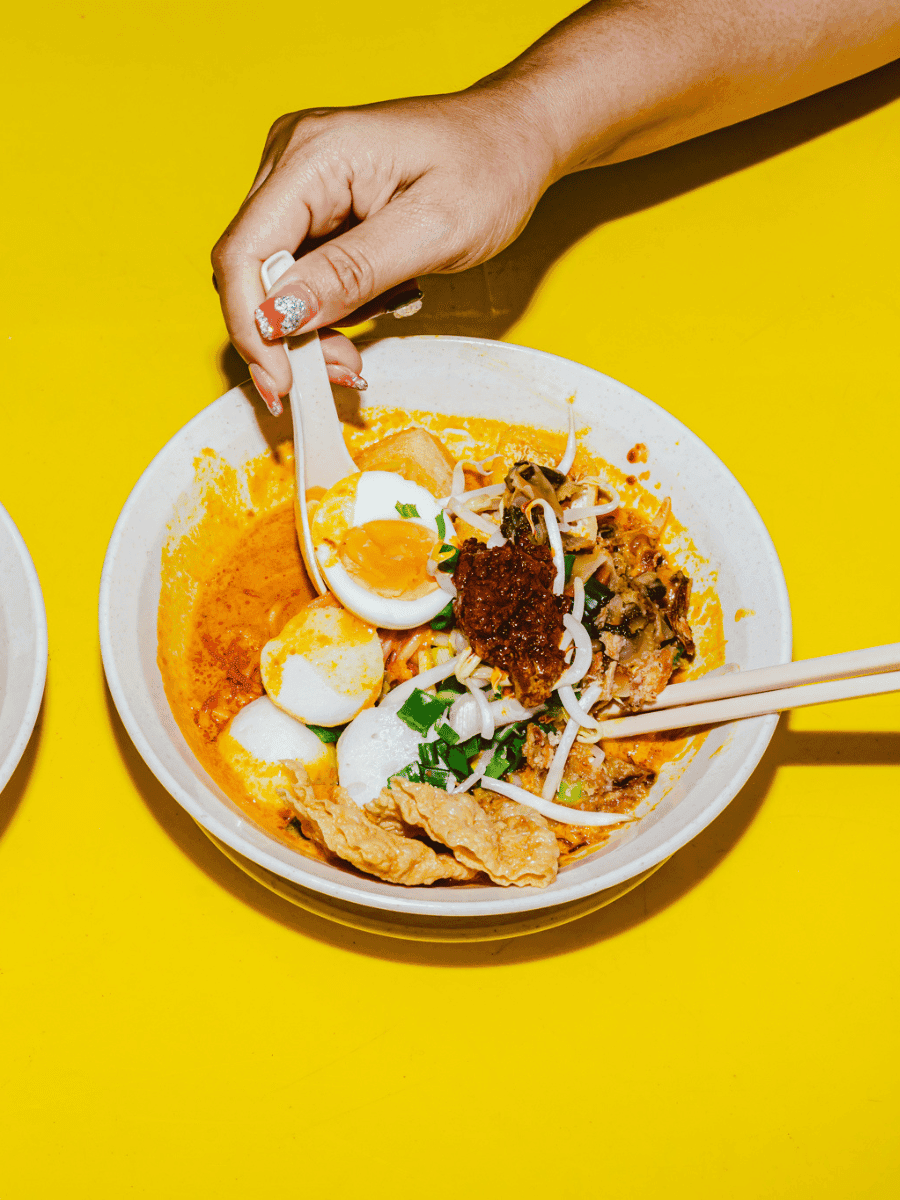
Coconut-based curry noodle soup with prawns, tofu puffs, cockles and a scarlet slick of chilli oil. Malaysia's default lunchtime laksa, richer and softer than its Penang cousin.

Whole chicken slow-poached in dark soy master stock scented with star anise, cinnamon and rock sugar, chopped over rice with a spoon of ginger oil.