
Destination
Santiago
The story
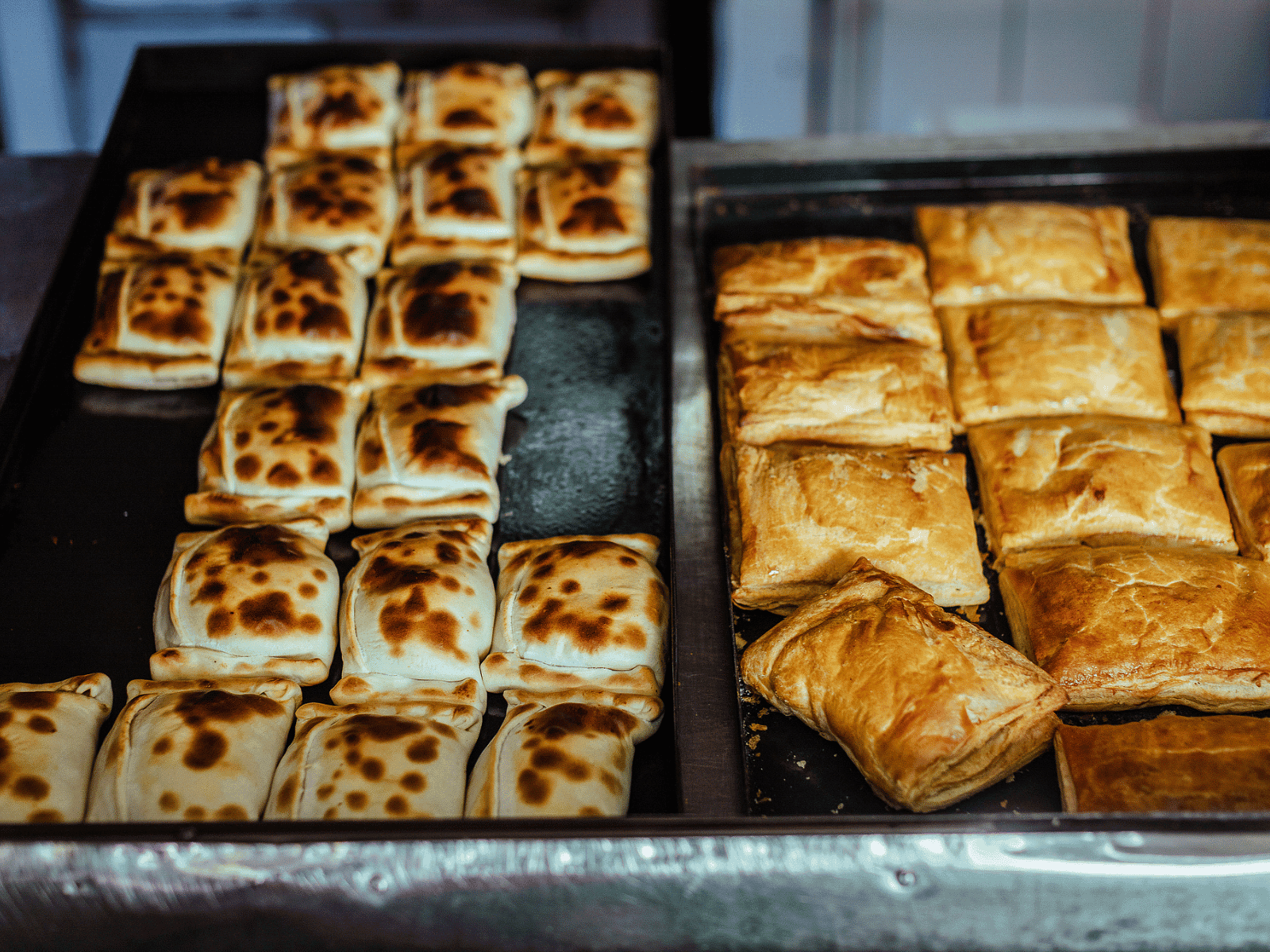
The Chilean empanada is different from its Argentine and Bolivian cousins. It's larger (about 20cm wide, twice the size of an Argentine one), it's baked rather than fried, and the filling (called pino, from the Mapuche word for the mix) is a specific and non-negotiable combination: hand-cut beef, sweet stewed onion, one hard-boiled egg wedge, one plump raisin, and one black olive with the pit still in. Sold at every Chilean bakery, but especially eaten in enormous quantities around September 18, the Fiestas Patrias (independence day).
Method
Melt the fat in a wide heavy pan over medium heat. Add the onion and a good pinch of salt. Cook slowly for 15 minutes, stirring often, until soft and sweet. Add the garlic, paprika, cumin, merkén, salt and pepper. Cook 1 minute more.
Turn the heat up. Add the diced beef and cook, stirring, until it releases its liquid. Pour in the stock and simmer 15 minutes until the beef is tender and the liquid has reduced. Cool completely, ideally in the fridge overnight (pino must be cold when you assemble).
In a large bowl, combine the flour and salt. Whisk the egg into the warm milk with the melted fat and wine. Pour into the flour and mix to a soft dough. Turn out and knead 5 minutes until smooth. Wrap and rest 30 minutes at room temperature.
Heat the oven to 220°C (425°F). Line two baking trays with baking paper.
Divide the dough into 12 balls. Roll each ball into a 20cm round about 3mm thick on a lightly floured surface. Chilean empanadas are big, so don't skimp on size.
Place a heaped tablespoon of cold pino in the centre of each disc, off-centre toward one edge. Top with one egg wedge, one raisin and one whole olive.
Brush the edge with a little water. Fold the disc over to form a half-moon. Press firmly around the edge to seal. Fold two corners of the semicircle up and inward, and fold the central curved edge back over them; this three-corner fold is the classic Chilean repulgue.
Arrange on the trays. Brush the tops with egg wash. Bake for 25 to 30 minutes, until deeply golden and blistered in places.
Rest 5 minutes before serving: the filling is molten straight from the oven. Serve with a glass of red wine, or the traditional Chilean pairing of terremoto (fortified white wine with pineapple ice cream and Fernet).
Tips
- Hand-cut beef, never mince. The whole point of Chilean pino is the texture: small cubes of beef with visible pieces. Mince turns the filling into an unpleasant slurry.
- The pino must be cold when you assemble. Warm filling steams the dough from inside and gives you soggy, cracked shells. Overnight in the fridge is standard.
- Beef fat or lard for the dough is worth the effort. Butter works but gives a slightly less flaky, less savoury shell than the traditional beef fat (called manteca de vaca).
- The olive stays with the pit. This is not garnish, it's tradition. Every Chilean will warn a foreigner, and every Chilean expects the warning to come. Use pitted olives if you're worried, but the classic is with pit.
- Best eaten within an hour of baking. Chilean empanadas hold up better than most (thanks to the enclosed pastry), but they're at their best hot from the oven with the pastry crackling.
More recipes
View all
A layer of blitzed sweet corn with basil baked over a filling of beef, chicken, olive, raisin and boiled egg. Chile's summer national dish, served in a clay paila with sugar caramelised on top.

Half-moon pastries of knife-cut beef, sweet onion, cumin, hard-boiled egg and one green olive. The most portable meal in Argentina.
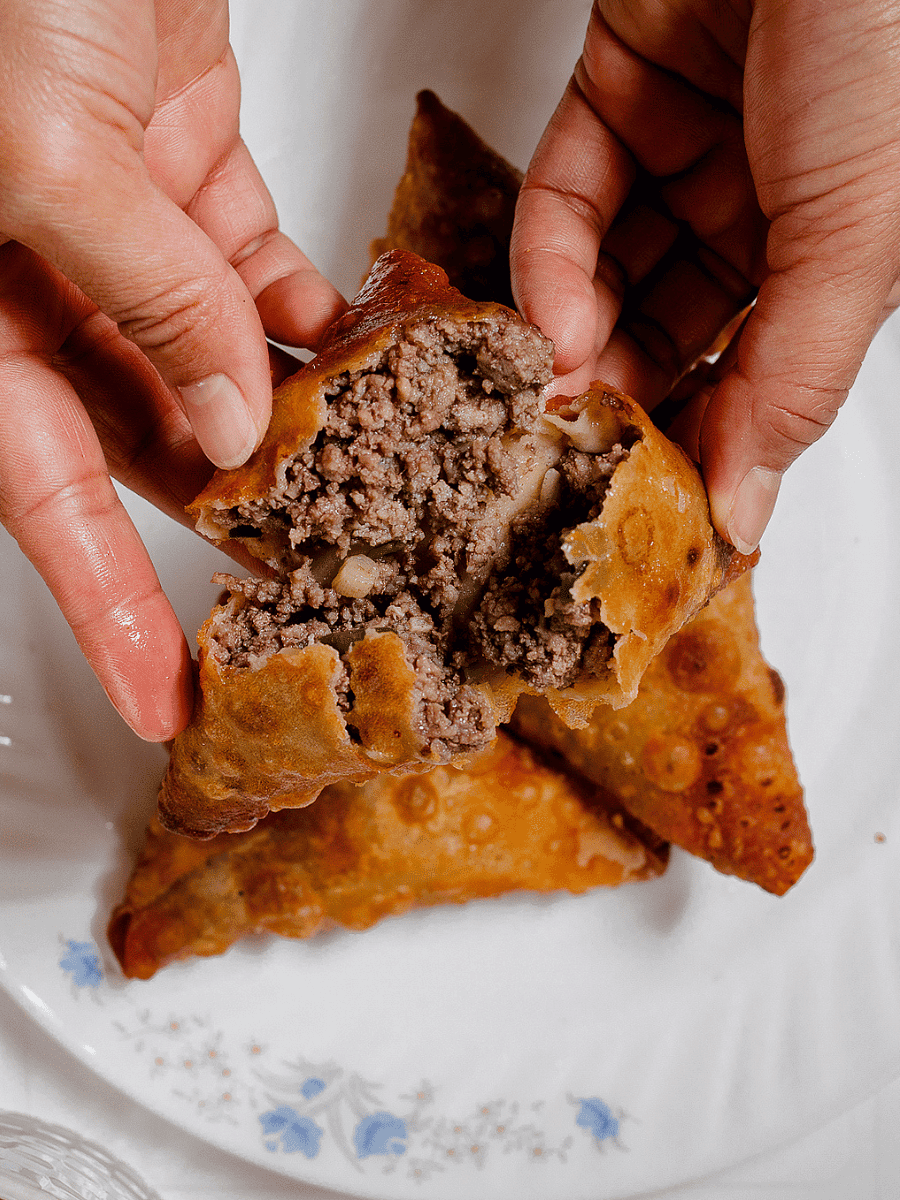
Small triangular pastries stuffed with spiced minced beef, onion and green peas, deep-fried until crisp. Rwanda's answer to Indian samosas, sold at every bar.
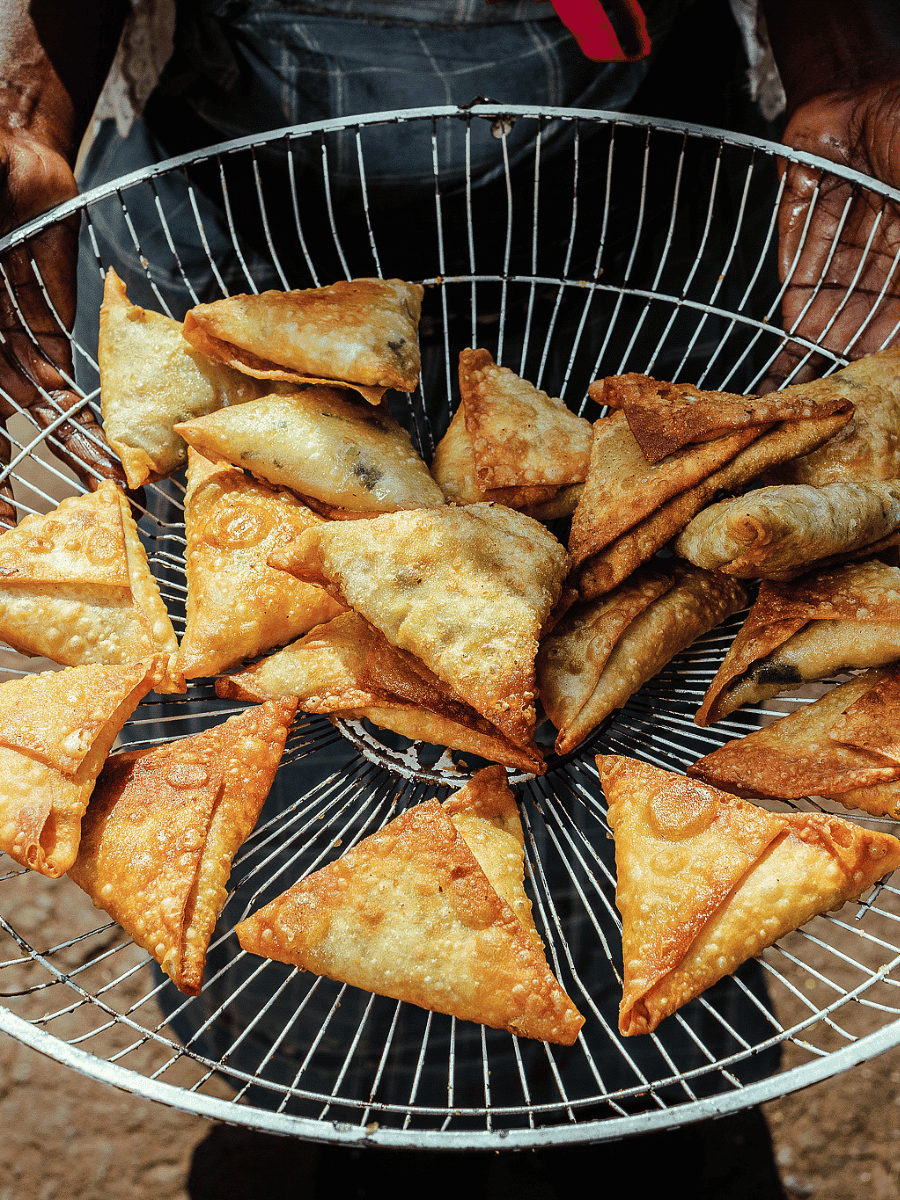
Small triangular pastries stuffed with spiced minced beef, onion and green peas, deep-fried until crisp. Kampala's Muslim-quarter breakfast staple.

Thin, crackling pastry deep-fried around a ground-beef filling. The classic feirinha snack, sold with sugarcane juice on Saturday mornings.

Flaky baked pastries stuffed with spiced beef, olives, egg and raisins, brushed with icing sugar. Peru's Sunday-morning bakery classic.