
Destination
Santiago
The story
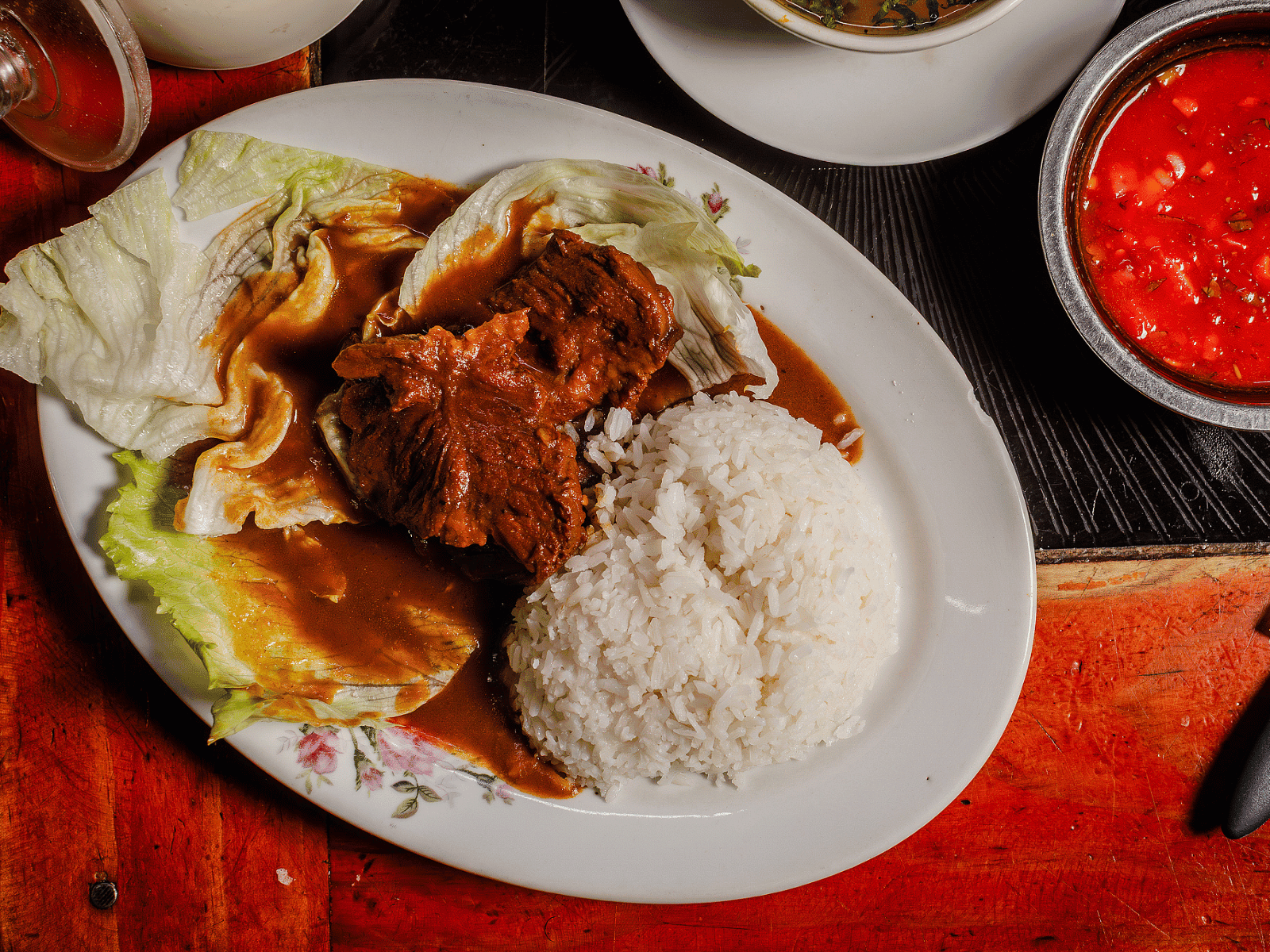
Carne al jugo ("beef in its juice") is the Chilean home-cooking classic that every abuela makes on a rainy Sunday: chunks of beef browned hard, then simmered slowly with sweet onion, garlic, red wine and stock until the meat is fork-tender and the gravy has reduced to a dark, glossy sauce that coats the back of a spoon. Piled onto mashed potato with a scatter of parsley. Chile in a plate.
Method
Pat the beef dry with kitchen paper (wet meat won't brown). Toss with the flour, salt and pepper.
Heat 2 tbsp of the oil in a large heavy pot over medium-high heat. Working in batches so the pot doesn't crowd, sear the beef 3 to 4 minutes per side until deep brown all over. Lift out and set aside.
Add the remaining oil and the onions to the same pot. Reduce heat to medium-low. Cook 12 to 15 minutes, stirring occasionally, until soft, golden and sweet. Don't rush this: it's the base of the sauce.
Add the garlic, tomato paste, paprika and cumin. Cook 2 minutes until fragrant and slightly darker in colour.
Pour in the red wine. Scrape up any browned bits from the bottom of the pot. Simmer 3 minutes to cook off the alcohol.
Return the beef to the pot with the stock, bay leaf and salt. Bring to a gentle simmer, cover with a lid, and cook 90 minutes on the lowest heat, until the beef is fork-tender.
Uncover, remove the bay leaf, and simmer another 15 to 20 minutes if the sauce is too thin. It should coat the back of a spoon.
Ladle the beef and sauce over a mound of mashed potato. Scatter with parsley. Serve immediately with more red wine.
Tips
- Dry the beef, then flour it. Wet meat steams instead of searing. The flour coating gives you the deep browning and also thickens the sauce as it cooks.
- Onion is half the sauce. Three large onions sounds like a lot until they melt into the pot. Cook them long enough to sweeten completely (12 to 15 minutes) before anything else goes in.
- Chilean red wine is the right red wine. Carmenère or a robust Cabernet Sauvignon gives the sauce the specific dark, plummy note that defines the dish. A generic Bordeaux works but tastes less right.
- Simmer, never boil. The lowest possible heat, lid on, for 90 minutes is what turns tough chuck into fork-tender braise. Cranked-up cooking gives you tough, dry beef.
- Puré is the correct partner. Rice works, mashed potato is correct. The gravy is designed to be soaked up by starch, and Chilean puré (with plenty of butter and warm milk) is the traditional accompaniment.
More recipes
View all
Baked (not fried) empanada de pino: hand-cut beef, sweet onion, hard-boiled egg, one raisin and one black olive inside a rich wheat pastry. Chile's national dish, especially for Fiestas Patrias.

A layer of blitzed sweet corn with basil baked over a filling of beef, chicken, olive, raisin and boiled egg. Chile's summer national dish, served in a clay paila with sugar caramelised on top.

Pork shoulder rolled with garlic, chilli and cumin, wrapped in pork skin, tied and slow-cooked. Chile's rustic party dish, sliced cold with pebre.
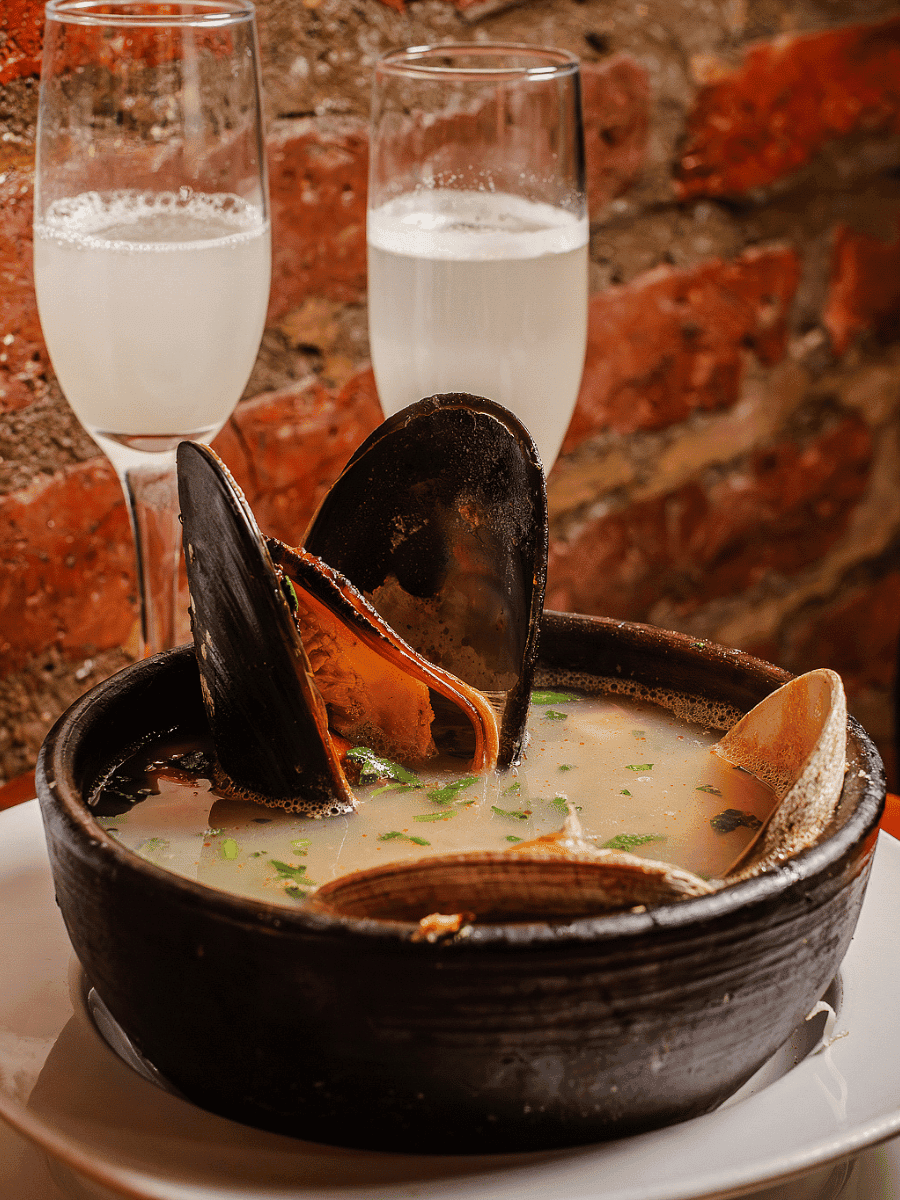
A clay bowl of Pacific shellfish and fish poached in a tomato-and-wine broth, thick with coriander. Chile's classic seafood stew, also the country's most-prescribed hangover cure.
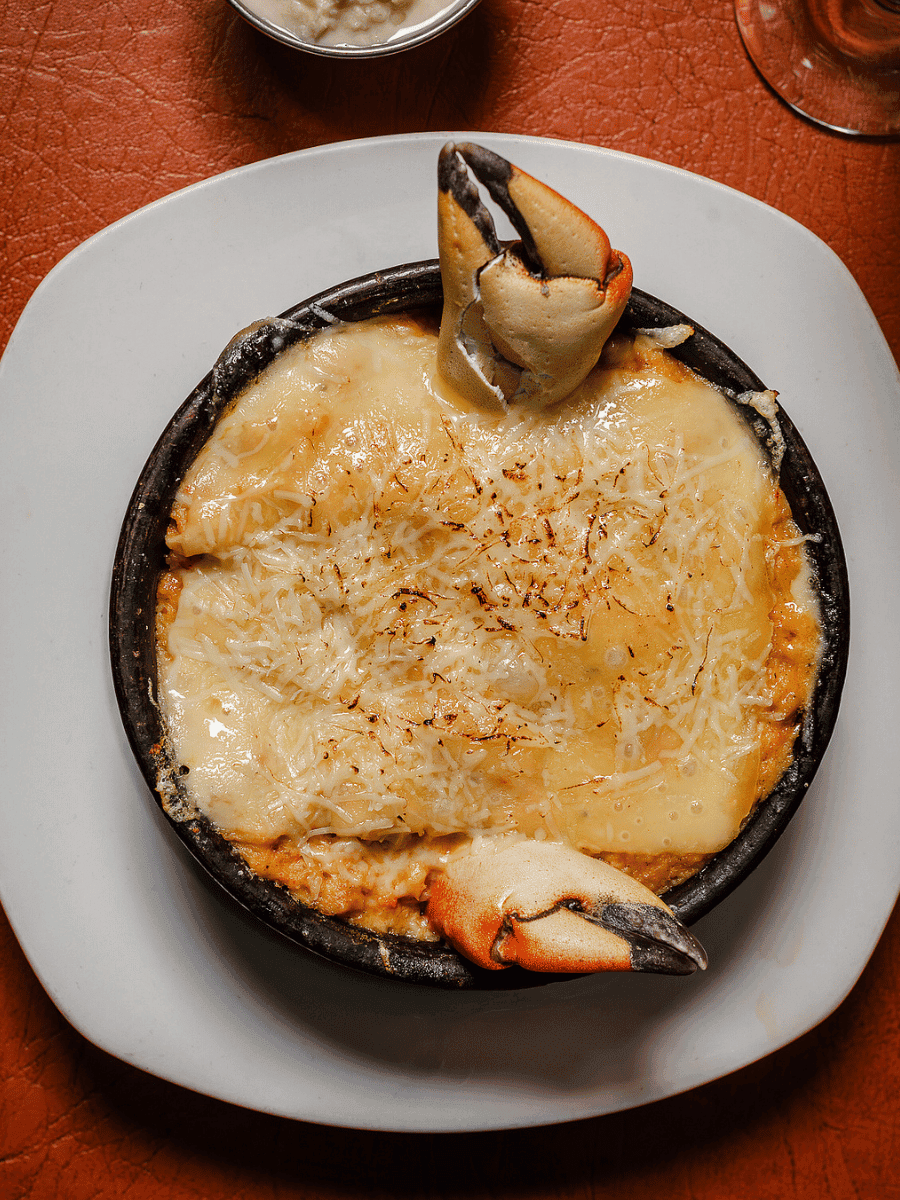
Crab meat baked with milk-soaked bread, white wine, cream and a lot of cheese in individual clay bowls. Chile's Pacific coast comfort food.
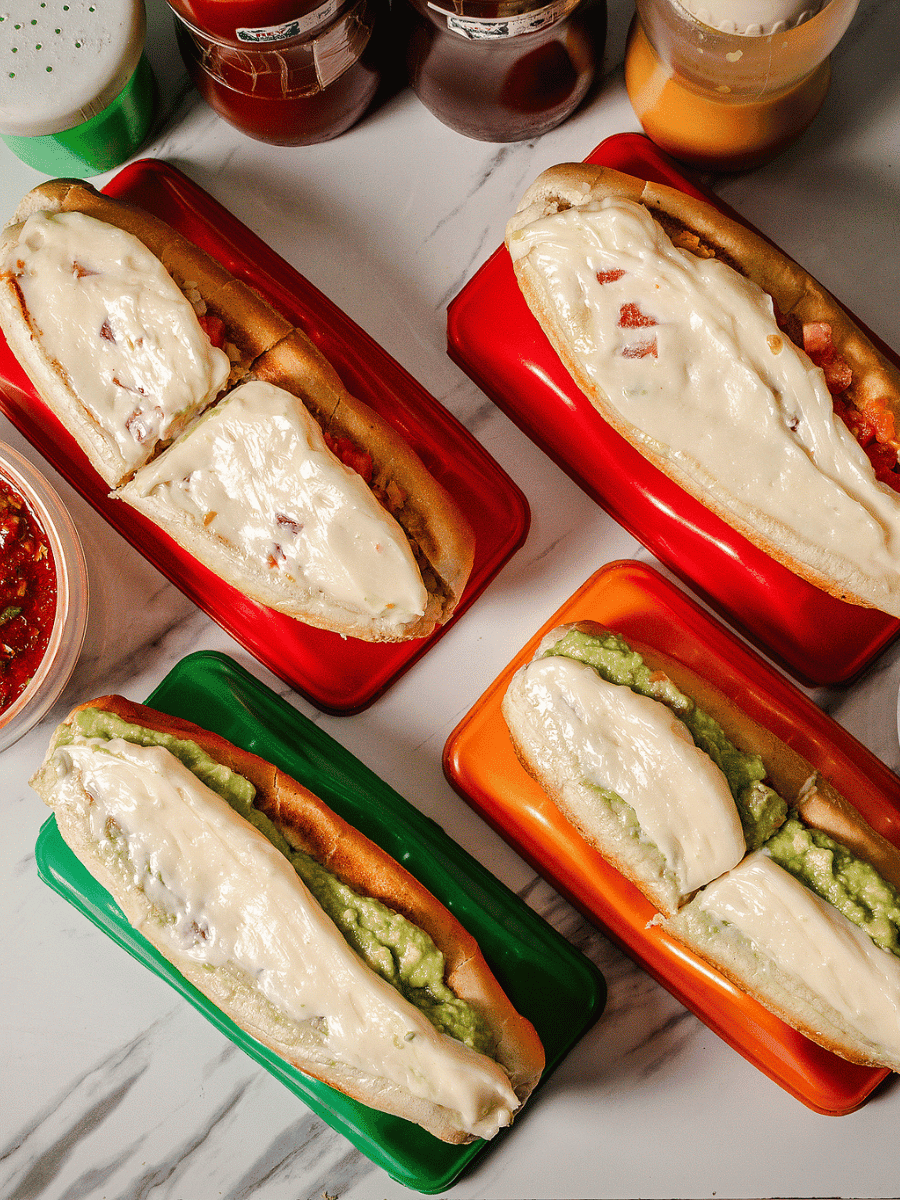
The Chilean hot dog: sausage on a soft bun, buried under mashed avocado, chopped tomato and a mountain of mayo. Green, red and white, the colours of the completo Italiano.