

Destination
Arequipa
The story
Adobo arequipeño is the Sunday-morning cure-your-hangover breakfast of Arequipa: chunks of pork shoulder simmered overnight in a broth of chicha de jora (Peruvian fermented corn beer), ají panca, garlic, cumin and oregano until the meat falls apart and the broth reduces to a deep-red thick stew. Served with a fresh crusty roll (French-style pan de tres puntas), a small dish of ají verde salsa, and a cold Peruvian beer alongside. Sold at Arequipa breakfast counters from 6am to 11am on Sundays, and made in every Arequipeño household after a Saturday night out. The dish has centuries of specifically-Arequipa identity behind it.
Method
Combine all marinade ingredients in a large bowl. Add the pork chunks and toss thoroughly. Cover and refrigerate overnight (or at least 6 hours).
Warm oil in a large heavy pot over high heat. Lift the pork chunks from the marinade (reserving marinade) and brown in batches, 8 minutes total, until deeply coloured on all sides.
Add the onion wedges to the same pot. Cook 5 minutes over medium heat until soft.
Return all pork to the pot. Pour in the reserved marinade plus the additional chicha and water. Add bay leaves and cinnamon (if using). Bring to a gentle simmer.
Cover partially and simmer over the lowest heat for 3 hours, stirring occasionally. The pork should be fork-tender and falling apart; the broth should have reduced by half and thickened to a heavy stew consistency.
Taste. Adjust with more salt or a splash of vinegar if the broth needs a lift. The finished adobo should taste sharp, chili-forward, mildly sour and deeply savoury.
Ideally, cool the adobo and refrigerate overnight. Reheating the next morning intensifies the flavour and makes the stew classically Arequipeño. If eating same-day, rest 30 minutes off the heat before serving.
Reheat gently. Ladle a piece of pork and a generous ladle of broth into each shallow bowl. Scatter with coriander. Serve with a fresh crusty roll for scooping and a small dish of ají verde salsa on the side. A cold beer is mandatory.
Tips
- Chicha de jora is the flavour marker. Peruvian fermented corn beer is sold at Latino grocers or online. A dark beer + a splash of vinegar is the practical substitute; the flavour is close but not identical.
- Overnight marinade + overnight rest. The full 2-day version is markedly better than same-day. If you can, marinate Saturday afternoon and serve Sunday morning.
- Ají panca is the deep-red note. Ají amarillo adds heat. Both are needed — the classical Arequipeño version uses both.
- Slow and low. Three hours over the lowest heat gives you pork that falls apart. A hard boil breaks the pork into strings and clouds the broth.
- Fresh bread on the side. Arequipa's pan de tres puntas (three-cornered French-style roll) is the classical bread. A crusty French petit-pain is a fine substitute; a soft sandwich roll is not.
More recipes
View all
Mashed potato shaped around a spiced beef, olive and egg filling, then fried until crisp. Lima's afternoon-snack answer to Colombian arepa de huevo.
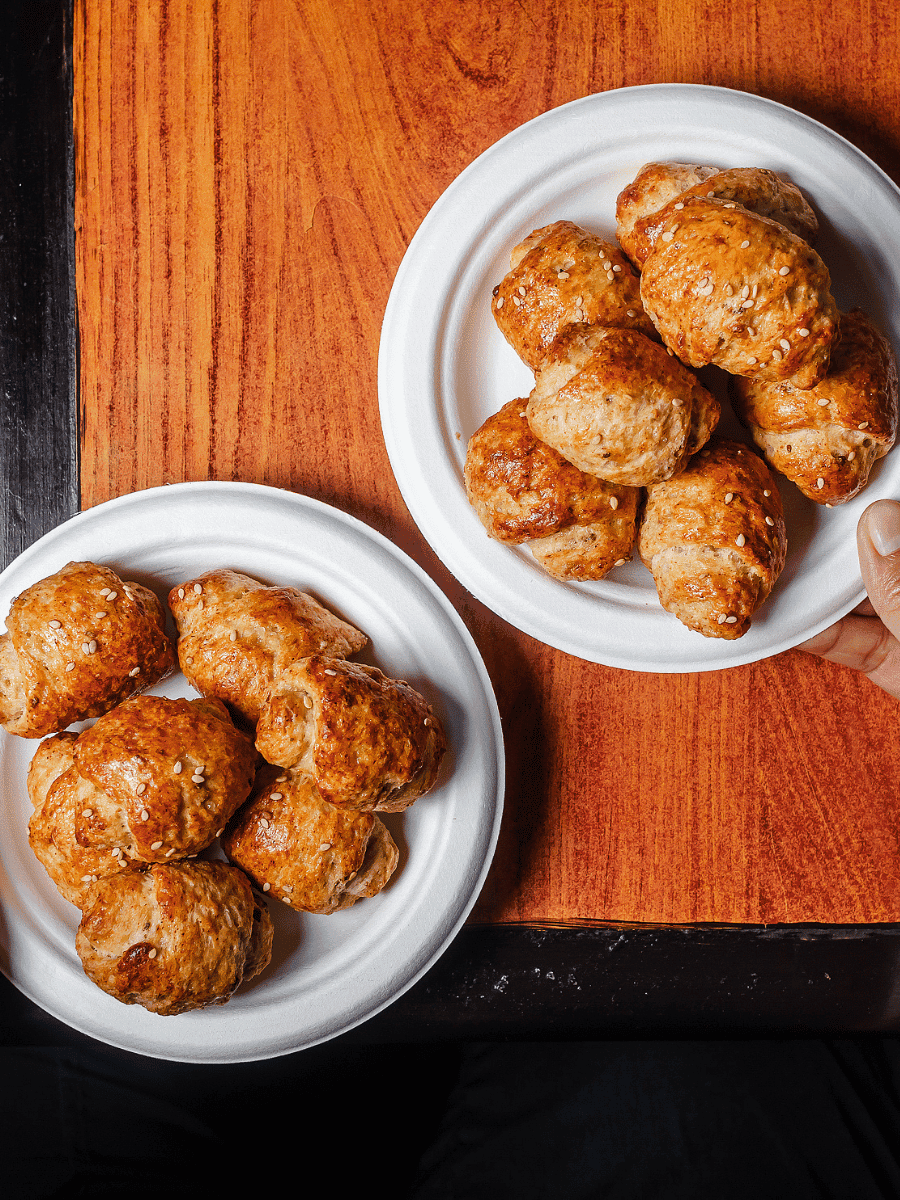
Small, slightly sweet, cheese-topped bread rolls from the Cajamarca highlands, split and eaten warm with mantequilla and jam. Northern Peru's breakfast staple.

Flaky baked pastries stuffed with spiced beef, olives, egg and raisins, brushed with icing sugar. Peru's Sunday-morning bakery classic.

Beef stir-fried hard in a wok with red onion, tomato, ají amarillo and soy, plated with rice and hot fried potatoes. Peru's most-loved Chifa dish.
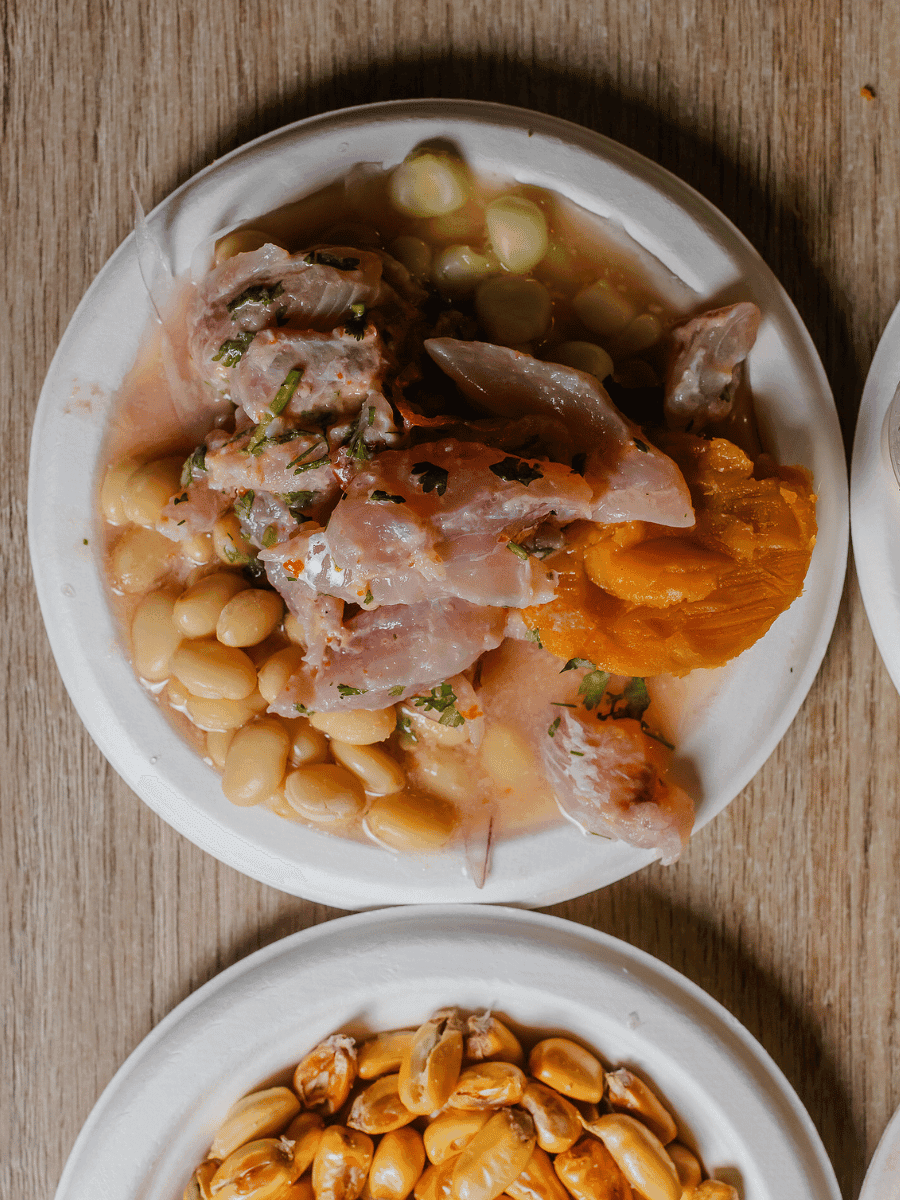
Raw white fish "cooked" in fresh lime juice with red onion, ají amarillo and coriander, served with sweet potato and choclo corn. Peru's national dish.

Peruvian purple corn simmered with pineapple, cinnamon, cloves and lime, chilled and served over ice. Peru's national soft drink.