
Destination
Hue
The story
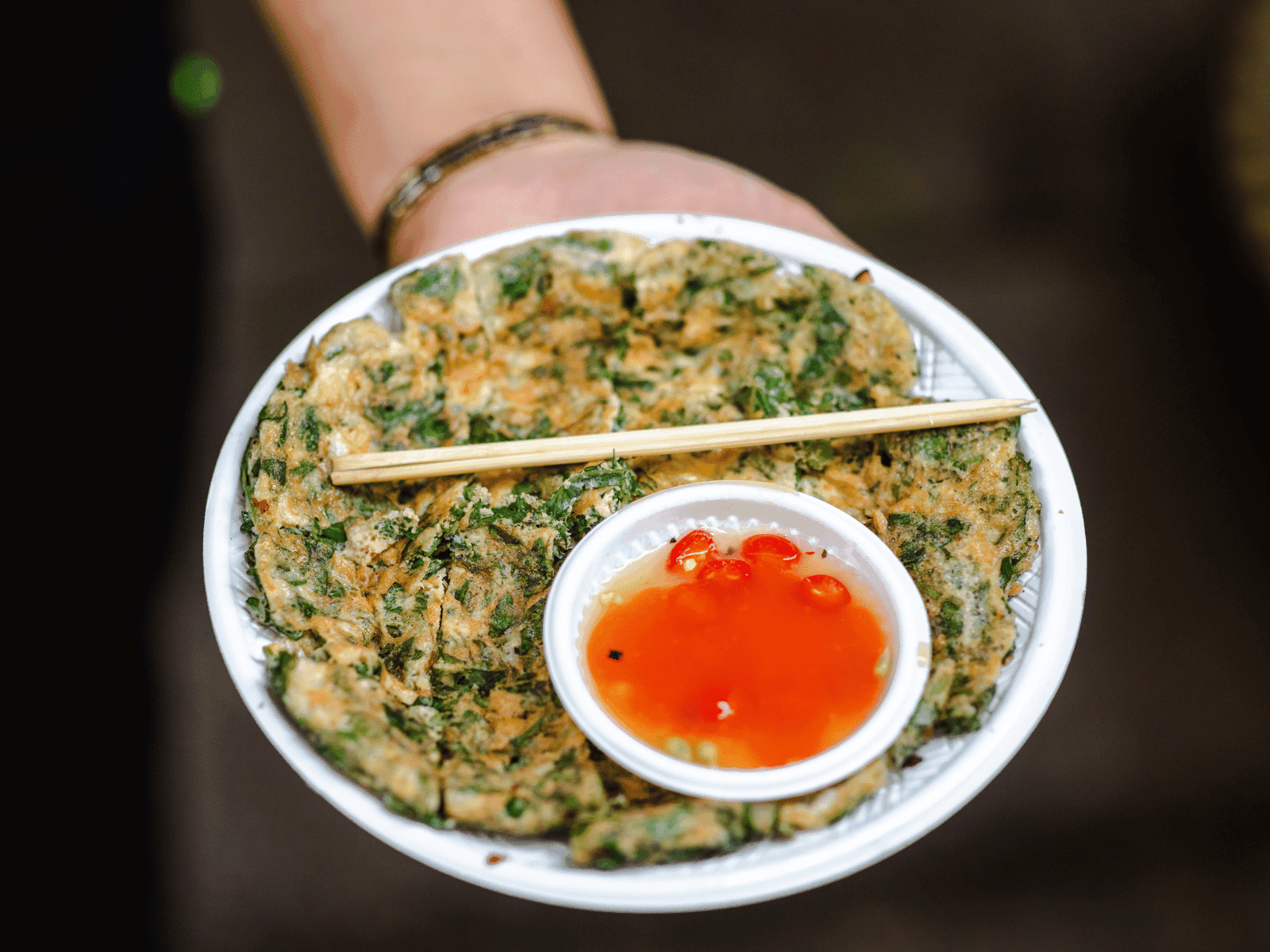
Trứng ngải cứu is a specifically northern Vietnamese home-cooked dish that sits at the intersection of food and traditional medicine. Ngải cứu is Vietnamese mugwort (Artemisia vulgaris), a bitter aromatic herb long used in Vietnamese traditional medicine to warm the body, aid digestion, and support post-childbirth recovery. Chopped fresh mugwort leaves are folded into beaten eggs seasoned lightly with fish sauce, pepper and a splash of sesame oil, then pan-fried into a soft flat omelette. Served hot with plain white rice, a small dish of nước chấm on the side, and sometimes accompanied by a small bowl of chicken broth. Traditionally served to women recovering from childbirth, to invalids recovering from illness, and to anyone who has stayed up too late working or drinking.
Method
Rinse the mugwort leaves thoroughly. Remove any tough stems. Chop coarsely into pieces about 1cm.
In a bowl, whisk eggs. Add fish sauce, sugar, pepper, sesame oil and minced shallot. Whisk until fully combined.
Add the chopped mugwort to the egg mixture. Stir to combine. There should be a lot of herb relative to egg.
Warm oil in a wide non-stick pan over medium heat.
Pour the egg mixture into the hot pan. Cook 3 to 4 minutes without stirring until the underside is golden and the top is mostly set. The high herb content means it will not spread as thin as a plain omelette; that is correct.
Slide onto a large plate. Invert back into the pan uncooked-side down. Cook another 90 seconds.
Slide onto a serving plate. Cut into wedges. Serve immediately with hot steamed rice, a small bowl of chicken broth on the side, and fish sauce for dipping.
The dish is meant to be slightly bitter and deeply herbal. First-time eaters may find the bitterness surprising; northern Vietnamese eaters consider it restorative.
Tips
- Fresh mugwort is essential. Dried mugwort does not have the same soft-leaf quality. Any Vietnamese or Chinese medicinal-herb grocer sells fresh bunches.
- High herb ratio. Do not skimp; this is a herb-forward omelette, not a plain omelette with a garnish.
- Light seasoning. The bitter aromatic mugwort speaks; heavy seasoning drowns it.
- Serve with plain rice. The rice tempers the bitterness. Do not serve as a solo dish.
- Restorative food. This is a Vietnamese functional-food classic, traditionally eaten during recovery. Explain to guests before serving.
More recipes
View all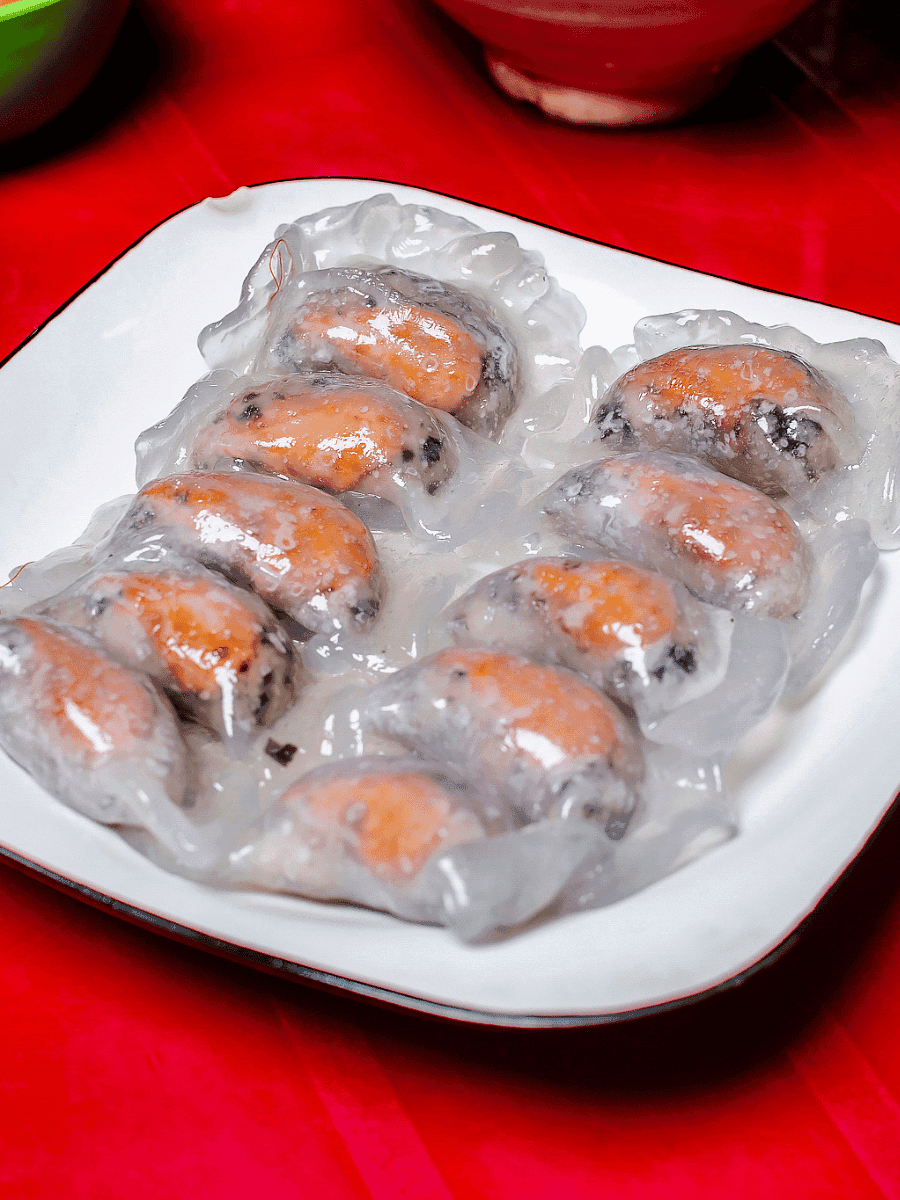
Small translucent tapioca-flour dumplings stuffed with pork and shrimp, wrapped in banana leaves and steamed. Hue's most-loved snack, served with fish sauce and fried shallots.

Delicate translucent shrimp-filled dumplings shaped like small white roses, topped with fried shallots and served with a light dipping sauce. Hoi An's most photogenic small plate.

Half-moon fried pastries stuffed with pork, wood ear mushroom, glass noodles and quail egg. Hanoi's most-loved cold-weather street snack, dipped in sweet fish sauce.

Tiny concave steamed rice cakes topped with dried shrimp, fried garlic, spring onion oil and a splash of fish sauce. Hue's most-shared small-plates dish, eaten by the dozen.

Fresh razor clams stir-fried hard with water spinach, garlic and chili in a splash of fish sauce. Ho Chi Minh City's late-night beer snack.

Chicken wings marinated in fish sauce, garlic and pepper, then deep-fried until dark caramelised and crispy. Ho Chi Minh City's most-loved beer snack, dipped in salt-pepper-lime.