

Destination
Luang Prabang
The story
Thum mak hoong is Laos's national salad and the country's most-eaten dish alongside sticky rice: shredded green papaya pounded ("thum") in a wooden mortar with garlic, bird's-eye chillies, fish sauce, padek (fermented fish sauce), lime, palm sugar, tomato, long beans and sometimes crushed peanuts, until everything is bruised together into a sharp, funky, hot, sour, salty salad. The classic version is genuinely fiery; ordering one and getting a mild version is disappointing to Lao locals but a mercy for most visitors. Eaten alongside sticky rice, ping gai, jeow bong and raw vegetables at every Lao meal.
Method
Peel the green papaya. Using a mandolin or a sharp knife, shred it into thin matchstick pieces about 5cm long. If using a mandolin, use the julienne attachment; if using a knife, slice thinly then stack the slices and cut into matchsticks. Rinse briefly under cold water to remove any bitter sap, then drain and pat dry.
In a large mortar (or a heavy sturdy bowl), pound the peeled garlic and chillies together with the pestle for 30 seconds until roughly bruised into a coarse paste.
Add the palm sugar, padek, lime juice, fish sauce, tamarind paste and shrimp paste (if using). Pound briefly to dissolve the sugar into the wet ingredients.
Add the long beans first and pound gently for 20 seconds to bruise them. Add the tomato wedges and pound briefly to release their juice.
Add the shredded papaya to the mortar. Toss with the pestle and a spoon, alternating between pounding gently and tossing, for about 60 seconds. The goal is to bruise the papaya slightly so it takes on the sauce without pulverising it.
Taste. Adjust for balance: more lime for sharpness, more fish sauce for salt, more sugar for sweetness, more chilli for heat. Thum mak hoong should hit all four registers at once.
Tip onto a serving plate. Top with crushed peanuts or dried shrimp if using. Serve immediately alongside warm sticky rice, raw vegetables and grilled meat.
Tips
- Green (unripe) papaya. Ripe papaya is a different fruit entirely (sweet, orange-fleshed, dessert-appropriate); green papaya is firm, pale, and the correct base for thum. Sold at Southeast Asian grocers labelled as green papaya.
- Padek is what makes it Lao. Padek (Lao fermented fish sauce, funkier than regular fish sauce) is the specific ingredient that separates thum mak hoong from Thai som tam. Sold at Lao and Vietnamese grocers. Regular fish sauce is a fine substitute but the character is different.
- The mortar is essential. Bruising the ingredients releases the correct combination of flavours and textures. A bowl and a spoon give you a salad; a mortar gives you thum.
- Add ingredients in the correct order. Garlic and chillies first (to release oils), then wet flavourings (to dissolve into a sauce), then vegetables that need bruising (long beans, tomato), then papaya last (to absorb without over-mashing).
- Serve immediately. Thum mak hoong is at its best within 10 minutes of making; sitting time softens the papaya and dulls the fresh flavours. Make just before serving.
More recipes
View all
Thin strips of beef marinated in fish sauce, sugar and pepper, air-dried in the sun and finished with a quick deep-fry. Laos's sweet-savoury jerky, always with sticky rice.

Roasted chillies, garlic and shallots pounded to a thick paste with fried pork skin, fish sauce and a little palm sugar. Laos's national condiment, served with sticky rice and raw vegetables.

Butterflied chicken marinated in lemongrass, garlic, coriander root and fish sauce, then grilled hard over charcoal. Served with sticky rice and jeow bong.

Rice noodles in a clear pork broth topped with a rich tomato-and-pork ragout, fresh herbs and Lao chilli paste. Luang Prabang's noodle-soup signature, not to be confused with Thai khao soi.

Chewy hand-cut tapioca-and-rice noodles simmered in a clear ginger-chicken broth, topped with poached chicken, fried garlic and fresh herbs. Laos's daily breakfast.
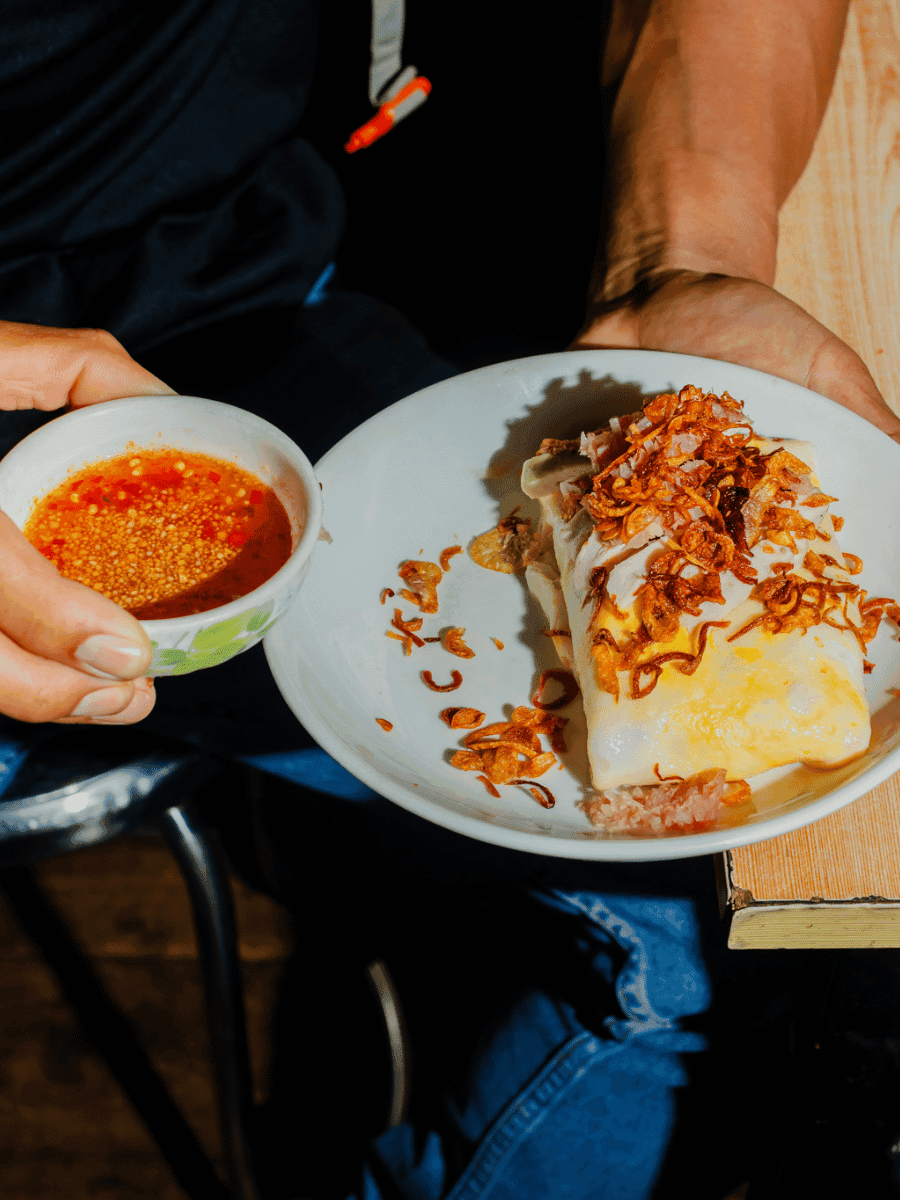
Steam-set rice noodle rolls filled with pork and wood-ear mushroom, served with sliced grilled sausage and fresh herbs. Luang Prabang morning market's Vietnamese-Lao crossover.