

Destination
Krabi
The story
Sangkhaya faktong is one of Thailand's most photogenic desserts and a specifically autumnal treat: a whole small pumpkin (kabocha or Japanese pumpkin) has its top cut off, seeds scraped out, and the empty cavity is filled with a rich sangkhaya custard — a Thai preparation of egg yolks, palm sugar, coconut cream, salt and pandan. The whole pumpkin is steamed for 45 minutes until the custard is just set and the pumpkin flesh is tender. Sliced into wedges at the table so each serving includes both the sweet custard and the tender orange pumpkin flesh. Sold at every Thai temple-fair stall and dessert shop during autumn (October-January) when kabocha pumpkins are at peak.
Method
Cut a 5cm circle from the top of the pumpkin (save as a lid). Scoop out seeds and stringy pulp. Rinse the inside briefly.
In a saucepan, warm coconut cream with pandan and palm sugar until sugar dissolves. Do not boil. Remove pandan.
In a large bowl, whisk egg yolks and whole eggs with salt.
Slowly pour the warm coconut-sugar mixture into the eggs while whisking. Strain through a fine sieve.
Set the pumpkin in a heatproof dish. Pour the custard into the pumpkin cavity, filling to 2cm below the top.
Place the filled pumpkin in a large steamer over vigorous heat. Steam 45 to 60 minutes until custard is just set (a knife inserted 2cm from the edge comes out clean, middle should be slightly jiggly) and pumpkin flesh is tender.
Lift pumpkin out of steamer. Cool at least 15 minutes at room temperature (custard firms up as it cools).
Slice pumpkin (with custard inside) into wedges. Serve warm or cold. Drizzle with extra coconut cream and toasted sesame seeds.
Tips
- Kabocha or Japanese pumpkin. Sweet dense flesh, not stringy. Butternut squash is the practical substitute.
- Strain the custard. Removes lumps from the eggs and gives a silky finish.
- Do not oversteam. Custard should still jiggle slightly when done — it firms up as it cools.
- Serve warm or cold. Both are correct in Thai dessert culture.
More recipes
View all
Small two-layer coconut custards — a sweet rice-flour base topped with a salty coconut cream — steamed in tiny porcelain cups. Bangkok's classical dessert bite.

Sticky rice soaked in coconut cream and palm sugar, served alongside ripe golden Nam Dok Mai mango and a drizzle of extra coconut cream. Thailand's world-famous dessert.
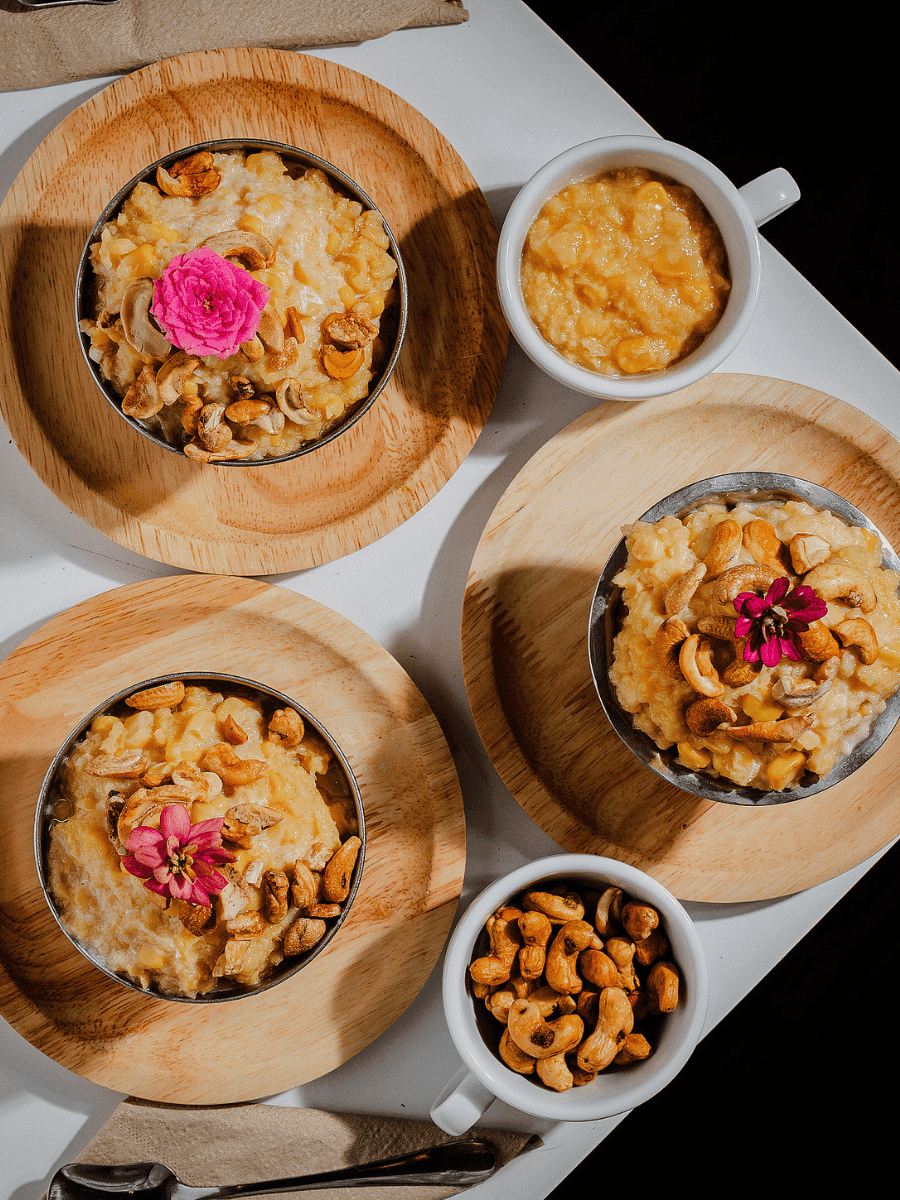
Sticky rice cooked porridge-style with coconut milk, fresh corn kernels, palm sugar and salt. Bangkok's morning warm-porridge dessert.

A pile of shaved ice drenched in sweetened coconut cream, topped with a customer-chosen selection of jelly, tapioca pearls, sweetened beans and jackfruit. Bangkok's summertime cooler.
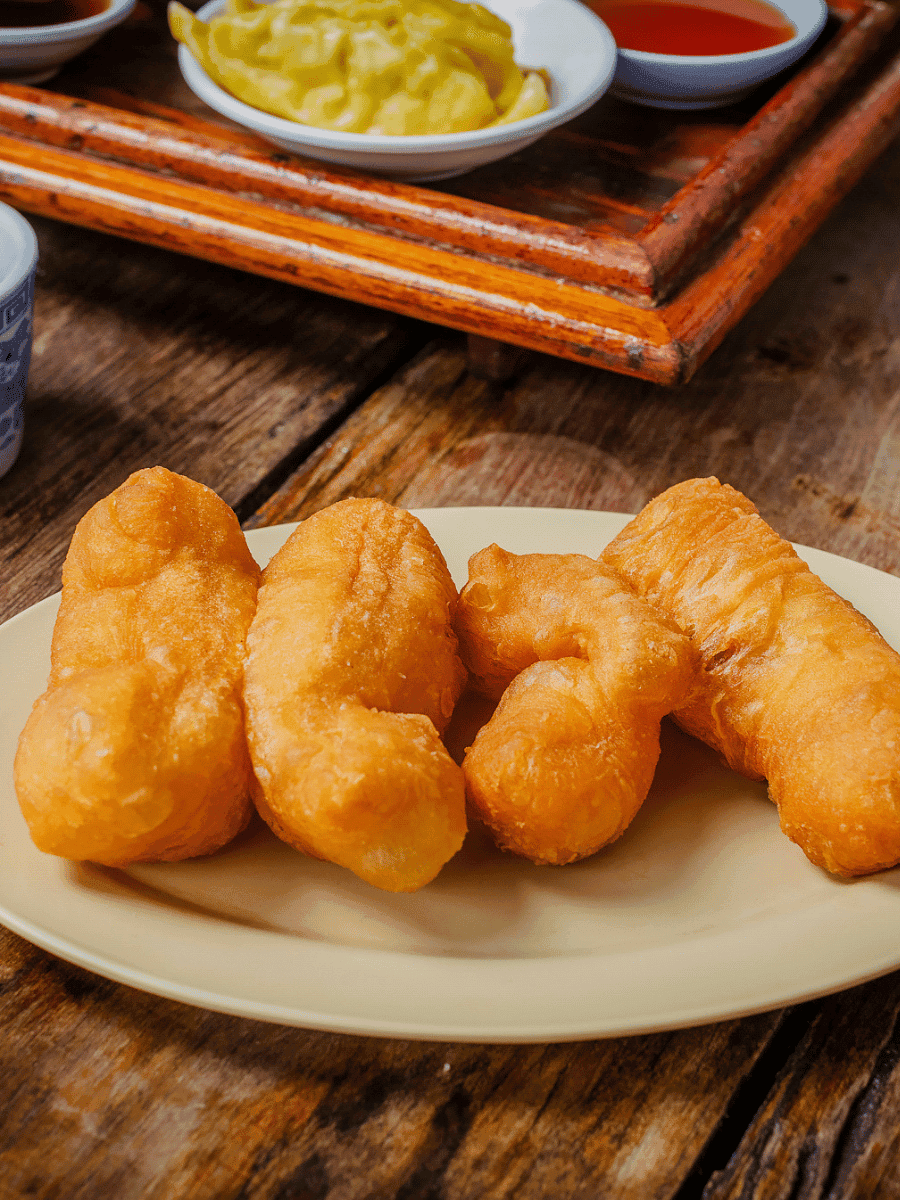
Paired fried dough sticks — like Chinese youtiao — served in Thai style with sweetened condensed milk or hot sangkhaya custard for dipping. Bangkok's dawn breakfast.
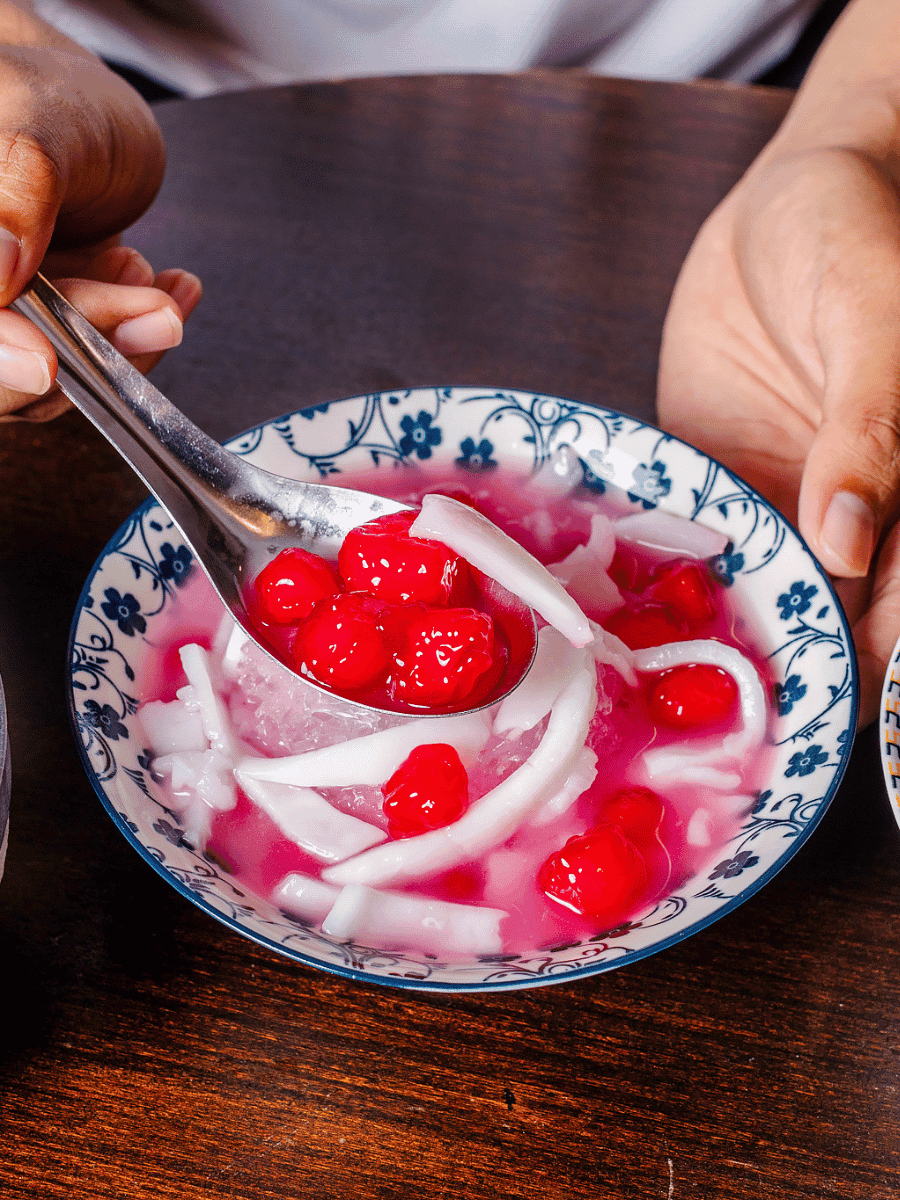
Diced water chestnuts coated in bright red tapioca starch and boiled until glassy, served over shaved ice with sweetened coconut milk. Bangkok's most-photographed cold dessert.