
Destination
Phuket
The story
Gui chai is Bangkok Chinatown's most-loved Teochew dumpling: a soft, translucent rice-flour wrapper dyed pale green with the juice of pounded garlic chives, filled with a mixture of minced garlic chives, minced pork or dried shrimp, and steamed until the wrapper turns glassy. Served with a small dish of Thai-style sweet-hot chili-vinegar dip. Sold at every Bangkok Chinatown morning market and every Teochew dim sum shop; the classical version is Sriracha-brand chili-vinegar with a small side dish of soy for eaters to blend. Nay Mong, one of Yaowarat Road's oldest gui chai stalls, has been selling the same recipe since the 1960s.
Method
In a large bowl, whisk rice flour, tapioca flour and salt. Add boiling water while stirring vigorously. Add oil and the blitzed chive-water mixture. Knead 5 minutes into a smooth green dough. Cover and rest 30 minutes.
Combine minced garlic chives, minced pork (or dried shrimp + pork), garlic, ginger, soy, fish sauce, oyster sauce, sesame oil, pepper, salt, sugar and cornstarch. Mix thoroughly.
Divide dough into 24 balls. Roll each into a 10cm round.
Place 1 heaped tbsp filling in the middle of each wrapper. Fold in half to make a half-moon. Press edges to seal, or pleat one side for classical look.
Line bamboo steamer with paper. Arrange dumplings with 1cm spacing. Steam 12 to 15 minutes over vigorous heat. Wrapper should turn glassy.
Once steamed, brush each dumpling with a light film of neutral oil so they don't stick to each other or the plate.
Combine all dip ingredients in a small bowl. Stir to dissolve sugar. Divide between small dishes.
Arrange gui chai on a plate. Serve immediately with dip. Diners can also pan-fry the steamed dumplings briefly in oil for a crispy bottom (called "gui chai thod" or "pan-fried gui chai") — a modern Bangkok variation.
Tips
- Blitzed chive water for green colour. The classical Bangkok Teochew wrapper is pale green from pounded chive juice. Skip this and you get plain white dumplings.
- Rice flour + tapioca flour. This specific blend gives the classical translucent-glassy wrapper.
- Fill generously with chives. This is a chive dumpling — the pork is secondary. The classical filling is 2/3 chives, 1/3 pork.
- Pan-fry option. For crispy bottoms, pan-fry steamed dumplings in a little oil for 2 minutes a side.
More recipes
View all
Open-top steamed dumplings filled with pork, prawn, water chestnut and Thai sweet soy, served with a fierce chili-vinegar dipping sauce. Bangkok Chinatown's dim sum classic.
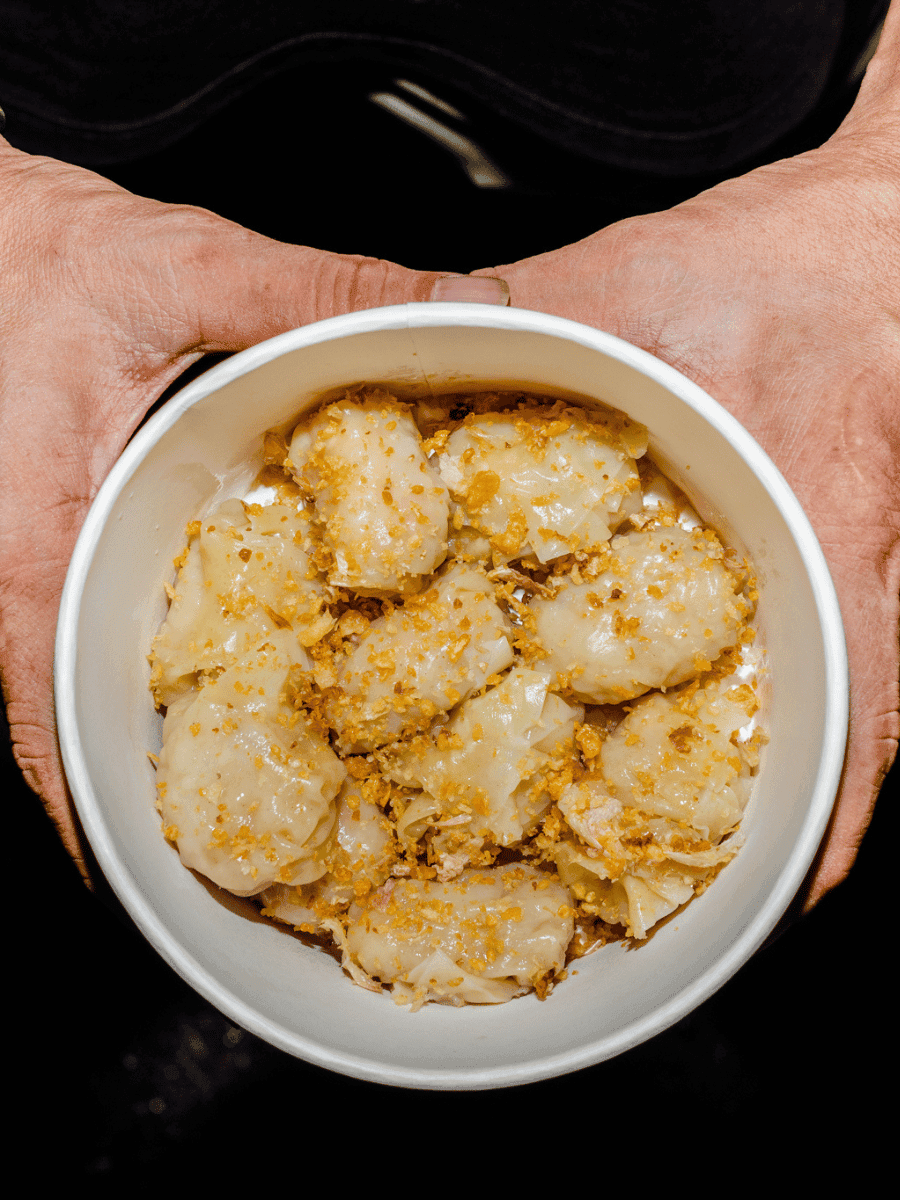
Thin wheat-flour wrappers pleated around a pork-prawn filling, steamed clear and served with a tangy garlic-vinegar dip. Bangkok's morning-market dumpling.

Pillowy white steamed buns stuffed with a sweet-savoury pork or a sweet mung-bean paste. Bangkok's Chinese-Thai breakfast and afternoon-snack staple.

Crab meat mixed with pork, water chestnut and coriander, stuffed back into the shell and deep-fried. Bangkok Chinatown's Thai-Chinese celebration snack.

Large yellow crispy turmeric-rice crepes filled with prawn, pork, bean sprouts and herbs, folded and cut into wedges. Bangkok's Vietnamese-Thai fusion snack.

Deep-fried purse-shaped parcels of pastry filled with spiced pork and prawn, tied with a chive ribbon. Bangkok's celebration bite, said to bring wealth.