
Destination
Kampala
The story
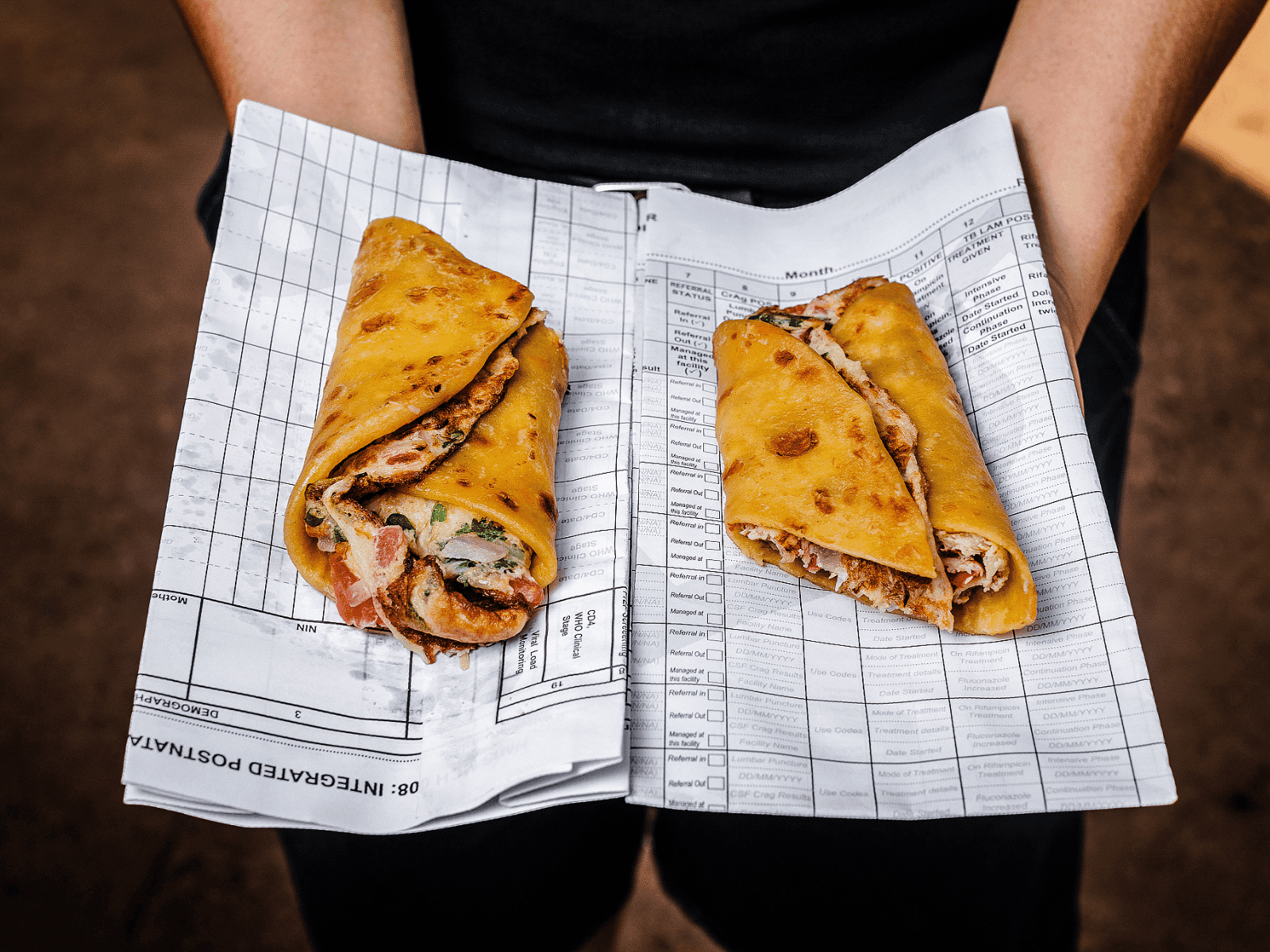
The rolex is Uganda's most iconic street food and one of the country's proudest culinary exports. The name is a phonetic borrowing of "rolled eggs" said with a Ugandan English accent, and every Kampala street corner from Wandegeya to Bugolobi has small charcoal-heated rolex stalls that operate from dawn until midnight. A soft chapati (Uganda took the flatbread from Indian migrants and made it its own) is heated briefly on a hot flat pan, an egg beaten with chopped tomato, onion, cabbage, green pepper and salt is poured onto the same pan into a thin omelette, the warm chapati is laid on top of the still-wet omelette so they bond together, then the whole thing is flipped once, rolled up into a tight cigar, cut in half and served on a piece of paper.
Method
In a bowl, whisk the eggs. Add chopped tomato, onion, cabbage, green pepper, chili, coriander, salt, curry powder and black pepper. Mix thoroughly.
Warm a wide flat non-stick pan or heavy flat griddle over medium heat with 1 tbsp oil.
Place one chapati on the pan for about 30 seconds each side just to warm through and soften. Lift onto a plate. Repeat with the second chapati.
Add another tbsp of oil. Pour half the egg mixture onto the hot pan, spreading it into a thin round about the size of the chapati.
Before the egg fully sets on top, lay one warm chapati directly on top of the wet egg. Press gently so they bond.
When the underside egg has set (about 60 seconds), slide a wide spatula under the whole thing and flip so the chapati is on the bottom and the egg is now on top. Cook 30 seconds more.
Slide the chapati-omelette onto a chopping board, egg-side up. Roll tightly from one edge into a cigar shape. Repeat the whole process with the second chapati.
Cut each rolex in half diagonally with a sharp knife. Serve immediately with Ugandan chili sauce, fresh tomato slices and hot chai. Eat with hands.
Tips
- Soft chapati is essential. Ugandan chapati is soft and slightly oily, not crispy like Indian paratha. If you cannot find Ugandan chapati, a large flour tortilla is the practical substitute; Indian roti works too.
- Bond the egg and chapati. Placing the chapati on the still-wet omelette is the whole trick. The setting egg glues the two together.
- Cabbage adds crunch. Not optional in the classical Kampala version. Shred it fine so it wilts slightly in the omelette.
- Serve hot from the pan. Rolex does not hold well. Eat within 5 minutes of rolling.
- Variations exist. Add avocado slices for a modern version; add cooked beans for a kikomando rolex; add slices of cheese for a fancy version. All are acceptable modern takes.
More recipes
View all
Triangular yeasted doughnuts scented with cardamom and coconut milk, fried until deep gold. Kampala's morning-tea companion, dunked in hot chai.
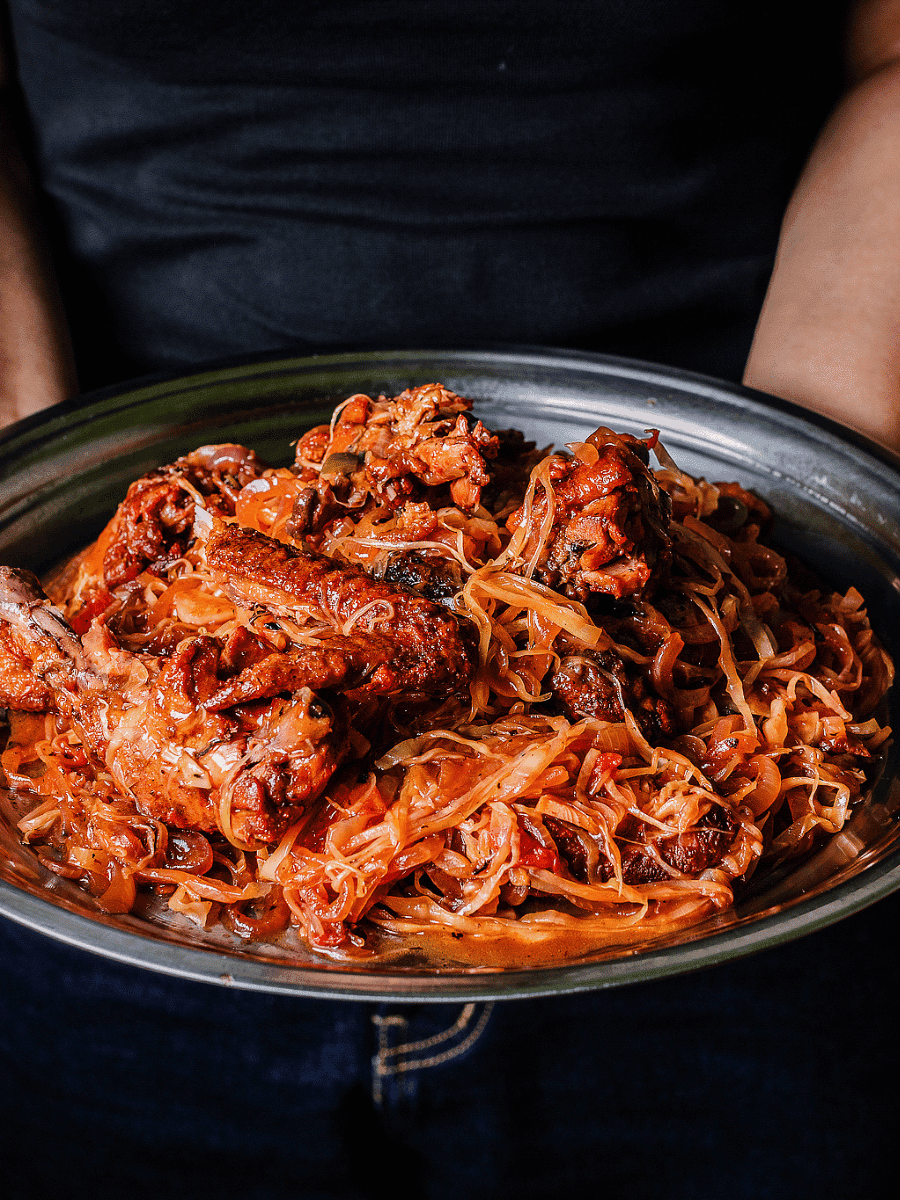
Whole marinated chickens slow-rotated on a vertical rotisserie behind the shop window, chopped and served with chapati, kachumbari and hot chili sauce. Kampala's post-work classic.

Boiled potatoes, maize, green peas and pumpkin leaves mashed together into a bright green side. A Kikuyu-Ugandan mash beloved across the border regions.
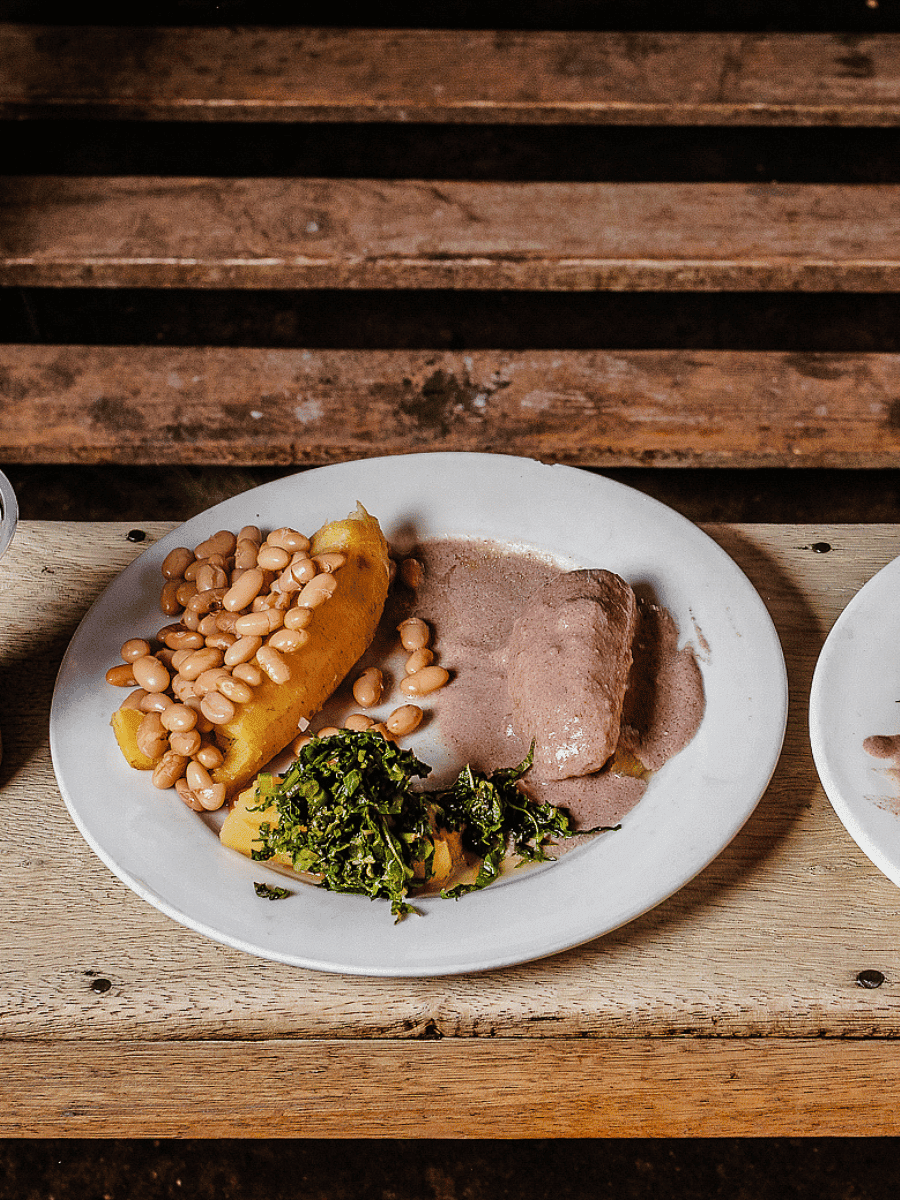
Ground peanuts simmered with onion, tomato and mixed spices into a rich, creamy sauce. Buganda's essential accompaniment to matoke, posho and rice.
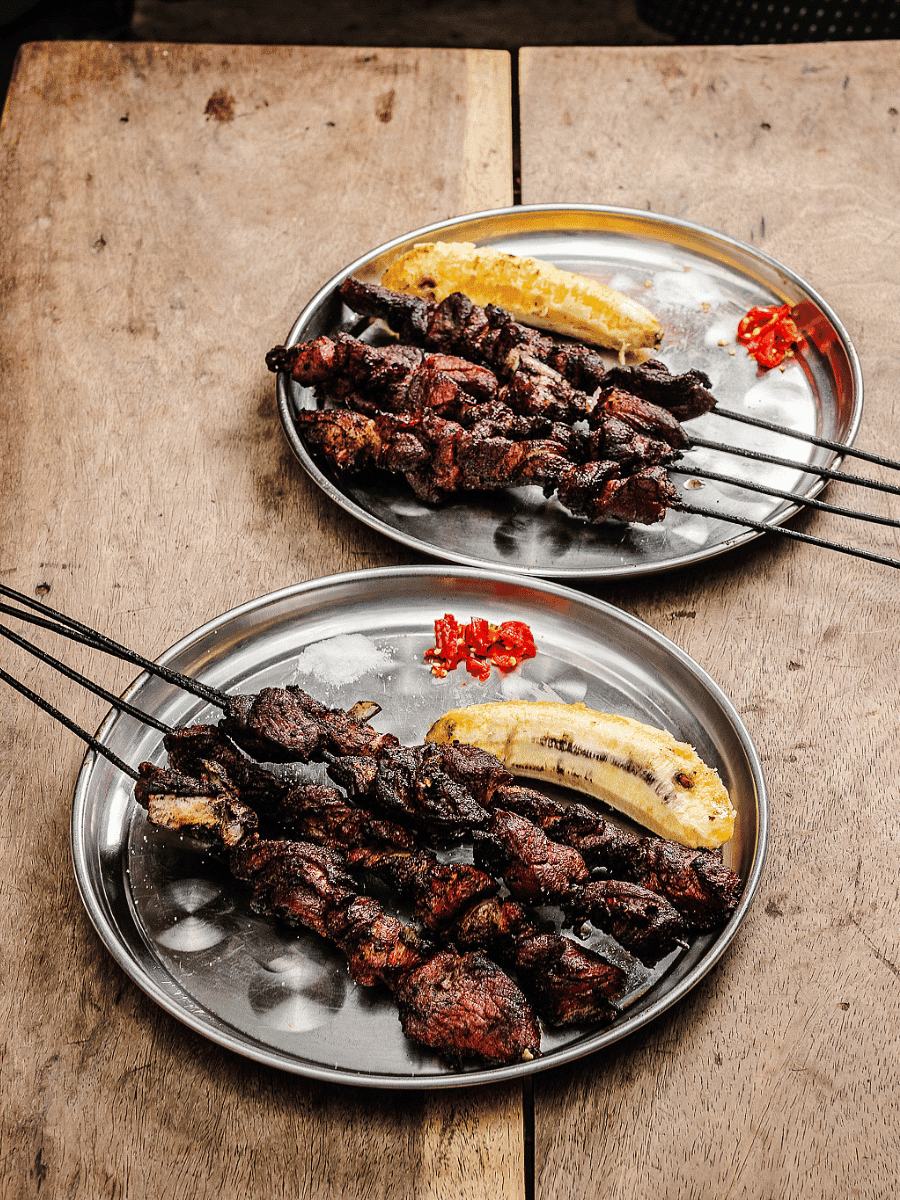
Cubes of marinated goat meat threaded onto skewers and grilled over charcoal, served with kachumbari salsa and boiled cassava. Kampala's classic evening bar food.
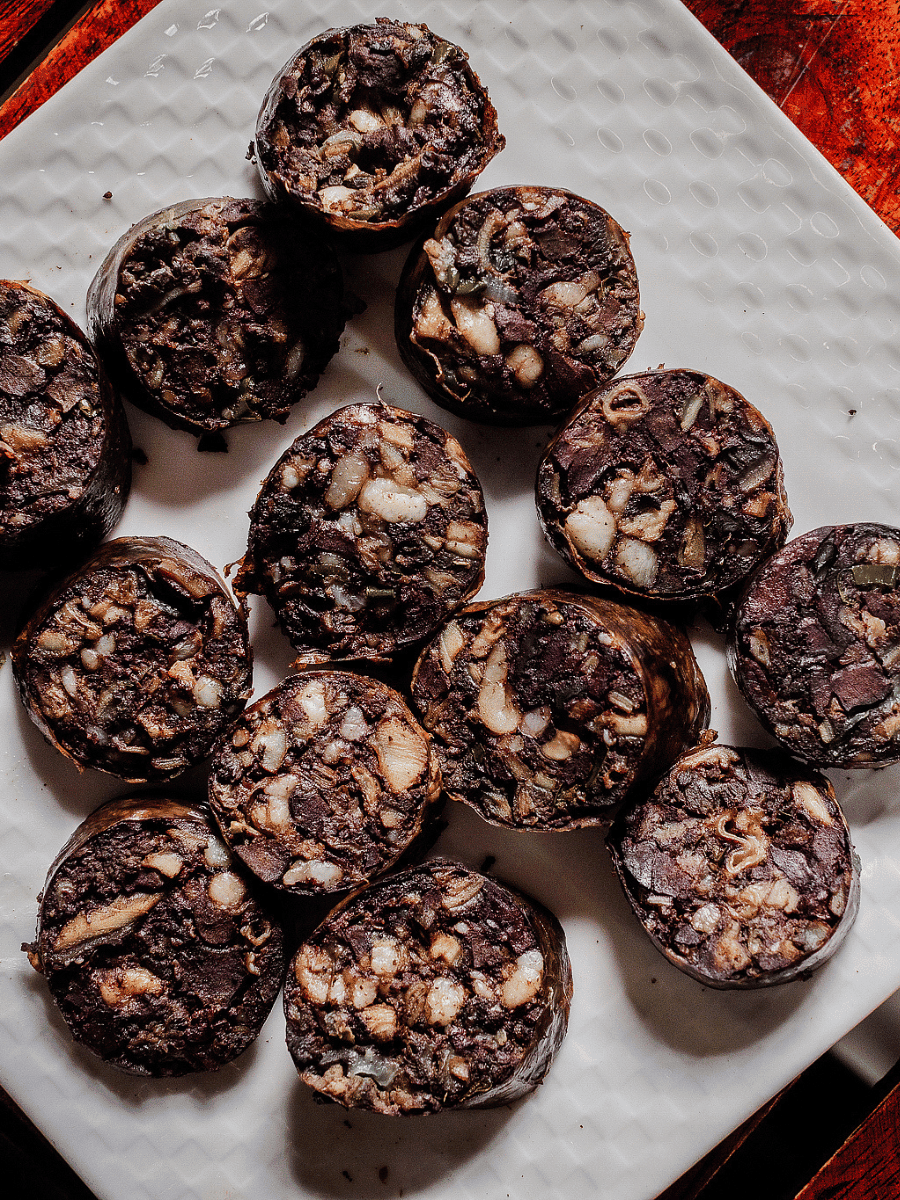
Beef or goat blood mixed with intestines and spices, stuffed into a natural casing and grilled over charcoal. Kampala and Nairobi's late-night bar snack.