
Destination
Arequipa
The story
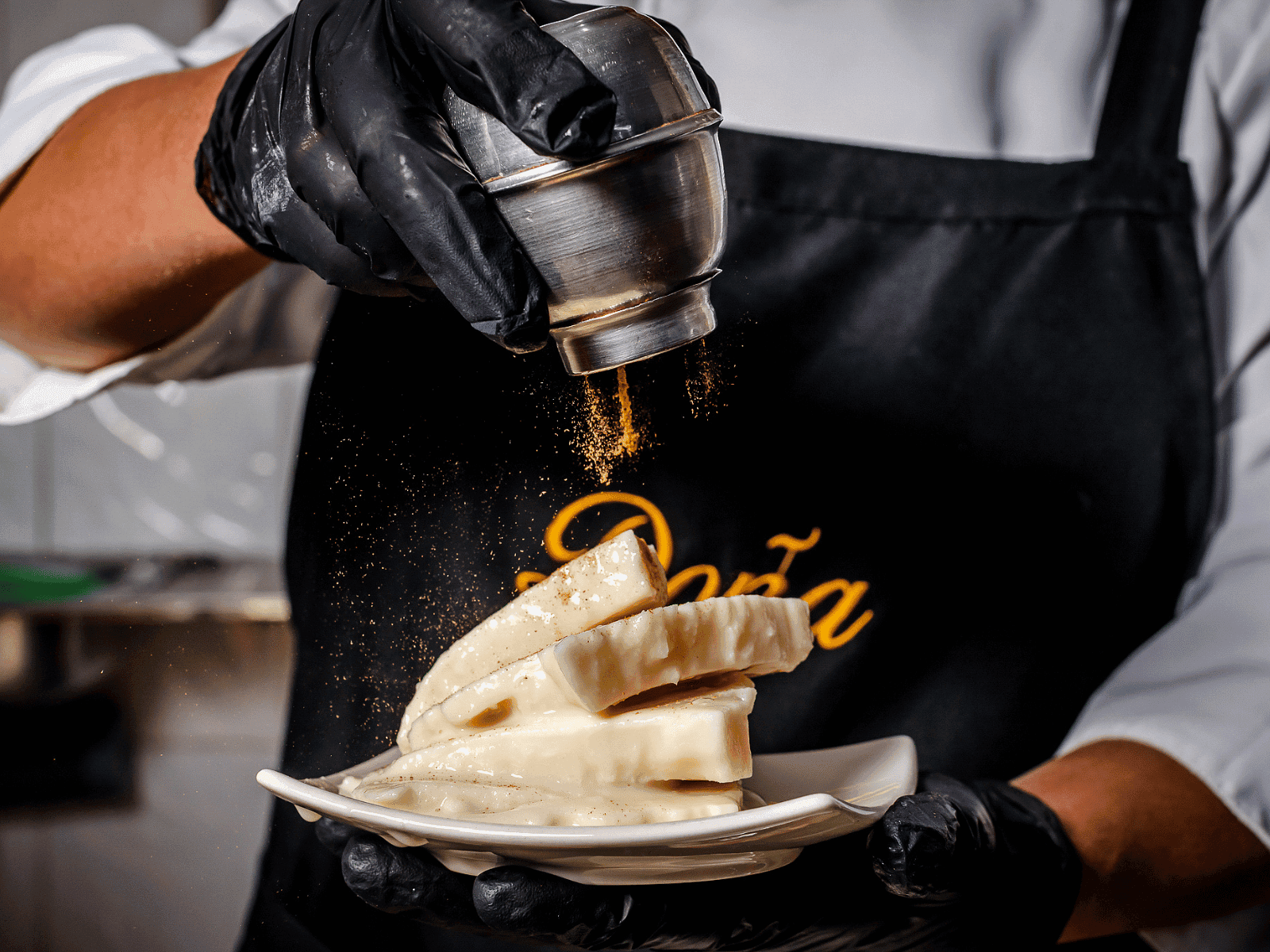
Queso helado is Arequipa's most iconic street food and one of the most confusingly-named foods in South America: despite the name ("frozen cheese"), it contains no cheese. It's a semi-frozen ice cream-like dessert made from whole milk, evaporated milk, coconut, cinnamon and vanilla, hand-churned in a big copper drum (called a paila) surrounded by rock salt and ice, and served scooped into small paper cups with a heavy dust of ground cinnamon across the top. Sold from small carts in Arequipa's Plaza de Armas and the surrounding streets, especially in the afternoons — you buy a cup on the walk between the churches and the museums. The name is thought to come from the finished dessert's crumbly, cheese-like texture (much softer than modern ice cream, more like a firm sorbet).
Method
Combine whole milk, evaporated milk, cinnamon sticks and desiccated coconut in a saucepan. Warm gently over medium heat until steaming. Off the heat, let steep 30 minutes so the cinnamon and coconut flavours infuse deeply.
Strain the infused milk through a fine sieve into a clean pan, pressing the coconut to extract every drop. Discard the coconut and cinnamon sticks (or reserve half the coconut and fold back in for a chunky texture).
In a bowl, whisk the egg yolks with the sugar and salt until pale and slightly thickened. Slowly pour a ladle of the warm milk into the yolks while whisking, then pour everything back into the pan.
Warm over medium-low heat, stirring constantly with a wooden spoon, until the mixture thickens slightly and coats the back of the spoon (about 5 minutes). Do not boil, or the eggs will scramble.
Stir in the vanilla. Strain into a bowl. Cool at room temperature 15 minutes, then refrigerate at least 3 hours until very cold.
Pour the cold base into an ice-cream maker. Churn 25 to 35 minutes until firm and spoonable. Transfer to a container and freeze another hour if you want firmer scoops.
Combine ice and rock salt in the large outer bowl. Set the metal inner bowl into the ice-salt mixture. Pour in the cold custard base. Stir vigorously with a wooden spoon every 5 to 10 minutes for 90 minutes, scraping the frozen sides into the middle. The mixture will slowly turn from liquid to slushy to soft-frozen.
Scoop the queso helado into small cups. Dust each generously with ground cinnamon — the finished dust should look like snow on the surface. Serve immediately with a small wooden spoon. Best eaten within 20 minutes; queso helado is designed to be soft, not rock-hard.
Tips
- Cinnamon dust is the signature. Do not skimp. A heavy dust on top of each portion is what visually marks it as Arequipeño.
- Steep the coconut. Thirty minutes of infusion is what gives queso helado its subtle coconut note. Skip and it tastes like plain cinnamon ice cream.
- Serve soft, not rock-frozen. Queso helado is at its classical texture as a soft-scoop — closer to Italian gelato than to American ice cream. If it's hard-frozen from the freezer, let it soften 10 minutes before scooping.
- Traditional method is worth trying once. The rock-salt-and-ice hand-churn is a fun kitchen project and gives you a texture slightly grainy in the classical way. Ice cream maker is the practical modern method.
- Best fresh. Queso helado is at its peak within 2 days of making. Store in an airtight container; softens over time but the flavour stays.
More recipes
View all
Long ridged churros piped and fried, then injected with manjar blanco or chocolate. Peru's Andean answer to Spanish churros, sold from paper cones at every fair.

Ring-shaped doughnuts made from squash and sweet potato purée, fried crisp and drizzled with fig-and-cinnamon syrup (chancaca). Lima's afternoon fair-food classic.

Large layered pastry cake stuffed with dulce de leche, pineapple jam and manjar blanco, sliced like a brick. The signature sweet of Lambayeque.

Silky evaporated-milk caramel custard scented with vanilla and cinnamon, baked in a bain-marie. Peru's Sunday-lunch finish.

Peruvian purple corn simmered with pineapple, cinnamon, cloves and lime, chilled and served over ice. Peru's national soft drink.

Hard-boiled quail eggs dressed with huacatay (Andean black mint) salsa and a splash of ají amarillo. Peru's modern-restaurant Andean amuse-bouche.