
Destination
Arequipa
The story
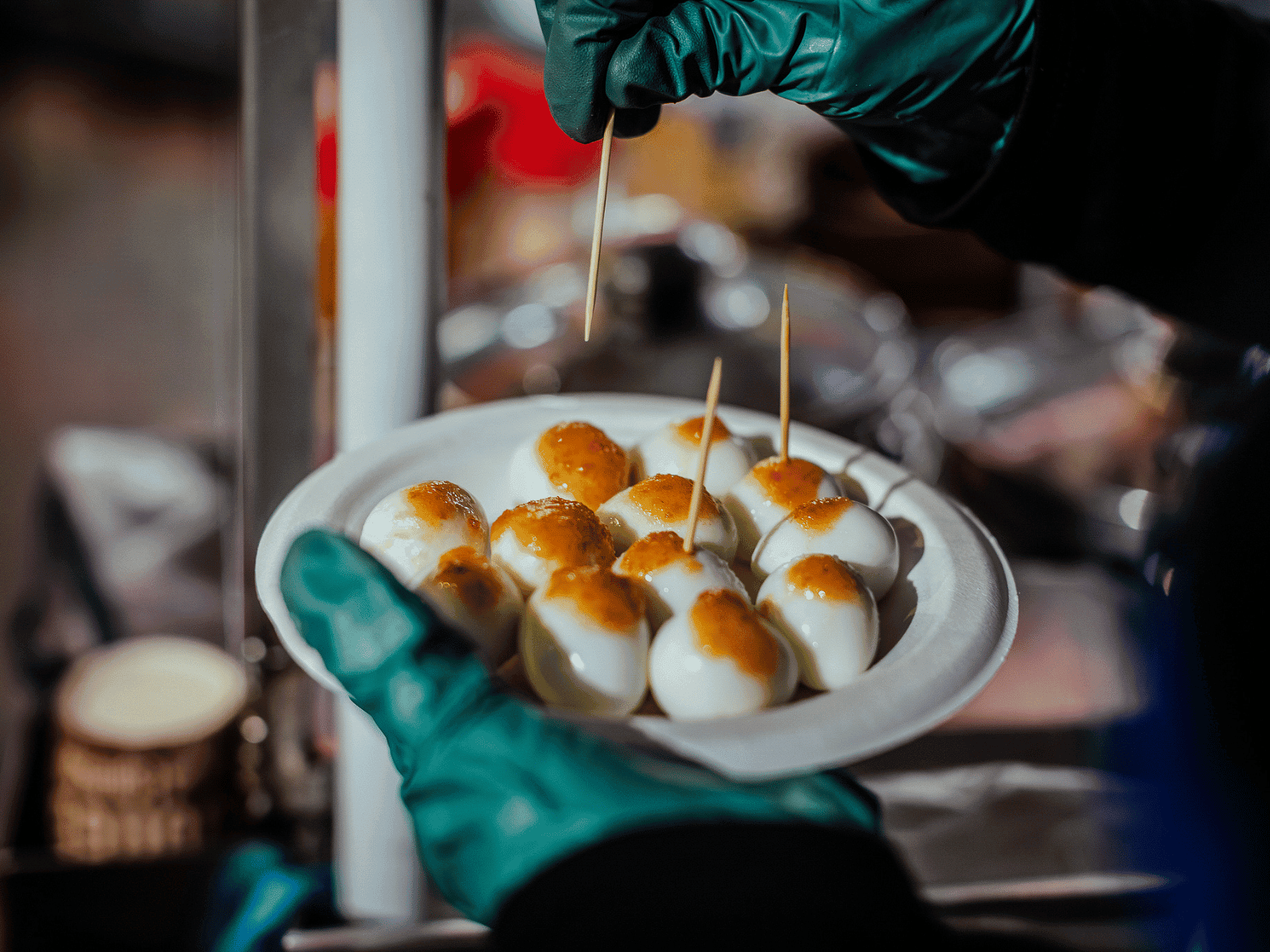
Huevos de codorniz con huacatay is a modern Peruvian dish — a restaurant-style Andean amuse-bouche that's turned into a popular home appetiser: hard-boiled quail eggs, halved lengthways, dressed with a bright green salsa made from huacatay (Peruvian black mint — a specific Andean herb with a menthol-anise-mint flavour), ají amarillo, garlic, olive oil and lime, plated on a small dish with a scatter of coriander and a wedge of lime. The dish shows up on modern Peruvian tasting-menu restaurants (Central, Astrid y Gastón, Maido) as a hymn to Andean ingredients, and has spread to home kitchens as an easy elegant starter.
Method
Bring a small pot of salted water to a simmer. Lower the quail eggs in gently with a slotted spoon. Boil 4 minutes for firm yolks (or 2:30 for slightly runny). Immediately drain and plunge into ice water. Cool 5 minutes.
Peel the quail eggs — the shells are delicate. Roll each gently under your palm on a chopping board to crack all over, then peel starting from the wider end. Rinse briefly to remove any shell fragments.
Cut each egg in half lengthways with a very sharp small knife. You should have 48 half-eggs.
Blend the huacatay leaves, coriander, ají amarillo paste, garlic, oil, mayonnaise (if using), lime juice and salt to a smooth green sauce. Adjust with more oil if too thick, more lime if too flat.
Taste the salsa — should be bright, mildly spicy, herbaceous with the characteristic huacatay menthol note. Adjust salt, lime or chili.
Arrange the halved eggs cut-side-up on a serving platter or on small individual plates. Spoon a small dollop of huacatay salsa onto each egg half.
Top each with a tiny scatter of diced red onion, a slice of chili and a small pinch of toasted quinoa or cancha for crunch. Add a fresh coriander leaf.
Serve immediately with lime wedges and a small dish of extra ají amarillo salsa on the side. As an amuse-bouche, 4 per person is enough; as a starter, 6 per person is a portion.
Tips
- Huacatay is essential. Peruvian black mint has no direct substitute. Fresh is best, frozen works well, jarred huacatay paste is the practical option. Any Latino grocer stocks it. Regular mint is not a substitute.
- Ice bath after boiling. This stops the cooking and makes peeling easier. Skip it and the yolks turn grey-ringed and the shells stick.
- Cut with a sharp knife. A dull knife squashes the halves. Sharp and small (a paring knife) is right.
- Serve immediately. The salsa oxidises within 30 minutes and turns dull green. Assemble at the last moment.
- Modern amuse-bouche or elegant starter. 4 halves as amuse, 6 as starter, 12 as light lunch. Adjust portions to the meal.
More recipes
View all
Very thin red onion slices marinated in fresh lime juice with ají limo, coriander and salt. Peru's essential garnish, on every plate that isn't ceviche.

Cassava batons parboiled then deep-fried until crackly golden, served with a spicy huancaína dipping sauce. Peru's Amazonian answer to French fries.

Large layered pastry cake stuffed with dulce de leche, pineapple jam and manjar blanco, sliced like a brick. The signature sweet of Lambayeque.

Long ridged churros piped and fried, then injected with manjar blanco or chocolate. Peru's Andean answer to Spanish churros, sold from paper cones at every fair.

Frozen cinnamon-coconut milk with a heavy dust of cinnamon on top, hand-churned in a copper drum. Arequipa's iconic street ice cream — no cheese despite the name.

Ring-shaped doughnuts made from squash and sweet potato purée, fried crisp and drizzled with fig-and-cinnamon syrup (chancaca). Lima's afternoon fair-food classic.