
Destination
Manila
The story
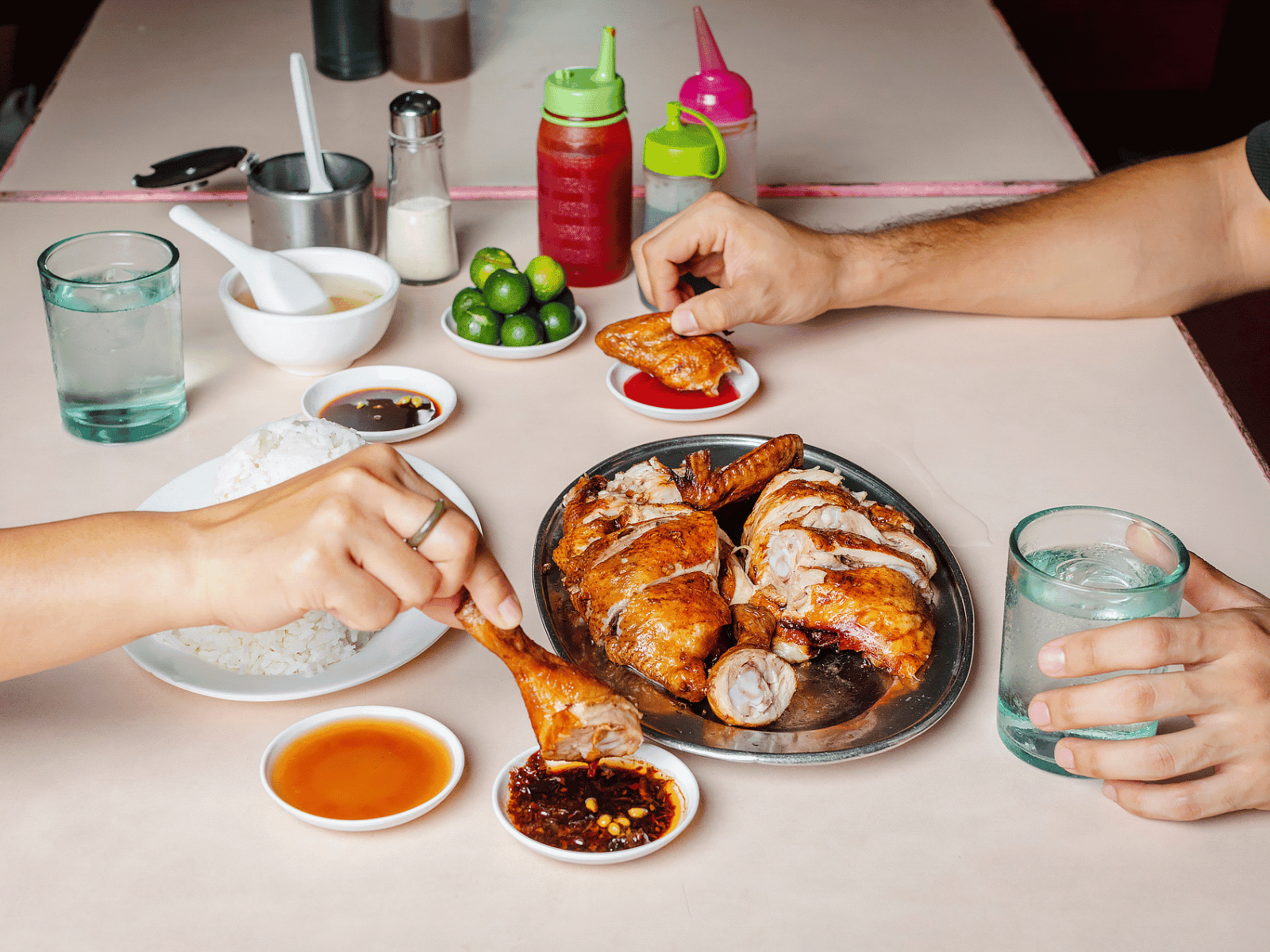
Pritong manok is the Filipino version of fried chicken and one of the country's most-loved home-cooked dishes: bone-in chicken pieces marinated overnight in a mixture of soy sauce, calamansi juice, garlic, black pepper and bay leaves, then dredged in seasoned flour and deep-fried until the outside is deep golden and the meat inside is juicy. Served with a scoop of steamed rice, a small dish of banana ketchup or spiced vinegar, and often a side of atchara (pickled papaya). Sold at every Filipino carinderia and turo-turo counter, at every Jollibee (the Filipino fast-food giant famous for its Chicken Joy), and made in every Filipino home for Sunday lunch. The dish is deceptively simple but requires the right marinade for the classical Filipino flavour.
Method
Whisk all marinade ingredients in a large bowl. Add the chicken pieces and toss so every piece is coated. Cover and refrigerate at least 8 hours, preferably 24 hours.
Lift the chicken pieces from the marinade and let excess drip off. Do not wipe off — some marinade should still coat the chicken.
In a wide plate or shallow dish, whisk all seasoned flour ingredients together.
Working with one piece at a time, roll each chicken piece in the seasoned flour, pressing gently so the coating adheres well. Shake off excess flour and set on a rack.
Let the dredged chicken rest on the rack 10 to 15 minutes so the coating sets and adheres. Skipping this step causes the coating to fall off in the fryer.
Warm the oil in a deep heavy pot to 175C. A test piece of flour should sizzle immediately and turn golden in 45 seconds.
Fry 4 to 5 pieces at a time for 12 to 15 minutes, turning occasionally, until deeply golden all over and the internal temperature at the thickest part is 75C. Do not crowd the pot. Between batches, let the oil come back to 175C.
Lift onto a wire rack (not paper). Rest 3 minutes so the coating firms up. Serve on a platter with rice, banana ketchup, spiced vinegar, atchara, tomato-cucumber slices and calamansi wedges. Eat with hands or knife and fork.
Tips
- Overnight marinade. This is the flavour marker. Filipino fried chicken is defined by the soy-calamansi marinade that penetrates through the bone. Short marinades give you a plain fried chicken.
- Bone-in, skin-on. This is essential. Boneless breast gives you a dry, sad fried chicken. Bone-in thighs, drumsticks and wings are the classical cuts.
- 175C oil. A thermometer is worth using. Cooler and the coating absorbs oil and turns greasy; hotter and the coating burns before the meat cooks through.
- Rest the dredge. The 10-minute rest after coating lets the flour bond to the chicken. Skipping causes the coating to fall off in the oil.
- Banana ketchup is the classical dip. This sweet, tangy, orange-red Filipino condiment is what makes pritong manok specifically Filipino. Any Asian grocer stocks it (Jufran or UFC brand).
More recipes
View all
Wide flat rice noodles wok-fried hard with beef strips, bean sprouts and Chinese greens in a dark soy glaze. Manila's Chinoy fried noodle classic.

Chopped pork face and ears sautéed with onion, chili and calamansi, served sizzling on a cast-iron plate with a raw egg cracked on top. Kapampangan bar food royalty.
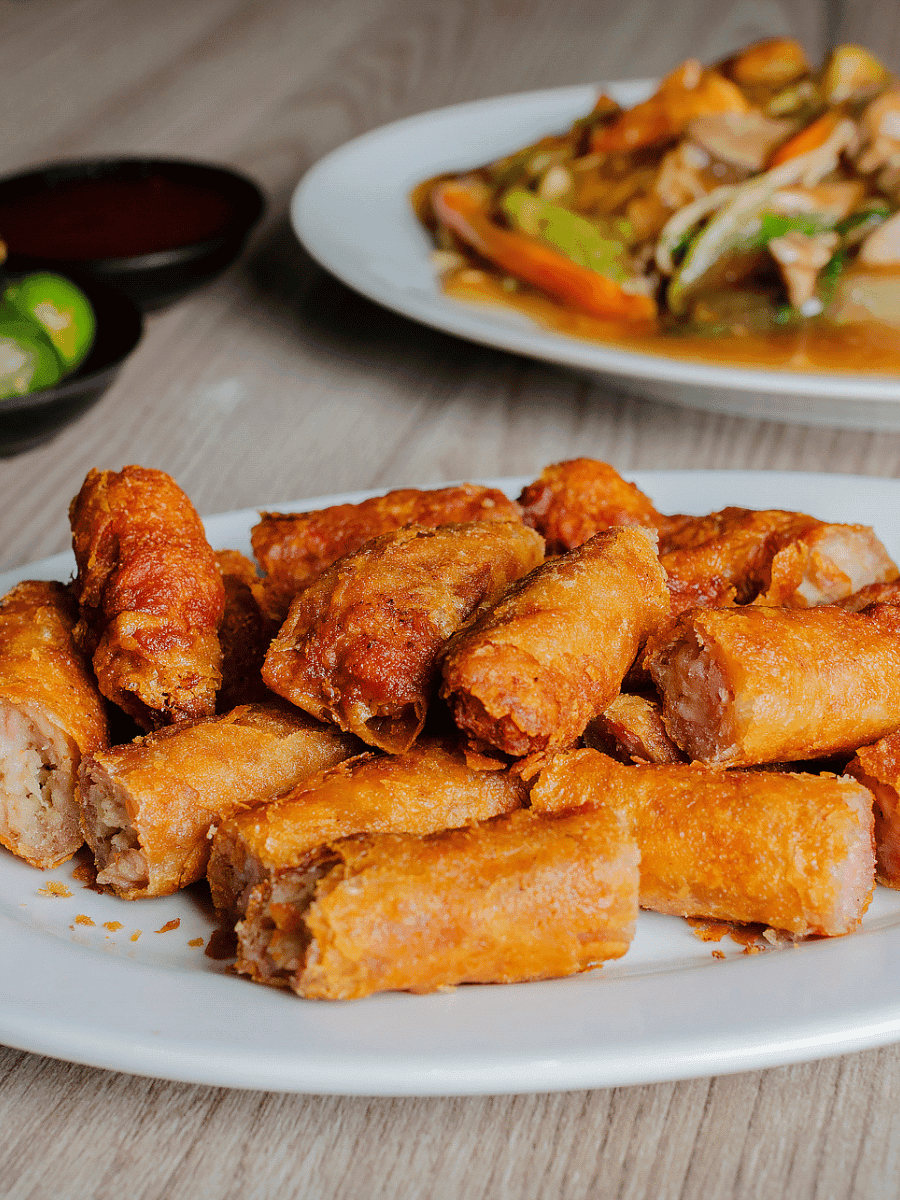
Thin, crisp pork-and-vegetable rolls fried to a shatter, dipped in banana ketchup or a sweet chili vinegar. The Philippines' party finger food.
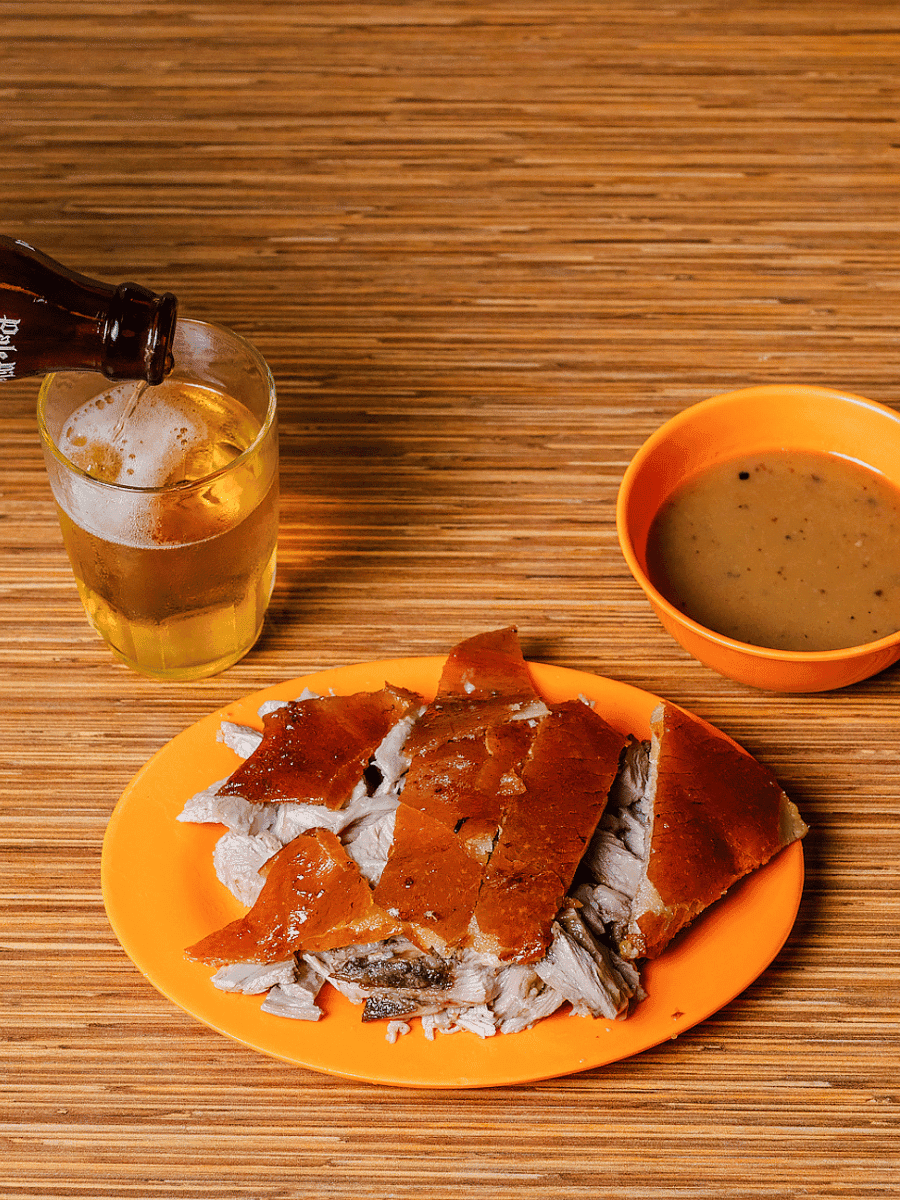
A whole suckling pig slow-roasted for hours over charcoal, stuffed with lemongrass and pandan, served with sarsa liver sauce. The Philippines' fiesta centrepiece.
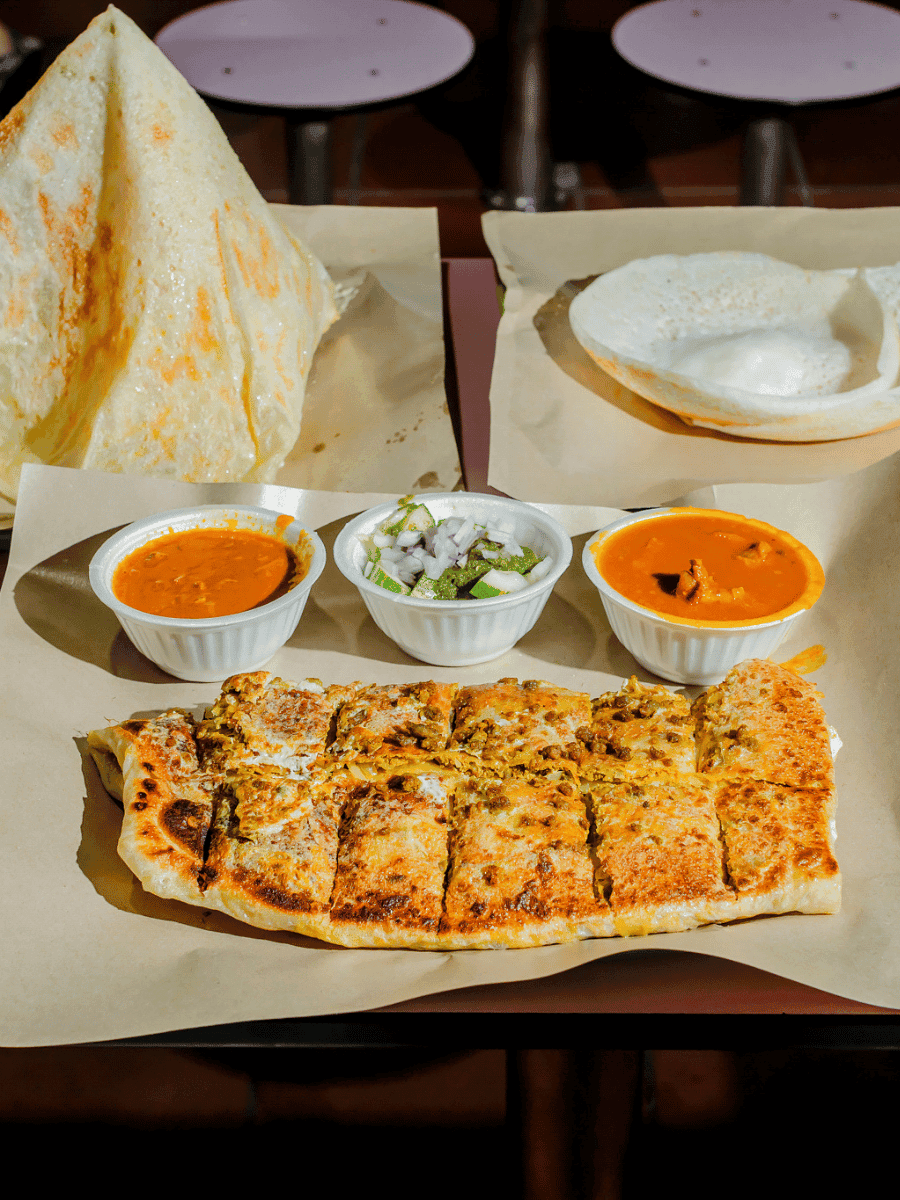
Thin roti prata dough stretched paper-thin and folded around a filling of minced mutton, onion and egg, pan-fried until crackly. Little India's late-night favourite.
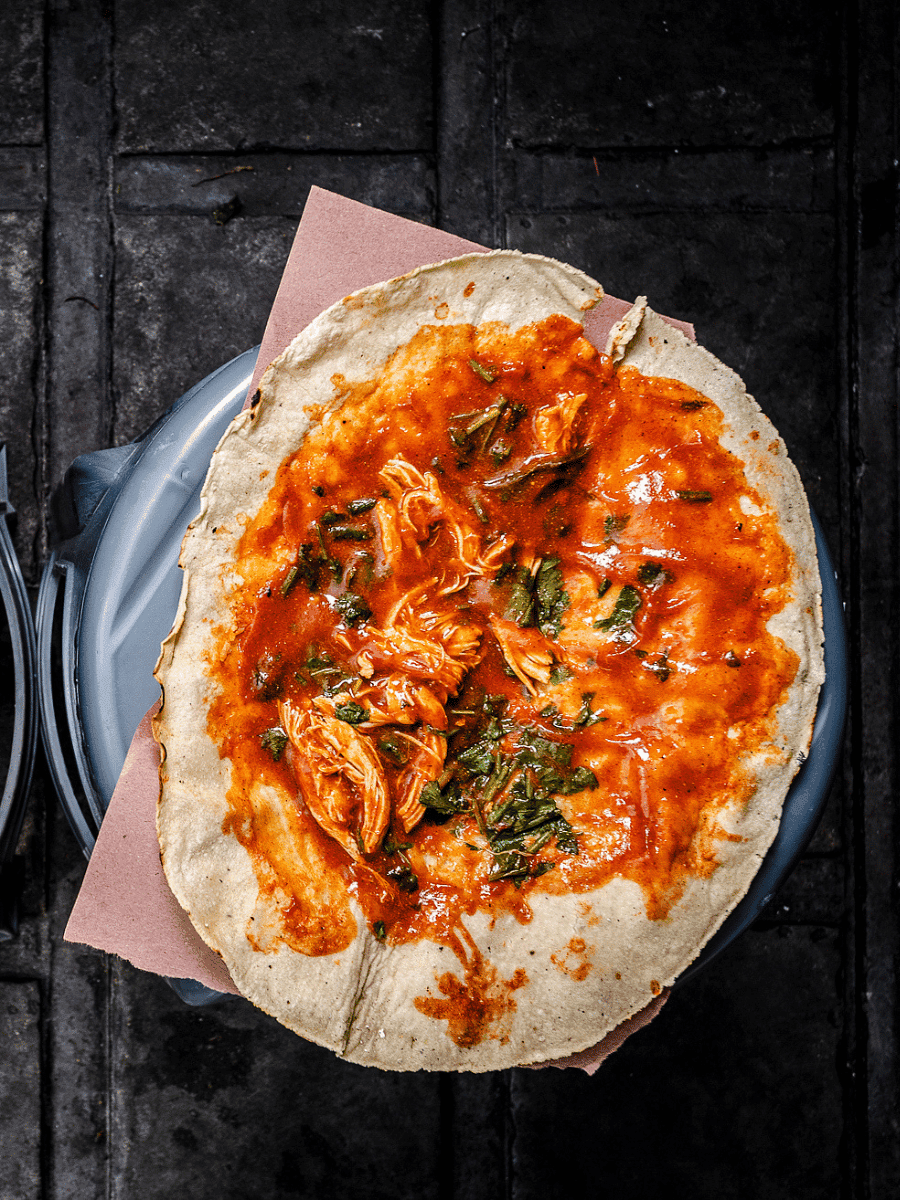
A giant half-moon masa turnover stuffed with yellow mole, chicken and squash flower, then browned on a comal. The Oaxacan Sunday empanada.