

Destination
Koh Samui
The story
Khanom jeen nam ngiao is one of Chiang Mai's most-loved noodle dishes and a specifically Lanna preparation: fresh rice vermicelli (khanom jeen) topped with a tangy, mildly-spicy tomato-pork rib broth infused with dried chili paste, Chinese black cardamom, fermented soybean, dried cotton tree flower (dok ngiao — the eponymous flower) and small cubes of pig's blood tofu (a jelly-like set blood pudding — mandatory for classical Lanna versions). Served with a plate of raw vegetables (bean sprouts, cabbage wedges, pickled mustard greens, lime wedges) and a small dish of chili powder. Sold at every Chiang Mai market and every Lanna neighbourhood restaurant, especially at breakfast; this is the Sunday-morning noodle dish that fills Chiang Mai's temple neighbourhoods with the smell of tomato and dried chili.
Method
Pound all chili paste ingredients in a mortar or blend into a smooth paste.
Warm oil in a large heavy pot. Brown pork ribs in batches 6 minutes until deeply coloured. Reserve.
In the same pot, add minced pork. Break up and brown 5 minutes. Reserve with ribs.
In the same pot, cook onion 4 minutes; add garlic and ginger 60 seconds. Add the chili paste and fry 4 minutes until deep red and fragrant.
Add chopped tomatoes. Cook 10 minutes, mashing gently, until they break down into a rough sauce.
Return pork ribs and mince to the pot. Add water and dok ngiao flowers. Bring to a simmer.
Simmer 75 to 90 minutes until pork ribs are tender. Add fish sauce, palm sugar, tamarind and salt. Taste and adjust. Add blood tofu cubes in the last 5 minutes.
If using dried rice vermicelli: cook per packet, drain. Divide between 6 large bowls. Ladle hot broth generously over, making sure each bowl has pork ribs, mince and blood cubes. Serve with plates of bean sprouts, cabbage wedges, pickled greens, lime wedges, chili powder, coriander, spring onion, and fried garlic on the side. Eaters add toppings to their preferred amount.
Tips
- Dried cotton tree flowers (dok ngiao). This is the eponymous flavour. Sold at any Thai grocer as dried orange-brown flower heads. If truly unavailable, omit — the dish loses a bit of its identity but is still recognisably khanom jeen nam ngiao.
- Pig's blood tofu is classical but optional. The dark jelly-like cubes are a Lanna signature. Available at Thai and Chinese grocers as "cong luot" or "chicken blood tofu." Skip for a fully clean version.
- Tomato-forward broth. Most Thai noodle soups are clear or coconut-based; this one is tomato-forward. Fresh tomatoes are essential; tinned tomatoes work but change the flavour.
- Fresh khanom jeen noodles. Sold at Thai markets as coiled fresh rice noodles. Vietnamese dried rice vermicelli (bun) is the practical substitute.
More recipes
View all
Thai instant noodle brand Mama transformed into a proper meal: tom yum broth, minced pork, prawn, kaffir lime and a runny yolk fried egg. Thailand's midnight comfort food.
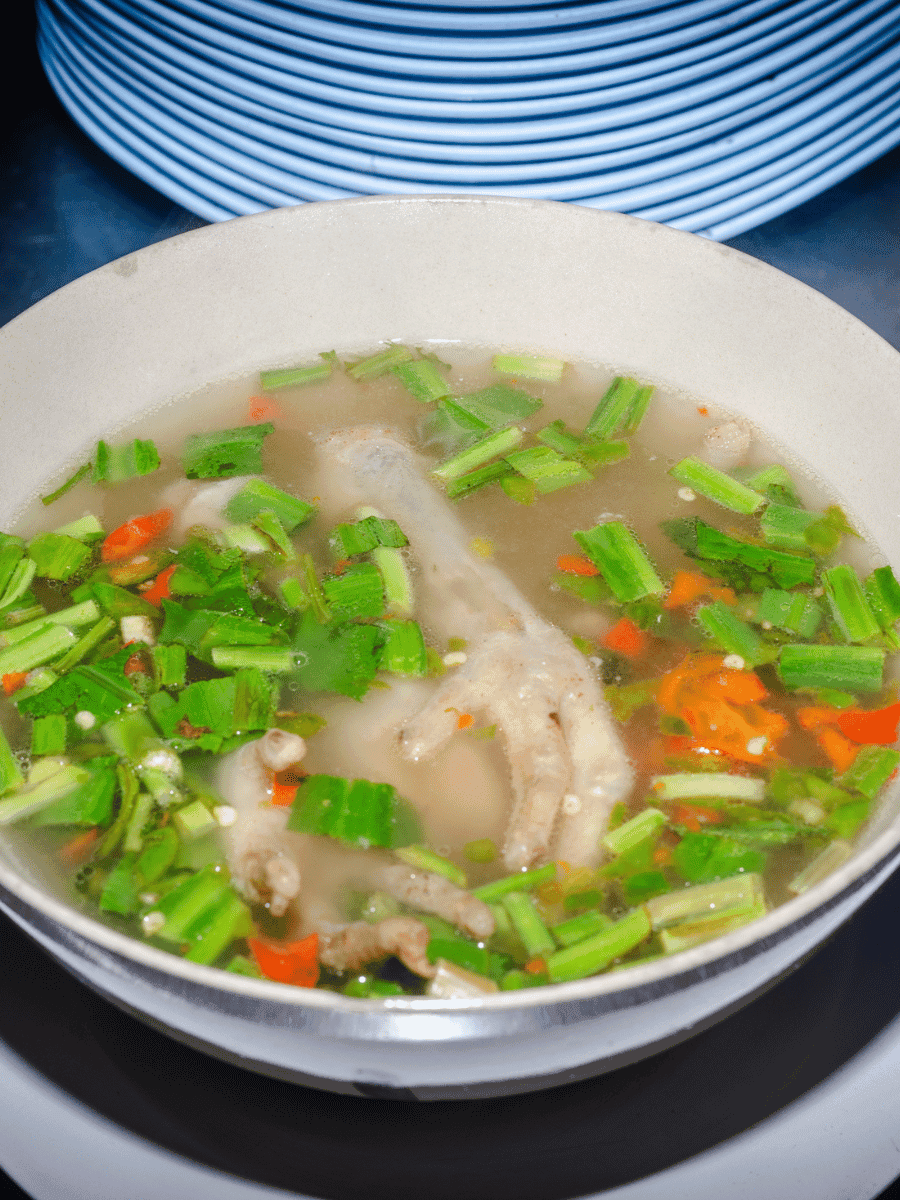
Chicken feet slow-simmered in a hot-sour tom yum broth with lemongrass, galangal, kaffir lime, mushrooms and lime juice. Bangkok's gelatinous late-night noodle-shop favourite.

Yellow noodles stir-fried Hokkien-style with prawns, squid, pork, kai lan and dark soy. Bangkok Chinatown's Chinese-Thai classic, tossed in a screaming wok.

Clear beef broth over rice noodles with slow-braised beef shin, meatballs, bean sprouts and fresh coriander. Bangkok's iconic noodle lunch.
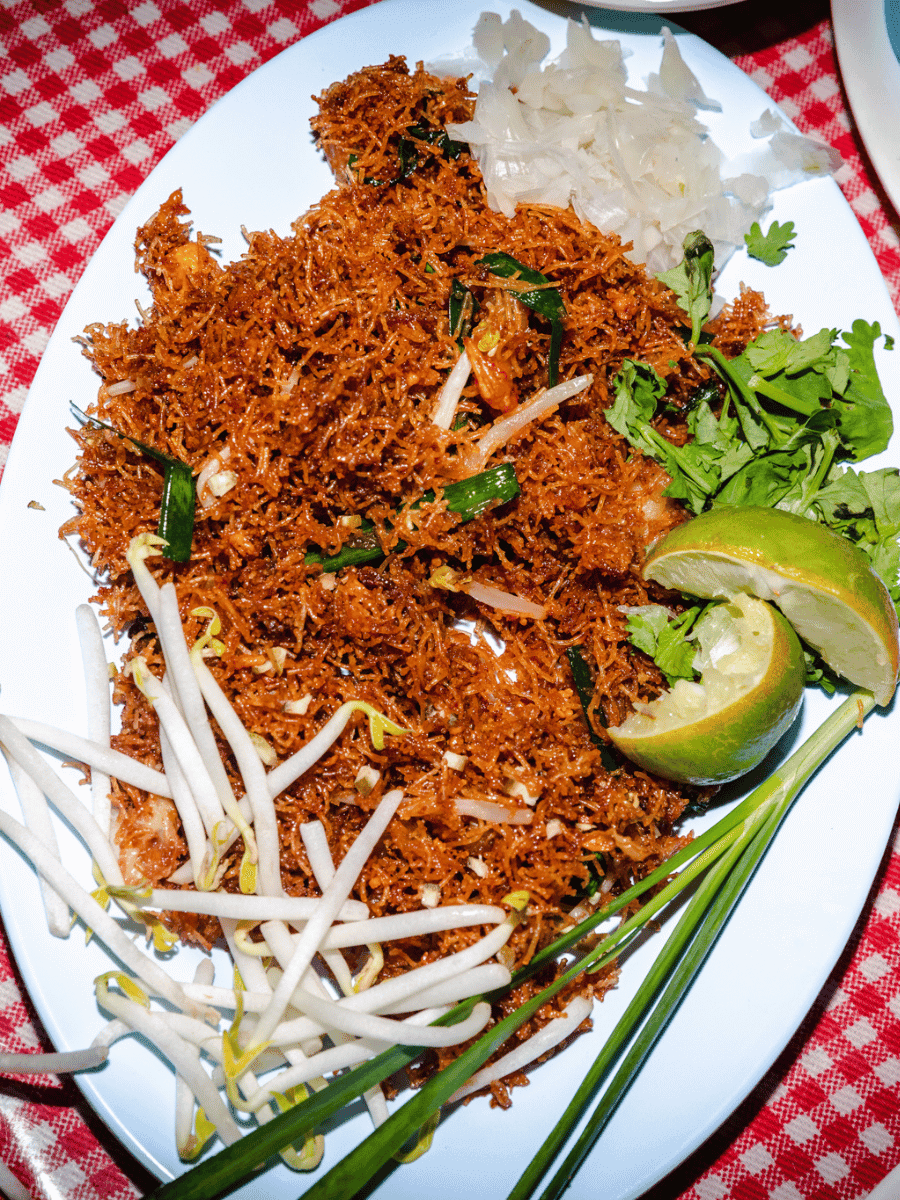
Deep-fried rice vermicelli tossed in a bright orange sweet-sour tamarind-vinegar sauce with prawn, tofu and Chinese chives. Bangkok's regal celebration noodle.

Glass noodles wok-fried with prawns, egg, Chinese celery and roasted-chili nam prik pao paste. Bangkok's Chinese-Thai comfort noodle stir-fry.