
Destination
Pattaya
The story
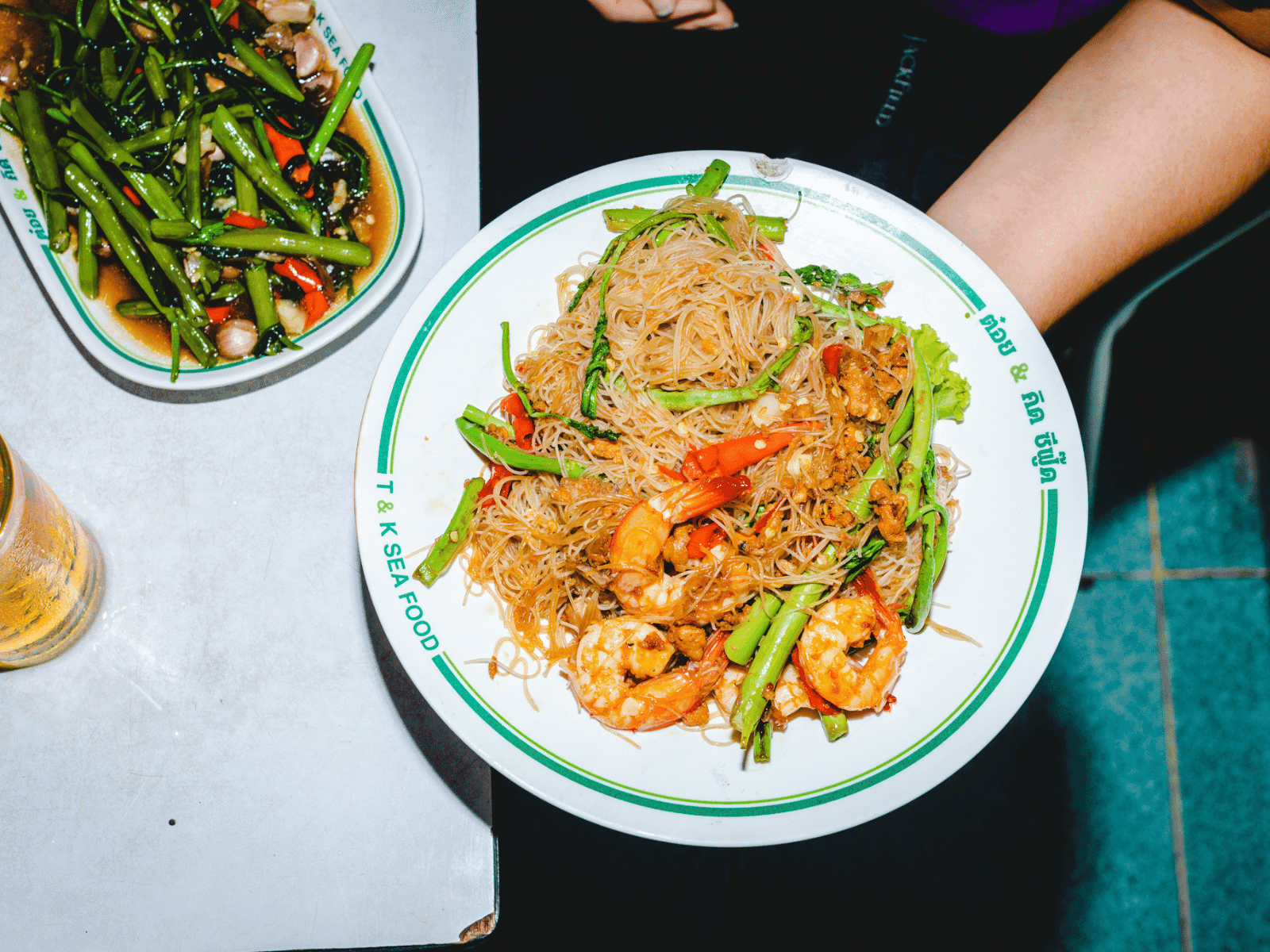
Pad woon sen ("stir-fried glass noodles") is Bangkok's Chinese-Thai comfort stir-fry: mung-bean glass noodles wok-fried hard with prawns, egg, Chinese celery, garlic, dark soy and — the flavour marker — a generous spoon of nam prik pao (Thai roasted-chili paste), which gives the noodles their distinctive smoky-sweet-hot depth. Sold at every Bangkok Chinese-Thai eatery and every home stir-fry, this is the noodle dish Thai families make when they want something quick, comforting and slightly indulgent. The addition of nam prik pao (a Thai pantry staple made from roasted dried chilies, shallots, garlic, tamarind and shrimp paste) is what transforms a plain glass noodle stir-fry into pad woon sen.
Method
Cover the glass noodles with warm water in a bowl. Soak 10 to 12 minutes until soft and pliable. Drain thoroughly and cut into shorter lengths with kitchen scissors (they can be very long).
Whisk all sauce ingredients in a bowl. Set beside the wok.
Warm oil in a wok over the highest heat until smoking. Add garlic, ginger (if using) and sliced chilies. Stir 20 seconds until fragrant.
Add the prawns. Toss 60 seconds until pink. Push to one side of the wok.
Pour the beaten eggs into the empty side of the wok. Let set for 30 seconds, then break up and toss briefly.
Add the sliced onion and drained glass noodles to the wok. Pour in the sauce mix. Toss vigorously for 2 minutes so the noodles absorb the sauce and everything is well coated.
Fold in the Chinese celery and spring onions. Toss 60 seconds — the celery should stay crisp.
Divide between 4 plates. Serve immediately with jasmine rice, lime wedges, sliced chili and coriander leaves.
Tips
- Soak the noodles, don't boil. Soaking gives you a slightly-chewy texture; boiling turns them to mush.
- Nam prik pao is essential. This roasted-chili paste is the flavour marker. Do not skip. Any Thai grocer sells it in jars.
- Chinese celery (khun chai), not regular celery. Chinese celery has thin stems and strong flavour. Regular celery is too watery and mild.
- Very hot wok. As always with Thai stir-fries — smoking hot is the target.
More recipes
View all
Yellow noodles stir-fried Hokkien-style with prawns, squid, pork, kai lan and dark soy. Bangkok Chinatown's Chinese-Thai classic, tossed in a screaming wok.

Chopped crispy pork belly stir-fried hard with garlic, bird's-eye chili, fish sauce and holy basil. Served over rice with a fried egg — Thailand's fastest lunch.

Morning glory greens stir-fried hard in a flaming wok with garlic, bird's-eye chili, fermented soybean paste and oyster sauce. Thailand's essential green vegetable.

Squid rings stir-fried hard with garlic, chili, celery and dark sweet soy — a fast, glossy wok dish that shows up on every Thai seafood menu.

Thai instant noodle brand Mama transformed into a proper meal: tom yum broth, minced pork, prawn, kaffir lime and a runny yolk fried egg. Thailand's midnight comfort food.
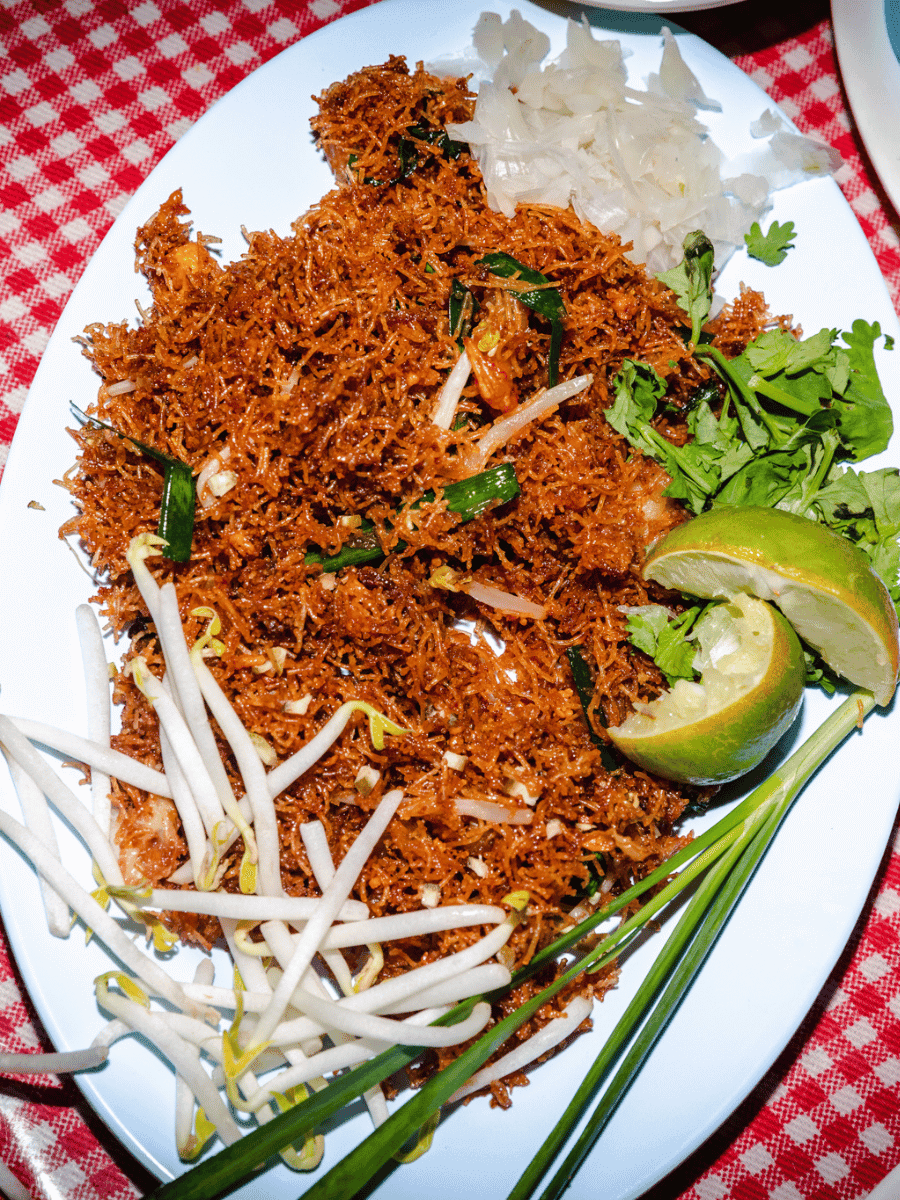
Deep-fried rice vermicelli tossed in a bright orange sweet-sour tamarind-vinegar sauce with prawn, tofu and Chinese chives. Bangkok's regal celebration noodle.