

Destination
Kathmandu
The story
Juju dhau — literally "king curd" in Newari — is Bhaktapur's most famous dessert and one of Nepal's most photographed foods: thick, sweet, faintly saffron-tinged buffalo-milk yogurt, set overnight in small unglazed clay pots (kwati bata) about 100ml each. What sits in each pot is a spoonable, creamy, mildly sweet yogurt with a specific caramel-cream flavour that no cow's-milk yogurt reproduces. Sold from small stalls along the streets of Bhaktapur's Durbar Square and the surrounding Newari old town, juju dhau is the after-lunch treat you buy in the middle of a tour of the temples, sitting on a step and eating with a small wooden spoon.
Method
Pour the milk into a heavy saucepan. Bring to a boil, then reduce to a lively simmer. Cook 25 to 30 minutes, stirring occasionally, until the milk has reduced by about a third and taken on a slight cream colour. This concentration is essential for the classical thick texture.
Stir in the sugar, cracked cardamom pods and saffron. Simmer another 3 to 5 minutes until the sugar has fully dissolved and the milk is faintly golden. Stir in the orange blossom water if using.
Strain the milk through a sieve (to remove cardamom husks) into a clean bowl. Let it cool at room temperature until it reaches body temperature (37-38C) — warm to the touch, not hot. Too hot kills the yogurt cultures; too cool won't activate them.
In a small bowl, whisk 3 tbsp of the warm milk with the yogurt starter until smooth and lump-free. Pour this back into the main pot of warm milk and whisk gently.
Divide the milk between the small clay pots (or ramekins), filling almost to the top. Do not stir the milk once it's in the pots.
Cover each pot with a small piece of cloth or a saucer. Place all pots in a warm spot (around 24-28C) — the top of a radiator, a warm cupboard, or wrapped in a tea towel in the oven with only the light on. Leave 6 to 8 hours until the yogurt has set to a firm, spoonable texture.
Transfer the set pots to the fridge and chill at least 4 hours (overnight is ideal). The yogurt firms further as it cools and the flavour develops.
Dust each pot with a pinch of ground cardamom and a few saffron threads. Top with chopped pistachios or almonds. Serve straight from the pot with a small wooden spoon. Best eaten within 3 days.
Tips
- Buffalo milk if you can find it. Buffalo milk (from an Indian or Nepali grocer) has 8% fat vs cow's milk 3.5% — that's what makes juju dhau specifically thick. Cow's milk works but the texture is lighter.
- Clay pots draw out whey. Unglazed terracotta absorbs the excess whey from the setting yogurt, giving you the classical firm texture. Ramekins give you a slightly wetter finished yogurt.
- Body temperature exactly. This is the make-or-break step. Too hot and the yogurt cultures die; too cool and they never activate. A finger dip should feel warm but not uncomfortable.
- Live yogurt starter. Make sure your starter yogurt is labelled "live and active cultures." Pasteurised, heat-treated yogurts (some commercial brands) won't work.
- Do not disturb once set. Once the yogurt has set in the pots, do not move or shake them for 4 hours. Disturbing the structure gives you a slimy, thin yogurt.
More recipes
View all
Thick sweetened yogurt whisked with rose water and cardamom, poured over ice into tall glasses. Kathmandu's Newari-Indian summer refresher.

Bright orange fried batter spirals soaked in cardamom-scented sugar syrup. Kathmandu's Newari sweet, sold hot from bubbling oil at every sweet shop.

Puffed deep-fried whole wheat breads served with a spiced potato-tomato curry. Kathmandu's Saturday-morning breakfast, sold at every corner sweet shop.

Roasted black soybeans dressed with mustard oil, garlic, ginger, chilies and Timur pepper. Newari beer snack, best with a cold Gorkha lager.
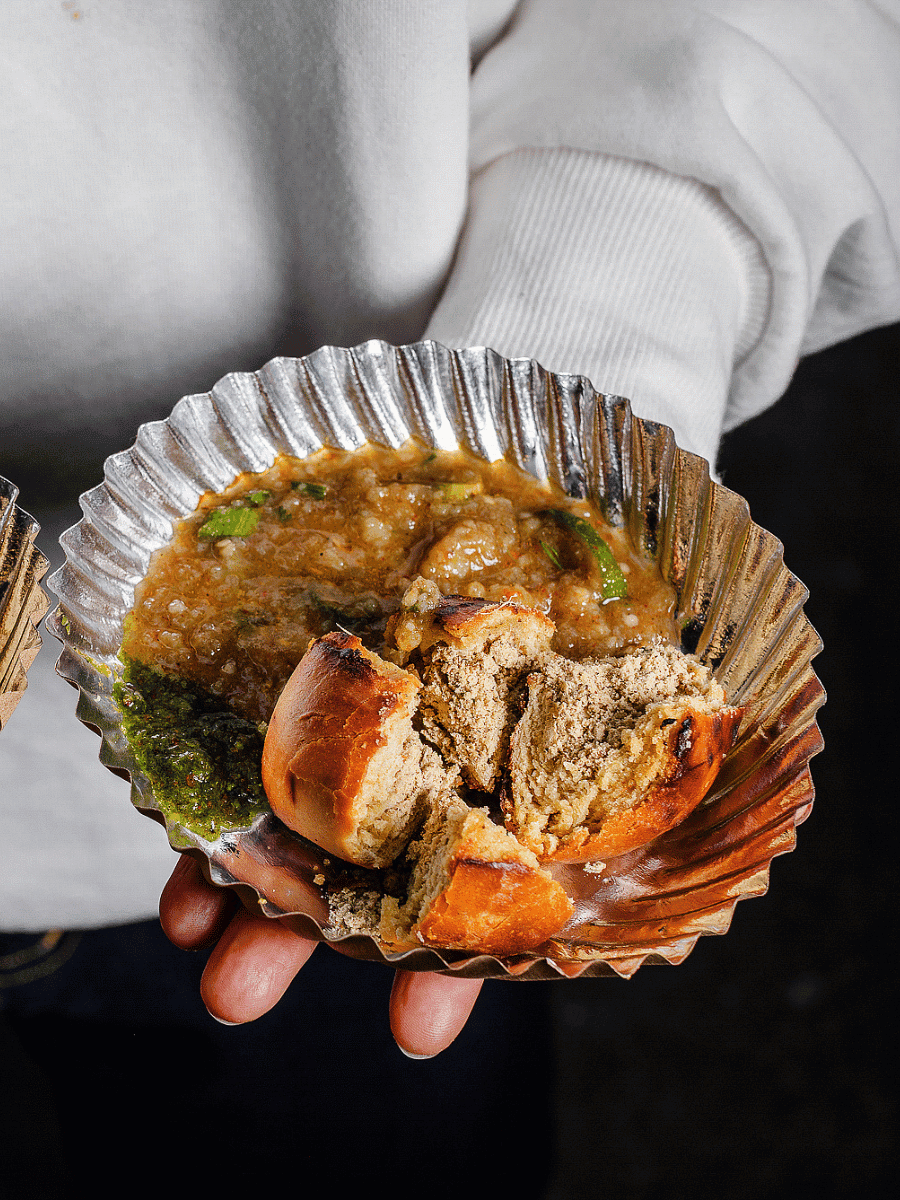
Roasted wheat-flour balls stuffed with spiced sattu, served with a rustic mash of fire-roasted tomato, aubergine and potato. Bihari-Newari street food.
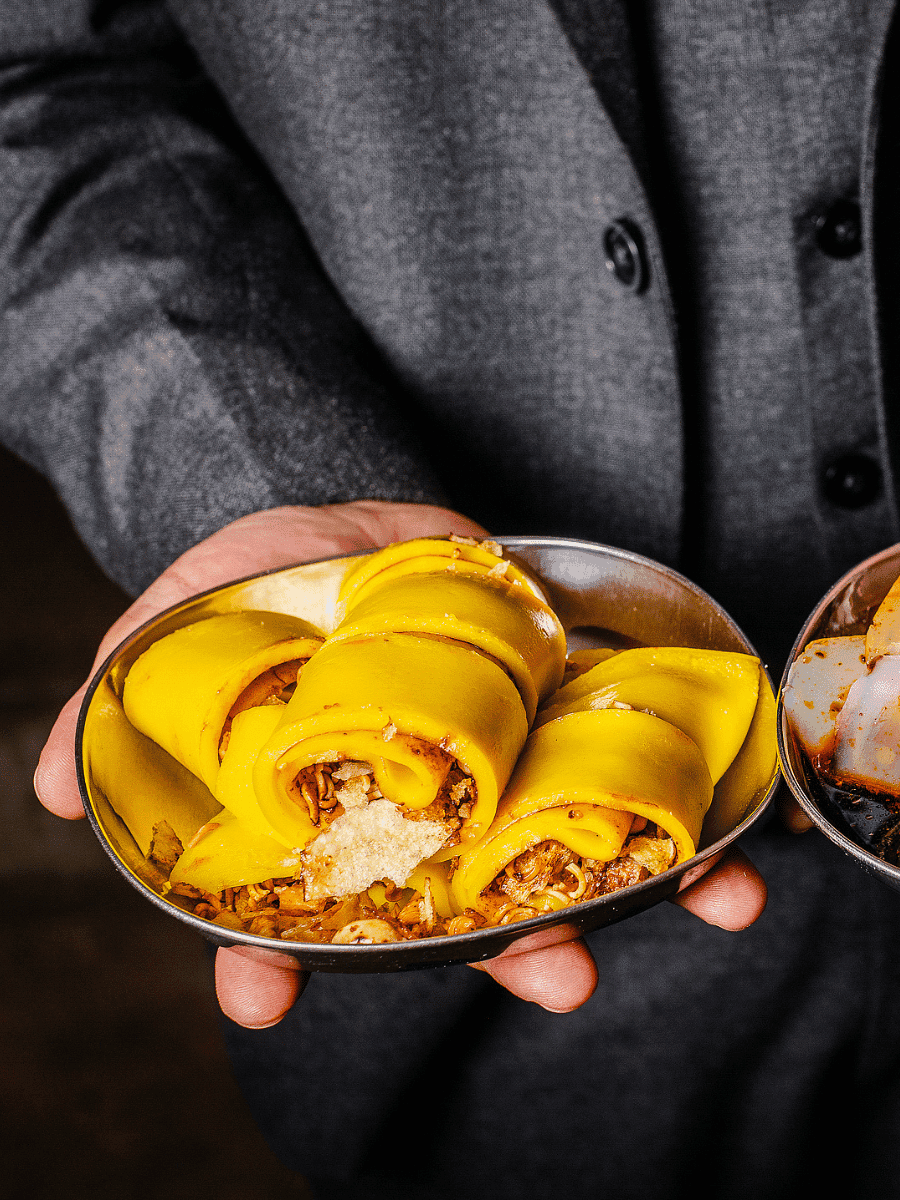
Cold, jelly-textured mung-starch noodles topped with soy, chili oil, cucumber, coriander and crushed peanuts. Kathmandu's Tibetan street snack.