
Destination
Puerto Vallarta
The story
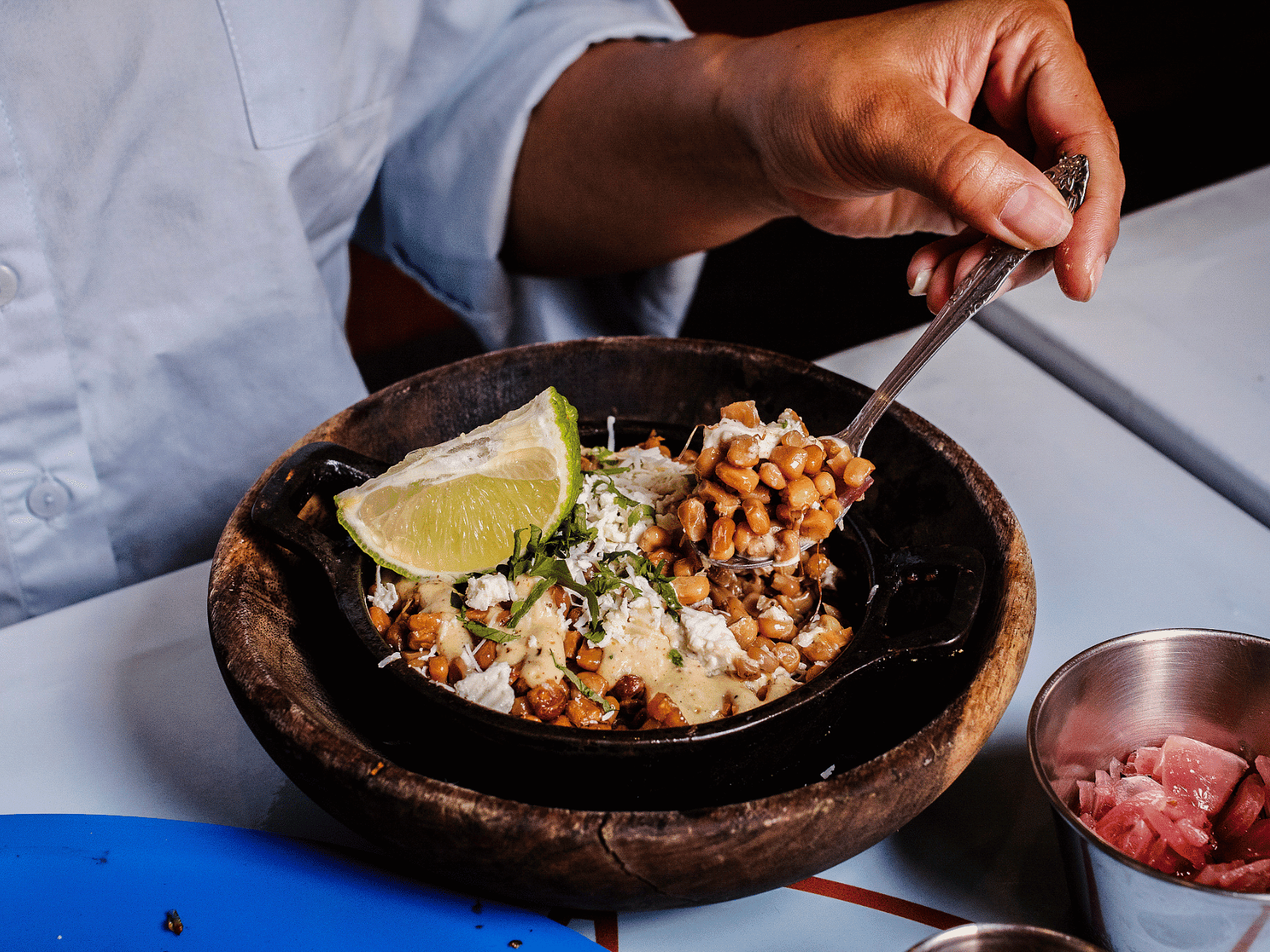
Esquite pibinal is the Yucatán's version of Mexico's beloved street-corn cup: kernels of young corn (pibinal — the small, sweet, waxy corn harvested underripe from Yucatecan milpas) charred and toasted with epazote and a habanero chilli, then piled into a foam cup and dressed with mayo, crumbled dry cheese, chile powder and a heavy squeeze of lime. Sold at markets in Mérida, Valladolid and Playa del Carmen from mid-afternoon into the evening, eaten hot from a plastic spoon while you walk. "Pibinal" is Yucatec Maya for young corn, and it's the specific milpa harvest that gives this version its identity — the kernels are smaller, softer and much sweeter than mature corn.
Method
If using fresh corn, husk the ears and slice the kernels off the cob with a sharp knife, working over a large bowl. You want about 800g of kernels. Pat dry with a tea towel if wet.
Warm the oil in a wide heavy pan (cast-iron or carbon steel) over medium-high heat. Add the epazote and habanero and cook 30 seconds until the epazote wilts and the habanero starts to smoke.
Add the corn kernels in a single layer. Do not stir for 3 minutes — you want the bottom layer to catch and char. Then stir and cook another 5 to 7 minutes, stirring every minute or so, until the kernels are lightly charred and toasted throughout. Season with the salt and pepper. Fish out the habanero.
Tip the toasted corn into a warm bowl and cover with foil. Discard the epazote sprigs (or, if you like, chop a few leaves finely and reserve for garnish).
Fill each cup or bowl three-quarters full with hot corn kernels. This is the moment to work fast — everything else is at room temperature and the corn cools quickly.
Onto each cup, spoon 1 tbsp of crema and 1 tbsp of mayonnaise. Do not mix yet.
Scatter a generous handful of crumbled cotija over each cup. Dust with Tajín or chile piquín. Squeeze a heavy amount of lime juice across the top — one-third of a lime per cup.
Top with chopped coriander and a pinch of chopped raw epazote if using. Add optional avocado, pickled onion or a splash of habanero salsa on the side. Serve immediately with a plastic spoon. The eater stirs the whole cup once before eating to distribute the sauces.
Tips
- Toast, don't boil. This is the Yucatecan technique. Boiling the corn is central-Mexican esquites; toasting is the pibinal signature. The dry heat produces a totally different flavour.
- Epazote is not optional. This weedy Mexican herb is what makes the dish taste Yucatecan. Any Latino grocer sells it fresh or dried. Coriander is not a substitute — it's a different note entirely.
- Handle the habanero with care. Slit it or leave it whole; halved and deseeded is safer. The point is a slow, warm heat rather than a fierce one. Serve extra habanero salsa on the side for those who want more.
- Cotija cheese is the right cheese. It's a dry, salty, crumbly Mexican cheese from Michoacán, made specifically for scattering. Feta is the closest supermarket substitute; parmesan is a fallback that's not quite right.
- Assemble to order. Esquites don't hold. The mayo, lime and cheese should meet the hot corn at the last moment. Making a large bowl in advance and hoping to reheat it doesn't work.
More recipes
View all
Oaxaca's street mash-up: a crunchy tostada base piled with hot esquite corn, mayo, cheese, lime and chile. The prehispanic dish gets a modern platform.

Stale dry tortillas soaked in a fierce vinegar-chile brine with radishes, cabbage, cucumber and pig's-foot. Puebla's cheekiest and most controversial street snack.

Corn tortillas rolled around hard-boiled egg and drenched in a jade-green pumpkin-seed sauce, finished with a slick of tomato oil. The Yucatán's oldest dish.

Thin oval masa cakes brushed with asiento (unrefined pork lard), topped with black beans, quesillo and salsa. Oaxaca's answer to the pizza slice.

Beer-battered white fish, fried to a shattering crust, folded into warm tortillas with shredded cabbage, chipotle crema and lime. Baja California's contribution to the taco world.

Guajillo-red-dyed bread stuffed with potato-chorizo and pan-fried until crisp — a red-stained sandwich that Mexico City eats standing up.