
Destination
Puerto Vallarta
The story
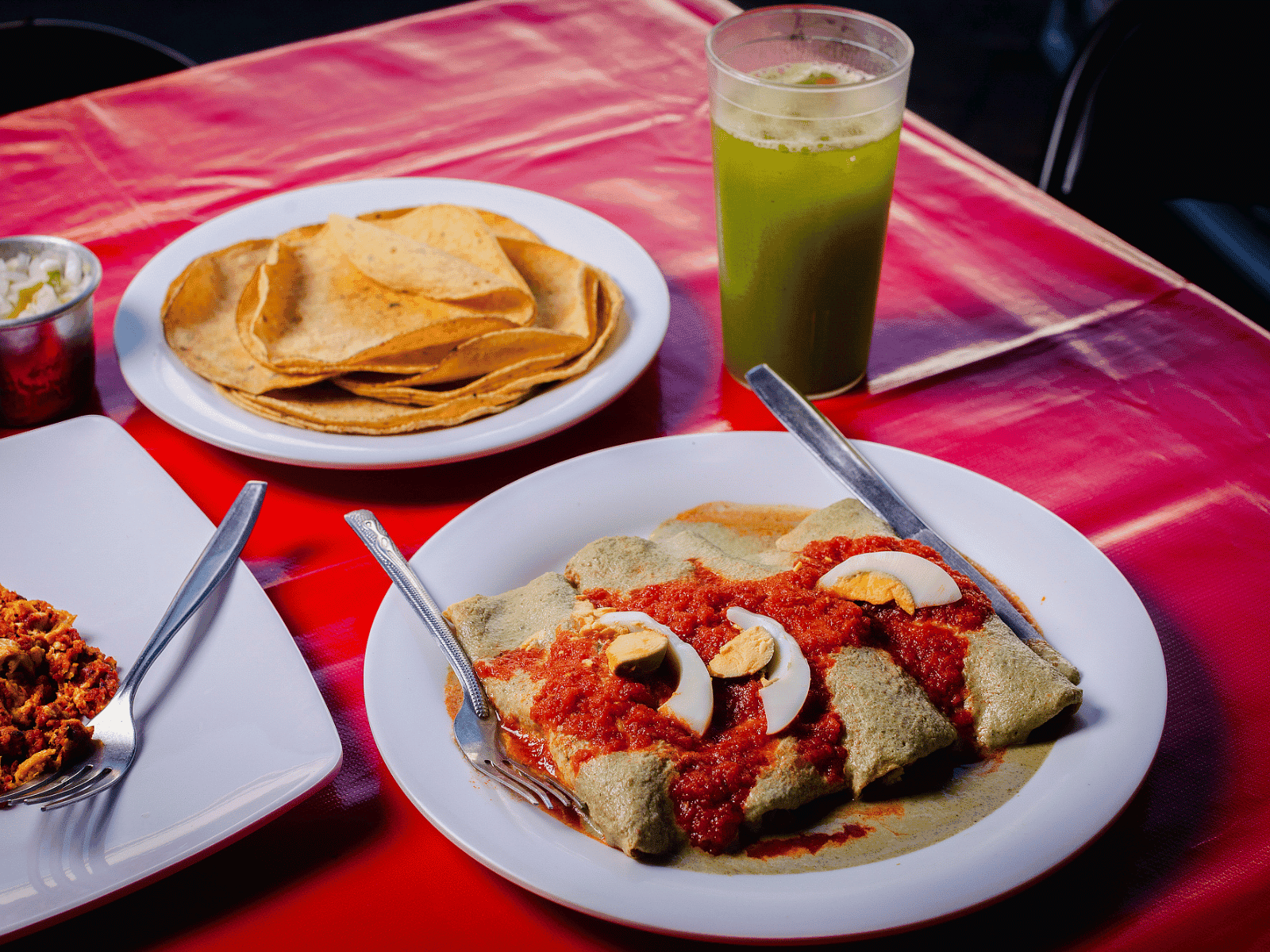
Papadzules are the oldest continuously-cooked dish in the Yucatán — a pre-Hispanic Mayan dish that predates the arrival of the Spanish by centuries and still tastes distinctly ancient: soft corn tortillas dipped in a warm sauce of ground toasted pumpkin seeds thinned with epazote-scented water, rolled around a stuffing of hard-boiled egg, and finished with a fried-tomato sauce painted across the top and a scatter of chopped raw onion. The colour palette alone — jade-green sauce, red tomato oil, yellow egg — makes it one of the most photogenic plates in Mexican cooking. The name is Yucatec Maya ("papak dzul"), often translated as "food of the lords," and every regional cookbook of the Yucatán opens with a version of it.
Method
Lower the eggs into a pot of simmering water and cook 9 minutes. Drain, cool briefly in cold water, then peel and chop finely with the salt and pepper. Reserve.
Warm a dry heavy pan over medium heat. Add the pumpkin seeds and toast, stirring constantly, 4 to 5 minutes until they puff, pop and turn faintly golden — do not let them brown. Tip onto a plate to cool. Reserve 2 tbsp for garnish.
Bring the water to a boil in a small pot. Add the epazote leaves, onion, garlic and serrano. Simmer 5 minutes. Cool to lukewarm.
Combine the toasted pepitas, the strained epazote water (about 400ml), salt and half a cup of the reserved cooked epazote leaves in a high-speed blender. Blend 60 to 90 seconds until smooth and vivid green. The sauce should be thick as pouring cream. If it's too thick, add a splash more warm water; if too thin, add a handful more seeds.
Char the tomatoes, half-onion, garlic clove and habanero directly on a hot dry pan until blackened in patches, 6 to 8 minutes total. Peel any loose tomato skin.
Blend the charred vegetables with the oil and salt to a smooth sauce. Simmer in a small pan 8 minutes until thickened and glossy — it should look like a rich tomato paste with an oil slick.
Warm the pepita sauce in a wide, shallow pan over low heat until steaming but not boiling (boiling splits it). Warm the tortillas on a hot dry comal for 20 seconds a side. Dip each tortilla into the pepita sauce for 3 to 4 seconds, coating both sides, and lift onto a plate.
Spoon 1 tbsp of chopped egg down the middle of each dipped tortilla. Roll into a loose cylinder and place on a serving platter, seam-side down. Repeat until all tortillas are rolled. Pour any remaining pepita sauce over the top. Drizzle the tomato oil in a diagonal stripe across the plate. Scatter with diced onion, a few epazote leaves and the reserved pepita seeds. Serve with lime wedges. Eat immediately — the sauce sets as it cools.
Tips
- Epazote is not optional. This weedy Mexican herb has no substitute; without it, papadzules taste like ground-nut butter thinned with water. Every Latino grocer sells it fresh or dried; frozen works too. Coriander is not a substitute.
- Keep the water warm, not hot. Boiling water splits the pepita sauce into a green oil puddle. Lukewarm epazote water blends smoothly into a stable sauce. If the sauce splits anyway, blend in another spoon of dry pepitas to bring it back.
- Toast, don't brown, the pepitas. They should puff and pop, not colour. Browned pepitas make a bitter sauce.
- Dip fast, plate fast. Papadzules is a hot-and-immediate dish. The sauce doesn't hold well; it sets on a cold plate. Have your eggs, tomato oil and platter ready before you dip the first tortilla.
- Green oil on top is the sign of a Yucatecan cook. If your pepita sauce weeps a little green oil as it sits on the plate, drizzle it across the top as garnish — that's the Mayan chukua. It's not a fault; it's the finish.
More recipes
View all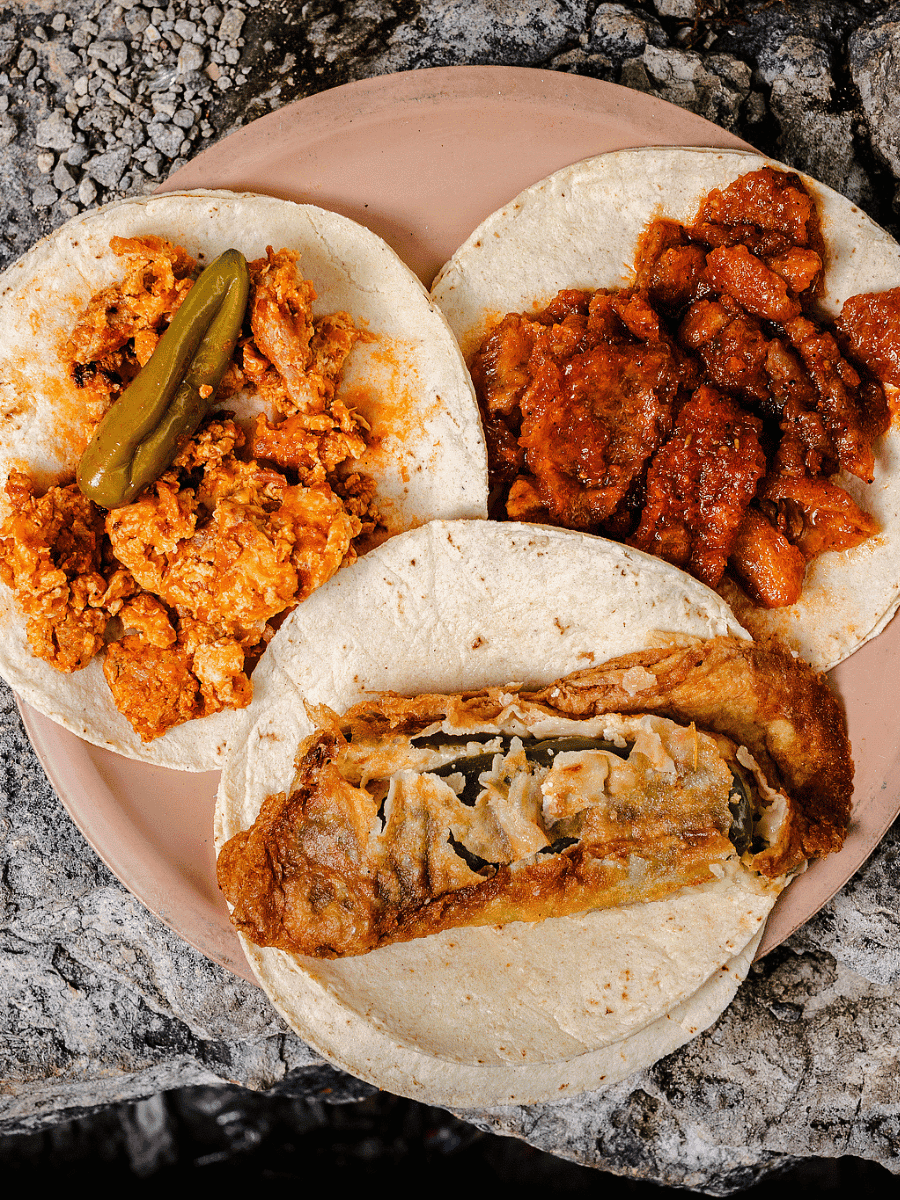
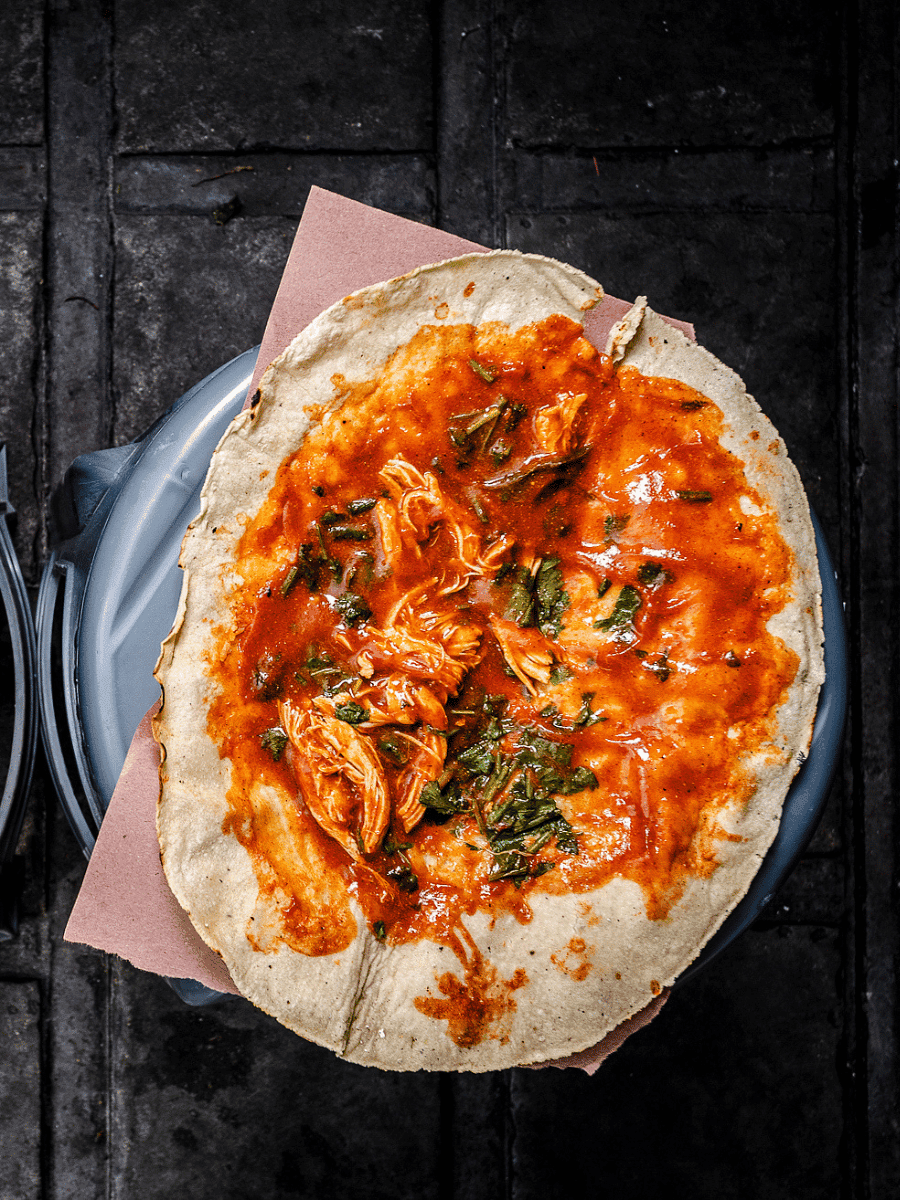
Whatever grandma's been stewing since dawn, spooned onto warm tortillas at a Mexico City lunch fonda. Chicken tinga, chile relleno, huevo en salsa verde — the daily menu.
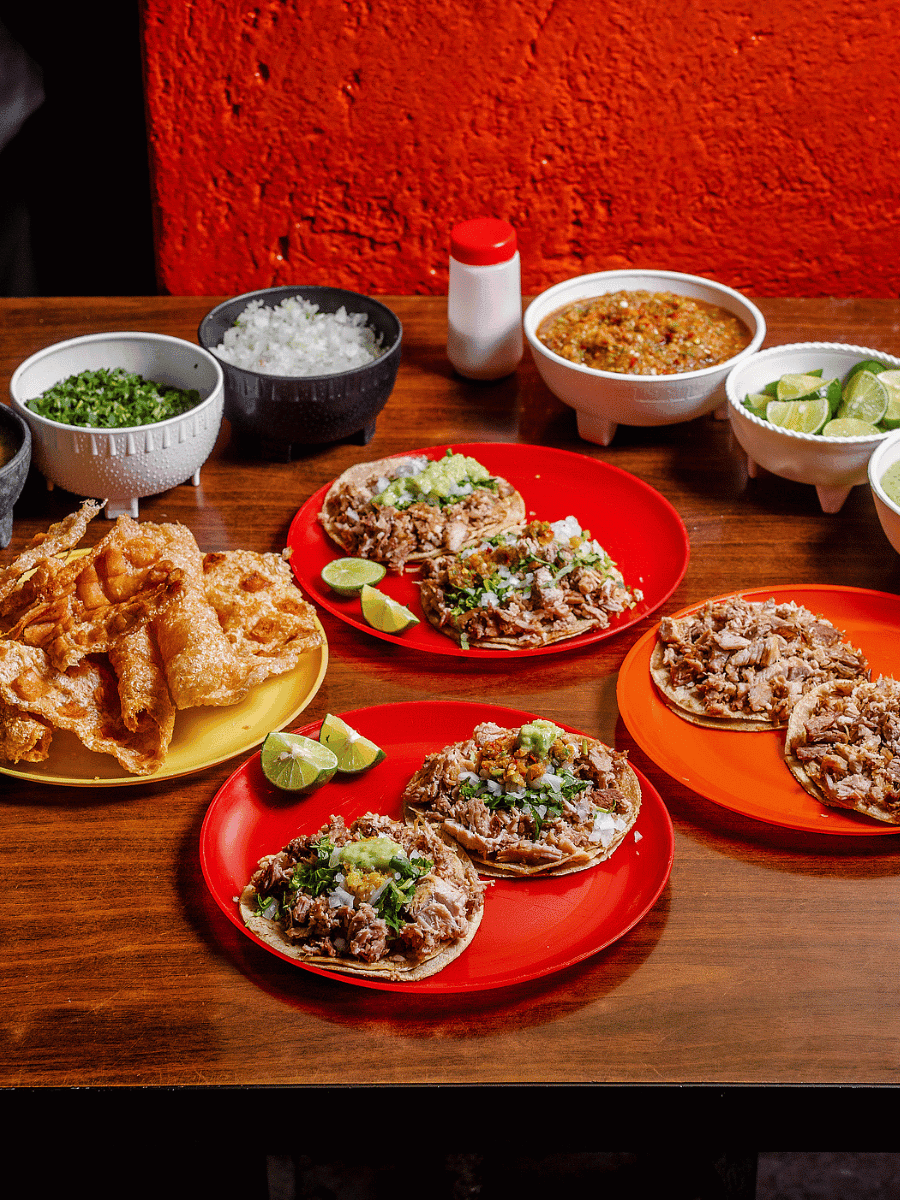
Beef brisket confit-fried in its own fat on a domed disc, chopped fine and folded into double tortillas with onion, coriander and salsa verde. CDMX's late-night taco.
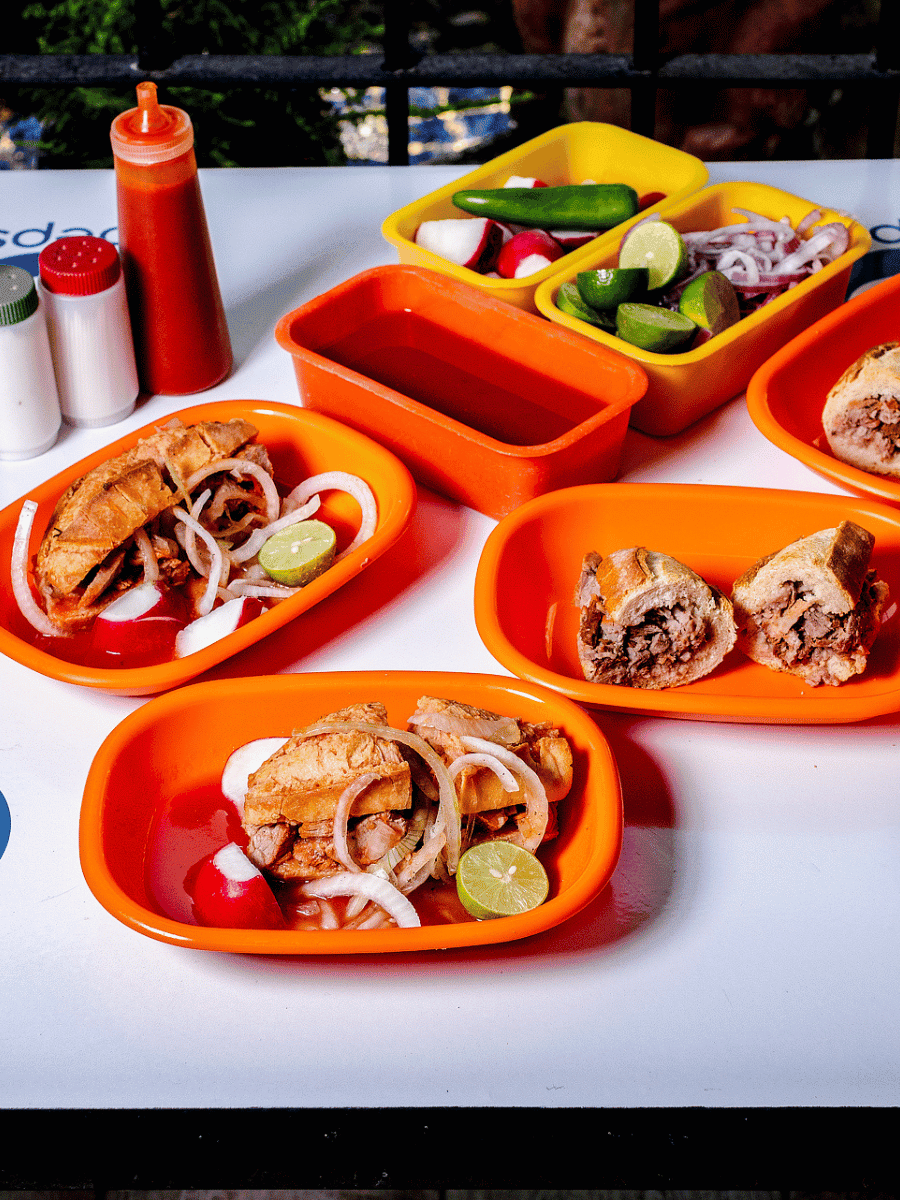
A crusty birote roll stuffed with slow-braised pork carnitas and drowned in a fierce chile de árbol tomato sauce. Guadalajara's most famous sandwich.

Oaxaca's street mash-up: a crunchy tostada base piled with hot esquite corn, mayo, cheese, lime and chile. The prehispanic dish gets a modern platform.
A giant half-moon masa turnover stuffed with yellow mole, chicken and squash flower, then browned on a comal. The Oaxacan Sunday empanada.

Thick handmade masa cakes with a pinched rim, topped with beans, meat, cream, cheese and salsa. The pinched-rim tortilla that holds all the sauce.