
Destination
Ipoh
The story
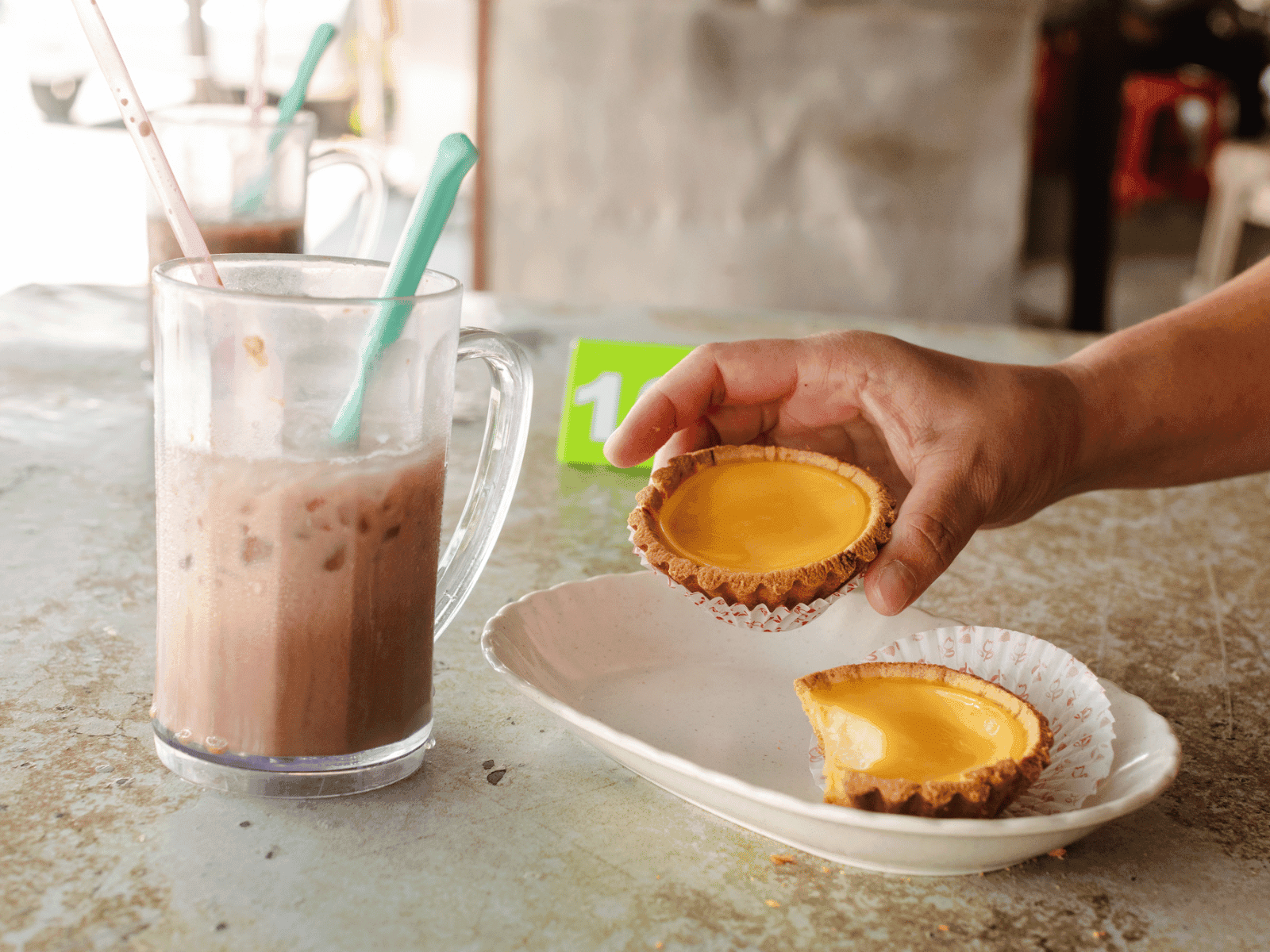
Malaysian egg tarts are the local version of the wider Chinese-Portuguese egg tart tradition: a small cup of flaky puff pastry (or a shortcrust in some kopitiams) filled with a silky, lightly-sweet egg custard, baked until the pastry has puffed and the custard has just set. Served warm at kopitiams (traditional Malaysian coffee shops), Chinese bakeries and dim sum trolleys from morning until early evening. The Malaysian version leans slightly sweeter than the Hong Kong tart and is often larger; the crust is deeper and holds more custard.
Method
In a saucepan, warm the milk and cream over medium heat until steaming (don't boil). In a bowl, whisk the eggs, extra yolks and sugar until pale and smooth. Slowly whisk the warm milk into the eggs, stirring constantly to avoid scrambling. Stir in the vanilla and salt.
Strain the custard through a fine sieve into a jug. This removes any egg strands and gives you the classic smooth surface. Set aside to cool to room temperature.
Heat to 220°C (425°F).
Roll the pastry sheets slightly thinner (to about 2mm). Cut 12 rounds slightly larger than the tart tins (about 9cm across). Press each into the tins, working the pastry up the sides so the top edge is just above the rim.
Pour the cooled custard into each pastry case, filling to about 90% full (leave a small gap at the top; the custard puffs slightly during baking).
Bake for 18 to 22 minutes, until the pastry has puffed and turned deep gold and the custard has just set (a slight wobble in the centre is correct). Watch closely; overcooked custard cracks and turns brown.
Cool in the tins for 5 minutes, then transfer to a rack. Best eaten warm within an hour.
Tips
- Strain the custard. This one step separates bakery-standard egg tarts from home-cook versions. A fine sieve removes egg strands and gives you the classic glass-smooth top.
- The custard should barely set. A slight wobble in the centre when you pull the tarts out is correct. As they cool, the custard sets fully. Overbaked custard cracks and turns brown.
- Cool the custard before filling. Hot custard poured into cold pastry starts cooking the pastry from the inside and gives you a soggy base. Room temperature is the target.
- Puff pastry for speed, shortcrust for tradition. Ready-made puff pastry is the modern shortcut and gives excellent results. Traditional Malaysian kopitiam tarts use a lard-shortcrust base for a flaky-crumbly finish; substitute if you want to be traditional.
- Eat warm within an hour. Egg tarts are at their best 10 to 15 minutes out of the oven, when the pastry is still crisp and the custard is warm through.
More recipes
View all
Iced coconut milk sweetened with palm sugar, poured over shaved ice, green rice-flour noodles and red beans. Malaysia's afternoon cooling dessert.

Silken tofu curds drenched in a light ginger-and-panela syrup. Malaysia's afternoon-cart cooling dessert, served warm or cold with a small spoon.
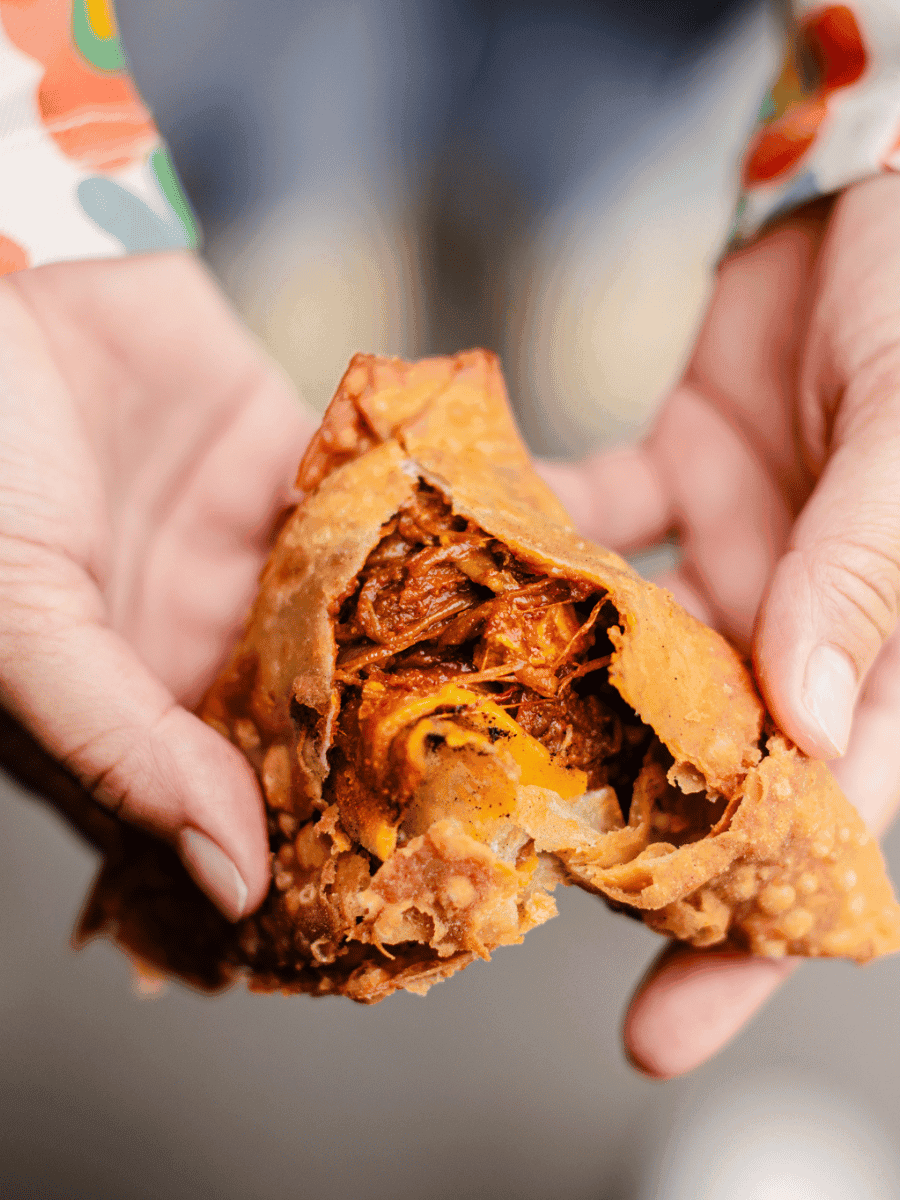
Triangular pastries filled with spiced potato and peas, deep-fried until crackling. Malaysia's mamak-stall snack, always with mint chutney.

Strong black tea and condensed milk pulled between two jugs into a frothy top. Malaysia's national drink, served at every mamak from dawn until 2am.
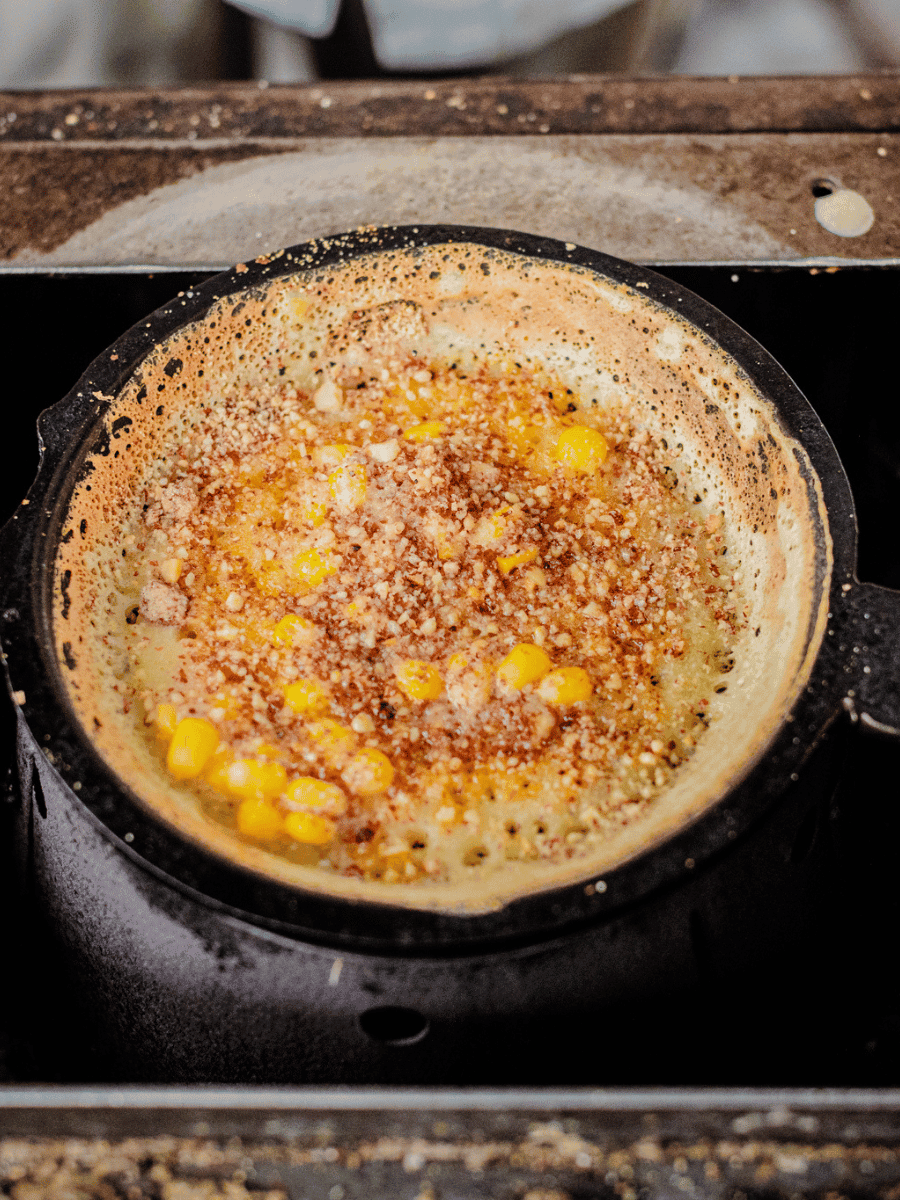
A folded pancake stuffed with crushed peanuts, sugar, sweetcorn and a slick of butter. Malaysia's night-market half-moon, cooked to order in a heavy pan.

Small hollow crispy shells filled with spiced water, tamarind chutney, potato and chickpeas. India's most-loved street snack, now permanent at every Malaysian mamak stall.