
Destination
Hong Kong
The story
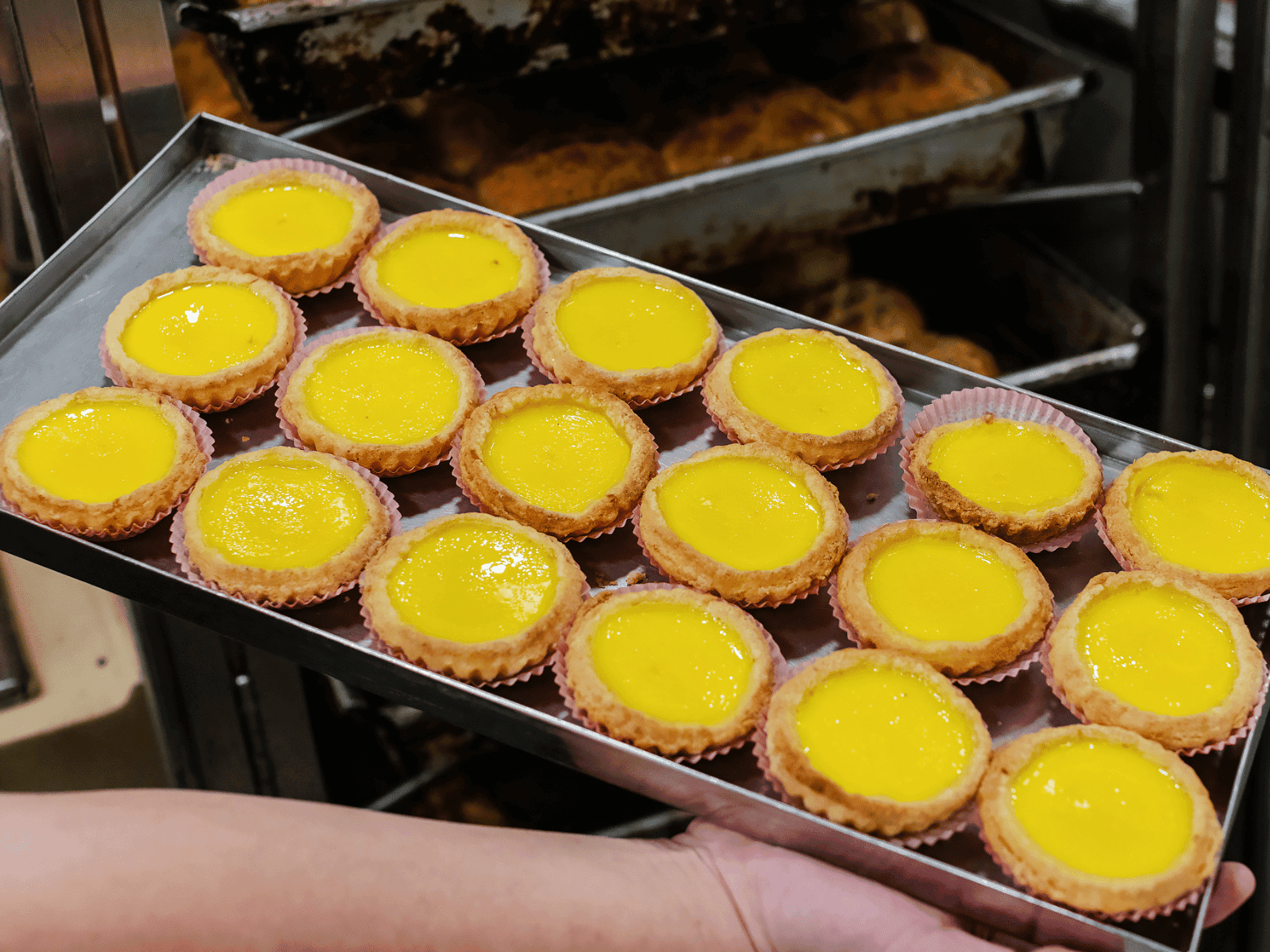
Daan tat is Hong Kong's most iconic bakery pastry: a small cup of flaky puff pastry (or shortcrust, depending on the bakery style) filled with a silky egg custard, baked until the custard has just set and the pastry has puffed dramatically. Eaten warm from the oven with a small cup of yuenyeung (coffee-tea) or milk tea, at every cha chaan teng and traditional bakery in the city. Governor Chris Patten famously declared them his favourite Hong Kong food during the handover era, which is when they went from local speciality to global icon.
Method
In a saucepan, warm the milk and cream over medium heat until steaming (don't boil). In a bowl, whisk the eggs, extra yolks and sugar until pale and smooth. Slowly whisk the warm milk mixture into the eggs, stirring constantly to avoid scrambling. Stir in the vanilla.
Strain the custard through a fine sieve into a jug. This removes any egg strands and gives you a smooth finish. Set aside to cool to room temperature.
Heat to 220°C (425°F).
Roll the pastry sheets slightly thinner (to about 2mm). Cut 12 rounds slightly larger than the tart tins (about 8cm across). Press each into the tins, working the pastry up the sides so the top edge is just above the rim.
Pour the cooled custard into each pastry case, filling to about 90% full (leave a small gap at the top; the custard puffs slightly during baking).
Bake for 18 to 22 minutes, until the custard has just set (a slight wobble in the centre is correct) and the pastry has puffed and turned deep gold. Watch closely; overcooked custard cracks and turns brown, which is not the Hong Kong style.
Cool in the tins for 5 minutes, then transfer to a rack. Best eaten warm within an hour.
Tips
- Strain the custard. This one step separates bakery-standard daan tat from home-cook versions. A fine sieve removes egg strands and gives you the classic glass-smooth surface.
- The custard should barely set. A slight wobble in the centre when you pull the tarts out is correct. As they cool, the custard sets fully. Overbaked custard cracks and turns brown, which is the Portuguese pastel de nata style, not Hong Kong.
- Cool the custard before filling. Hot custard poured into cold pastry starts cooking the pastry from inside and gives you a soggy base. Room-temperature custard is the target.
- Puff pastry for speed, shortcrust for tradition. Ready-made puff pastry is the modern shortcut and gives excellent results. Traditional Hong Kong bakery daan tat uses a lard-shortcrust (gwoh sing pei) for a flaky-crumbly base; substitute if you want to be traditional.
- Eat warm within an hour. Daan tat is at its best 10 to 15 minutes out of the oven, when the pastry is still crisp and the custard is warm through. Cold daan tat is fine but a different experience.
More recipes
View all
Warm silken tofu spooned into a bowl and drenched in fresh ginger syrup. Hong Kong's afternoon-tea comfort, sold from carts in the humid summer.

Sweet Hong Kong bakery bun with a crackly cookie-crust top that looks like pineapple skin (no actual pineapple involved). Split and stuffed with cold butter for the classic bolo yau.

Twin lengths of dough deep-fried until golden and hollow, torn and eaten with congee. China's original doughnut, and Hong Kong's breakfast partner.

Layered filo pastry crisps sandwiched with almond-milk custard, dusted with icing sugar and cinnamon. Fes's most elegant dessert.

Buttery flaky pastry filled with silky egg custard, baked until the top is just set. Malaysia's kopitiam-and-bakery classic, always eaten warm.

Ring-shaped semi-hard biscuits scented with fennel, aniseed and sesame, twice-baked until golden. Morocco's tea-dunking staple, sold by weight at every pastry souk.