
Destination
Rio de Janeiro
The story
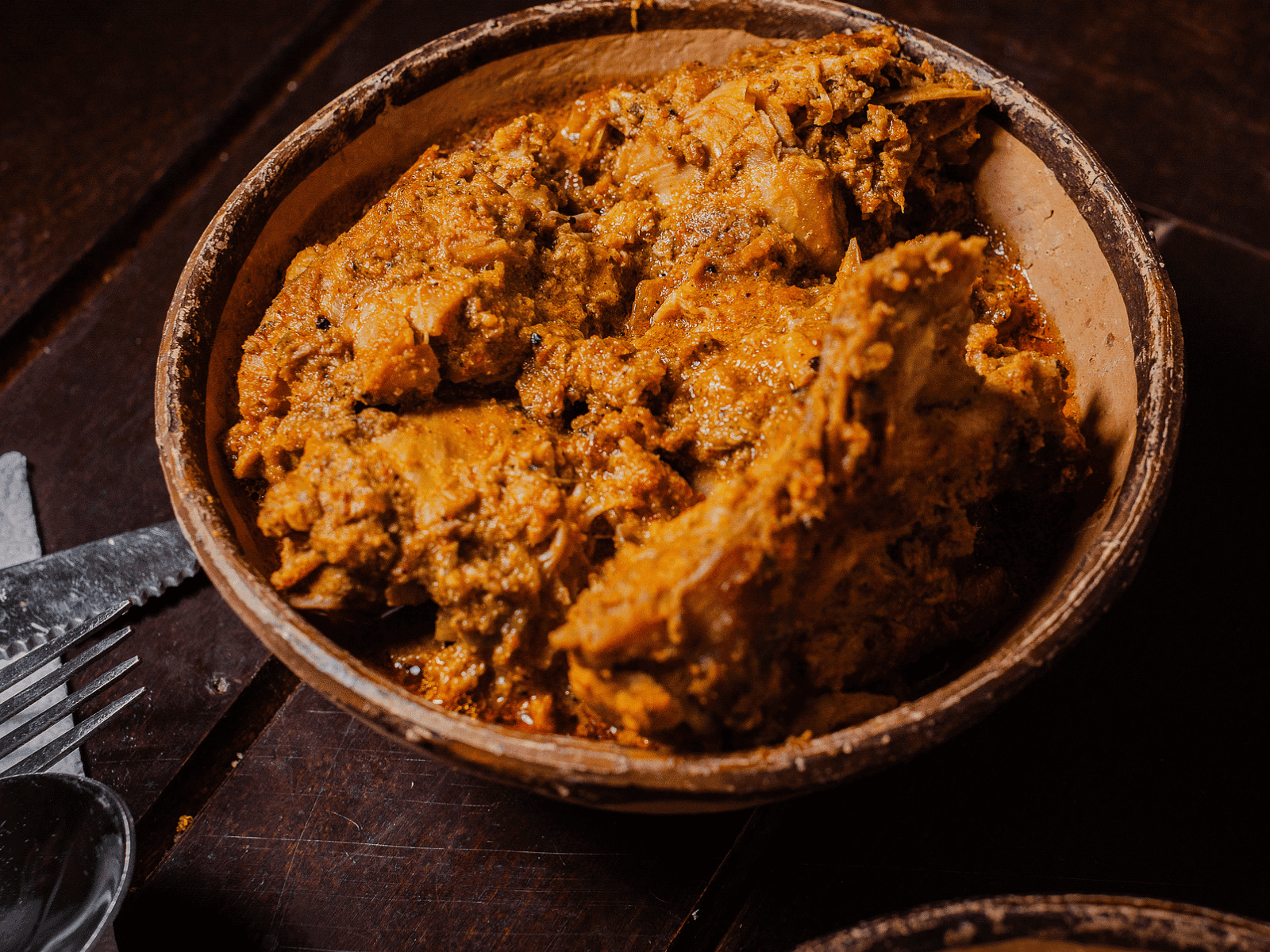
Ximxim de galinha (sometimes spelled xinxim) is one of the deepest, richest dishes in the Bahian repertoire: chicken braised slowly in a paste of ground peanuts, cashews, dried shrimp and ginger, cooked in coconut milk and dendê until it's dark orange, savoury and nutty. Served with white rice and, ideally, farofa. Belongs to the Afro-Brazilian Candomblé tradition and is one of the offerings made to the orixá Oxum, goddess of freshwater, love and beauty.
Method
In a bowl, toss the chicken thighs with the lime juice, garlic, ginger, salt and pepper. Cover and refrigerate 30 minutes (or overnight for a deeper flavour).
In a food processor, blend the drained dried shrimp, peanuts, cashews, onion, garlic and ginger to a coarse paste. Add a splash of water if needed to help it come together.
Warm the dendê in a large heavy pot over medium-high heat. Working in batches so the pot doesn't crowd, sear the chicken thighs 3 to 4 minutes per side until deep golden. Lift out and set aside.
Add the paste to the same pot. Cook 5 to 6 minutes over medium heat, stirring often, until it darkens and smells deeply savoury.
Return the chicken to the pot. Pour in the coconut milk and stock. Bring to a low simmer, cover, and cook 40 to 45 minutes, until the chicken is falling-off-the-bone tender and the sauce is thick and glossy.
Off the heat, stir in most of the coriander (save some for the plate). Taste and season with salt if needed.
Ladle into shallow bowls with a mound of white rice and a spoon of farofa. Scatter over remaining coriander. Pass hot sauce at the table.
Tips
- Dendê is what makes ximxim baiano. Without red palm oil the dish is a fine peanut chicken stew but not ximxim. Sold at Brazilian and West African grocers.
- Dried shrimp is not optional. It's the umami base of the paste and defines the flavour. Available at Brazilian, West African and Asian grocers.
- Blend the paste coarse, not smooth. A little texture in the sauce is what makes ximxim recognisable. Over-processed and it turns into a beige puree.
- Chicken on the bone gives the best sauce. Deboned thighs work in a pinch but the bone marrow contributes to the depth of the braise.
- Better on day two. The nuts hydrate, the sauce tightens, and the whole thing tastes rounder after a night in the fridge. Make it Friday for a Saturday lunch.
More recipes
View all
Crab meat cooked with coconut, dendê and coriander, baked back into the shell it came from. Salvador's most elegant petisco.
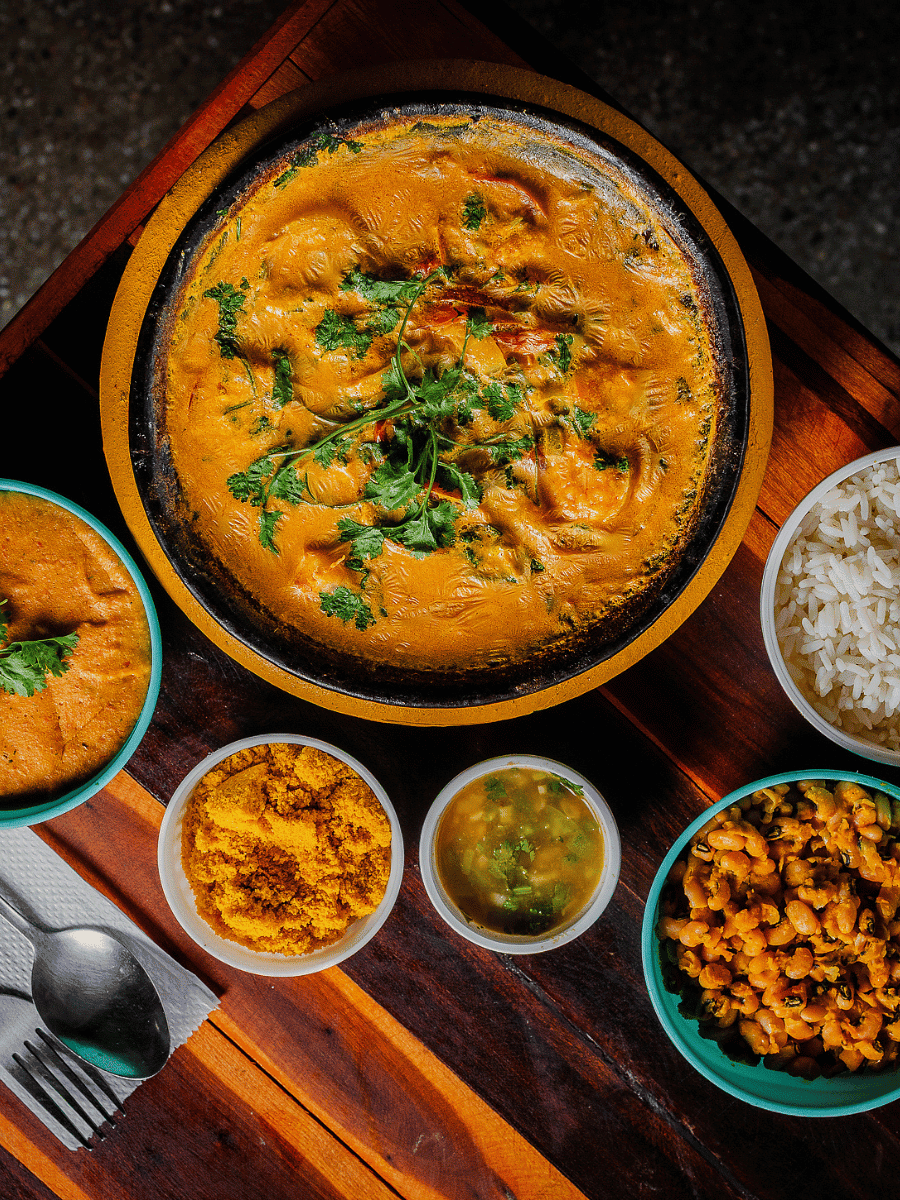
White fish and shrimp cooked slowly in coconut milk, dendê, tomato, pepper and coriander. The Bahian stew that defines the West African soul of Brazilian cooking.

A teardrop of shredded chicken (and catupiry cream cheese, if you're doing it right) wrapped in dough, breaded and deep-fried. The corner-shop snack every Brazilian grew up on.
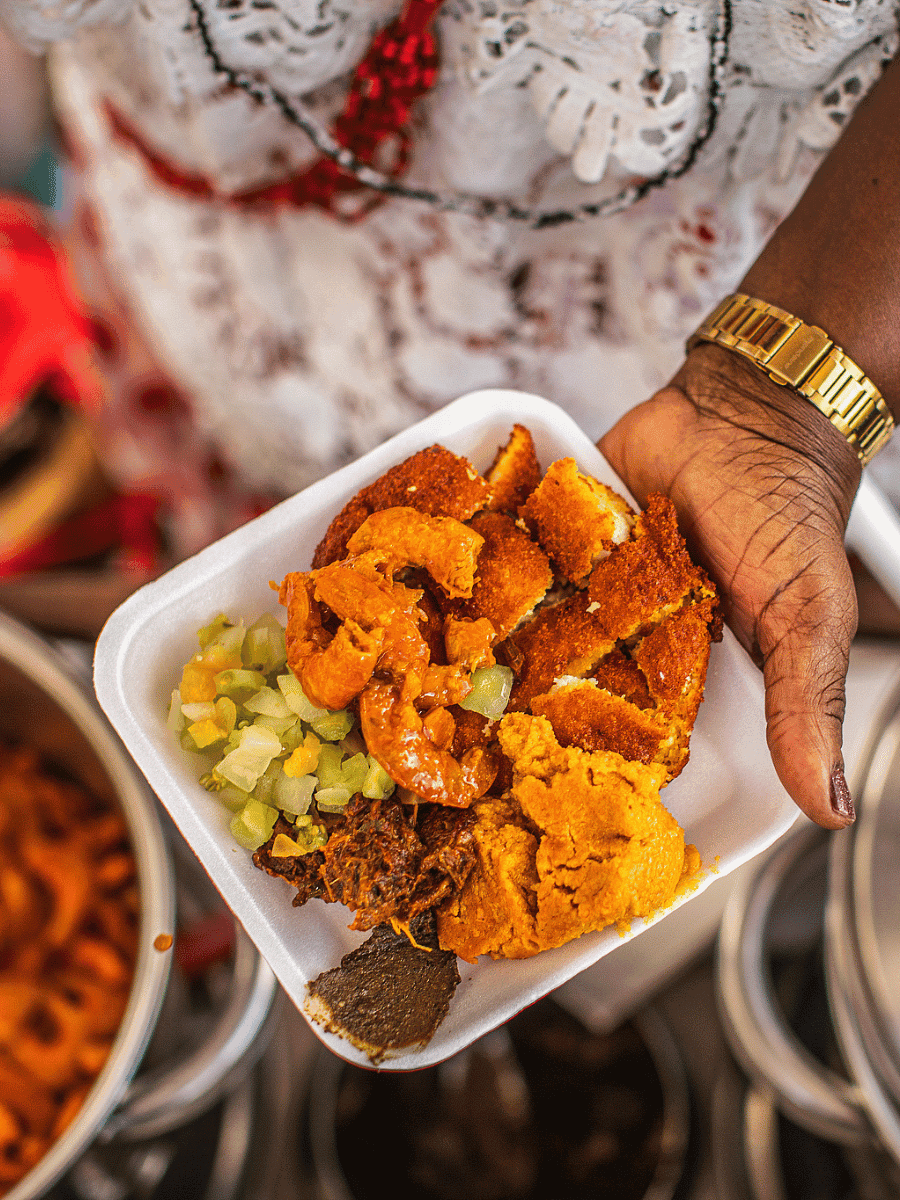
Black-eyed pea fritters deep-fried in palm oil, split open and stuffed with vatapá, caruru and dried shrimp. Salvador's most sacred street food.

Shredded roast chicken, melted mozzarella, potato palha and a slick of creamy sauce piled inside a hot roll. The São Paulo boteco chicken sandwich generations of Rua Piauí counters made famous.

Salt cod, potato, onion and parsley shaped between two spoons and deep-fried until golden. The Portuguese fritter that colonised every Brazilian boteco.