

Destination
Antalya
The story
Türk kahvesi (Turkish coffee) is one of the world's oldest continuously-brewed coffee traditions, dating to the 16th century when the drink arrived in Istanbul via Yemen and became a fixture of Ottoman court and coffeehouse culture. Modern Turkish coffee is essentially unchanged from the original: extremely finely-ground coffee (finer than espresso, closer to powdered sugar) is simmered slowly in a small copper pot called a cezve with water and sugar, brought just to a foam three times without letting it boil over, then poured unfiltered into small demitasse cups where the grounds settle at the bottom. Served with a small glass of water on the side and a piece of Turkish delight (lokum). The whole ritual takes 10 minutes and the drinking takes 5.
Method
Fill the demitasse cups with cold water. Pour into the cezve. Turkish coffee is measured by the cup, and adding a bit extra is a mistake (there is no room for foam if the pot is over-full).
Add 2 heaped tsp of finely-ground coffee for every 2 cups (about 1 heaped tsp per cup) into the cezve. Add sugar according to preference. Do not stir yet.
Place the cezve over very low heat. Stir gently twice with a small spoon just to dissolve the sugar and moisten the coffee. Then stop stirring.
Watch the surface. As the coffee heats, a thick foam will rise on top. Just before it threatens to boil over, lift the cezve off the heat.
Using a small spoon, gently transfer the foam from the top of the cezve into each waiting cup, dividing evenly. Return the cezve to the heat.
Let the coffee foam up again. Lift off. Spoon foam if any remains. Repeat one more time. The classical Turkish coffee is brought to foam three times total.
Pour the remaining coffee slowly into each cup on top of the foam. The grounds will follow and settle at the bottom.
Rest the cups 60 seconds so the grounds settle. Serve with a piece of Turkish delight and a glass of cold water on the side. Drink slowly, avoiding the grounds at the bottom (they are drunk in tasseography but not by the average drinker).
Tips
- Turkish-fine grind. The coffee must be as fine as powdered sugar. Regular fine grind is too coarse. Any Turkish grocer sells pre-ground; a home grinder must have a specific Turkish setting.
- Cold water in the cezve. Do not use hot water. The slow warming is what develops the classical flavour.
- Do not stir after the initial dissolve. Stirring during the foam stage collapses the foam. Two initial stirs, then leave it.
- Do not boil over. If the foam threatens to run over the top, lift the cezve off immediately.
- The glass of cold water. Drunk before, not with, the coffee. It cleanses the palate and prepares you for the coffee flavour.
More recipes
View all
Dried white beans slow-cooked with tomato and onion, served topped with kavurma of chunks of sautéed lamb. Turkey's most beloved home-cooked bean dish.
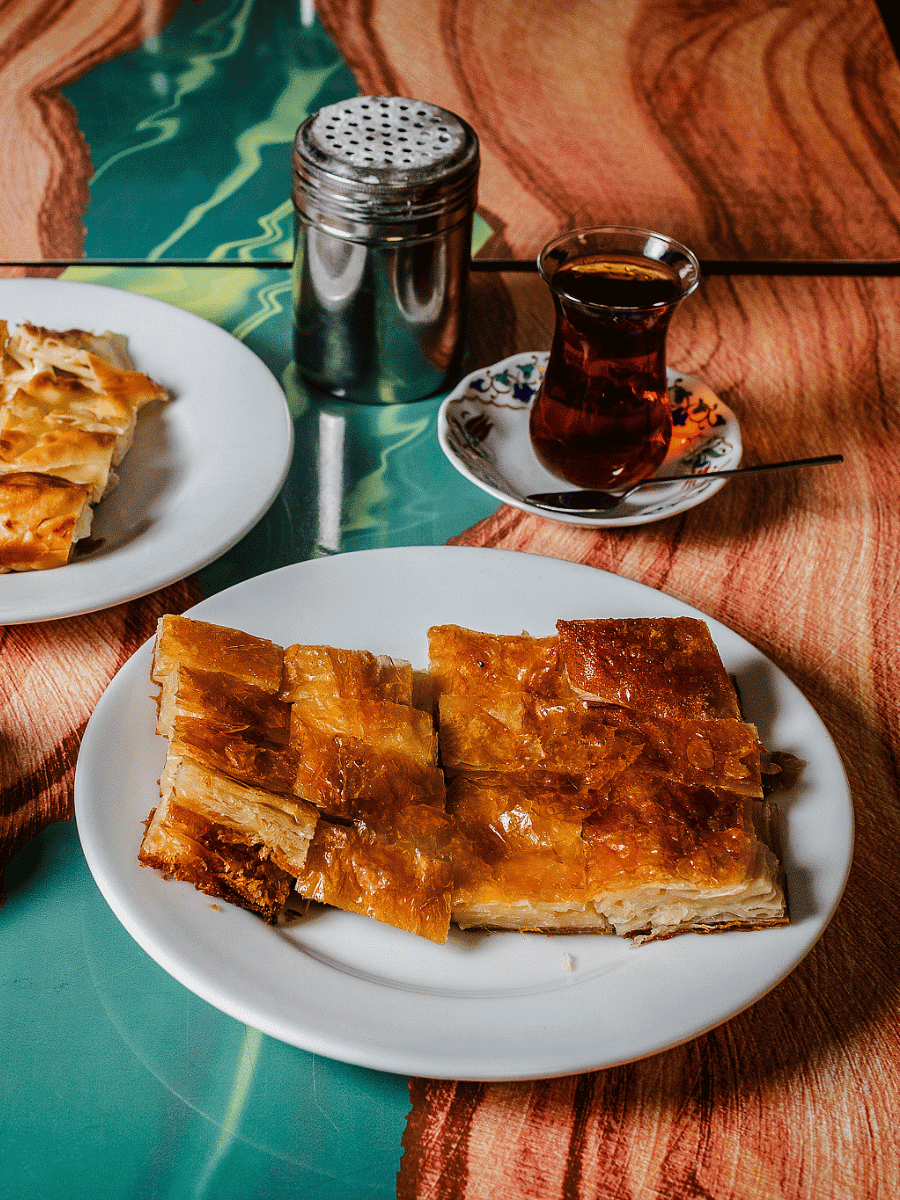
Sheets of thin homemade pastry parboiled, layered with feta, egg and herbs, and baked into a lasagne of golden layers. Turkey's Sunday-brunch centrepiece.
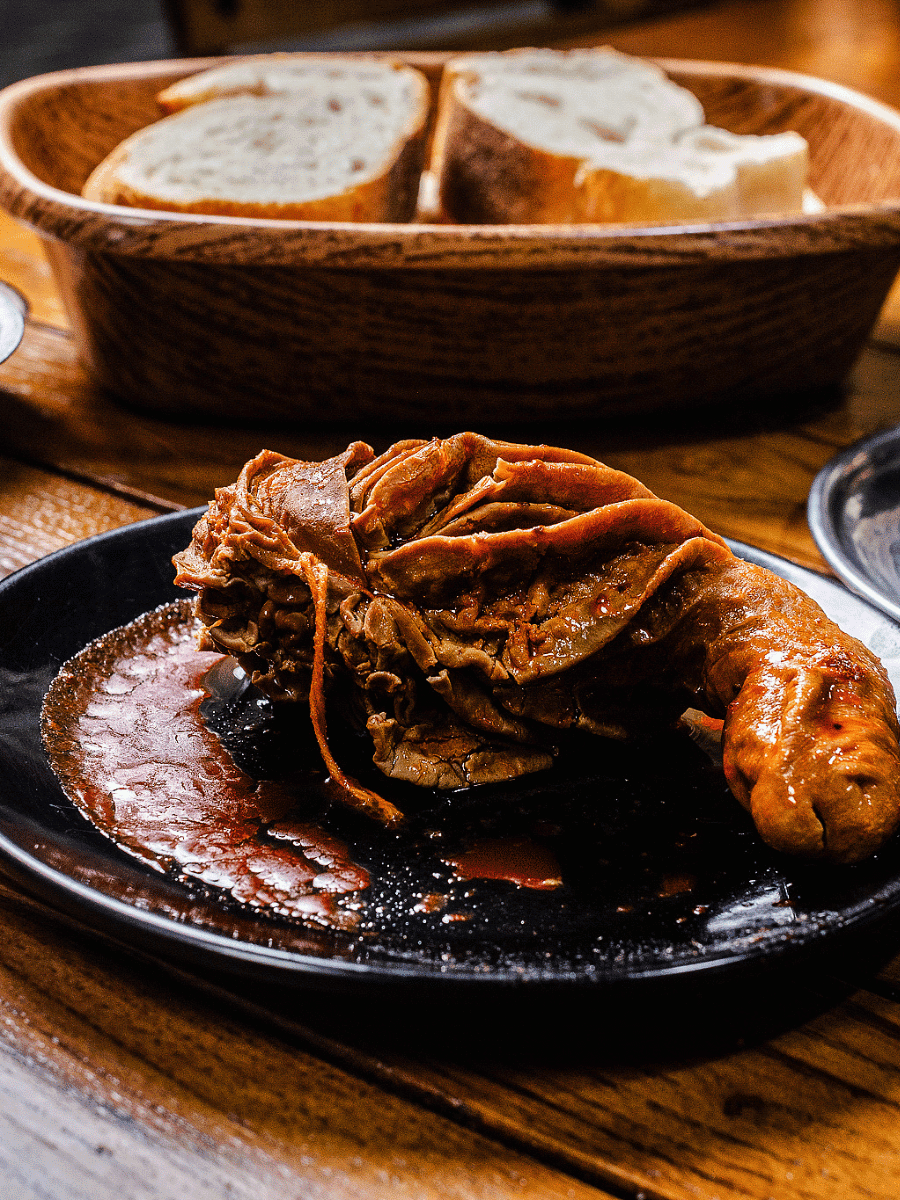
Lamb tripe stuffed with rice, tail fat and spices, slow-cooked in a spiced broth. Adana's late-night speciality and one of Turkey's most-loved offal preparations.

Small round yeasted dough balls fried until deep golden, then dipped in a warm lemon-and-cinnamon syrup and scattered with cinnamon. Turkey's most-shared street sweet.

Paper-thin flatbread topped with a spiced mince of lamb, tomato, onion, red pepper paste and parsley, baked at high heat until the edges crisp. Turkey's most-shared street pizza.

Diced lamb stir-fried hard on a saç with tomato, onion, sumac and parsley, wrapped in a thin lavash with pickled peppers and lemon. Mersin's late-night street wrap.