

Destination
Taipei
The story
Taiwanese pork chop rice (also called "pai gu fan" or "paigu fan") is Taiwan's most-eaten weekday lunch and the standard bento-box menu item across the country: a large butterflied pork chop, marinated in soy sauce, Shaoxing wine, garlic, ginger and five-spice, coated in sweet potato starch (the same crackly coating as yan su ji), and shallow-fried until deep golden and crisp. Served over a mound of jasmine rice with a spoon of braised cabbage, pickled mustard greens, a soy-braised egg and (sometimes) a scoop of shredded pickled radish. Sold at every Taiwanese bento shop, every school cafeteria, and every railway station lunchbox counter across the country — Taipei's Fu Ba Wang and Fu Wang are two legendary bento shops.
Method
Lay each pork chop between two sheets of baking paper. Pound with a meat mallet or the bottom of a heavy pan until 5-8mm thick. Try to keep the shape intact.
Whisk all marinade ingredients in a wide dish. Add the pork chops and turn to coat. Cover and refrigerate 30 minutes to 4 hours.
Warm oil in a wok. Cook garlic 30 seconds. Add cabbage and black fungus. Toss 2 minutes. Add soy sauce, oyster sauce, stock and sugar. Cover and simmer 12 minutes until cabbage is soft. Keep warm.
Warm the braising liquid in a small pot. Add peeled hard-boiled eggs. Simmer 20 minutes, turning occasionally, so they colour deeply. Reserve.
Warm oil in a wide pan (at least 5mm deep) to 175C.
Lift each pork chop from the marinade (do not wipe off — some marinade should coat the pork). Roll thoroughly in sweet potato starch, pressing so it coats in a thick, uneven layer. Do not shake off excess. Fry immediately.
Fry pork chops 2 at a time for 3 to 4 minutes per side until deep golden and crackly. Drain on a wire rack (not paper).
Divide the warm jasmine rice between 4 bento boxes or shallow bowls. Arrange a whole pork chop on top of the rice. Around the chop, place a spoonful of braised cabbage, a halved soy egg, a scoop of pickled mustard, and a spoon of blanched greens. Scatter with spring onion. Serve with Sriracha, extra dark soy on the side. Diners eat with chopsticks and a soup spoon.
Tips
- Sweet potato starch is essential. Same as yan su ji — this specific starch gives Taiwanese fried pork chops their distinctive shatter-crisp coating. Any Asian grocer sells it.
- Pound thin. 5-8mm is the target. Thick pork chops give you Japanese tonkatsu (which is delicious but different); thin is the Taiwanese standard.
- Wet coating. Dip and fry immediately. Do not rest — that dries out the coating and loses the classical texture.
- 175C oil is the target. Cooler and the coating absorbs oil; hotter and it burns before the pork is cooked.
- Bento presentation matters. The classical Taiwanese lunch box arranges everything neatly around the pork chop. Presentation is half the pleasure.
More recipes
View all
Diced pork belly slow-braised in soy, five-spice, rock sugar and shallot, spooned over jasmine rice with a soy-egg and pickled cabbage. Taiwan's every-diner comfort bowl.

Thin wheat vermicelli in a thick brown broth heavy with sliced pig intestine, small oysters and coriander — Ximending's crowd-around-the-counter Taipei signature.
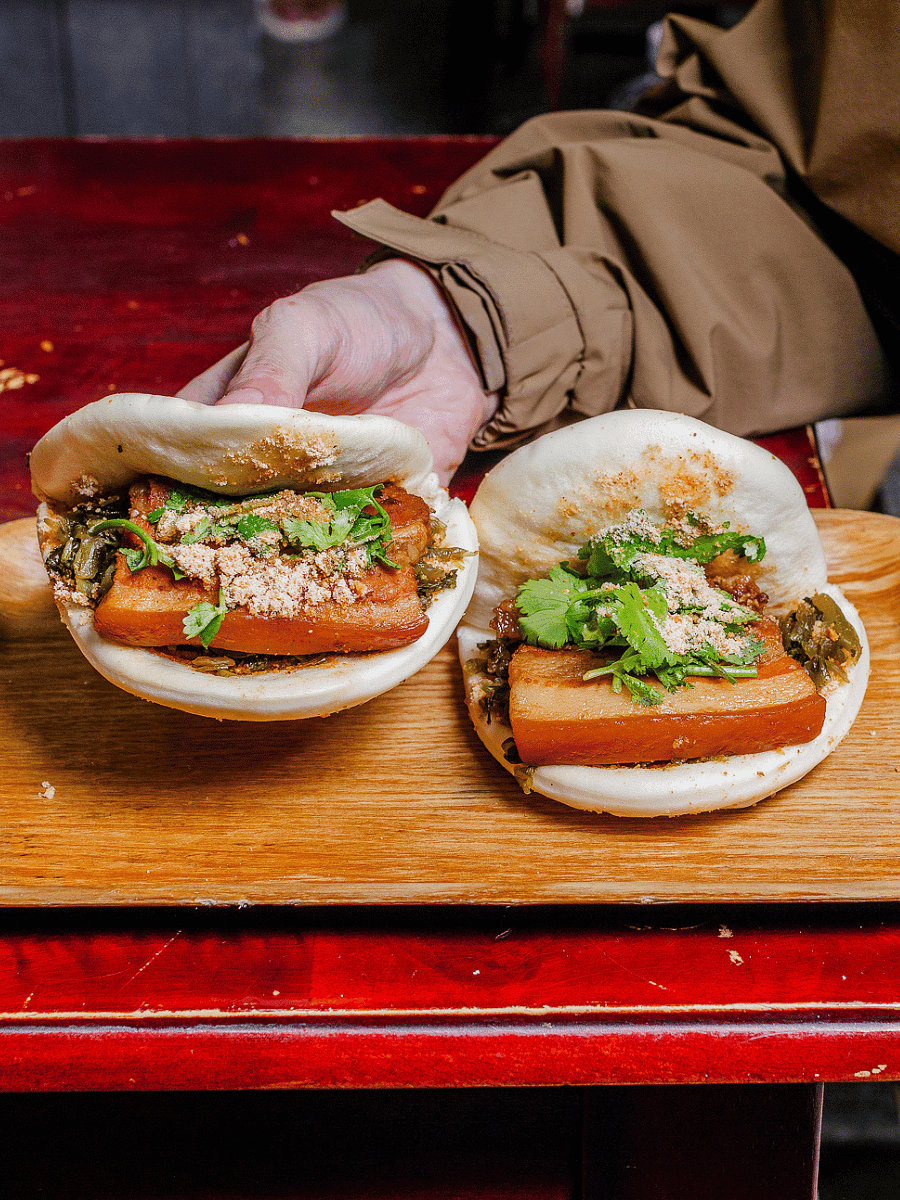
A soft folded steamed bun stuffed with slow-braised pork belly, crushed peanut powder, pickled mustard greens and fresh coriander. Taiwan's most-copied street snack.

Fermented tofu deep-fried until the outside is crackly gold and the inside is silky, served with pickled cabbage, sweet chili sauce and a coriander topping. Taipei's night-market lightning rod.

Slow-braised beef shin in a spiced red-oil broth over hand-pulled wheat noodles, topped with pickled mustard greens, spring onion and coriander. Taiwan's national dish.

Chopped crispy pork belly stir-fried hard with garlic, bird's-eye chili, fish sauce and holy basil. Served over rice with a fried egg — Thailand's fastest lunch.