
Destination
Koh Samui
The story
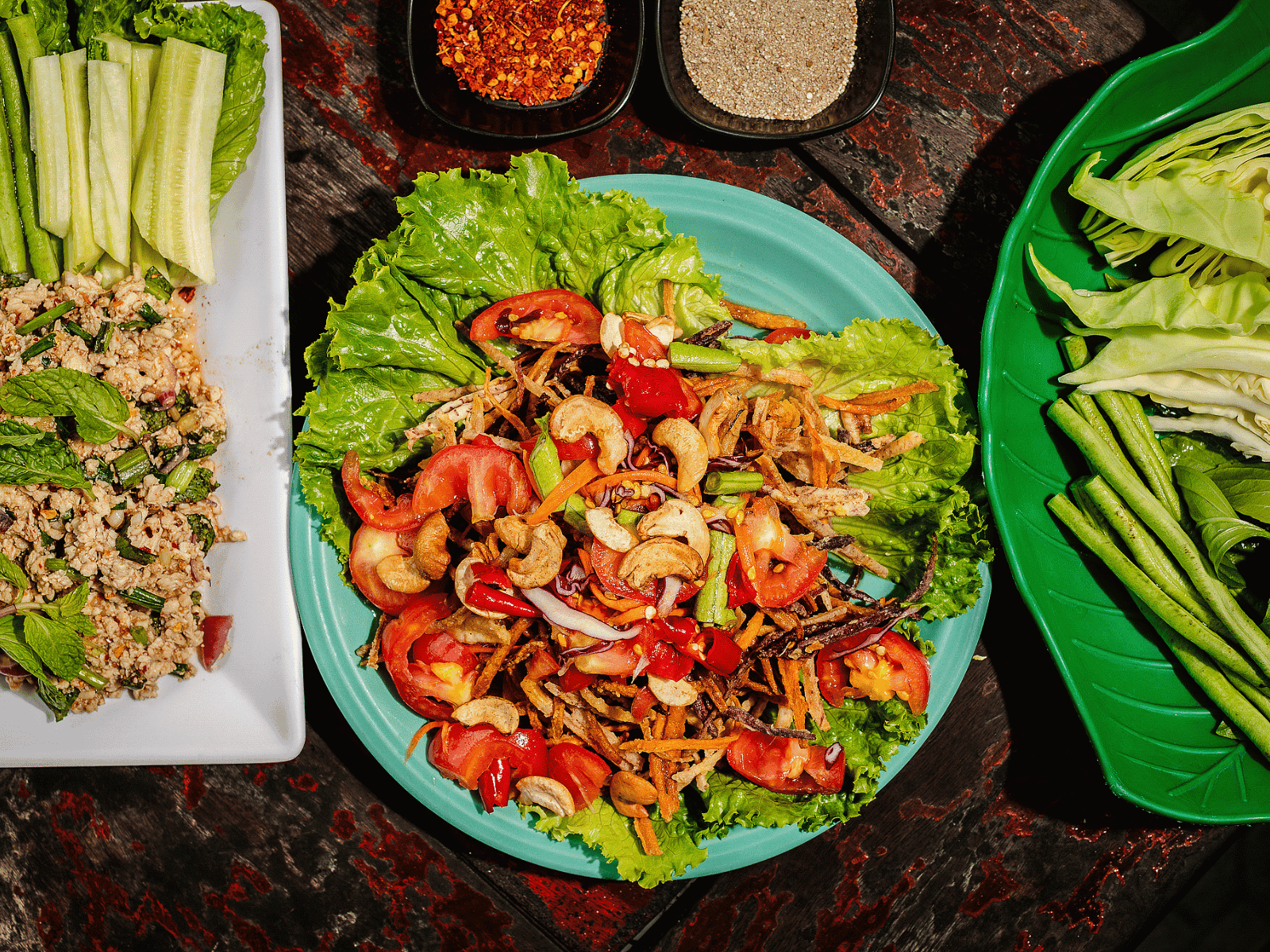
Som tum Thai is Thailand's most-ordered salad and a defining dish of Isaan (northeastern) cuisine that has become the national favourite: unripe green papaya shredded into long fine strips, then bruised together in a heavy clay mortar with garlic, bird's-eye chilies, palm sugar, fish sauce, tamarind juice, lime, dried shrimp, roasted peanuts and slices of green bean and tomato. The finished salad is sharp, sweet, salty, sour, hot and crunchy all at once — the classical five-flavour balance of Thai cooking distilled into a single bowl. Sold at every Thai street cart, every market stall, every restaurant across the country; served with sticky rice and grilled chicken (gai yang) for the classical Isaan trio.
Method
Add garlic and chilies to a large Thai clay mortar. Pound with a wooden pestle 15 seconds until roughly crushed but not paste.
Add the peanuts and dried shrimp. Pound briefly, 5 or 6 heavy strokes, to partially crush.
Add the crushed palm sugar. Pound and mix to break up any lumps.
Add the green beans. Bruise with 4 or 5 strokes. Add the shredded papaya. Continue pounding gently — bruising, not smashing — while turning the mortar contents with a spoon in your other hand. Aim for 30 seconds of gentle pounding.
Add lime juice, fish sauce and tamarind concentrate. Pound and mix another 10 seconds so the seasonings coat the papaya.
Add the halved tomatoes. Bruise gently 3 or 4 strokes to release juice — do not turn them to pulp.
Taste the mixture. Adjust with more lime (if too flat), fish sauce (if too sweet), palm sugar (if too sour) or chili (if not spicy enough). Som tum should hit sharp, sweet, salty, sour, and hot in equal proportions.
Transfer to a serving plate, spooning the liquid at the bottom of the mortar over the top. Scatter with extra peanuts. Serve immediately with sticky rice, gai yang and raw vegetables. Best eaten within 15 minutes — the papaya softens.
Tips
- Thai clay mortar is worth buying. Cheap and available at any Thai grocer. Bruising rather than crushing is the whole technique — a food processor turns everything to slush.
- Palm sugar, not white sugar. Palm sugar has a specific caramel depth. Sold in blocks at Asian grocers. Break with a knife or crumble with fingers.
- Adjust to your palate. Thai palates vary — Isaan cooks use more chili and less sugar; Bangkok cooks use more sugar and less chili. Taste as you go.
- Serve immediately. Papaya wilts within 15 minutes. Make to order at the table or just before serving.
More recipes
View all
A colorful rice salad of jasmine rice with pomelo, coconut, dried shrimp, ginger, lemongrass and vegetables, dressed with a sweet-sour-fishy budu sauce. Southern Thailand's Sunday plate.
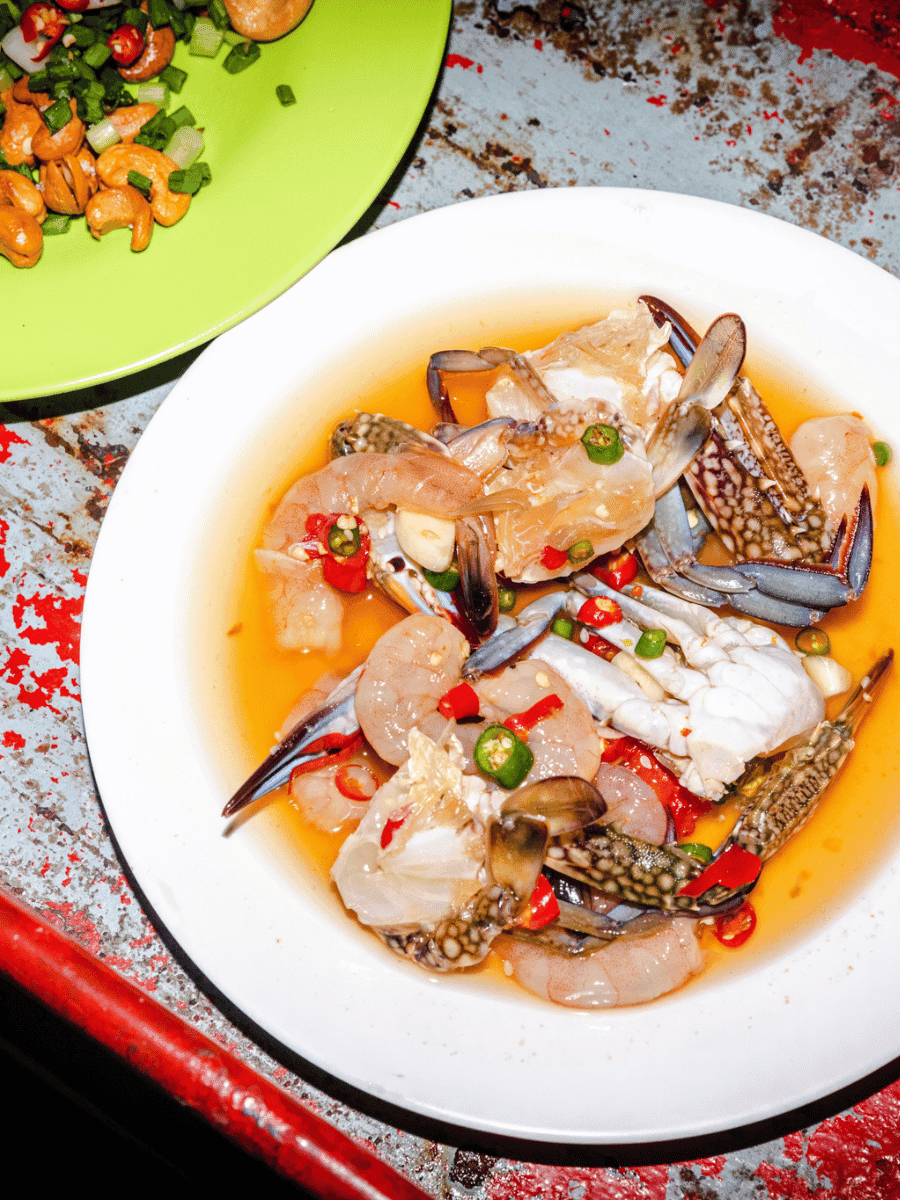
Steamed blue crab tossed with red onion, chili, coriander, mint and a tangy fish-sauce-lime dressing. A Thai coastal seafood salad at its most direct.
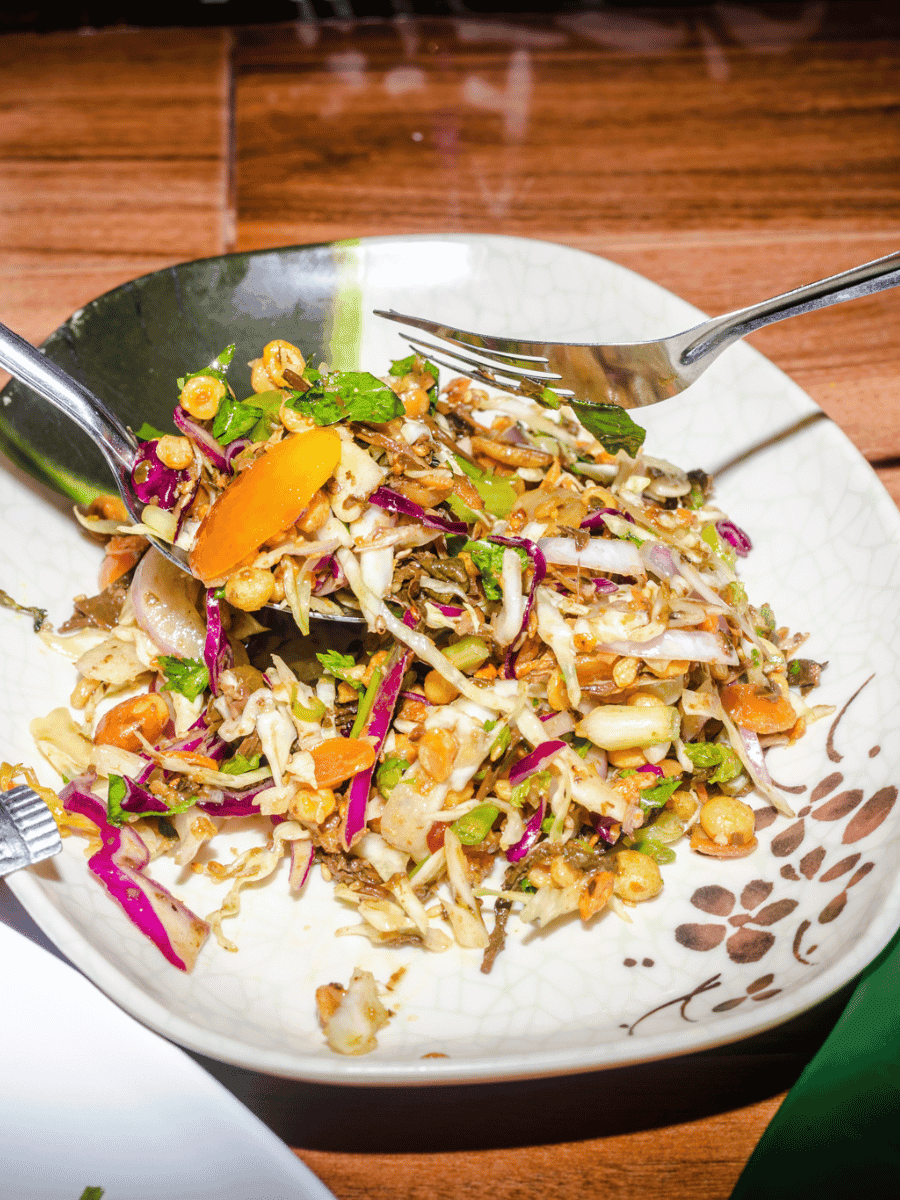
Wild pepper leaves wrapped around dried shrimp, coconut, chili, lime cube and ginger, drizzled with palm-sugar sauce. Bangkok's most-photographed one-bite starter.

Fresh corn kernels pounded with garlic, chili, palm sugar and lime instead of green papaya — a modern Bangkok variation of the classical som tum.
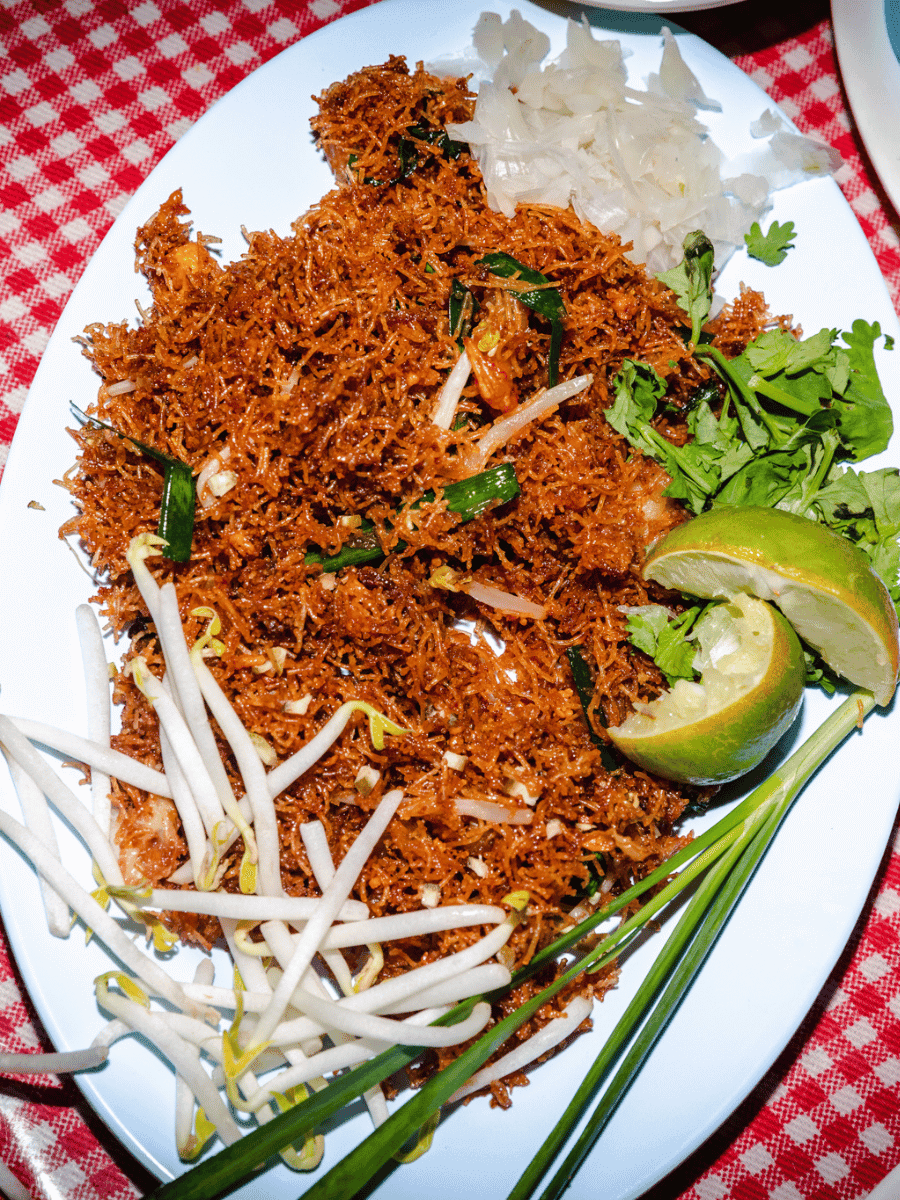
Deep-fried rice vermicelli tossed in a bright orange sweet-sour tamarind-vinegar sauce with prawn, tofu and Chinese chives. Bangkok's regal celebration noodle.
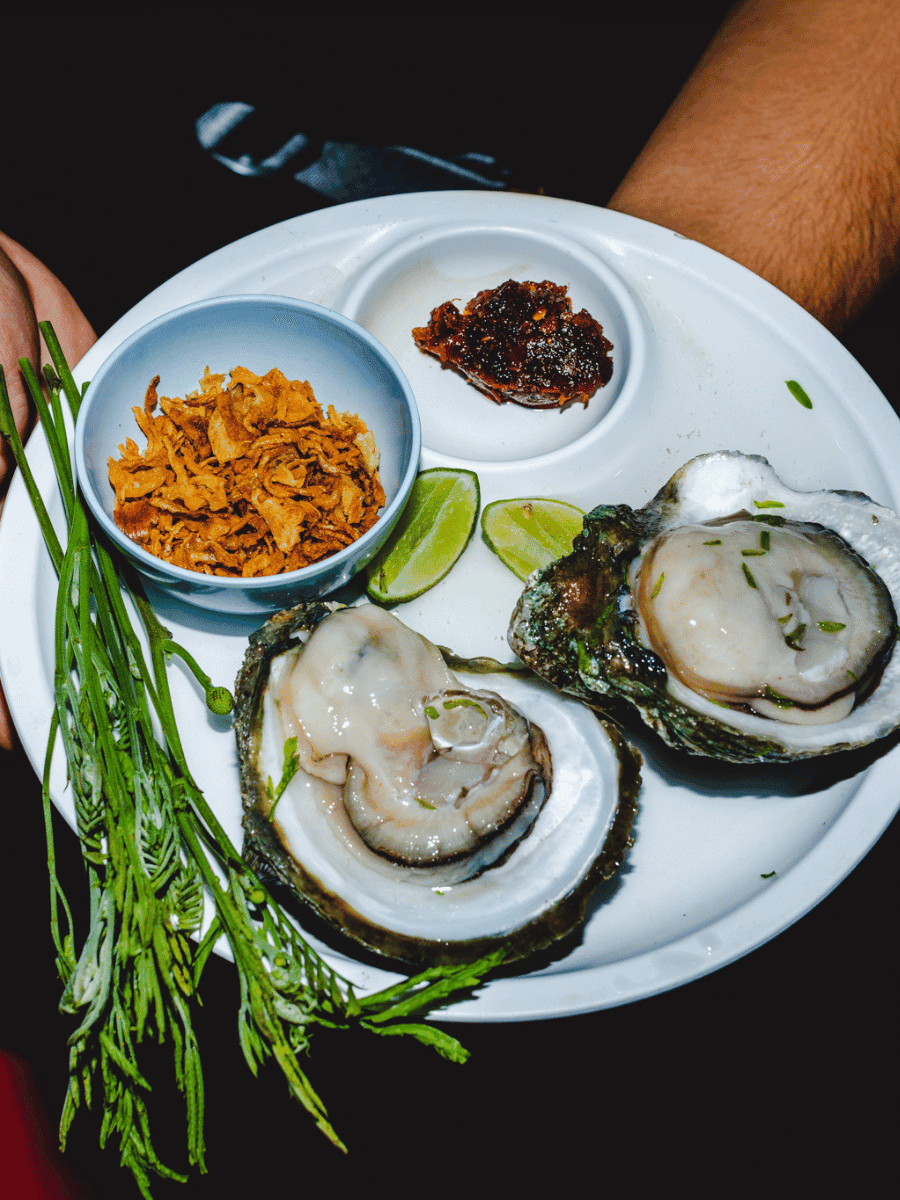
Small fresh oysters served raw with a fierce chili-lime-garlic dipping sauce, fried shallots and fresh Thai herbs. Thailand's coastal aperitivo.