
Destination
Puerto Vallarta
The story
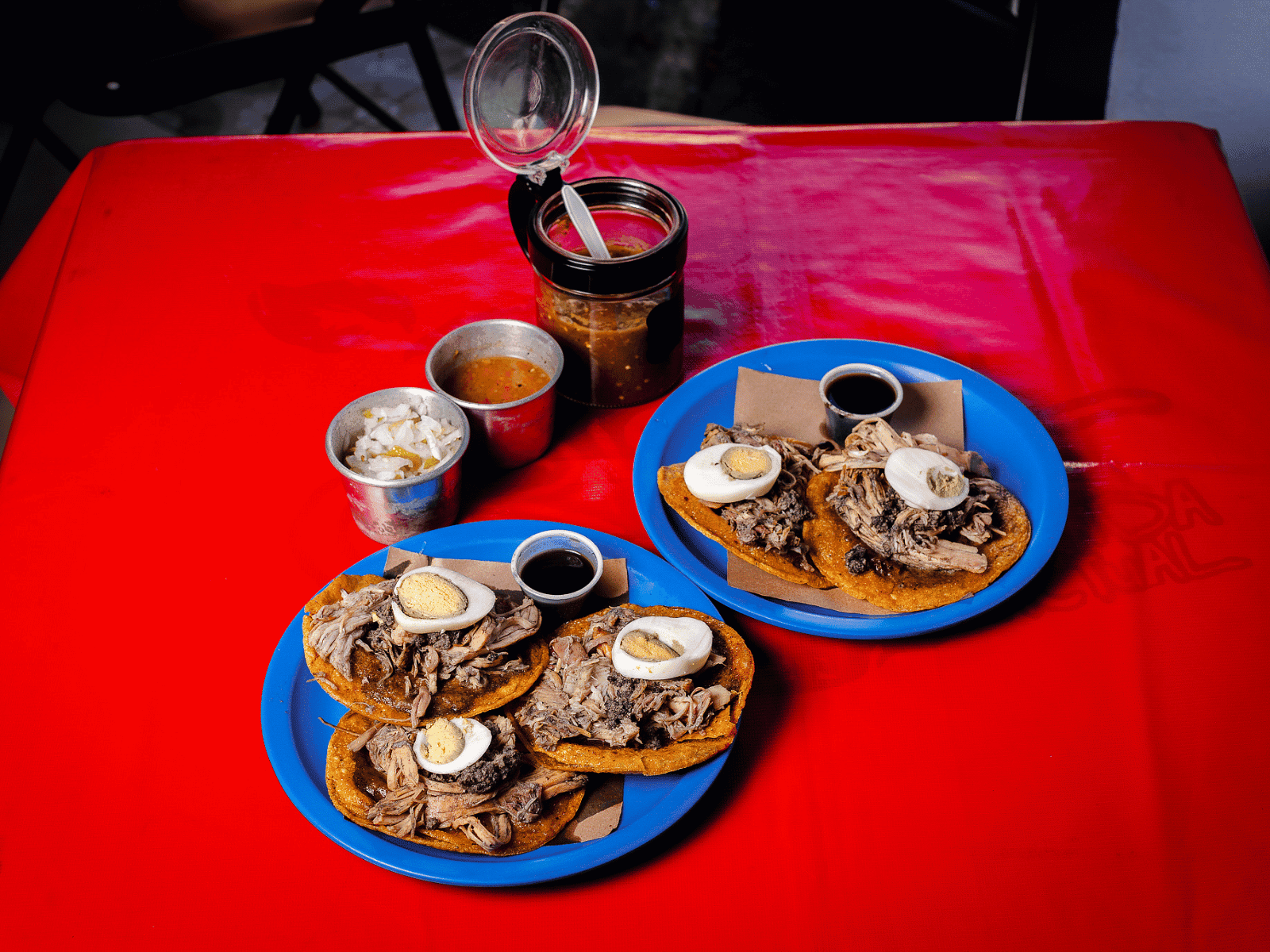
Relleno negro — literally "black stuffing" — is the Yucatán's answer to Oaxaca's mole negro, and every bit as dramatic to look at: a jet-black broth built on burnt dried chiles, thickened to a stew, with pieces of turkey and a stuffing of ground pork wrapped in a whole hard-boiled egg simmered inside. The colour comes from the chiles: chile seco de yucatán (a variety of dried arbol) is toasted on a comal until it goes fully black — smoking, singed, past what any other regional cook would tolerate — and then blended into a paste with garlic, oregano, cumin and roasted spices. The finished dish is the colour of ink and tastes deep, smoky and mildly bitter, with the burnt chile as its defining note.
Method
Combine turkey, halved onion, halved garlic head, bay leaves, oregano, salt and water in a large pot. Bring to a gentle simmer and cook 45 minutes until the turkey is starting to soften. Lift out the turkey and reserve; strain the broth into a clean pot.
Warm a dry heavy comal or pan over medium-high heat. Add the chiles secos and toast, turning constantly, 4 to 5 minutes until they are fully blackened — smoking, singed, uniformly charcoal. This is intentional; do not rescue them early. Add the anchos to the pan and toast just 20 seconds a side (they burn faster). Tip everything into a bowl and cover with boiling water. Soak 20 minutes.
On the same pan, char the halved garlic head and halved onion 6 minutes each side until blackened at the edges. Toast the peppercorns, cumin, oregano, cloves and cinnamon in the pan 60 seconds until fragrant.
Drain the soaked chiles (reserve soaking liquid). Combine chiles, charred garlic and onion (peeled), toasted spices and 300ml of the chile soaking liquid in a blender. Blend 2 minutes to a very smooth paste; strain through a sieve, pressing to extract every bit.
Warm the lard in a large heavy pot over medium heat. Tip in the strained paste (careful — it will spit). Cook 12 to 15 minutes, stirring constantly, until darkened almost to black and the fat has separated. This is the Yucatecan step that flavour depends on — do not shortcut.
Pour in 1.5 litres of the reserved turkey broth. Whisk to combine. Return the turkey pieces to the pot. Simmer gently for 1 hour, uncovered, until the turkey is falling off the bone and the sauce has thickened to a light stew.
While the turkey simmers, cook the chopped onion in the lard 4 minutes; add garlic, oregano, cumin, allspice, salt and pork. Brown 8 minutes. Cool briefly. Form the pork mixture into 6 balls, pressing a whole boiled egg into the middle of each so the pork wraps around the egg. Slip the balls carefully into the simmering pot for the last 25 minutes of cooking.
Ladle a piece of turkey and a whole pork-and-egg stuffing ball into each shallow bowl. Cover generously with the black sauce. Serve with rice, warm tortillas, pickled onion, habanero salsa and lime wedges. Slice the stuffing at the table so the yolk shows.
Tips
- Burn the chiles. This is not a mistake. Yucatecan chile seco is toasted past dark brown into full black — smoke, char, the smoke alarm. That's where the colour and flavour come from. Rescue them early and the finished dish is muddy brown instead of jet black.
- Ventilate the kitchen. Toasting 20 chiles until black creates serious fumes. Open windows, turn on the extractor and don't do this on a still afternoon.
- Strain the paste. The blended chile paste has to be pushed through a sieve to remove the skins — otherwise the finished sauce is gritty. Use the back of a ladle.
- The egg-stuffed pork ball is traditional. Six eggs give six slices. Every guest gets one ball with an egg cross-section on the plate. If short on time, use plain pork picadillo without eggs — it's still authentic in some Campeche kitchens.
- This is a make-ahead dish. Relleno negro is markedly better on day two, after the flavours settle. Make Saturday for a Sunday lunch; it holds well in the fridge for four days and freezes well.
More recipes
View all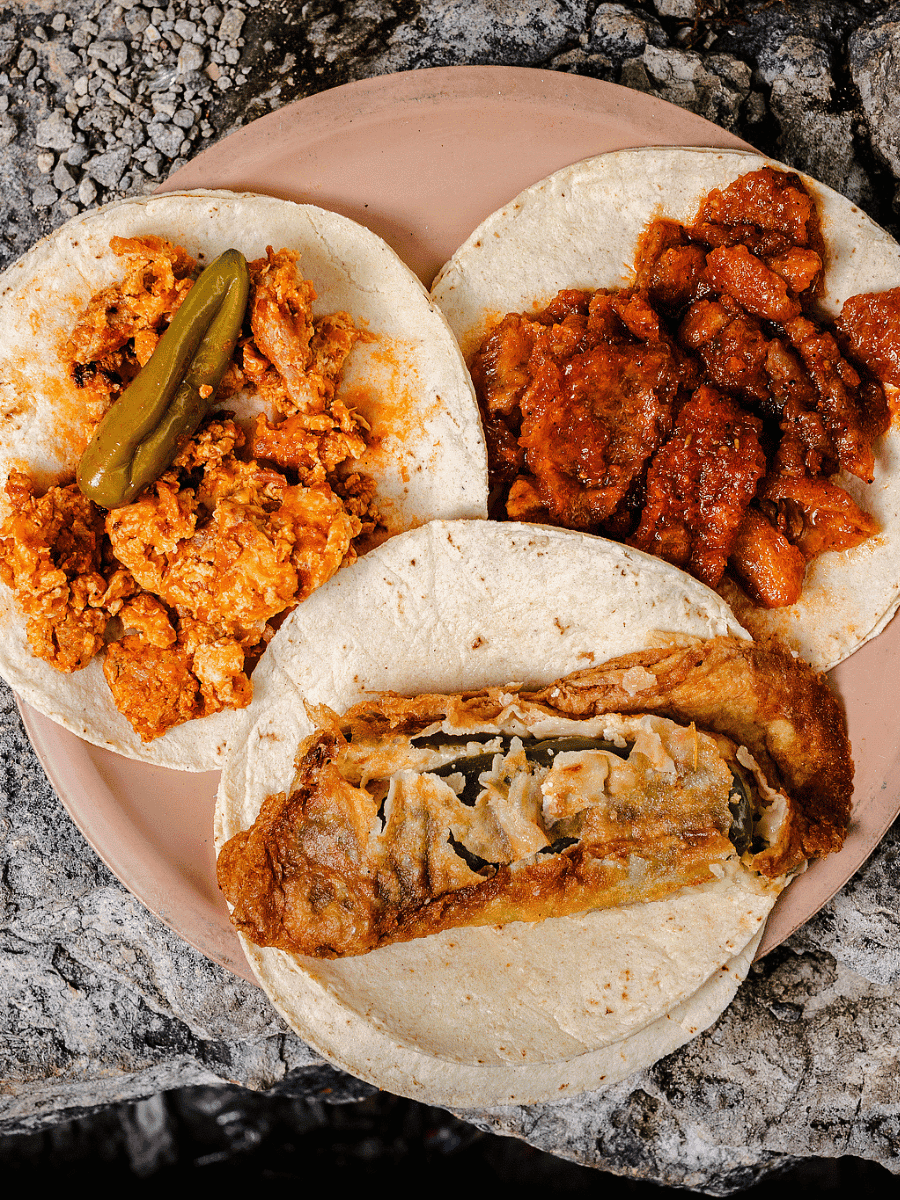
Whatever grandma's been stewing since dawn, spooned onto warm tortillas at a Mexico City lunch fonda. Chicken tinga, chile relleno, huevo en salsa verde — the daily menu.

A whole edam cheese hollowed and stuffed with spiced pork picadillo, then drenched in a white-flour cream sauce and a bright red tomato salsa. Yucatán's most theatrical dish.

Enchiladas drenched in Oaxacan mole negro instead of red or green salsa — dark, complex, slightly bitter, sweet, spicy, and utterly unlike any other enchilada.
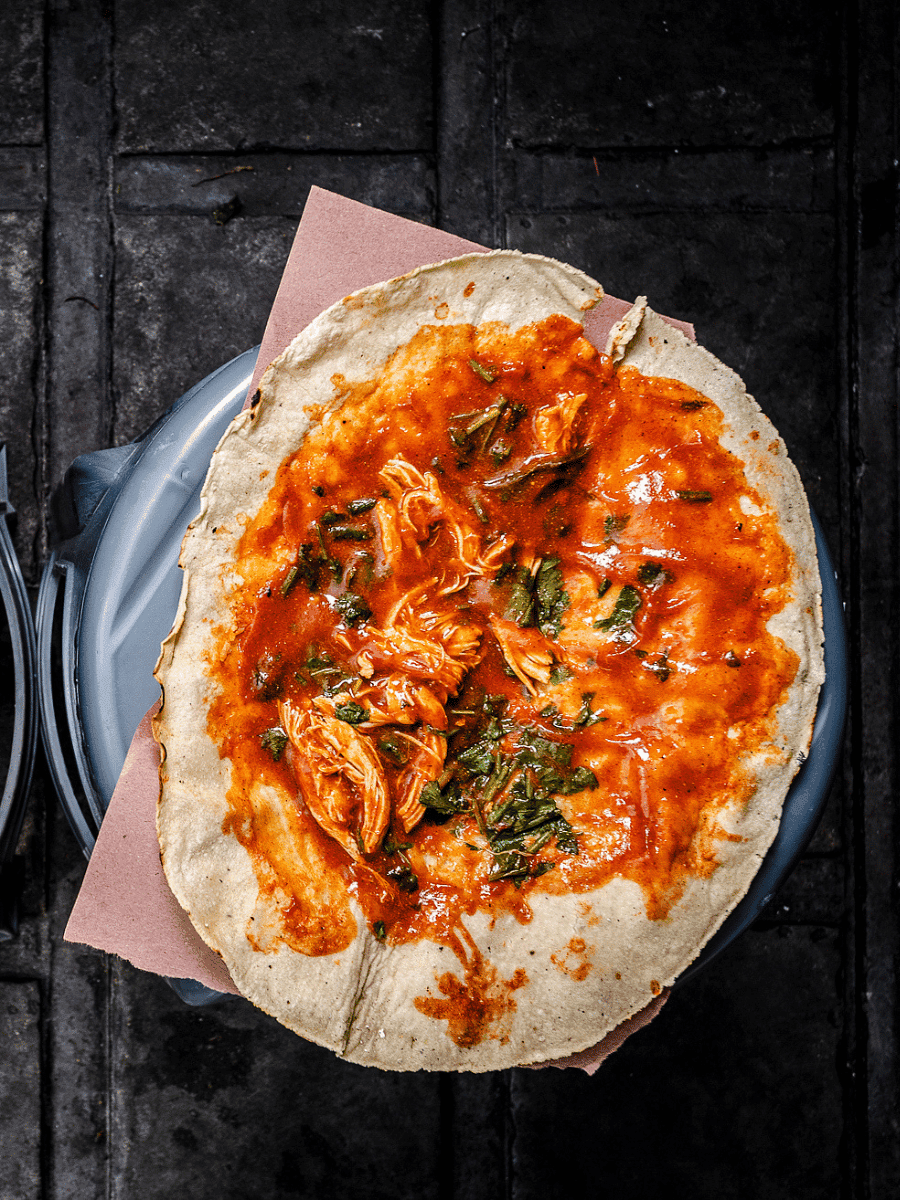
A giant half-moon masa turnover stuffed with yellow mole, chicken and squash flower, then browned on a comal. The Oaxacan Sunday empanada.

Thick handmade masa cakes with a pinched rim, topped with beans, meat, cream, cheese and salsa. The pinched-rim tortilla that holds all the sauce.

Fluffy corn masa filled with pork shredded in red guajillo-ancho salsa, wrapped in corn husks and steamed. The classical Mexican tamal, red edition.