
Destination
Ayutthaya
The story
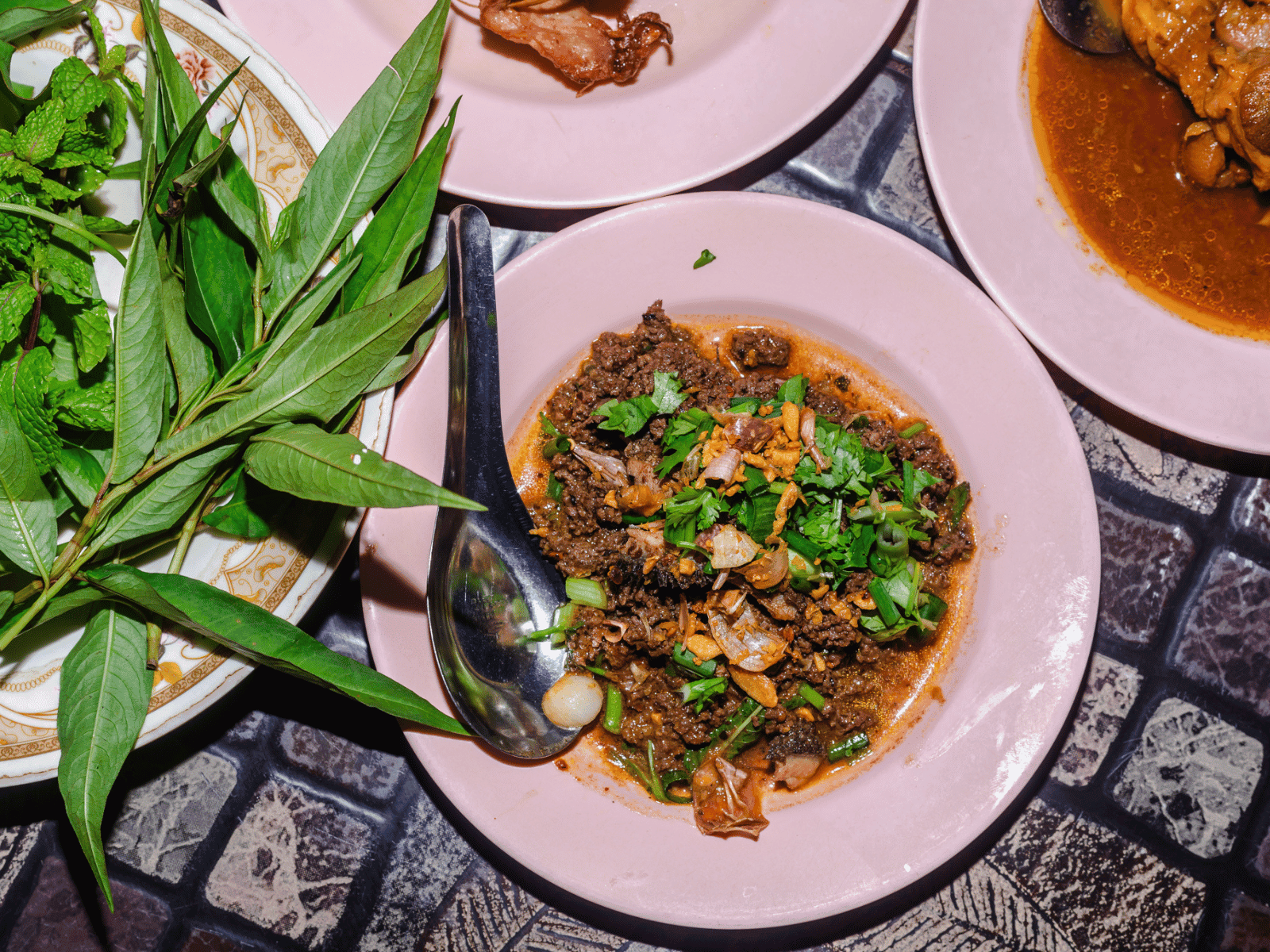
Laab mueang ("northern-style laab") is Chiang Mai's most distinctive dish and a defining preparation of Lanna (northern Thai) cuisine: finely chopped pork or beef, mixed with offal (liver, tripe, heart) and — the classical version — a small amount of fresh blood, tossed with a specifically northern laab spice blend called phrik laab (a blend of dried chilies, star anise, cinnamon, cloves, cumin, coriander seed and other warm spices that's completely different from the Isaan laab seasoning), and finished with fresh mint, coriander, sliced shallots and toasted rice powder. Served with sticky rice and a plate of raw vegetables (long beans, cabbage wedges, cucumber). Sold at every Chiang Mai neighbourhood restaurant, at every Lanna celebration table, and at the specialty laab shops that dot the Chiang Mai old town.
Method
Toast all whole spices (chilies, star anise, cumin, coriander, cloves, peppercorns, cinnamon, mace) in a dry pan over medium heat for 3 minutes until fragrant. Cool. Grind to a coarse powder in a spice grinder or mortar. Mix with salt.
Toast 3 tbsp raw sticky rice in a dry pan 5 minutes until deep gold. Cool briefly, then grind to a coarse powder.
Chop pork shoulder very fine with a heavy knife on a wooden board (traditional) or pulse briefly in a food processor. Same for liver and tripe if using.
Warm oil in a wide pan over medium-high heat. Cook garlic and shallots 2 minutes until fragrant. Add pork and cook, breaking up, 6 minutes until just cooked through. Add liver and tripe (if using) in the last 3 minutes. Do not overcook — you want the meat still juicy.
Off the heat, sprinkle 2 to 3 tbsp of the phrik laab spice mix over the meat. Stir thoroughly.
Fold in the mint, coriander, spring onions and toasted rice powder. Add fried garlic slices. Taste and adjust with salt.
For the classical laab dip experience with blood: stir in 3 tbsp fresh pig's blood at the very end. The meat should turn slightly darker. This is the traditional Lanna finish but optional for hygiene reasons.
Pile the laab on a large platter. Serve with sticky rice and a large plate of raw vegetables. Diners take a piece of sticky rice, scoop laab with the rice, wrap in a cabbage or lettuce leaf, and eat. Extra phrik laab and chili on the side for those who want more heat.
Tips
- Phrik laab is the flavour marker. This bespoke northern spice blend defines laab mueang. Isaan laab seasoning (fish sauce + lime + chili flakes + rice powder) is a completely different flavour.
- Chop by hand for classical texture. A heavy cleaver on a wooden board gives you the fine, uneven texture that a food processor can't match. Processor works as a practical shortcut.
- Blood is optional. For traditional purists, blood is essential; for hygiene-conscious cooks, skip it. Both versions are considered acceptable in modern Lanna cooking.
- Do not overcook. Six minutes is the target for the meat. Overcooked laab is chalky and dry.
More recipes
View all
Thai instant noodle brand Mama transformed into a proper meal: tom yum broth, minced pork, prawn, kaffir lime and a runny yolk fried egg. Thailand's midnight comfort food.

Large yellow crispy turmeric-rice crepes filled with prawn, pork, bean sprouts and herbs, folded and cut into wedges. Bangkok's Vietnamese-Thai fusion snack.
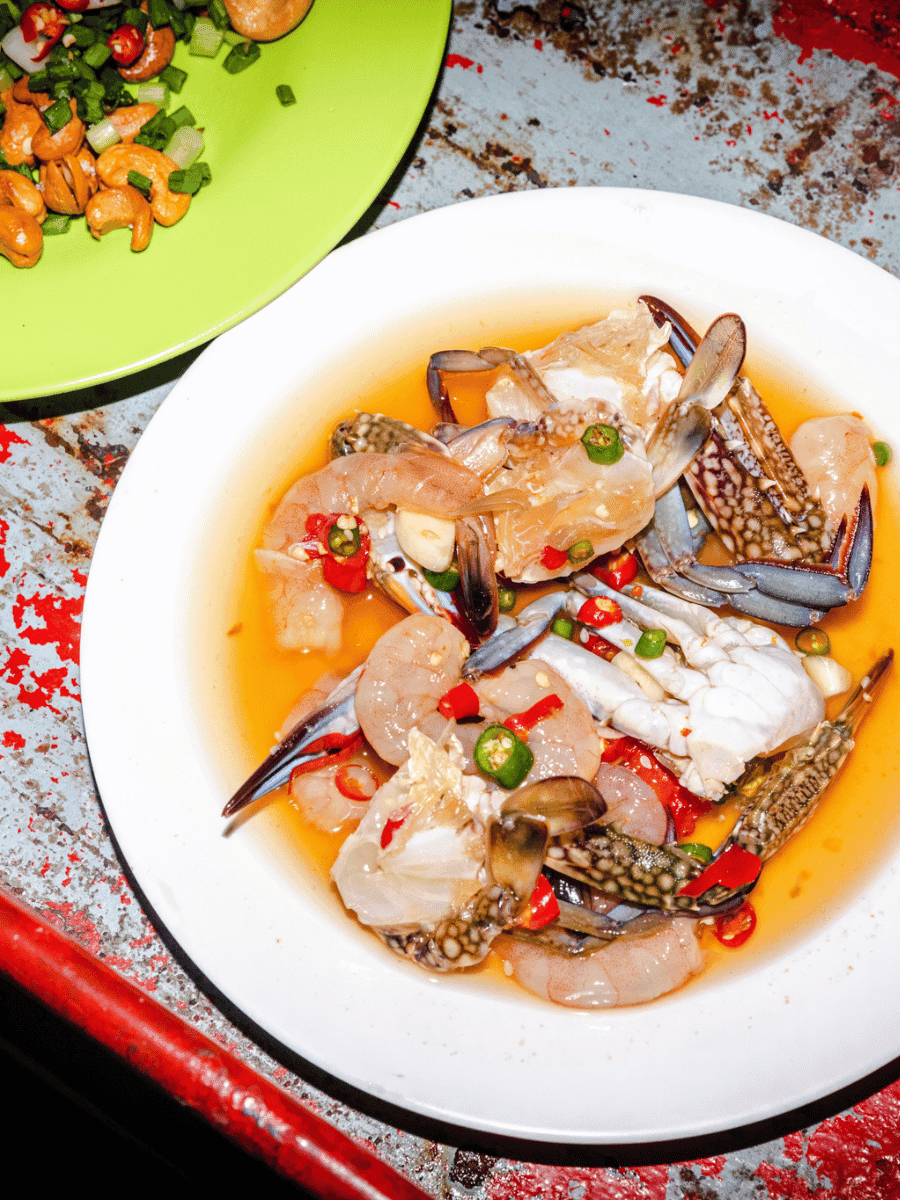
Steamed blue crab tossed with red onion, chili, coriander, mint and a tangy fish-sauce-lime dressing. A Thai coastal seafood salad at its most direct.

Fresh corn kernels pounded with garlic, chili, palm sugar and lime instead of green papaya — a modern Bangkok variation of the classical som tum.
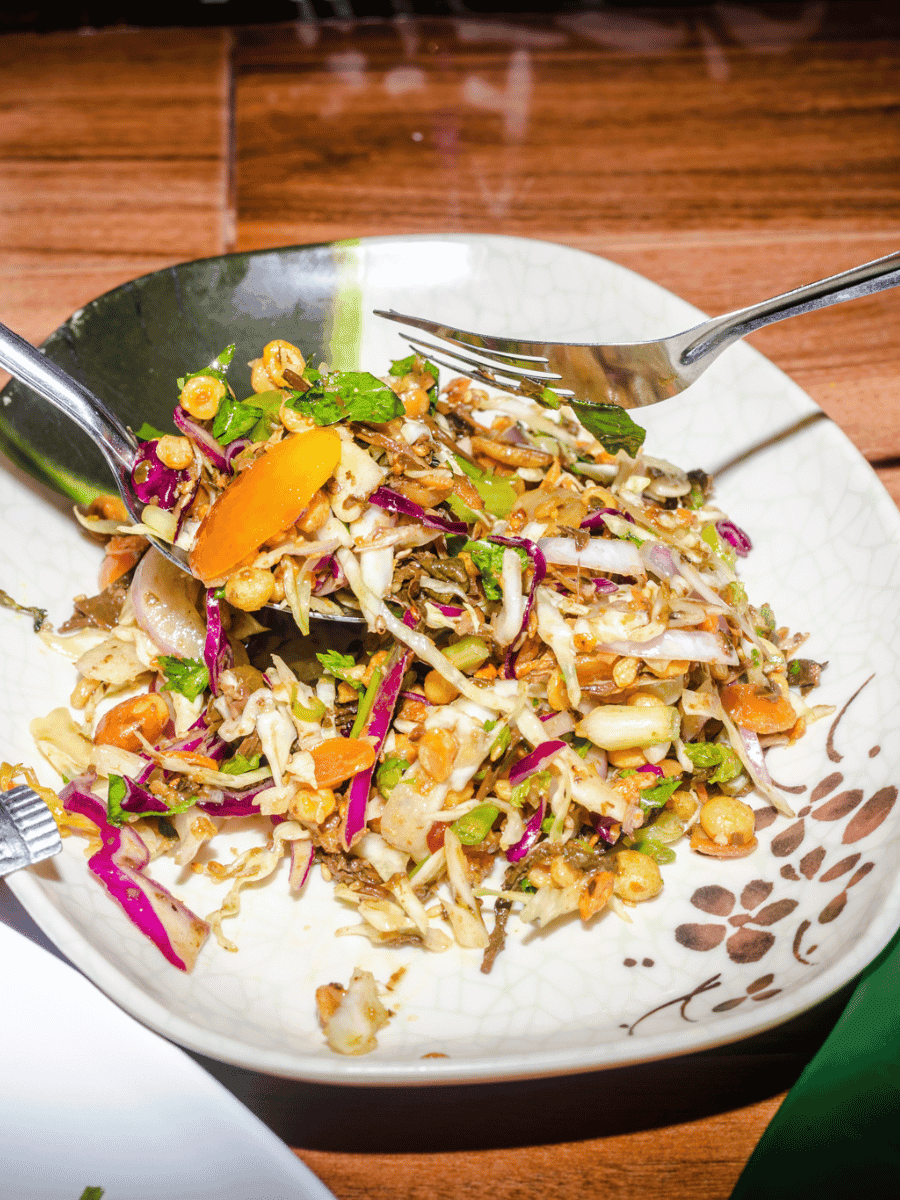
Wild pepper leaves wrapped around dried shrimp, coconut, chili, lime cube and ginger, drizzled with palm-sugar sauce. Bangkok's most-photographed one-bite starter.

Soft rice paper rolls filled with lettuce, coriander, cooked prawn, glass noodles and sweet Chinese sausage, dipped in a tangy plum-tamarind sauce. Bangkok's lightest starter.