

Destination
Antigua
The story
Guatemalan artisan hot chocolate is not the sweet, thin, cocoa-powder-and-milk drink most of the world calls hot chocolate. It's made from bars or discs of stone-ground cacao (cacao molido) that have been mixed with a little sugar (panela) and cinnamon at the mill, then dissolved into hot water or hot milk and whisked hard with a molinillo (a wooden whisk twirled between the palms) until the surface foams. Dark, rich, subtly gritty, deeply cacao. The way Guatemalans have drunk chocolate for centuries.
Method
In a heavy saucepan, warm the milk (or water) with the cinnamon stick and salt over medium heat until steaming but not boiling. Take off the heat and leave to infuse 5 minutes.
Return the pan to low heat. Add the chopped chocolate a piece at a time, whisking constantly with a wire whisk or a molinillo, until fully melted and smooth. This takes 3 to 4 minutes.
Continue whisking hard (with the molinillo between the palms if you have one, or a wire whisk moved briskly in a circular motion) for 1 to 2 minutes more, until the surface has a thick foam and the drink is glossy. The molinillo is the traditional tool; a stick blender used briefly is a modern shortcut.
Off the heat, stir in the vanilla if using. Remove the cinnamon stick.
Pour into small warm cups. Dust the tops with ground cinnamon. Serve immediately, ideally with a piece of pan con frijol y queso for dipping.
Tips
- Guatemalan or Mexican artisan cacao is worth seeking out. Sold at Latin American grocers as tablets, discs or small rounds. It's cacao pre-mixed with panela and cinnamon, which is what gives Guatemalan chocolate its specific texture and flavour.
- Water for traditional bittersweet, milk for creamy. The purist Guatemalan version uses hot water; the modern (and easier-to-love) version uses whole milk. Both are correct in different households.
- A molinillo makes a real difference. This wooden whisk twirled between the palms creates the specific frothy top that defines Guatemalan hot chocolate. Sold at Latin grocers for under $10. A wire whisk or a brief stick-blender pulse is the home substitute.
- Cocoa powder is a different drink. Please don't try to make this recipe with unsweetened cocoa powder. Cocoa powder has been fat-extracted; hot chocolate needs the whole ground cacao (fat and all) to have body and richness.
- Serve immediately. The foam collapses within a couple of minutes. Whisk, pour and drink; don't try to hold the drink warm.
More recipes
View all
Crusty roll split open, spread thick with refried black beans and stuffed with crumbled fresh cheese. Guatemala's morning-market breakfast, dunked in hot chocolate.

Ripe plantains fried, then simmered in a sweet chocolate-and-chilli mole sauce. Guatemala's Semana Santa dessert, closer to a rich pudding than a savoury main.

Fresh sweetcorn blended, strained and thickened with cinnamon and panela into a warming corn drink. Guatemala's morning-cart pour, poured hot into small cups.

Fresh corn tortillas patted by hand, stuffed with a slab of white cheese, and cooked on a hot comal until the cheese melts and the tortilla crisps. Guatemala's simplest market snack.

Deep-fried corn tortillas topped with a chunky avocado mash, pickled onion and crumbled cheese. Guatemala's afternoon-market snack, crisp and cold in the heat.
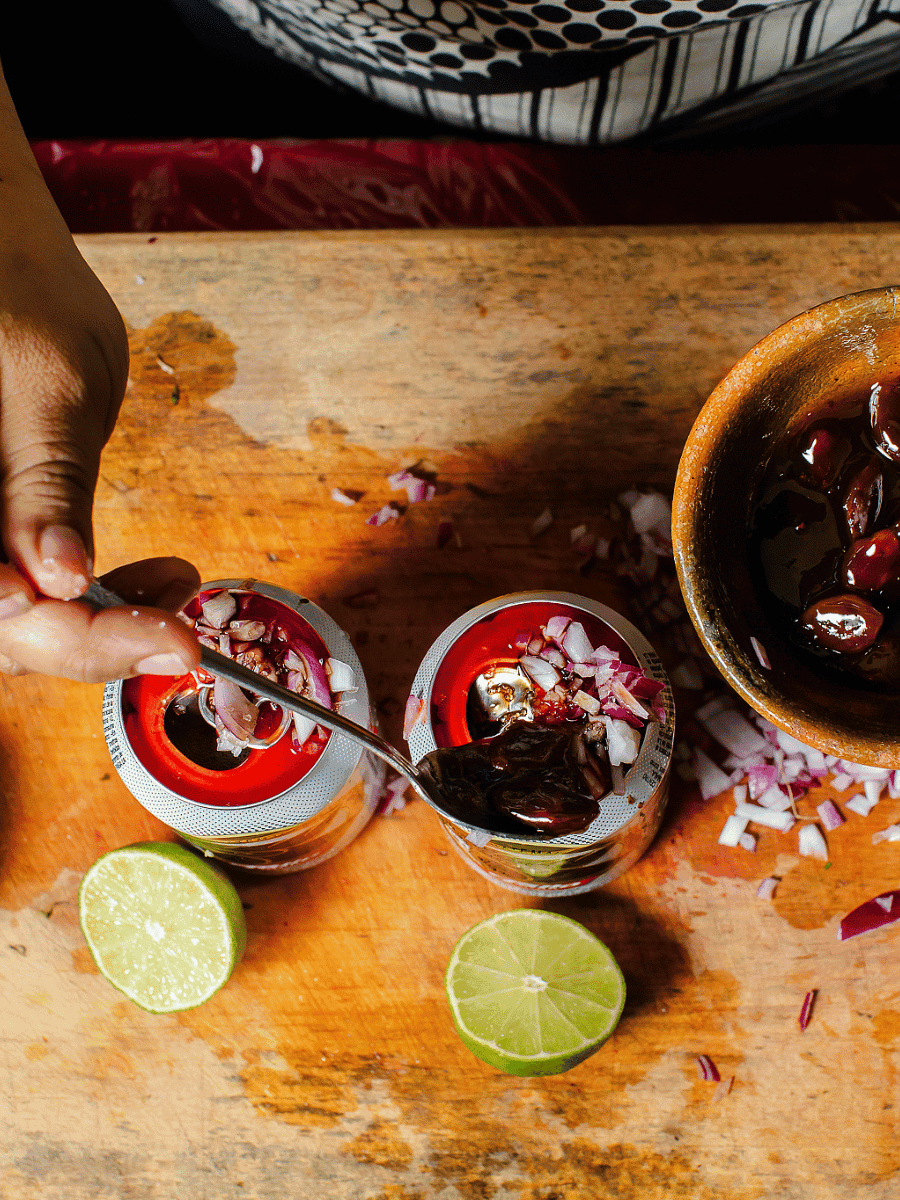
Shredded cabbage salad tossed with sliced hot dog, pickled sauce and lime, served in a small plastic bag. Antigua's street-snack cure for a mid-morning appetite.